In This Article
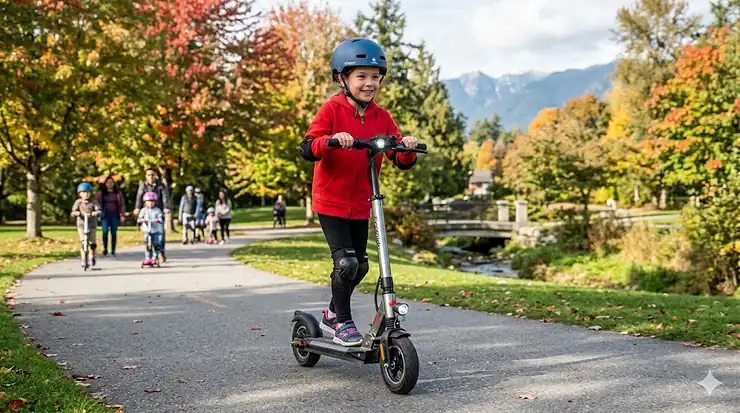
So your kid won’t stop asking for an electric scooter, and you’re standing in front of a wall of options wondering where to even start. How to choose an electric scooter for kids comes down to matching motor power, top speed, weight capacity and braking system to your child’s age and riding environment — then checking that the model actually meets Canadian toy-safety standards before it ships. Electric scooters for kids have come a long way from the wobbly, underpowered toys of a decade ago. Today’s models pack LED lighting, parent-adjustable speed caps and genuinely useful range, which makes the decision both easier and more confusing at the same time. This guide breaks down seven real models available through Amazon.ca, walks through the Canadian rules that actually apply to kids’ scooters (which are different from the rules for adult e-scooters you’ve seen on the news), and gives you a framework for matching a scooter to your child instead of just chasing the highest star rating.
We tested specs against real-world use cases: a 7-year-old riding circles in a Calgary driveway has very different needs than a 12-year-old commuting around an Ottawa cul-de-sac. By the end, you’ll know exactly which scooter fits your situation — and why the “fastest” option is rarely the right one for younger riders.
Quick Comparison Table
| Scooter | Best Age | Top Speed | Range | Price Range (CAD) | Best For |
|---|---|---|---|---|---|
| Segway Ninebot eKickScooter C2 Lite | 6–10 | 16 km/h | ~9 km | $270–$320 | First-time riders |
| Segway Ninebot Kickscooter C2 Pro | 6–14 | ~20 km/h | ~15 km | $340–$400 | Growing kids, premium build |
| Hiboy S2 Lite | 10+ | ~21 km/h | ~14 km | $400–$460 | Hills, low-light visibility |
| GoTrax GXL V2 | 12+ | ~25 km/h | ~17 km | $280–$320 | Confident tweens/teens |
| GoTrax Scout | 5–8 | ~10 km/h | ~6 km | $150–$180 | Nervous beginners |
| Razor Power Core E100 | 8+ | ~16 km/h | varies | $270–$310 | Classic, simple controls |
| isinwheel S4 | 8–13 | varies (3 modes) | varies | $200–$250 | Lightest foldable pick |
Looking at the table, the spread in top speed (10 to 25 km/h) matters more than most parents realize — that’s the difference between a scooter your six-year-old can safely stop and one built for a confident pre-teen. Note that all prices above are estimated CAD ranges based on typical Amazon.ca and manufacturer pricing at the time of research; prices change constantly, so always check the current listing before buying. Younger or first-time riders should stay in the sub-16 km/h tier regardless of how “cool” the faster models look in reviews.
💬 Just one click — help others make better buying decisions too! 😊
✨ Don’t Miss These Exclusive Deals!
🔍 Take your search for the right kids’ electric scooter to the next level — click on any highlighted model below to check current pricing and availability on Amazon.ca. A little research now saves a lot of regret (and returns) later!
Top 7 Electric Scooters for Kids: Expert Analysis
1. Segway Ninebot eKickScooter C2 Lite
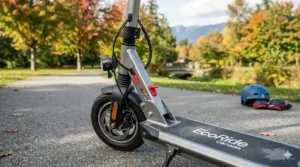
The C2 Lite is Segway’s entry point for kids aged six to ten, and it shows in the details that matter for nervous beginners. The 130W motor caps out at 16 km/h, which sounds slow on paper but feels exactly right when you’re watching a six-year-old try to brake for the first time on a Canadian driveway covered in last autumn’s gravel. Solid (not pneumatic) tires mean no flat-tire panic on the day of a birthday party, and the ~9 km range covers a solid after-school window without a midway charging interruption. What most Canadian parents overlook is the three-mode system: Power Assist mode lets a parent walk alongside while the motor does most of the work, which is the single best feature for a kid who’s still building confidence. Canadian buyers report the solid tires hold up well on driveway gravel and cracked sidewalk seams that would puncture a pneumatic tire within weeks.
Pros:
✅ Power Assist mode for true beginners
✅ Puncture-proof solid tires
✅ Lightweight enough for a kid to carry
Cons:
❌ 16 km/h ceiling means a 10-year-old will outgrow it within a year or two
❌ No Bluetooth speaker
Verdict: Around $270–$320 CAD. The best low-stress starter scooter for the youngest end of the age range.
2. Segway Ninebot Kickscooter C2 Pro
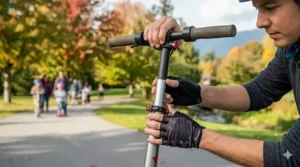
Step up to the C2 Pro and you get a scooter built to last through the awkward “tween” growth years rather than being outgrown in a single summer. The roughly 20 km/h top speed and 15 km range give a 6-to-14-year-old genuine room to grow, and the adjustable handlebar height means you’re not buying a new scooter every time your kid hits a growth spurt. UL2272 electrical safety certification is the spec that matters most here, even though it rarely gets mentioned in marketing copy — it’s the battery and motor safety testing standard that catches the fire-risk issues cheap knockoff scooters sometimes skip. The built-in Bluetooth speaker and cruise mode are genuinely nice extras, but the alloy steel frame and three distinct riding modes are what justify the premium price for a Canadian family planning to use one scooter across several years of riding.
Pros:
✅ Adjustable handlebar grows with your kid
✅ UL2272-tested battery/motor safety
✅ Three selectable riding modes
Cons:
❌ 132 lb (60 kg) weight limit can feel tight for a taller 13-year-old
❌ Premium price point
Verdict: Around $340–$400 CAD. The best multi-year investment for a family that wants one scooter to cover several growth stages.
3. Hiboy S2 Lite
If your kid is riding on anything other than a perfectly flat surface, the S2 Lite’s hill-climbing performance is the feature that earns its keep — it noticeably outpaces the Segway C2 Pro on steeper grades, which matters a lot if your neighbourhood has any kind of slope (and most do, outside the prairies). The standout practical feature is visibility: a bright LED headlight, glowing deck lights and a full LED light panel across the front make this scooter genuinely easy to spot from a distance during Canada’s long autumn and winter dusk hours, when kids are often still riding home from school in fading light. At roughly 21 km/h, it’s better suited to confident 10-and-up riders rather than younger beginners, and the front electronic brake paired with a mechanical rear drum brake gives noticeably shorter stopping distances than single-brake budget models.
Pros:
✅ Best-in-class hill climbing for the price
✅ Exceptional low-light visibility
✅ Strong dual-brake stopping power
Cons:
❌ Speed may be too much for riders under 10
❌ Heavier than the foldable budget picks
Verdict: Around $400–$460 CAD. The pick for hilly neighbourhoods and shorter winter daylight hours.
4. GoTrax GXL V2
The GXL V2 is really a teen scooter wearing a kids’-category listing, and Canadian parents should treat it that way. At up to 25 km/h with no speed-limiting mode, it’s the fastest scooter on this list — great for a confident 12-to-14-year-old who’s already comfortable on a regular kick scooter or bike, not appropriate for a younger sibling who happens to be tall for their age. The integrated LED headlight and lightweight frame make it easy for a teen to carry up an apartment stairwell or load into a hatchback, and the price stays reasonable given the speed on offer. What the spec sheet won’t tell you: because the top speed can’t be capped, this is the one model on this list where a Canadian municipal helmet bylaw for under-18 riders genuinely matters every single ride, not just as a suggestion.
Pros:
✅ Fast and fun for confident teens
✅ Very lightweight for its speed class
✅ Budget-friendly relative to its top speed
Cons:
❌ No speed-limiting mode for cautious riders
❌ Not appropriate for kids under 12
Verdict: Around $280–$320 CAD. Best value for a teen who already rides confidently and needs a helmet rule enforced every time.
5. GoTrax Scout
Some kids just aren’t ready to go fast, and the Scout is built entirely around that reality. A 10 km/h ceiling sounds almost too slow until you watch a five-or-six-year-old white-knuckle the throttle on a faster model — at this speed, the learning curve is gentle enough that most kids master starting, steering and stopping within a single afternoon. It’s also the most affordable scooter on this list by a wide margin, which makes it an easy first purchase before committing real money to a model your child might outgrow emotionally rather than physically. The trade-off is honest: shorter range, simpler components, and a battery that won’t keep a confident 10-year-old entertained for long. For the youngest or most cautious riders, though, that’s exactly the point.
Pros:
✅ Most beginner-friendly top speed available
✅ Lowest price point on this list
✅ Easy for small hands to control
Cons:
❌ Limited range for older or more active kids
❌ Less durable build than premium picks
Verdict: Around $150–$180 CAD. The lowest-risk first scooter for a nervous five-to-eight-year-old.
6. Razor Power Core E100
Razor built its reputation on traditional kick scooters long before electric models existed, and the Power Core E100 carries that legacy of simplicity forward. The controls are refreshingly uncomplicated — twist-grip acceleration and a hand-operated front brake — which means less for a first-time rider to think about while they’re also learning balance and steering. At roughly 16 km/h it sits in the same comfortable middle tier as the Segway C2 Lite, fast enough to be genuinely fun without outpacing an eight-to-ten-year-old’s reaction time. The design reads as a little dated next to the LED-laden newer entrants on this list, but the brand’s decades of parts availability and customer support history in Canada count for something when you’re hoping to find a replacement battery three years from now.
Pros:
✅ Simple, beginner-friendly controls
✅ Long-established brand with parts availability
✅ Solid middle-tier speed for ages 8+
Cons:
❌ Fewer modern features (no LED light panel, no Bluetooth)
❌ Design feels less refined than newer competitors
Verdict: Around $270–$310 CAD. A dependable, no-frills choice from a brand most Canadian parents already trust.
7. isinwheel S4
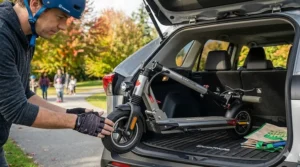
For families short on storage space — think Toronto or Vancouver condo living — the S4’s foldable frame and roughly 15 lb (under 7 kg) weight make it the easiest scooter on this list to tuck into a hallway closet or hatchback trunk. The 200W motor and three adjustable speed modes let the scooter grow with a child’s confidence without needing to buy a second unit, and the LED dashboard plus Bluetooth music feature add genuine novelty appeal that keeps younger riders engaged. Dual braking (electronic front, foot-operated rear) gives reassuring stopping power for the price point. The deck and pedal lighting are more about fun than function, but for evening rides around a quiet suburban street, the extra visibility doesn’t hurt either.
Pros:
✅ Lightest foldable design on this list
✅ Three speed modes for growing confidence
✅ Dual braking system at a budget price
Cons:
❌ Build quality feels less premium than Segway/Hiboy
❌ Bluetooth speaker drains battery faster
Verdict: Around $200–$250 CAD. The best pick for small-space Canadian families who need something foldable.
How to Choose an Electric Scooter for Kids in Canada
- Match top speed to age, not aspiration. Five-to-seven-year-olds do best under 12 km/h; eight-to-ten-year-olds can typically handle 14–18 km/h; only confident riders aged 11+ should go near 20–25 km/h models.
- Check the weight limit against your child’s current weight, with room to grow. A scooter rated right at your kid’s current weight will feel sluggish and underpowered within months.
- Prioritize braking system over top speed. Dual brakes (front electronic plus rear mechanical or foot brake) stop noticeably faster than single-brake budget models — this matters more than any other spec for safety.
- Look for genuine battery capacity (watt-hours), not just claimed range. Manufacturer range claims vary wildly by rider weight and terrain; a higher Wh battery is the more honest indicator.
- Confirm Canadian toy-safety compliance. Electric scooters marketed to children fall under Health Canada’s Toys Regulations and must meet the CSA C22.2 No. 149 electrical-toy safety standard — check the listing or packaging for a recognized certification mark.
- Decide where it will actually be ridden. Driveway and backyard use has very different requirements than a public sidewalk or park path, especially given municipal bylaws discussed below.
- Budget for a properly fitted, certified helmet separately. A $40–$80 CSA- or CPSC-approved helmet matters more to safety outcomes than any single scooter feature.
Electric Scooter Speed Limit, Weight Limit & Age Guidelines for Kids
There’s no single federal electric scooter speed limit for kids the way there is for adult e-scooters on public roads — instead, manufacturers set their own age and weight bands per model, and parents are largely left to apply common sense. As a rough Canadian-context guideline: ages 5–7 should stay at or under roughly 10–12 km/h, ages 8–10 generally manage 14–18 km/h comfortably, and only confident riders aged 11 and up should approach the 20–25 km/h tier. Scooter weight limit for children typically ranges from around 100 lbs on entry-level models up to 130–180 lbs on the larger teen-oriented scooters like the GXL V2, and exceeding that limit doesn’t just void the warranty — it measurably increases stopping distance and reduces stability. It’s worth repeating: these are manufacturer recommendations for the toy-class scooters in this guide, not legal speed restrictions, since Canada’s provincial e-scooter speed laws (discussed below) are written for a different, more powerful category of device.
Lightest Models & Sit-Down Scooters for Older Kids
If portability is the deciding factor — say, hauling a scooter up three flights of stairs in a Montreal walk-up — the isinwheel S4’s sub-7 kg foldable frame and the GoTrax Scout’s lightweight build are the easiest to carry one-handed. On the other end, some families specifically search for an electric scooter with a seat for older kids who want a more relaxed ride or have balance challenges that make standing scooters less practical; the Razor Pocket Mod Miniature Euro is a well-known sit-down option in this category, designed for kids under ten with a speed capped under 13 km/h to keep the lower riding position safe. Sit-down models trade portability for stability, so they suit driveway and park use better than a quick fold-and-carry commute.
Kids E-Scooter Safety Features That Actually Matter
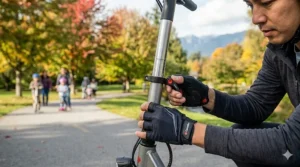
Marketing copy loves to highlight flashy extras, but a short list of kids e-scooter safety features consistently separates genuinely safer models from the rest: dual braking systems (a single rear-only brake roughly doubles stopping distance compared to combined front/rear braking), a parent-selectable low-speed or “training” mode, a low centre of gravity and wide deck for stability, bright forward-facing LED lighting for Canada’s shorter winter daylight hours, and a recognized safety certification mark on the packaging. Bluetooth speakers, light shows and app connectivity are fun, but they don’t reduce injury risk — braking performance and speed-limiting modes do.
Buyer’s Decision Framework
Use this quick framework if you’re still deciding which kids electric scooter for kids fits your situation:
- If your child is under 8 and has never ridden a kick scooter → choose the GoTrax Scout or Segway C2 Lite’s Power Assist mode.
- If your child is 8–10 and rides a regular kick scooter confidently → choose the Segway C2 Lite, Razor Power Core E100, or isinwheel S4.
- If you want one scooter to last several growth years → choose the Segway C2 Pro for its adjustable handlebar and wider age range.
- If your neighbourhood has real hills → choose the Hiboy S2 Lite for its stronger climbing performance.
- If your child is 11+ and already confident → only then consider the GoTrax GXL V2’s higher top speed, and pair it with a strict helmet rule.
- If storage space or stairs are a constraint → choose the isinwheel S4 for its foldable, lightweight frame.
Real-World Canadian Scenarios
A Toronto condo family with a 9-year-old: Since Toronto opted out of Ontario’s e-scooter pilot, riding stays confined to the building’s private courtyard or a backyard rather than sidewalks or streets. A foldable, lightweight model like the isinwheel S4 fits both the storage constraints and the lower-speed, supervised-private-space use case.
A suburban Calgary family with two kids, ages 6 and 11: The age gap calls for two different scooters rather than one “in-between” compromise — the GoTrax Scout for the six-year-old’s driveway laps, and the Segway C2 Pro for the eleven-year-old, whose adjustable handlebar will keep pace with a few more years of growth.
A rural Nova Scotia family riding gravel driveways and dirt laneways: Solid, puncture-resistant tires matter more here than top speed. The Segway C2 Lite or Razor Power Core E100 handle rough surfaces without the flat-tire risk that pneumatic-tired models carry on gravel.
Practical Usage & Winter Maintenance Guide
A few habits extend the life of any kids’ electric scooter through a Canadian climate that swings from humid summers to salted winter sidewalks. Bring the battery indoors for charging and storage rather than leaving it in an unheated garage, since lithium-ion batteries lose capacity faster in cold temperatures and can take noticeably longer to charge below freezing. Wipe down the deck and wheel wells after any ride near road salt or winter brine, since residue left on metal components accelerates corrosion over a single season. Most kids’ electric scooters aren’t rated for wet-weather use, so treat rain, slush and standing water as a hard no rather than a maybe. Finally, do a quick brake and tire check every couple of weeks during heavy-use months — catching a loose brake cable early is a five-minute fix, not a five-week repair.
Canadian Regulations & Safety Standards
This is the part most buying guides skip, and it’s the most important section for Canadian parents. Electric scooters marketed and sold as children’s toys — the low-power, low-speed category covered in this guide — fall under Health Canada’s Consumer Product Safety Act and its Toys Regulations, which require electrical toys to meet the CSA C22.2 No. 149 standard for electrically operated toys, covering shock, fire and overheating risks. That’s a different legal category from the standing electric kick scooters you’ve likely read about in the news, which several provinces regulate through dedicated pilot programs aimed at adult and teen riders on public roads.
British Columbia’s pilot program sets a minimum rider age of 16 for road-legal e-scooters, requires an approved helmet, and caps speed at 25 km/h — rules that apply to the faster, more powerful public-road category, not to a driveway-only kids’ toy scooter. Quebec’s framework sets a minimum age of 14 for road and bike-path use, with mandatory helmets for riders under 18. In Ontario, the City of Toronto opted out of the provincial e-scooter pilot entirely, meaning no e-scooter — regardless of the rider’s age — may legally be operated on Toronto streets, sidewalks or trails, even though the devices can still be sold in stores. Other Ontario municipalities that opted in generally set a 16-year minimum age with mandatory helmets for riders under 18.
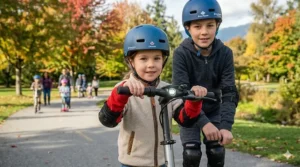
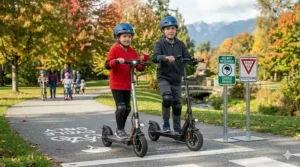
The practical takeaway: a kids’ toy-class scooter used on private property, a driveway or a backyard isn’t subject to these road-use age minimums, but the moment a child rides on a public sidewalk, street or park path, local bylaws may apply regardless of how slow the scooter goes — so it’s worth a quick check with your municipality. The Canadian Paediatric Society cautions that full-power e-scooters and e-bikes aren’t designed for children under 16 given how quickly they can accelerate, and CBC News reported a 61 percent rise in e-scooter-related injuries among children aged five to seventeen based on national hospitalization data — a strong reminder that helmet use and supervised riding apply just as much to a slower toy-class scooter as to an adult model. For the toy safety side specifically, Health Canada’s industry guide is the most reliable source if you want to verify what certification mark to look for before buying.
Common Mistakes When Buying an Electric Scooter for Kids
Parents shopping under deadline pressure (hello, birthday week) tend to make the same few mistakes. Buying purely on top speed is the most common — a faster scooter isn’t a better gift if your child can’t yet stop safely at that speed. Skipping the weight-limit check is another, since a scooter loaded near or over its rated limit loses both speed and braking performance. Assuming Amazon.com specs and pricing transfer directly to Amazon.ca is a frequent surprise; selection and exact CAD pricing can differ, and not every U.S.-listed model ships to every Canadian province. Treating the helmet as optional rather than budgeting for one upfront is a safety mistake, not just a financial one. And finally, ignoring the CSA toy-safety certification mark in favour of a slightly cheaper unbranded import is a real risk, since electrical toy failures are exactly what that certification exists to catch.
Long-Term Cost & Maintenance in Canada
The scooter’s sticker price is rarely the full cost of ownership. Replacement batteries for the mid-range models on this list typically run in the $60–$120 CAD range when the original pack degrades after one to two years of regular use, and cold Canadian winters accelerate that degradation if the battery is repeatedly stored in an unheated garage. Tire and brake-pad replacements add modest but recurring costs, generally under $30 CAD per part for the budget and mid-range models. If you’re tempted by a lower price on Amazon.com, factor in that cross-border returns, warranty claims and replacement-part shipping become considerably more complicated once the device crosses the border — a small price difference rarely outweighs the convenience of buying and servicing through Amazon.ca from the start.
✨ Don’t Miss These Exclusive Deals!
🔍 Ready to compare current pricing? Click through to Amazon.ca on any of the models above to check availability, current deals, and exact specs before you buy.
FAQ
❓ What is the best electric scooter for kids in Canada?
❓ What is the electric scooter speed limit for kids?
❓ Do kids need a helmet to ride an electric scooter in Canada?
❓ Can kids ride an electric scooter on the sidewalk in Canada?
❓ Does Amazon.ca ship electric scooters to all Canadian provinces?
Conclusion
Choosing the right electric scooter for your kid really comes down to three honest questions: how fast can they safely stop, how much room do they have to grow into the model, and where will they actually be allowed to ride it once your municipality’s rules are factored in. The seven models in this guide cover everything from a cautious six-year-old’s first ride to a confident teenager’s daily loop around the block, and none of them require guesswork once you match the spec sheet to your child’s actual riding ability rather than their wish list. Whatever you choose, pair it with a properly fitted helmet and a quick read of your province’s e-scooter rules — the scooter is the easy part of this decision; making sure it gets used safely is the part that actually matters.
Recommended for You
- Best Electric Scooter for Kids 8-12 in Canada 2026: Top 7 Picks
- 7 Best 24V Off-Road Electric Ride-On for Kids in Canada (2026)
- 24V Electric UTV vs Dune Buggy for Kids: Which Is Better in Canada 2026
Disclaimer: This article contains affiliate links. As an Amazon Associate, I earn from qualifying purchases. If you purchase products through these links, we may earn a small commission at no additional cost to you.
✨ Found this helpful? Share it with your friends! 💬🤗
