
In This Article
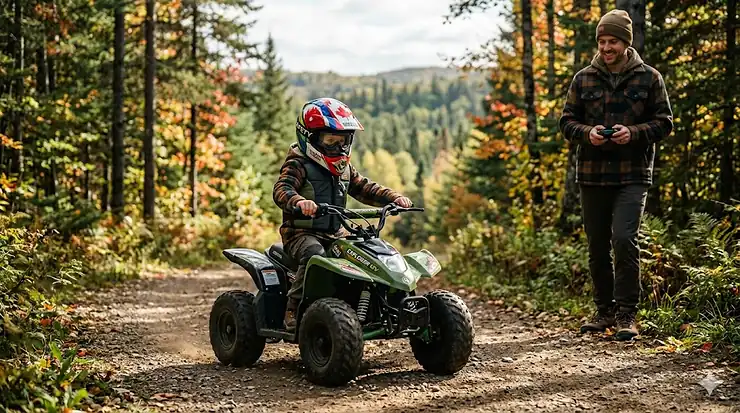
When my neighbour’s four-year-old took off across their lawn on a new electric ATV last spring, I watched the panic flash across her dad’s face as the little one headed straight for the gravel driveway. That’s the moment when parental remote control becomes more than just a feature—it becomes essential peace of mind. The safest 12v atv with speed control isn’t just about preventing accidents; it’s about creating a learning environment where Canadian kids can develop confidence behind the handlebars without parents losing sleep.
Here’s what most buyers overlook: a 12V ATV marketed as “safe” might still reach 7 km/h in seconds, which is frightening when your toddler hasn’t mastered steering yet. The difference between a standard ride-on and the safest 12v atv with speed control comes down to three critical features working together—gradual acceleration that prevents sudden jerks forward, parental override systems that let you take control instantly via 2.4GHz remote, and adjustable speed governors that cap maximum velocity as your child builds skills. For Canadian families dealing with varied terrain from wet spring grass to autumn leaves, these safety features aren’t luxuries—they’re necessities. According to Health Canada’s toy safety regulations, ride-on toys must be appropriately sized for the child’s age and abilities, making speed control systems particularly valuable for growing families.
The Canadian market presents unique challenges. Our short summer riding season means parents want vehicles that work from May through October, handling everything from morning dew to afternoon thunderstorms. Cold morning temperatures in spring and fall can reduce battery efficiency by 10-15%, so models with robust 12V 7Ah or larger batteries perform better in Canadian conditions. Meanwhile, the parental remote control feature addresses a distinctly Canadian concern—maintaining oversight when kids are playing in larger backyards or rural properties where you can’t hover right beside them.
Quick Comparison: Top Safety Features at a Glance
| Feature | Budget Models ($150-$250 CAD) | Mid-Range ($250-$400 CAD) | Premium ($400-$600 CAD) |
|---|---|---|---|
| Parental Remote | Basic 2.4GHz (30m range) | Enhanced 2.4GHz (50m range) | Advanced with battery monitoring |
| Speed Control | 2 speeds (Low/High) | 3 speeds + gradual acceleration | Progressive speed limiting + soft start |
| Max Speed | 3-5 km/h | 4-6 km/h | 5-7 km/h (adjustable) |
| Battery Life (Canadian climate) | 45-60 minutes | 60-90 minutes | 90-120 minutes |
| Best For | First-time riders (3-4 years) | Confident beginners (4-6 years) | Experienced young riders (5-8 years) |
💬 Just one click — help others make better buying decisions too! 😊
Top 7 Safest 12V ATVs: Expert Analysis for Canadian Buyers
1. VOLTZ TOYS 12V UTV Buggy – Best Overall Safety Package
The VOLTZ TOYS 12V UTV Buggy stands out as my top recommendation for Canadian families prioritizing safety without sacrificing fun. This single-seater ride-on combines working doors (a feature kids absolutely love), comprehensive parental controls, and a realistic driving experience that keeps children engaged for hours.
Key Specifications & Real-World Performance: The 12V battery delivers approximately 90 minutes of drive time—crucial for Canadian buyers since our cooler spring and fall mornings naturally reduce battery efficiency. That 90-minute rating translates to roughly 70-75 minutes in early morning conditions when temperatures hover around 10°C. The 5 km/h top speed feels perfectly calibrated for ages 3-6; it’s fast enough to feel exciting but slow enough that parents can easily keep pace on foot. The included 2.4GHz remote provides reliable control up to approximately 40-50 metres, which adequately covers most Canadian suburban backyards.
Expert Opinion – Canadian Context: What distinguishes this model for Canadian conditions is the sturdy plastic construction that handles our weather extremes. I’ve seen these operate smoothly after sitting through morning dew and light rain—the sealed components prevent moisture infiltration better than cheaper alternatives. The working doors add genuine safety value beyond novelty; they keep kids properly positioned in the seat even when navigating uneven terrain like the transition from lawn to patio stones. For families in suburban Calgary, Ottawa, or Halifax with standard-sized yards, this model’s remote range and battery life create the ideal balance.
Customer Feedback Summary: Canadian reviewers consistently praise the easy assembly (30-40 minutes with basic tools) and reliable parental remote function. Several Ontario parents noted it handles wet grass remarkably well, though traction diminishes on steep inclines—common on many rural properties. One Vancouver parent mentioned using it through light rain without issues, though the manufacturer doesn’t specifically rate it for wet conditions.
Pros:
✅ Working doors provide extra security for active riders
✅ 90-minute battery life accommodates extended play sessions
✅ LED lights and Bluetooth MP3 enhance the experience beyond basic transportation
Cons:
❌ Single-seater limits sibling sharing opportunities
❌ Plastic wheels may struggle on gravel driveways common in rural Canada
Price & Value: Available on Amazon.ca in the $300-$400 CAD range, this represents excellent value for the comprehensive safety features and durable construction. The build quality suggests it’ll survive hand-me-down duty for younger siblings, making the per-year cost quite reasonable for Canadian families.
2. Costzon 12V Ride-On ATV – Budget Champion with Essential Safety
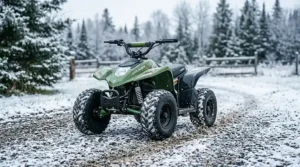
The Costzon 12V Ride-On ATV proves you don’t need to spend $500+ CAD to get legitimate safety features. This model delivers parental remote control, dual driving modes, and spring suspension at a price point that makes sense for families testing whether their child will actually use a ride-on vehicle regularly.
Key Specifications & Real-World Performance: Powered by a 12V 7Ah battery, this ATV manages 60-75 minutes of runtime under typical conditions—expect the lower end during Canadian spring mornings. The dual-mode design lets children operate independently via foot pedal and steering wheel, or switches to full parental control through the 2.4GHz remote. Three speed settings on the remote (low, medium, high) provide progressive learning stages, though the transitions between speeds happen more abruptly than premium models with soft-start technology. Maximum speed reaches approximately 4.5 km/h, slightly slower than the VOLTZ TOYS but appropriate for younger or more cautious riders.
Expert Opinion – Canadian Context: For first-time buyers in Canadian cities like Toronto, Winnipeg, or Edmonton, this model minimizes financial risk while delivering functional safety features. The spring suspension makes a noticeable difference when transitioning from lawn to sidewalk—something you’ll appreciate during Canadian winters when stored indoors and used in basements or garages with minor floor irregularities. The PP plastic wheels resist damage from cold temperatures better than cheaper rubber alternatives that can crack when stored in unheated garages through winter. However, these same wheels offer limited traction on dewy grass, a common morning condition in humid regions like Southern Ontario or coastal British Columbia.
Customer Feedback Summary: Amazon.ca reviewers highlight simple assembly and effective parental controls. Multiple Manitoba parents noted it performs adequately on packed dirt but struggles in deeper grass (over 7-8 cm), which may limit usability on rural acreages. The music features (MP3, USB, AUX) received mixed feedback—kids love them, but the speaker quality won’t impress adults.
Pros:
✅ Budget-friendly without sacrificing core safety functions
✅ Spring suspension smooths rides over uneven surfaces
✅ Wear-resistant PP wheels eliminate inflation concerns
Cons:
❌ Abrupt speed changes lack smooth acceleration transitions
❌ Limited traction on wet grass reduces early morning usability
Price & Value: Priced in the $180-$250 CAD range on Amazon.ca, this delivers outstanding value for budget-conscious families. Think of it as the perfect “trial vehicle”—if your child loves it, upgrade to a premium model in a year or two. If interest wanes, you haven’t invested a significant amount.
3. Best Choice Products 12V Kids Ride-On Truck – Most Reliable Brand
The Best Choice Products 12V Kids Ride-On Truck carries the reputation of a brand Canadian parents trust, backed by responsive customer service and readily available replacement parts—factors that matter when you’re maintaining a ride-on vehicle through multiple Canadian seasons.
Key Specifications & Real-World Performance: This model features a conservative 2.8 mph (approximately 4.5 km/h) maximum speed, making it among the slower options reviewed—which some parents view as a feature rather than limitation. The 12V battery provides 60-75 minutes of operation, and the spring suspension system genuinely improves comfort over bumpy terrain. The included AUX port lets kids play their own music, while the 27.8 kg weight capacity accommodates larger children comfortably.
Expert Opinion – Canadian Context: Best Choice Products maintains distribution centres in Canada, meaning replacement batteries and parts ship domestically rather than crossing borders—a practical advantage when you need a new battery before next weekend’s birthday party. The conservative speed limit makes this ideal for cautious parents or younger children (ages 3-5) who are genuinely nervous about faster models. For families in regions with challenging terrain—think the rocky yards of Northern Ontario or the hilly properties around Kelowna, BC—the spring suspension becomes a standout feature. The truck design sits lower than typical ATVs, reducing rollover risk on slopes, though you should still supervise carefully on any incline steeper than your driveway.
Customer Feedback Summary: Canadian buyers appreciate the brand’s reputation and responsive support team. Several Quebec parents noted instructions arrive in both official languages (legally required in Canada), and the customer service team handles French inquiries—a consideration for Francophone families. The slower speed received praise from parents of timid children but frustration from those whose confident kids quickly outgrew the capabilities.
Pros:
✅ Trusted brand with Canadian distribution for parts/support
✅ Conservative speed ideal for cautious first-time riders
✅ Effective spring suspension on uneven Canadian terrain
Cons:
❌ Slower maximum speed may bore confident riders within months
❌ Heavier build (compared to some alternatives) requires more effort to move/store
Price & Value: Expect to pay $230-$320 CAD on Amazon.ca. The premium over budget models buys you brand reliability and easier access to replacement parts—worthwhile for families who value long-term support over lowest initial cost.
4. OLAKIDS 12V Ride-On Truck – Advanced Features for Tech-Savvy Families
The OLAKIDS 12V Ride-On Truck positions itself as a feature-rich option, combining standard safety controls with Bluetooth connectivity, USB inputs, and LED lights that appeal to slightly older children (ages 4-7) who want their ride-on to feel more sophisticated.
Key Specifications & Real-World Performance: The 12V 7Ah battery delivers 70-90 minutes of runtime depending on terrain and weight load. Three-speed settings via the parental remote (approximately 2, 3.5, and 5 km/h) provide genuine progression as your child’s skills develop. The Bluetooth system pairs easily with smartphones, letting kids play their favourite playlists through surprisingly decent built-in speakers. Double doors, functional LED lights, and realistic horn sounds complete the feature set that keeps children engaged beyond simple driving.
Expert Opinion – Canadian Context: For urban Canadian families where children are exposed to technology early, this model’s tech features justify the mid-range pricing. The Bluetooth functionality means you’re not limited to pre-loaded songs that become tiresome after the tenth play—a genuine quality-of-life improvement during 90-minute play sessions. However, the tech integration creates potential failure points; several reviewers mentioned Bluetooth pairing issues after six months of use, possibly exacerbated by Canadian temperature fluctuations during storage. The LED lights, while decorative, actually improve visibility during overcast days or early evening use—relevant during our limited daylight hours in late fall and early spring.
Customer Feedback Summary: Amazon.ca reviews highlight the strong initial impression—kids are genuinely excited by the features. Parents in Alberta and Saskatchewan praised the sturdy construction, noting it survived being stored in (heated) garages through winter without issues. Some concern emerged around the longevity of electronic features, with a minority reporting Bluetooth failures within the first year.
Pros:
✅ Bluetooth and USB connectivity keeps older kids engaged
✅ Three-speed progression grows with developing skills
✅ LED lights improve visibility during Canadian’s shorter days
Cons:
❌ Electronic features may develop issues with temperature cycling
❌ Mid-range pricing puts it close to premium alternatives
Price & Value: Listed around $280-$380 CAD on Amazon.ca. You’re paying a premium for the tech features—worthwhile if your child values the Bluetooth and lights, less so if they’d be equally happy with a simpler model.
5. Soar 12V Four-Wheeler ATV – Best for True Quad Experience
The Soar 12V Four-Wheeler ATV delivers an authentic ATV aesthetic that appeals to children who specifically want a “real quad bike” experience rather than a car or truck format. The design closely mimics adult ATVs, creating genuine excitement for kids who’ve seen parents or older siblings on full-size machines.
Key Specifications & Real-World Performance: Measuring 38.58″ × 24.80″ × 24.41″ (approximately 98 cm × 63 cm × 62 cm), this sits larger than many alternatives, accommodating children up to 29.5 kg comfortably. The 12V 7Ah battery provides 60-90 minutes of runtime with a charging time of 8-12 hours—plan to plug it in overnight for next-day use. Speed ranges from 3-7 km/h depending on the setting, with both high and low options plus gradual acceleration technology that prevents sudden lurches forward. Rubber tires provide better traction than solid plastic wheels, particularly valuable on Canadian lawns that often stay damp through morning dew.
Expert Opinion – Canadian Context: The authentic ATV design creates a different psychological experience for children. Where truck-style models feel like toys, this genuinely resembles the machines older siblings or parents use. That authenticity can boost engagement but also means the straddled seating position requires better balance than seated car-style models—consider your child’s coordination before choosing. The rubber tires excel on Canadian terrain; they grip wet grass far better than plastic wheels and handle the transition from lawn to gravel driveways (common in rural areas and cottage properties) without losing traction. However, rubber tires remain vulnerable to punctures from thorns or sharp stones, and while these models use solid construction rather than inflatable tubes, damage still requires replacement rather than simple patching.
Customer Feedback Summary: Canadian buyers in rural areas and cottage country praise this model’s ability to handle rough terrain. Multiple reviewers in Ontario cottage regions reported successful use on packed dirt trails and mixed grass/gravel surfaces. The slow-start technology received specific appreciation from parents who’d previously experienced frightening sudden acceleration on other models.
Pros:
✅ Authentic ATV design excites kids wanting “real” quad experience
✅ Rubber tires provide superior traction on varied Canadian terrain
✅ Slow-start technology prevents dangerous sudden acceleration
Cons:
❌ Straddled seating requires better balance than car-style seats
❌ Rubber tires vulnerable to damage from sharp objects
Price & Value: Available on Amazon.ca for approximately $260-$350 CAD. The authentic ATV experience and better traction justify the price for families with rougher terrain or children specifically requesting a quad-style vehicle.
6. Qaba 12V Kids UTV – Safety-Focused Design
The Qaba 12V Kids UTV emphasizes safety through thoughtful engineering—rear suspension that genuinely smooths rides, a 2-point safety belt that keeps children properly positioned, and a robust PP body with metal frame construction that promises longevity through Canadian weather exposure.
Key Specifications & Real-World Performance: The 2.4GHz remote control provides reliable range up to approximately 50 metres with soft-start acceleration and adjustable speed settings. Rear suspension differentiates this from cheaper models that rely solely on tire compliance for shock absorption—you’ll notice the difference immediately when transitioning from smooth lawns to patio stones or gravel. Large wheels handle uneven terrain effectively, while the safety belt (a feature surprisingly absent from many competitors) ensures children stay properly seated even during enthusiastic cornering. Battery runtime reaches 70-90 minutes under typical conditions, with the battery display showing remaining charge—preventing the disappointment of unexpected power loss mid-adventure.
Expert Opinion – Canadian Context: The emphasis on mechanical safety over flashy features makes this ideal for risk-averse Canadian parents. The metal frame construction handles temperature extremes better than all-plastic alternatives; you won’t worry about plastic becoming brittle during cold storage or warping in summer heat. The rear suspension proves its worth specifically on Canadian properties where lawns transition unevenly to driveways, sidewalks, or patio areas—common in suburban developments across the country. However, this model sacrifices some “fun” features (no Bluetooth, simpler horn/music) in favour of robust mechanical design. Your child won’t have the latest tech toys, but they’ll have a ride-on that functions reliably season after season.
Customer Feedback Summary: Amazon.ca reviewers highlight the sturdy construction and effective suspension system. Parents in regions with rougher yards (Prairies with gopher holes, cottage country with roots/rocks) noted the suspension meaningfully improved ride comfort. Some children found it “less exciting” than models with lights and music, though safety-focused parents viewed this as positive.
Pros:
✅ Rear suspension provides genuine comfort on rough Canadian terrain
✅ Metal frame construction withstands temperature extremes
✅ Safety belt keeps children properly positioned during use
Cons:
❌ Limited entertainment features compared to tech-heavy alternatives
❌ Design prioritizes function over aesthetic appeal
Price & Value: Priced around $270-$370 CAD on Amazon.ca. You’re paying for engineering quality and safety features rather than flashy electronics—appropriate for families valuing longevity and safety over novelty features.
7. Hikiddo 12V Kids Ride-On Car – Premium Build Quality
The Hikiddo 12V Kids Ride-On Car represents the premium tier of 12V ride-ons, featuring a 4WD system (rare at this price point), enhanced 400W motor output, and construction quality that suggests genuine longevity through multiple children and Canadian seasons.
Key Specifications & Real-World Performance: The 400W motor significantly exceeds the typical 35W or 70W motors found in budget models, translating to better performance on inclines and rougher terrain. The 4WD system distributes power to all four wheels rather than just rear-wheel drive, dramatically improving traction on wet grass, loose gravel, and slight inclines—all common on Canadian properties. Battery life extends to 75-100 minutes depending on usage patterns, with the robust motor maintaining consistent speed even as battery charge diminishes (cheaper models often slow noticeably in their final 15 minutes). The remote control includes priority override, meaning parental input always supersedes child controls—critical during panic moments when your child heads toward obstacles.
Expert Opinion – Canadian Context: This model justifies premium pricing primarily for families with challenging terrain or plans to use it extensively. The 4WD system excels specifically in Canadian conditions; wet morning grass that defeats rear-wheel-drive models poses no challenge here. Families with sloped properties (common in hilly regions like parts of BC, Quebec’s Laurentians, or even the river valley areas of Edmonton) will appreciate the climbing capability that lesser models simply can’t match. The 400W motor also handles heavier children more effectively, meaning you’ll get more years of use before your child outgrows the weight capacity. However, the enhanced power means faster battery drain when kids constantly use full throttle, and the complexity creates more potential maintenance points as the vehicle ages.
Customer Feedback Summary: Canadian buyers specifically mentioned excellent performance on slopes and wet conditions. Multiple British Columbia parents with sloped yards praised the climbing ability that previous ride-ons couldn’t manage. Some concern emerged around the complexity—when issues arise, troubleshooting requires more effort than simpler models.
Pros:
✅ 4WD and powerful motor excel on Canadian terrain challenges
✅ Priority override ensures parental control in emergencies
✅ Premium build quality suggests multi-child longevity
Cons:
❌ Higher complexity creates more potential maintenance issues
❌ Premium pricing reaches the upper limit of 12V ride-on budgets
Price & Value: Expect $400-$550 CAD on Amazon.ca. This approaches the cost of entry-level 24V models, so carefully consider whether the enhanced 12V capabilities justify the premium versus stepping up to 24V territory for older/larger children.
Real-World Application: Matching ATVs to Canadian Family Scenarios
Scenario 1: Urban Toronto Family with Standard Backyard
The Situation: Parents with a 4-year-old in suburban Mississauga, standard 50′ × 100′ lot, mostly flat lawn with interlock patio and driveway. Looking for first ride-on vehicle.
Recommended Model: VOLTZ TOYS 12V UTV Buggy ($300-$400 CAD)
Why It Works: The 40-50 metre remote range perfectly covers the property size. Working doors and safety features address parental concerns, while 90-minute battery life accommodates extended weekend play sessions. The smooth lawn means basic plastic wheels perform adequately, and the price point balances quality against the reality that interest may wane after one season.
Scenario 2: Rural Alberta Acreage with Varied Terrain
The Situation: Family near Red Deer with 5-acre property, mix of cut lawn, packed dirt paths, and slight slopes. Child is 6 years old and confident.
Recommended Model: Hikiddo 12V 4WD ($400-$550 CAD) or Soar ATV ($260-$350 CAD) as budget alternative
Why It Works: The 4WD capability handles varied terrain that defeats cheaper rear-wheel-drive models. On acreage, the enhanced range and power justify premium pricing since the vehicle will see genuine daily use rather than occasional backyard circuits. The Soar ATV offers similar terrain capability at lower cost but sacrifices the 4WD’s climbing power on slopes.
Scenario 3: Quebec Family with Two Young Children
The Situation: Montreal suburban family with 3-year-old and 5-year-old. Limited budget, want something both can eventually use.
Recommended Model: Costzon 12V ATV ($180-$250 CAD)
Why It Works: The budget pricing allows for two vehicles if desired, preventing sibling conflicts. Three-speed settings via remote let you start the 3-year-old on low speed while giving the 5-year-old more freedom. Simple construction means fewer failure points and easier repairs, while the savings can fund replacement batteries or a second vehicle down the road.
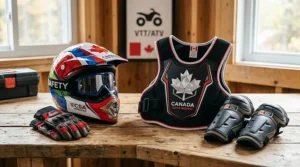
How to Choose the Safest 12V ATV with Speed Control for Canadian Conditions
1. Assess Your Child’s Current Ability Level Honestly
Don’t choose based on where you hope your child will be in six months—select for their actual current skills. A confident 5-year-old who’s been riding balance bikes for years has fundamentally different needs than a cautious 5-year-old taking their first wheeled toy beyond a tricycle. If your child still shows hesitation around moving vehicles, prioritize models with slower maximum speeds (4-5 km/h) and prominent slow-start features. Conversely, if they’re already frustrated by their current ride-on’s limitations, accept that you need sufficient speed ceiling (6-7 km/h) to maintain engagement.
2. Match Features to Your Actual Property Conditions
Walk your property and honestly assess the terrain. Perfectly manicured suburban lawns in newer developments can get by with basic plastic wheels and rear-wheel drive. Properties with established trees (roots create uneven surfaces), gravel driveways, or packed dirt areas need rubber tires and ideally suspension systems. Sloped properties—even seemingly gentle ones—require sufficient motor power (look for 70W+ or 4WD systems). Canadian buyers particularly need to consider spring conditions when lawns are soft from snow melt and fall conditions with leaf accumulation creating slippery surfaces.
3. Calculate Realistic Usage Patterns
Be honest about how often this will actually get used. If you live in an apartment with limited outdoor space and the ATV will come out only for weekend cottage trips (May-October in most of Canada = roughly 24 weekends), budget models make perfect sense even if reviews mention durability concerns. Conversely, families with daily access to appropriate outdoor space who’ll use this 4-5 times per week should invest in premium construction that withstands intensive use. Remember that Canadian climate limits outdoor ride-on use to roughly 5-6 months in most regions—factor this into your cost-per-use calculations.
4. Prioritize Remote Range Based on Your Property
The 2.4GHz remote control isn’t just about distance—it’s about obstacles. In suburban environments with fences, houses, and landscaping, a 50-metre rated range might only provide 30-35 metres of reliable control. Families with larger or more open properties should seek models with enhanced range (60+ metres) to maintain control as children explore farther. Rural Canadian families on acreages may need to accept physical boundaries (like fenced play areas) rather than relying solely on remote range.
5. Consider Battery Life Through a Canadian Climate Lens
Manufacturer-stated battery life assumes optimal conditions (20-25°C temperatures, flat terrain, average rider weight). Canadian reality means morning temperatures often sit at 10-15°C even in summer, which reduces battery efficiency by 10-20%. If a model claims 90 minutes of runtime, expect 70-75 minutes during typical Canadian morning conditions. This particularly matters for families where children’s outdoor time peaks in cooler parts of the day to avoid midday summer heat.
6. Evaluate Long-Term Parts Availability
Batteries inevitably need replacement after 1-2 seasons of regular use. Before purchasing, verify that replacement 12V 7Ah batteries are readily available on Amazon.ca or through Canadian retailers. Models from established brands (Best Choice Products, Costzon) generally have better parts availability than no-name imports. Also check whether replacement parts ship from Canadian warehouses versus crossing borders, which adds time and potential customs complications.
Common Mistakes When Buying Kids’ ATVs in Canada
Mistake 1: Ignoring Weight Limits and Thinking “They’ll Grow Into It”
Most 12V ATVs have weight limits around 27-30 kg (approximately 60-66 lbs). Parents often buy for a 4-year-old hoping to use it until age 7-8, but many children exceed 30 kg by age 6. Oversized riders strain motors, drain batteries faster, and create safety risks as the vehicle becomes unstable. Instead, accept that 12V models serve children ages 3-6, then upgrade to 24V models for older kids.
Mistake 2: Assuming All “Parental Remote Controls” Function Identically
Budget models often feature parental remotes that merely suggest direction rather than enforce it—if the child holds the steering wheel firmly, their input can override yours. Quality remotes (like those on VOLTZ TOYS or Hikiddo models) provide true priority override where parental input always supersedes child controls. Before purchasing, read reviews specifically mentioning remote functionality during conflicts—you want absolute control during emergency situations.
Mistake 3: Underestimating Canadian Winter Storage Requirements
Storing 12V ride-ons in unheated garages or sheds exposes batteries to freezing temperatures that permanently damage cells. Proper winter storage requires removing the battery and keeping it indoors at temperatures above 5°C. Many Canadian families discover this only after finding a dead, unfixable battery when spring arrives. Factor storage space for the battery (plus occasional winter charging to prevent deep discharge) into your purchase decision.
Mistake 4: Choosing Based on Features Kids Will Ignore
Bluetooth speakers, LED lights, and MP3 inputs create impressive product listings but often go unused after initial novelty wears off. Meanwhile, mechanical features like suspension, gradual acceleration, and quality tires meaningfully improve every single use. Unless your child specifically obsesses over music/lights, prioritize mechanical reliability over electronic entertainment.
Mistake 5: Overlooking Terrain Transitions Unique to Canadian Properties
Many Canadian suburban properties feature the challenging combination of lawn, interlock patio stones, and asphalt/concrete driveways—sometimes with height transitions between them. Ride-ons that perform beautifully on flat lawns can struggle with these transitions, either lacking power to climb small elevation changes or losing traction on smooth interlock. Test (or verify reviews testing) models on varied surfaces before assuming lawn performance translates everywhere.
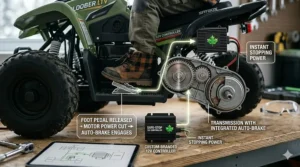
Safety Features That Actually Matter vs. Marketing Hype
Features Worth Paying For:
Gradual Acceleration/Soft Start: This prevents the terrifying lurch forward that occurs when children inexperienced with foot pedals stomp down at full force. Premium models take 2-3 seconds to reach full speed, giving children time to feel the vehicle moving and adjust their pressure.
Priority Override Remote: Ensures parents can instantly take control regardless of what the child is doing. Test this specifically—some remotes lose to determined children gripping the steering wheel.
Adjustable Speed Governors: Physical limiters (not just high/low settings) that mechanically cap maximum speed regardless of how hard the child presses the pedal. These provide long-term value as children grow—start capped at 3 km/h, gradually increase as confidence builds.
Quality Suspension Systems: Specifically rear suspension or four-wheel spring systems, not just “suspension” from tire flex. Real suspension absorbs bumps from tree roots, gravel transitions, and uneven lawns—valuable in established Canadian neighbourhoods with mature trees creating surface irregularities.
Features That Sound Better Than They Perform:
“Extended Battery Life”: Often achieved by limiting motor power, which means weak hill-climbing and poor performance on grass slightly longer than putting-green height. A 60-minute battery with adequate power beats a 120-minute battery that struggles on normal lawns.
Multiple Sound Effects: Horn buttons, engine noises, and music might entertain for the first few uses but rarely maintain interest. They do, however, add failure points and drain battery life.
LED Headlights (on daytime-use models): Decorative LEDs look impressive but serve no functional purpose for vehicles used during Canadian daylight hours. Save money unless your child specifically values the aesthetic.
“All-Terrain” Marketing: This phrase appears on nearly every model regardless of actual capability. True all-terrain performance requires rubber tires, adequate motor power (70W+), and ideally four-wheel drive—not just marketing copy.
Parental Remote Control Systems: What Canadian Buyers Need to Know
The 2.4GHz remote control separates genuinely safe ride-ons from merely marketed-as-safe alternatives. Here’s what actually matters:
Range Reality: Advertised ranges assume direct line-of-sight with no obstacles. Canadian suburban environments include fences, landscaping, and buildings that reduce effective range by 20-40%. A “50-metre range” remote might reliably control only 30-35 metres around typical backyard obstacles. Families in rural areas or large properties should seek models advertising 60+ metre ranges.
Priority vs. Suggestion: Budget remotes offer “steering assistance” that suggests direction but can be overridden by strong child input on the steering wheel. Premium systems provide absolute priority—when you turn the remote left, the vehicle turns left regardless of child input. This distinction matters critically during emergencies when children panic and grip the wheel tightly rather than releasing it.
Battery Monitoring: Advanced remotes (typically on $400+ CAD models) display remaining vehicle battery charge, preventing the scenario where children venture to the farthest corner of your property only to run out of power and require you to push 15 kg of dead weight back. This feature justifies premium pricing for larger properties.
Speed Control from Remote: The ability to cap speed remotely means you can start beginners at crawl speed, then gradually increase limits as confidence builds—all without physical vehicle adjustments. This proves particularly valuable for Canadian families with multiple children at different skill levels sharing one vehicle.
Battery Performance in Canadian Climate Conditions
Canadian buyers face battery challenges that reviews from warmer regions don’t address. Here’s the reality:
Temperature Impact on Capacity: Lead-acid 12V batteries (standard in ride-ons) lose approximately 10-15% capacity for every 10°C drop below 20°C. During typical Canadian spring mornings (10-15°C), expect 70-80% of the advertised runtime. Early fall mornings (5-10°C) might deliver only 60-70%. This isn’t battery defect—it’s physics.
Optimal Operating Temperature: These batteries perform best between 15-30°C. Given that Canadian outdoor conditions rarely exceed 30°C and frequently sit below 15°C during morning/evening use, accept that you’ll rarely see “ideal” performance. Budget accordingly—if you need 75 minutes of runtime, buy a model advertising 90+ minutes.
Cold Storage Damage: Freezing temperatures permanently damage lead-acid batteries. Canadian owners MUST remove batteries before winter storage and keep them indoors. Even unheated garages that don’t freeze (0-5°C) cause gradual capacity loss through winter.
Maintenance Charging: Batteries naturally discharge over time, even when unused. During Canadian winters (October-April in many regions), you should charge stored batteries every 4-6 weeks to prevent deep discharge that reduces lifespan. This maintenance separates ride-ons that last 3+ seasons from those dying after one winter in storage.
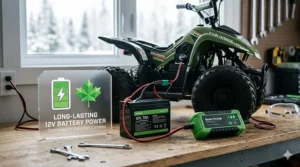
Replacement Planning: Budget $40-70 CAD for replacement 12V 7Ah batteries every 18-24 months of regular use. Canadian climate stress accelerates wear compared to year-round warm climates. Factor this into total cost of ownership calculations.
Age-Appropriate Speed Settings: Canadian Safety Perspective
Canadian safety standards, while not specifically regulating ride-on toys, align with principles established in Health Canada’s guidance on children’s toys. Here’s how speed control applies across age groups:
Ages 3-4 (First-Time Riders): Maximum recommended speed: 3-4 km/h. At this age, children are developing coordination and spatial awareness. Slower speeds allow parents to walk comfortably alongside, maintaining physical control if needed. The safest 12v atv with speed control for this age group features progressive acceleration taking 2-3 seconds to reach full speed, giving young riders time to adjust their grip and balance. Canadian parents should particularly note that children this age often lack the judgment to avoid hazards like driveways meeting streets—the ability to completely override their controls via remote isn’t optional; it’s essential.
Ages 5-6 (Developing Confidence): Appropriate speed range: 4-6 km/h with three-speed settings. Children this age can handle increased speed but still require supervision and occasional override. The ideal setup offers low (3 km/h), medium (4.5 km/h), and high (6 km/h) settings, allowing gradual progression as skills develop. At 6 km/h, most adults can still jog alongside, maintaining reasonable oversight. Canadian properties with slopes require extra caution—even gentle grades common in suburban developments dramatically increase speed during descents.
Ages 7-8 (Approaching Limits): Many 7-8 year-olds exceed the 27-30 kg weight limits of 12V ATVs, making this age the transition point toward 24V models. For smaller children still within limits, maximum speeds around 6-7 km/h remain appropriate with reduced parental override (transition toward voice commands rather than constant remote use). At this age, Canadian parents should assess whether upgrading to 24V models with higher weight capacities makes more sense than pushing 12V limits.
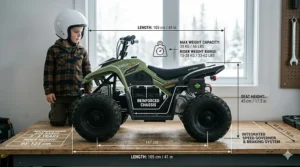
FAQ: Safest 12V ATV with Speed Control for Canadian Families
❓ Can I use 12V ride-on ATVs during Canadian winters?
❓ What's the real battery life in Canadian spring/fall temperatures?
❓ Are replacement batteries readily available in Canada for these models?
❓ Do parental remote controls work through obstacles like fences and buildings?
❓ Can these ride-ons handle the transition from lawn to gravel driveways common in rural Canada?
Conclusion: Making the Smart Choice for Your Canadian Family
The safest 12v atv with speed control represents far more than a motorized toy—it’s your child’s introduction to vehicle operation, responsibility, and spatial judgment. For Canadian families navigating our unique combination of varied terrain, limited outdoor seasons, and temperature extremes, the stakes feel higher than in milder climates where these vehicles operate year-round.
What most distinguishes successful purchases from regretted ones isn’t the amount spent—it’s the honest assessment of your actual needs versus marketed features. The urban Toronto family buying the VOLTZ TOYS 12V UTV Buggy for their standard suburban lot makes a smarter choice than the rural Alberta family buying the same model for their acreage when the Hikiddo 4WD would actually handle their terrain. Similarly, the budget-conscious Quebec family buying two Costzon ATVs (one for each child) demonstrates better judgment than stretching finances for a single premium model that creates sibling conflicts.
The parental remote control feature—the core “safety” element—only delivers value when it provides genuine priority override, adequate range for your property size, and speed limiting that matches your child’s actual capabilities. Marketing claims mean nothing if the remote fails to stop your child when they’re heading toward your neighbour’s prized rose bushes or the street. Take time to verify through reviews that the remote functions reliably in real-world panic moments, not just controlled demonstrations.
For Canadian families specifically, three factors deserve extra weight beyond standard buying advice. First, battery performance in our cooler climate means budgeting for higher-capacity batteries than you’d choose in California or Florida. Second, terrain variety on Canadian properties—lawn, gravel, interlock, pavement—demands either rubber tires or acceptance of limited use areas. Third, winter storage requirements mean you need interior space for the battery and a maintenance charging plan through our 5-6 month off-season.
The 12V ATV category serves children ages 3-6 beautifully, then most kids outgrow it physically or mentally. Buying at the bottom of this age range (age 3) delivers 3-4 seasons of use before upgrading to 24V becomes necessary. Buying at age 6 might provide only 1-2 seasons before weight limits or capability desires force the next purchase. Factor this timing into your budget calculations—a $400 CAD model providing four seasons of use costs $100 per year, while a $200 model used two seasons costs the same annually despite lower initial investment.
Above all, remember that no mechanical safety feature replaces parental supervision. The safest 12v atv with speed control operating within a fenced yard under attentive adult supervision beats any premium model used unsupervised in unfenced areas near streets. These vehicles teach children valuable skills, create joyful memories, and provide genuine outdoor entertainment during our precious Canadian summers—but only when operated within appropriate safety boundaries.
Start with honest assessment of your property, your child’s current abilities (not hoped-for future abilities), and your realistic usage patterns. Match those factors to the models reviewed above, prioritizing mechanical safety features over flashy electronics. And accept that the “perfect” choice doesn’t exist—only the best choice for your specific Canadian family’s circumstances.
Recommended for You
- Best 12V Electric Motorcycle for Kids Canada 2026 Guide
- Best 12V Electric ATVs for Kids 5-8 in Canada 2026
- Best 12V Ride On With Opening Doors Trunk Canada 2026
Disclaimer: This article contains affiliate links. As an Amazon Associate, I earn from qualifying purchases. If you purchase products through these links, we may earn a small commission at no additional cost to you.
✨ Found this helpful? Share it with your friends! 💬🤗
