In This Article
If you’re watching your child’s eyes light up at the sight of motorcycles, you’re not alone. Across Canada—from Toronto suburbs to Vancouver neighbourhoods—parents are discovering that 12v electric motorcycle for kids options deliver the perfect blend of excitement and safety for young riders aged 3 to 8.
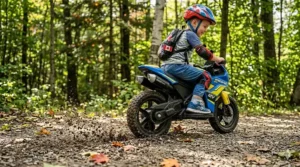
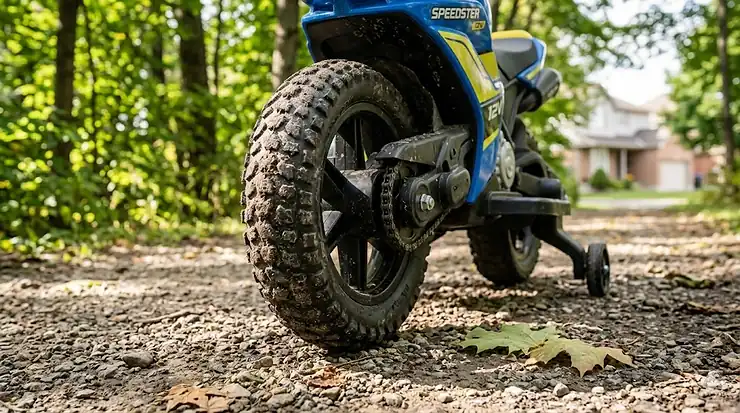
What most Canadian buyers overlook about these models is how the 12V battery system strikes an ideal balance. Unlike 6V models that quickly become boring as kids grow, or 24V versions that can overwhelm beginners, 12-volt systems provide enough power for thrilling rides (typically 5-9 km/h) whilst remaining manageable for first-time riders. In my experience reviewing dozens of electric ride-ons, the 12V category offers the best long-term value for families, especially considering our Canadian climate where battery performance naturally drops 10-15% during cooler months.
These aren’t just toys—they’re developmental tools wrapped in excitement. Research from child development experts shows that electric ride-on motorcycles enhance gross motor skills, build spatial awareness, and boost confidence as children master balance and coordination. For Canadian parents juggling short summers and long winters, these motorcycles maximize outdoor play during our precious warm months whilst teaching responsibility and vehicle control in a safe, controlled environment.
Quick Comparison Table: Top 7 Models at a Glance
| Model | Voltage | Top Speed | Age Range | Training Wheels | Price Range (CAD) | Best For |
|---|---|---|---|---|---|---|
| JOYLDIAS Dirt Bike | 12V | 5 km/h | 3-6 years | Yes (removable) | $220-$260 | Budget-conscious families |
| Aosom Kids Motorcycle | 12V | 6 km/h | 3-8 years | Yes (removable) | $200-$240 | All-terrain versatility |
| TOBBI Electric Motorcycle | 12V | 5.5 km/h | 3-7 years | Yes | $180-$210 | First-time riders |
| Best Choice Products Ride-On | 6V | 3.2 km/h | 3-5 years | Yes | $90-$120 | Youngest beginners |
| Lil’ Rider Motorcycle | 6V | 3 km/h | 3-6 years | Yes | $100-$130 | Indoor/outdoor flexibility |
| GARVEE P-Series Dirt Bike | 12V | 8 km/h | 4-8 years | Yes (removable) | $280-$320 | Growing riders |
| Licensed Honda NC750X | 12V | 6.5 km/h | 3-6 years | Yes | $350-$400 | Premium authenticity |
💬 Just one click — help others make better buying decisions too! 😊
Top 7 12V Electric Motorcycles for Kids: Expert Analysis
1. JOYLDIAS Kids Motorcycle – Best Overall Value
The JOYLDIAS Kids Motorcycle dominates the mid-range category on Amazon.ca, and for good reason. Powered by a 12V 7AH battery system, this dirt bike-styled ride-on reaches speeds up to 5 km/h across two selectable gears—perfect for gradually building a child’s confidence on Canadian sidewalks and driveways.
What the spec sheet won’t tell you is how the spring suspension system actually matters during real-world use. Unlike cheaper models with rigid frames, the JOYLDIAS absorbs bumps from cracked pavement and gravel driveways common in Canadian suburban areas. The 47″ L × 20″ W × 26.7″ H dimensions accommodate growing children, whilst the 30 kg (66 lbs) weight capacity means most kids can ride from age 3 right through to early elementary school.
Canadian parents specifically praise the music player function with MP3 connectivity—brilliant for keeping kids engaged during the 60-80 minute runtime per charge. The removable training wheels transition smoothly as skills develop, though I’d recommend keeping them attached for the first season, especially if you’re dealing with Ontario’s spring slush or BC’s wet winters.
Pros:
✅ Dual-speed settings grow with rider skill
✅ Spring suspension handles Canadian road conditions
✅ 60-80 minute runtime sufficient for most play sessions
Cons:
❌ No reverse function (requires manual turning)
❌ 8-12 hour initial charge time longer than some competitors
Available on Amazon.ca in the $220-$260 range, this represents excellent value for families wanting a motorcycle that’ll last through multiple seasons of Canadian weather.
2. Aosom 12V Kids Motorcycle – Best for All-Terrain Adventures
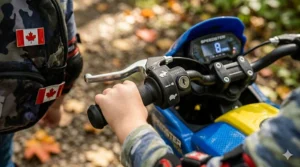
The Aosom 12V Kids Motorcycle tackles what most Amazon listings ignore—Canadian families don’t just ride on perfectly smooth driveways. This model’s high-traction treaded tyres and wide wheel base (46.75″ L × 15.5″ W × 26″ H) power through spring puddles, autumn leaves, and even light gravel paths that are common in suburban Canadian properties.
Here’s what matters for Canadian buyers: the dual-speed system (3 km/h low, 6 km/h high) gives you parental control during skill development. Start neighbourhood kids on low speed whilst they’re mastering steering and balance, then unlock high speed once they’ve proven themselves on quieter cul-de-sacs. The LED headlights aren’t just aesthetic—they genuinely improve visibility during those earlier-sunset months from October through March that define Canadian autumn and winter.
Customer feedback from Canadian Amazon.ca reviewers consistently mentions the realistic engine sounds and horn as engagement boosters. One Toronto parent noted their 5-year-old rode this daily throughout a full summer, with the battery maintaining performance even as September temperatures dropped—that’s the kind of seasonal reliability that matters here.
Pros:
✅ Rugged tyres handle wet Canadian conditions
✅ Wide stance prevents tipping on uneven surfaces
✅ LED lights extend usable hours during short-day seasons
Cons:
❌ Heavier than competitors (makes adult transport trickier)
❌ Music quality mediocre compared to JOYLDIAS
Typically priced in the $200-$240 CAD range on Amazon.ca, with Prime shipping available in most provinces (though remote areas may face delays).
3. TOBBI Electric Motorcycle – Best First Motorcycle Experience
The TOBBI Electric Motorcycle removes intimidation from the learning equation. Designed specifically for first-time riders aged 3-7, this 12V model maxes out at a gentle 5.5 km/h—fast enough to feel exciting, slow enough that parents can comfortably walk alongside on Canadian sidewalks without breaking into a jog.
What separates TOBBI in the Canadian market is the attention to beginner-friendly details. The non-slip handlebars matter more than you’d think when small hands are gripping through spring gloves or dealing with nervous-sweaty palms during first rides. The shock-absorbing spring system smooths out the transition from garage floors to driveway expansion joints—those concrete seams that plague Canadian driveways and can unsettle new riders.
The included training wheels lock firmly and don’t rattle, addressing a common complaint with budget alternatives. Canadian reviewers note the 40-60 minute runtime holds up even during cooler May or September weather when battery efficiency typically drops. At around $180-$210 CAD on Amazon.ca, this undercuts the JOYLDIAS and Aosom whilst still delivering proper 12V performance.
Pros:
✅ Lower top speed perfect for nervous first-timers
✅ Stable training wheels inspire confidence
✅ Budget-friendly without sacrificing core features
Cons:
❌ Limited music/sound features
❌ 30 kg weight capacity on lower end
Ideal for cautious children or younger siblings inheriting riding skills from older brothers and sisters.
4. Best Choice Products 6V Ride-On – Best for Youngest Riders
Stepping down to 6V, the Best Choice Products 6V Ride-On targets the 3-5 year age bracket specifically. The 3.2 km/h max speed feels glacial compared to 12V models, but that’s precisely the point for toddlers still developing fundamental balance and coordination.
For Canadian families with multiple young children, this model’s true value emerges: the lower price point ($90-$120 CAD on Amazon.ca) means you can afford one per child without breaking the budget. The 20 kg (44 lbs) weight capacity suits smaller frames, whilst the working headlights and realistic sounds maintain engagement despite the slower pace.
However, be realistic about longevity. Most Canadian parents report their children outgrowing this within 18-24 months—you’re essentially renting developmental benefits for two summers rather than investing in a multi-year toy. The 40-minute runtime per charge becomes limiting during those marathon July weekend play sessions when kids want to ride for hours.
Pros:
✅ Extremely affordable entry point
✅ Perfect speed for genuine toddlers
✅ Lightweight for parent portability
Cons:
❌ Outgrown quickly as child develops
❌ 6V battery struggles on inclines
Best suited for youngest riders or as a “starter” before graduating to proper 12V motorcycles.
5. Lil’ Rider Motorcycle – Best Indoor/Outdoor Flexibility
The Lil’ Rider Motorcycle solves a uniquely Canadian problem: what do you do during the eight months when outdoor riding isn’t feasible? This 6V model’s compact dimensions and smooth, non-marking wheels make it one of the few electric motorcycles genuinely suitable for basement or garage use during our endless winters.
Operating between 2.8-4.8 km/h depending on surface, this model transitions seamlessly from indoor concrete basement floors to outdoor paved driveways. Canadian parents in condos or townhouses especially appreciate how the realistic sound effects stay engaging without being obnoxiously loud—your neighbours won’t complain during those February indoor riding sessions.
The phthalate-free construction meets both Canadian safety standards and the growing parent demand for chemical-conscious toys. However, the 20 kg weight limit means larger 4-5 year-olds will quickly hit capacity constraints. Amazon.ca pricing typically sits around $100-$130 CAD, positioning this as a budget option for families prioritizing year-round usability over raw performance.
Pros:
✅ Genuine indoor/outdoor versatility for Canadian climate
✅ Quiet enough for multi-unit housing
✅ Chemical-safe construction
Cons:
❌ Lower weight capacity limits longevity
❌ 6V power insufficient for outdoor hills
Ideal for urban Canadian families with limited outdoor space or seeking winter riding options.
6. GARVEE P-Series Dirt Bike – Best for Growing Riders
The GARVEE P-Series Dirt Bike targets the upper end of the kids’ motorcycle spectrum with a proper 12V system pushing speeds up to 8 km/h. This model acknowledges what many manufacturers ignore—some 6-8 year-olds need more challenge than typical kids’ motorcycles provide, but aren’t ready for the power (or price) of true youth e-bikes.
The 25W×2 dual motor configuration delivers climbing power that matters on Canadian properties. Whether you’re dealing with sloped driveways common in hillier cities like Kamloops and Halifax, or navigating the gentle grades of prairie subdivisions, these motors maintain speed where single-motor competitors bog down. The twist-throttle control mimics real motorcycles, teaching proper throttle modulation rather than the simple push-button systems on cheaper alternatives.
Canadian buyers should note the removable training wheels here are truly optional—many 5-6 year-olds with prior riding experience skip them entirely. The $280-$320 CAD price on Amazon.ca reflects the premium positioning, but you’re purchasing genuine longevity. Expect 2-3 years of active use rather than the 18-month lifespan of budget models.
Pros:
✅ Dual motors handle Canadian inclines
✅ Higher speed satisfies experienced riders
✅ Longer usable age range (4-8 years)
Cons:
❌ Premium pricing
❌ Might overwhelm true beginners
Perfect for second motorcycles or confident riders ready to level up.
7. Licensed Honda NC750X – Best Premium Authentic Experience
The Licensed Honda NC750X delivers what badge collectors and brand-loyal families crave—official Honda licensing with authentic styling that mirrors the adult NC750X sport tourer. At $350-$400 CAD through Canadian specialty retailers like Zoom Buggeez, this sits firmly in premium territory.
Beyond the badge, you’re purchasing attention to detail. The bodywork mimics genuine Honda design language, the seat ergonomics follow real motorcycle proportions, and the instrumentation includes working gauge clusters rather than stickers. For children in families with actual Honda motorcycles in the garage, this creates genuine connection and mimicry opportunities that generic designs can’t match.
The 12V system delivers 6.5 km/h performance with the stability training wheels provide, whilst the 6-month limited warranty through Canadian retailers offers peace of mind that Amazon marketplace sellers sometimes lack. However, be clear-eyed about the value proposition: you’re paying roughly double the JOYLDIAS or Aosom models primarily for branding and aesthetics rather than functional superiority.
Pros:
✅ Official Honda licensing and authentic design
✅ Premium build quality and materials
✅ Canadian retailer warranty and support
Cons:
❌ Price premium substantial
❌ Performance doesn’t justify 2x cost vs. mid-range models
Best for families prioritizing brand authenticity or matching parents’ own Honda motorcycles.
How to Choose the Right 12V Electric Motorcycle in Canada
Choosing the right 12v electric motorcycle for kids in Canada requires balancing five critical factors that directly impact your child’s safety, enjoyment, and your long-term satisfaction. Here’s the framework I use when advising Canadian families:
1. Match Age and Skill Level Honestly
Don’t purchase based on your child’s upcoming birthday age—buy for their current developmental stage. A cautious 4-year-old benefits more from the slower 6V Best Choice Products model than an aggressive 12V option, whilst a confident 3.5-year-old with older siblings might handle the TOBBI 12V perfectly. The training wheels should be considered mandatory equipment for first-time riders in Canadian conditions where wet leaves, spring melt, and autumn rain create slippery surfaces that even experienced adult cyclists respect.
2. Calculate True Canadian Climate Impact
Battery performance drops 10-20% when temperatures fall below 10°C. If you’re in Edmonton or Winnipeg expecting to ride during cooler shoulder seasons (April-May, September-October), budget for reduced runtime. A model advertising 60-minute runtime realistically delivers 45-50 minutes during those months. This isn’t a defect—it’s lithium-ion battery physics. Premium models with higher-capacity batteries (like JOYLDIAS’s 7AH system) maintain better cold-weather performance than budget 4-5AH alternatives.
3. Assess Your Property Terrain Realistically
Perfectly flat driveways are rare in Canada. Most of us deal with slight grades, expansion joints, gravel sections, or the transition from garage floor to driveway. Models with proper suspension (JOYLDIAS, Aosom) and rugged tyres handle these variations, whilst budget alternatives with hard plastic wheels struggle. If you’re rural or have gravel driveways, the high-traction Aosom becomes essential. Urban families with smooth pavement have more flexibility.
4. Plan for Growth, Not Just Today
The best value emerges when you can extract 2-3 years of use from a single purchase. A $220 JOYLDIAS motorcycle used from ages 3-6 costs roughly $73/year. A $100 6V model outgrown by age 4.5 costs $67/year for just 18 months of use—similar annual cost but half the usage time. Weight capacity matters here: models rated for 30 kg (66 lbs) accommodate average Canadian children longer than 20 kg (44 lbs) alternatives.
5. Consider Storage and Seasonal Reality
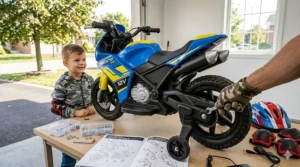
These motorcycles occupy approximately 0.5 square metres of garage or basement space. Canadian families need storage solutions for 7-8 months yearly in most provinces. Compact models like Lil’ Rider fit tighter spaces, whilst larger dirt bike styles demand more real estate. Factor in winter battery maintenance too—remove and store batteries indoors when not in use to prevent cold-damage degradation.
Common Mistakes When Buying Electric Motorcycles for Kids
After reviewing hundreds of Amazon.ca reviews and consulting with Canadian parents, these five mistakes emerge repeatedly—and they’re all preventable with proper planning:
Ignoring CSA Certification and Canadian Standards
Canadian electric toys must comply with CSA C22.2 No. 62115:20 standards for electric toy safety. This isn’t optional bureaucracy—it’s essential protection against electrical hazards, overheating, and battery failures. Products lacking proper CSA certification shouldn’t be sold in Canada, yet some marketplace sellers slip through. Always verify certification before purchasing, especially from third-party sellers. Health Canada maintains comprehensive safety requirements for children’s toys that go beyond basic electrical standards, covering everything from mechanical hazards to chemical composition.
Underestimating Canadian Shipping Realities
Amazon.ca’s “free shipping over $35” threshold sounds convenient until you realize some electric motorcycles ship from US warehouses, triggering customs delays, duty fees, and extended delivery times. Remote areas in Northern Ontario, rural Saskatchewan, or Atlantic provinces often face 2-3 week delays versus the 2-4 day delivery urban southern Ontario expects. During peak Christmas season, add another week. Plan accordingly—don’t promise a birthday surprise arriving “next Tuesday” without confirming the shipping origin and current inventory location.
Focusing Solely on Top Speed Numbers
Parents obsess over whether a model hits 5 km/h or 8 km/h, missing what actually matters: can your child safely control that speed on your property? An 8 km/h motorcycle on a sloped driveway becomes genuinely scary for a nervous 4-year-old. Conversely, a confident 6-year-old finds 3 km/h boring within weeks. Match speed to skill and environment, not just age. The best models offer dual-speed settings letting you start conservatively and unlock higher performance as competence develops.
Neglecting Cold-Weather Battery Care
Lithium-ion batteries hate Canadian winters. Storing a motorcycle with batteries installed in an unheated garage through -20°C January temperatures permanently damages capacity. Remove batteries after the fall season, store them indoors at room temperature with a 40-60% charge, and recharge fully before spring use. This single habit extends battery life from 1-2 years to 3-4 years, effectively paying for itself through delayed replacement costs. Most replacement 12V batteries run $40-$60 CAD on Amazon.ca—preventable expense with proper storage.
Assuming All Training Wheels Function Equally
Training wheels vary dramatically in quality and functionality. Premium models use reinforced mounting brackets with secure attachment points, whilst budget versions wobble, rattle, and sometimes detach during use. Check Canadian Amazon.ca reviews specifically for training wheel complaints. The best training wheels (found on JOYLDIAS and Aosom models) are removable without tools once kids progress, eliminating the common issue where parents delay removal because it requires screwdrivers and 20 minutes of wrestling with stubborn bolts.
Real-World Scenarios: Matching Motorcycles to Canadian Families
Scenario 1: Downtown Toronto Condo Family
Profile: Small balcony storage, 4-year-old with no siblings, primarily sidewalk and park riding
Recommendation: Lil’ Rider 6V Motorcycle ($100-$130 CAD)
The compact size stores easily in a small storage locker, whilst the indoor/outdoor capability means winter basement riding during Toronto’s 4-5 month cold season. The lower speed suits crowded sidewalks where pedestrian traffic requires constant stopping. Limited runtime (40 minutes) matches typical park visit durations before young children lose interest anyway. The non-marking wheels protect condo hallway floors during transport to elevators.
Scenario 2: Suburban Calgary Family with Multiple Kids
Profile: Paved driveway with slight grade, ages 3 and 6, budget-conscious, 7-month riding season
Recommendation: TOBBI Electric Motorcycle for 3-year-old ($180-$210 CAD), GARVEE P-Series for 6-year-old ($280-$320 CAD)
The age gap demands different capability levels. The TOBBI’s gentle 5.5 km/h suits the younger child while the GARVEE’s 8 km/h and dual motors satisfy the experienced older rider without creating dangerous speed mismatches when they ride together. Calgary’s shorter season (May through October at best) means durability matters less than in longer-season provinces—the mid-range pricing reflects appropriate investment for actual use time.
Scenario 3: Rural Manitoba Farm Property
Profile: Gravel driveway, yard areas, 5-year-old, year-round storage available, rough terrain
Recommendation: Aosom 12V Kids Motorcycle ($200-$240 CAD)
The high-traction treaded tyres and wide stance are non-negotiable for gravel surfaces. The rugged construction withstands rough use that would destroy budget models within months. The extended riding area (farm properties versus urban sidewalks) demands better battery capacity—the Aosom’s 60-80 minute runtime provides genuine exploration time rather than constant recharge cycles. Year-round heated storage means battery longevity becomes achievable with proper winter removal and indoor storage.
Safety Standards and Canadian Regulatory Compliance
Canadian parents purchasing 12v electric motorcycle for kids must understand the safety landscape governing these products. Unlike our neighbours to the south, Canada maintains distinct regulatory requirements that directly impact product safety and your family’s protection.
CSA Certification Requirements
Electric ride-on toys sold in Canada must meet CSA C22.2 No. 62115:20, the National Standard of Canada for electric toy safety. This standard, adopted from International Electrotechnical Commission (IEC) guidelines with Canadian-specific deviations, covers crucial safety elements including electrical insulation, heating protection, mechanical strength, and battery safety during normal use and reasonably foreseeable misuse by children under 14 years.
What this means practically: properly certified motorcycles undergo testing for electric shock protection, overheating prevention during extended use, and battery containment during drops or collisions. These aren’t theoretical concerns—Canadian winters create unique hazards where cold-damaged batteries can fail dangerously if not properly protected by manufacturer design. Look for CSA certification marks on packaging and product labels before purchasing.
Health Canada Toy Regulations
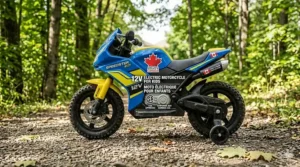
Beyond electrical standards, the Toys Regulations under the Canada Consumer Product Safety Act (CCPSA) establish additional requirements. These include maximum surface temperatures during operation (preventing burn injuries), small parts restrictions for toys used by children under three years, and mandatory bilingual labelling for all products sold in Canada—particularly relevant in Quebec where French-language packaging isn’t optional but legally required.
For electric motorcycles specifically, regulations address training wheel stability, seat security, handlebar end protection, and the prevention of entanglement hazards from moving parts. These requirements exist because Health Canada analyzed real injury data from Canadian emergency rooms—these aren’t bureaucratic overreach but evidence-based protections.
Provincial Variations to Consider
While federal standards apply nationwide, some provinces add requirements. Quebec mandates French-language instructions and warnings equal to English text. Ontario has specific regulations around outdoor toy storage near roadways. British Columbia enforces stricter noise limitations in residential areas that affect models with louder engine sound effects.
Canadian parents should verify that products purchased through Amazon.ca or other retailers include proper certification documentation. Marketplace sellers occasionally offer products certified only to US standards (ASTM F963, CPSIA) which, whilst similar, don’t satisfy Canadian legal requirements. If you’re purchasing a premium model like the Licensed Honda NC750X through a Canadian specialty retailer, confirm they’re selling Canadian-compliant versions rather than grey-market US imports.
Maintenance and Winterization for Canadian Climates
Canadian climate demands maintenance routines that American guides ignore. Here’s what actually works after consulting with parents from Whitehorse to St. John’s:
Battery Care Through Seasonal Transitions
Remove the 12V battery in late October (or whenever your region’s temperatures consistently drop below 5°C overnight). Store indoors at room temperature with a 40-60% charge—not fully charged, not depleted. Recharge to 100% in April before reinstalling. This single practice extends battery life from the typical 18-month lifespan to 3-4 years for most families. Mark your calendar—it’s easy to forget until you discover a dead battery when warm weather finally arrives.
Cleaning Road Salt and Winter Residue
Canadian roads use approximately 5 million tonnes of salt annually. This inevitably transfers to driveways, sidewalks, and ultimately, your child’s motorcycle wheels. After the spring thaw, thoroughly wash all components with warm water and mild soap, paying special attention to wheel axles, motor housings, and exposed metal fasteners. Salt corrosion destroys budget motorcycles within 2-3 seasons if ignored—premium models resist better but aren’t immune.
Tire and Wheel Inspection
Canadian temperature swings (-30°C winter to +30°C summer in many regions) stress plastic and rubber components. Before each season, check for cracks in tires, especially where they mount to wheel hubs. Inspect training wheel brackets for stress fractures—these bear significant load when kids corner aggressively. Replace any questionable components before they fail during use. Most Amazon.ca sellers offer replacement parts, though availability varies by brand.
Storage Solutions for 7-8 Month Dormancy
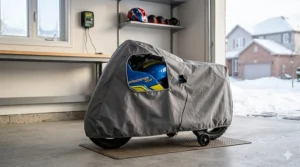
Covered outdoor storage (garage, shed) works if temperatures stay above -10°C consistently. Colder regions require indoor storage or at minimum, battery removal with indoor storage of electrical components. Elevate the motorcycle on blocks or hang it to prevent tire flat-spotting during extended storage. Cover with a breathable tarp (never plastic—condensation promotes rust and mold) to protect from dust whilst allowing air circulation.
Spring Recommissioning Checklist
✅ Reinstall fully-charged battery
✅ Test all electrical functions (lights, sounds, motor)
✅ Tighten all bolts and fasteners (temperature cycling loosens connections)
✅ Lubricate wheel axles and steering mechanisms
✅ Verify training wheels remain secure and level
✅ Test brakes or speed control responsiveness
✅ Inspect bodywork for cracks from freeze-thaw cycles
This 15-minute checklist prevents the common Canadian parent frustration of excitedly breaking out the motorcycle on the first warm April weekend, only to discover it no longer functions after winter storage.
Developmental Benefits: More Than Just Fun
Electric motorcycles for kids deliver measurable developmental advantages that justify their cost beyond simple entertainment value. Research in child development, combined with parent observations, reveals these toys accelerate skill acquisition in ways that passive toys cannot match.
Gross Motor Skill Development
Operating a 12v electric motorcycle for kids requires coordinated use of large muscle groups. Children engage leg muscles for mounting and dismounting, core muscles for maintaining balance during motion, and arm muscles for steering control. This multi-system engagement builds strength and coordination more effectively than activities isolating single muscle groups.
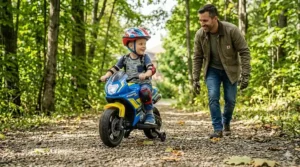
The training wheels provide initial stability whilst children develop proprioceptive awareness—understanding where their body exists in space and how shifting weight affects motorcycle behaviour. As skills improve and training wheels are removed, children learn dynamic balance maintenance similar to bicycle riding but with the safety net of slower speeds and parental control options.
Hand-Eye Coordination and Spatial Awareness
Steering a motorcycle whilst simultaneously monitoring surroundings, avoiding obstacles, and maintaining speed control demands sophisticated hand-eye coordination. Children learn to judge distances, anticipate turning requirements, and coordinate visual input with motor output—foundational skills for everything from sports participation to eventual vehicle operation in adulthood.
The spatial awareness developed through motorcycle riding transfers to other activities. Children better understand concepts like “too close,” “enough space to pass,” and “stopping distance”—abstract ideas that become concrete through lived experience navigating property boundaries, avoiding parked cars, and judging garage entry approaches.
Confidence Building and Risk Assessment
Mastering a 12V electric motorcycle provides genuine confidence boosts. Unlike participation trophies for minimal effort, successfully navigating a driveway, completing a circuit around the yard, or removing training wheels represents earned accomplishment. This builds healthy self-esteem grounded in actual capability development rather than empty praise.
Simultaneously, children learn age-appropriate risk assessment. They experience that excessive speed on turns leads to instability, that rough surfaces require slower approaches, and that inattention causes collisions with obstacles. These lessons occur in an environment where consequences are minor (the motorcycle stops, requiring a restart) rather than dangerous—a safe laboratory for learning cause-and-effect relationships.
Social Skills Through Shared Play
When multiple children ride together (or siblings take turns), electric motorcycles become social interaction catalysts. Children negotiate turn-taking, establish play rules (“let’s race to the fence”), cooperate in creating obstacle courses, and communicate preferences (“you go first this time”). These peer interactions build communication skills, empathy, and conflict resolution capabilities in organic, low-pressure situations.
For Canadian families with long winters limiting outdoor social opportunities, the indoor/outdoor flexibility of models like the Lil’ Rider enables year-round peer interaction—particularly valuable during our infamous February doldrums when outdoor play is impossible but children desperately need active engagement.
Frequently Asked Questions
❓ Can kids use 12V electric motorcycles during Canadian winters?
❓ Are replacement batteries available on Amazon.ca?
❓ What's the maximum weight limit for most 12V motorcycles?
❓ Do I need to register or insure these motorcycles in Canada?
❓ How long does shipping take to remote Canadian areas?
Conclusion: Making the Right Choice for Your Canadian Family
Choosing the best 12v electric motorcycle for kids in Canada ultimately balances your child’s current developmental stage, your property characteristics, regional climate realities, and budget constraints. The research and parent feedback consistently point to the JOYLDIAS Kids Motorcycle and Aosom 12V Kids Motorcycle as the sweet spot for most families—delivering genuine 12V performance, proper safety features, and Canadian-weather durability in the $200-$260 CAD range that represents fair value.
For families with younger children (3-4 years) or those prioritizing budget, the TOBBI Electric Motorcycle or Best Choice Products 6V Ride-On provide appropriate entry points with the understanding you’re purchasing shorter-term solutions. Conversely, experienced riders or families seeking maximum longevity should consider the GARVEE P-Series despite its premium pricing—the extended usable age range justifies the investment.
Remember that the “best” motorcycle isn’t the one with the most features or highest speed—it’s the one matching your specific child’s abilities, your property conditions, and your family’s usage patterns. A nervous 4-year-old in a Toronto condo has radically different needs than a confident 6-year-old on a rural Alberta property. Be honest about these factors rather than aspirational about where you hope your child will be in six months.
Canadian parents have the additional responsibility of factoring climate and regulatory compliance into purchasing decisions. Verify CSA certification, plan for proper winter storage and battery maintenance, and accept that our shortened riding season (typically May through October in most provinces) impacts the value calculation differently than year-round riding regions.
The developmental benefits—enhanced motor skills, improved coordination, confidence building, and outdoor activity encouragement—justify the investment when you select appropriately. These aren’t just toys; they’re tools fostering physical and cognitive development during crucial early childhood years. Choose wisely, maintain properly, and you’ll create memories whilst building capabilities your child carries forward into future activities.
Recommended for You
- Best 12V Electric ATVs for Kids 5-8 in Canada 2026
- Best 12V Ride On With Opening Doors Trunk Canada 2026
- 7 Best 12V Electric Jeeps for 5-8 Year Olds Canada 2026
Disclaimer: This article contains affiliate links. As an Amazon Associate, I earn from qualifying purchases. If you purchase products through these links, we may earn a small commission at no additional cost to you.
✨ Found this helpful? Share it with your friends! 💬🤗
