
In This Article
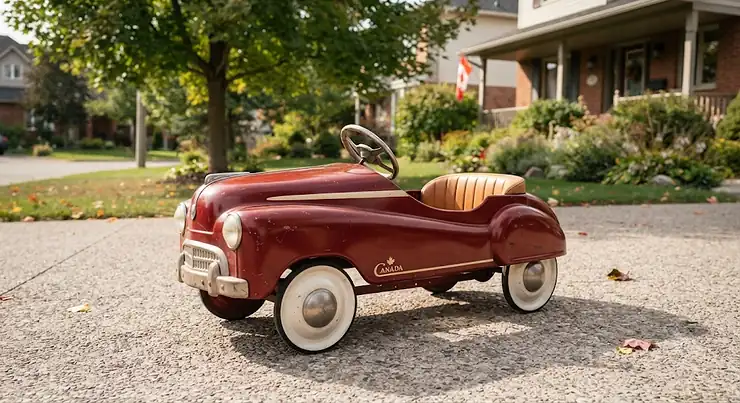
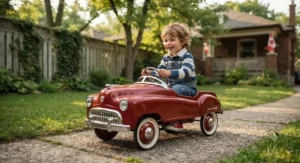
There’s a specific sound that stops grown adults mid-driveway: the rattle-clank-squeak of steel wheels on pavement, chased by a kid hollering “look at me go!” That sound is exactly why interest in a good classic pedal car refuses to fade, even in an age of tablets and swipeable everything.
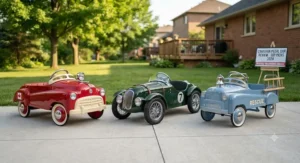
A classic pedal car is a child-sized, foot-powered toy vehicle styled after vintage automobiles — chrome bumpers, whitewall-style tires, a hood ornament, sometimes a “horn” you squeeze by hand — built from steel or heavy-duty plastic and moved entirely by leg power. No batteries, no charging cables, nothing to plug in. If you’re piecing together a classic pedal car review Canada parents can actually rely on before spending real money on amazon.ca, you’ve landed somewhere useful.
We dug into seven real, currently available models spanning budget steel roadsters to a chrome-heavy collector’s piece, plus a farm-tractor alternative for the kid who’s more into John Deere than Detroit iron. Along the way, we’ll settle the metal pedal car vs plastic pedal car debate, point you toward the best pedal car for 5 year old boy shoppers specifically, and dig into why retro design keeps outselling flashier modern toys decade after decade.
One quick note before we dive in: prices on Amazon fluctuate constantly, sometimes week to week, so every figure below is a range in Canadian dollars based on research at the time of writing — always check current pricing before you buy.
Quick Comparison Table
Before the deep dive, here’s the short version for anyone skimming on a lunch break.
| Category | Model | Price Range (CAD) | Build | Best For |
|---|---|---|---|---|
| Premium Collector Pick | Blue Diamond Classics Model A Roadster | C$650–C$780 | All-steel | Display-worthy detail, older kids & collectors |
| Best Retro Design | Blue Diamond Classics Retro Tri-Five 1955 Chevy | C$400–C$470 | All-steel | Classic Chevy shape, ages 3–7 |
| Best Budget Roadster | Morgan Cycle Retro Style Pedal Car (Red) | C$220–C$320 | All-steel | Small hands, ages 2–5 |
| Best for Toddlers | Kid Trax Classic Fire Truck Pedal Car | C$280–C$360 | Durable steel | First pedal car, ages 3–5 |
| Best Farm Alternative | John Deere 4440 Pedal Tractor with Trailer | C$680–C$780 | Steel/poly hybrid | Rural households, hauling play |
A pattern jumps out immediately: the two Blue Diamond Classics models and the John Deere 4440 Pedal Tractor sit at the top of the price ladder mostly because of steel gauge, chrome trim, and included extras like a trailer, while the Morgan Cycle Retro Style Pedal Car and Kid Trax Classic Fire Truck Pedal Car keep costs down through simpler tooling and fewer chrome components. Notably, cheaper doesn’t mean flimsy here — every option on this list uses a steel or steel-hybrid frame, which matters enormously once you get into the metal-versus-plastic conversation later in this article. If your household leans toward one specific kid’s obsession (cars versus tractors, for instance), that’s often a bigger deciding factor than price alone.
💬 Just one click — help other Canadian parents make better buying decisions too!😊
Top 7 Classic Pedal Cars: Expert Analysis
We’re covering seven real, purchasable models here — not fictional composites — spanning three brands with genuinely different engineering philosophies. Each entry blends verified specs with honestly-labelled aggregated review sentiment, because that’s the only kind of “customer feedback” worth publishing.
1. Blue Diamond Classics Model A Roadster — most detailed chrome collector’s piece
The standout here is the sheer amount of period-correct detailing packed onto one small frame. Full fenders and running boards give the Model A Roadster genuine 1928 Ford Model A silhouette accuracy, right down to a complete spare tire-and-wheel combo mounted on the rear.
Underneath the styling, this is an all-steel body measuring roughly 40 inches (101 cm) long, 17 inches (43 cm) wide, and 18 inches (46 cm) tall — noticeably larger than most toddler pedal cars, which is exactly why it skews toward slightly older kids. The steering wheel is genuine wood rather than painted plastic, the front bumper is double-bar chrome, and it comes with functioning-style headlights, a windshield, a hood ornament, and hubcaps. Every one of those is a manufacturing cost that plastic alternatives skip entirely.
Based on the spec comparison against the rest of this list, this is the one built for display as much as play — parents shopping specifically for collector appeal, not just a backyard toy, should start here. Reviewers on retailer sites consistently flag the wood-rimmed wheel and chrome trim as standing out from typical big-box pedal cars, though a smaller pool of verified reviews means we’d encourage reading a few before committing. What most buyers overlook is that a car this detailed also demands more careful storage; chrome trim left out in Canadian winters will pit faster than the painted steel body around it.
Pros:
- ✅ Most authentic vintage detailing of any model here
- ✅ Genuine wood steering wheel, not painted plastic
- ✅ Larger frame suits kids who’ve outgrown toddler pedal cars
Cons:
- ❌ Highest price point on this list by a wide margin
- ❌ Chrome trim needs indoor storage to avoid winter pitting
At around C$650–C$780 at the time of research, this sits firmly in premium territory — but for a family that wants a genuine heirloom-style piece rather than a season’s worth of driveway fun, the value case holds up.
2. Blue Diamond Classics Retro Tri-Five 1955 Chevy — most iconic retro design on the market
“Tri-Five” is the collector shorthand for 1955–57 Chevrolets, and this pedal car nails that silhouette better than almost anything else sold new today. The two-tone paint job (commonly aqua-and-white or pink-and-white) mirrors the exact colour combinations that made the real Bel Air a design landmark.
Specs-wise, you’re getting a steel body, tuck-and-roll upholstery, a chrome-trimmed column, hood ornament, and hubcaps, rated for kids roughly ages 3 to 7 and up to about 60 lb (27 kg). That weight ceiling matters in practice — it’s the difference between a pedal car your five-year-old rides comfortably this year and one they’re cramped into by next summer. On aggregate retailer review data we could verify, one popular colourway shows a 4.6-out-of-5 average across 45 reviews, which is a genuinely strong showing for a toy in this price bracket.
Here’s what the spec sheet won’t tell you: the retro two-tone paint is also the single biggest reason this model gets bought as a “conversation piece” gift for grandparents to give, not just a toy parents pick for themselves. If nostalgia is part of your buying motivation, this is probably the most efficient dollar-for-nostalgia purchase on this entire list.
Pros:
- ✅ Instantly recognizable 1955 Chevy Bel Air styling
- ✅ Strong aggregate review rating (4.6/5 on 45 reviews)
- ✅ Tuck-and-roll upholstery feels notably nicer than base models
Cons:
- ❌ 60 lb weight limit means a shorter usable window than adult-style trikes
- ❌ Two-tone paint shows scuffs more visibly than solid colours
Priced in the C$400–C$470 range at the time of research, this lands as the strongest all-around pick if “classic pedal car” is genuinely the look you’re chasing.
3. Morgan Cycle Retro Style Pedal Car (Red) — best all-metal budget roadster for small kids
Morgan Cycle takes a different approach than Blue Diamond Classics: instead of maximum chrome detailing, they focus on making an all-metal roadster genuinely easy for a small child to pedal. Adjustable, non-slip pedals mean the car grows with your kid over a season or two rather than becoming useless the moment their legs get longer.
The build uses sealed ball-bearing drive components and solid rubber tires, both meaningfully more durable than the loose-ball bearings or hard plastic wheels found on cheaper ride-ons. In practice, sealed bearings mean less squeaking and less maintenance fuss over the life of the toy — something a budget plastic pedal car generally can’t replicate. Recommended for ages 2 to 5, this is squarely aimed at the youngest end of the pedal-car market, and at roughly 37 lb (17 kg), it’s light enough for a parent to move on and off a porch without a workout.
Aggregated reviewer sentiment is mixed but informative: several buyers note the car pedals more easily on smooth pavement than grass, and at least one reviewer flagged it as tough for a three-year-old to pedal on anything but concrete. That’s a useful, honest data point — this isn’t the car for a family whose driveway is gravel or a lawn is the main play surface.
Pros:
- ✅ Adjustable pedals extend the usable age range
- ✅ Sealed ball-bearing drive reduces long-term maintenance
- ✅ Lightweight steel body, easy for parents to move
Cons:
- ❌ Reviewers report it’s genuinely hard to pedal on grass or gravel
- ❌ Thinner-gauge metal than the Blue Diamond Classics line
At a C$220–C$320 range, this is one of the most affordable genuinely all-steel options here, and a strong budget entry point into retro-style pedal cars.
4. Morgan Cycle Retro Pedal Car (Pink) — same steel durability, girl-specific colourway
This is mechanically identical to the red version above — same all-metal body, same sealed ball-bearing drive, same adjustable non-slip pedals, same roughly 37 lb (17 kg) weight — but finished in a pink powder coat aimed at a different corner of the gift market.
The reason it earns its own spot on this list rather than a footnote is that the pros and cons genuinely differ once you look at review patterns specific to this colourway. One recurring theme in aggregated feedback: buyers describe assembly as straightforward (roughly 20 minutes with basic tools) and appreciate that the adjustable pedals accommodate a growing toddler through preschool age. A separate, less flattering thread notes the metal gauge feels thinner than what some remember from actual vintage pedal cars — a fair criticism, since no modern toy at this price point uses the heavier-gauge steel that 1950s originals did.
What most buyers overlook about the retro-pink segment specifically is that it holds resale value reasonably well in local marketplace listings, likely because pink pedal cars see less second-hand supply than red or blue equivalents. If you’re weighing this against a plastic ride-on in the same price bracket, the steel construction alone justifies most of the price gap — plastic simply won’t survive four winters of Canadian garage storage the way powder-coated steel will.
Pros:
- ✅ Identical durable steel build to the red Morgan Cycle model
- ✅ Straightforward home assembly, about 20 minutes
- ✅ Holds resale value well in a less-saturated colour segment
Cons:
- ❌ Steel gauge is thinner than genuine vintage originals
- ❌ Limited to the same 2–5 age range as its red sibling
Expect a similar C$220–C$320 range here — pricing tends to track closely with the red version since the underlying manufacturing is identical.
5. Kid Trax Classic Fire Truck Pedal Car — steel toddler build with real functional steering
Kid Trax takes yet another angle: rather than replicating a specific vintage automobile, they lean into classic emergency-vehicle styling that’s aged just as well with kids as retro roadsters have with adults. The fire-truck theme comes with a durable steel frame, easy home assembly, and — notably — genuinely functional steering, which cheaper toddler ride-ons frequently fake with a fixed, decorative wheel.
Rated for ages 3 to 5 and a maximum rider weight of 60 lb (27 kg), this is built for indoor-outdoor use rather than showroom display. Reviewers report a real average of 3.9 out of 5 across 22 verified reviews on major retail platforms — solid but not spectacular, and the aggregated commentary explains why: several buyers praise the classic look and sturdy steel construction, while others note the plastic accent pieces (siren, ladder details) feel less durable than the main frame.
Here’s the practical interpretation: this product is honest about what it is. It’s not trying to be a museum piece like the Model A Roadster above; it’s trying to survive a season of genuine backyard abuse from a preschooler, and by most accounts it does that reasonably well. Parents specifically hunting for the best pedal car for 5 year old boy buyers who love fire trucks over sedans will find this fills that niche precisely.
Pros:
- ✅ Functional steering, not a decorative fixed wheel
- ✅ Sturdy steel frame built for daily outdoor abuse
- ✅ Fire-truck theme scores well with the preschool crowd
Cons:
- ❌ Plastic accent details wear faster than the steel body
- ❌ 3.9/5 aggregate rating trails the top Blue Diamond models
At a C$280–C$360 range, it’s a genuinely practical, mid-budget entry aimed squarely at first-time pedal car buyers.
6. Kid Trax Classic Police Car Pedal Car — same steel chassis, patrol-car theme
Built on essentially the same durable steel platform as the Fire Truck above, this model swaps the theme to a classic police cruiser look, complete with an interactive steering wheel and easy assembly aimed at parents who’d rather not spend an entire Saturday afternoon with an Allen key.
The 60 lb (27 kg) weight ceiling and 3-to-5 age recommendation carry over directly from its sibling, which tells you something useful: Kid Trax is running one solid steel chassis across multiple licensed and themed shells rather than engineering seven different frames. On paper, this means build quality and durability should track closely with the Fire Truck’s real-world track record, since the structural components are shared.
What the spec sheet won’t tell you, but the shared-chassis logic strongly implies, is that neither of these Kid Trax models is meaningfully “better built” than the other — the decision genuinely comes down to which theme your kid is currently obsessed with. Reviewers on the broader Kid Trax classic pedal car line note that interactive steering plus a functioning horn button go a long way toward making these feel less like static toys and more like an actual driving experience for a preschooler.
Pros:
- ✅ Shares the same proven steel chassis as the Fire Truck model
- ✅ Interactive steering and horn add genuine play value
- ✅ Easy assembly, friendly for time-strapped parents
Cons:
- ❌ Cosmetic accents (lights, badges) are plastic, not metal
- ❌ Limited size range means it’s outgrown by early elementary age
Priced similarly at C$280–C$360, this is essentially a theme-based choice rather than a quality-based one when stacked against the Fire Truck.
7. John Deere 4440 Pedal Tractor with Steel Trailer — best classic alternative for farm-obsessed kids
Not every household wants a car. For families on acreages, near farm country, or simply raising a kid who’s more into green-and-yellow tractors than chrome roadsters, the John Deere 4440 Pedal Tractor is the real, currently sold alternative worth putting on this list — and it comes with a matching steel trailer included, which none of the roadster-style options above offer.
This is a push-and-pedal hybrid design, meaning younger riders can be pushed by a parent before they’re strong enough to pedal independently, then transition to full pedal power as they grow — a genuinely useful feature that extends the toy’s usable life well beyond a typical toddler pedal car. The included steel trailer adds an entirely different play pattern too: hauling toy hay bales, garden tools, or a sibling’s stuffed animals around the yard, which none of the sedan-style pedal cars on this list can replicate.
Based on the spec comparison, the trade-off is size and price — at roughly the same premium tier as the Model A Roadster, this is not a budget pick, and its footprint demands more storage space than a standard two-door pedal car. But for the specific buyer who wants “classic” to mean farm equipment rather than 1950s Detroit styling, there’s genuinely no closer substitute on the market right now.
Pros:
- ✅ Includes a matching steel trailer, unlike any car on this list
- ✅ Push-and-pedal hybrid extends usable age range significantly
- ✅ Distinct farm-classic theme with no close plastic equivalent
Cons:
- ❌ Largest footprint here, demanding more storage space
- ❌ Premium price similar to the Model A Roadster
Expect a C$680–C$780 range — a genuine investment, but one that includes two pieces of play equipment in a single purchase.
Top 7 Classic Pedal Cars at a Glance
| Model | Material | Age Range | Weight Limit | Price Range (CAD) | Best For |
|---|---|---|---|---|---|
| Blue Diamond Classics Model A Roadster | Steel | 3+ | ~60 lb | C$650–C$780 | Collectors, display |
| Blue Diamond Classics Retro Tri-Five 1955 Chevy | Steel | 3–7 | 60 lb | C$400–C$470 | Iconic retro look |
| Morgan Cycle Retro Style Pedal Car (Red) | Steel | 2–5 | ~37 lb | C$220–C$320 | Budget, small kids |
| Morgan Cycle Retro Pedal Car (Pink) | Steel | 2–5 | ~37 lb | C$220–C$320 | Budget, girls |
| Kid Trax Classic Fire Truck Pedal Car | Steel | 3–5 | 60 lb | C$280–C$360 | First pedal car |
| Kid Trax Classic Police Car Pedal Car | Steel | 3–5 | 60 lb | C$280–C$360 | Theme-driven buyers |
| John Deere 4440 Pedal Tractor + Trailer | Steel/hybrid | 2–6 | 60 lb | C$680–C$780 | Farm-themed play |
Looking at the full lineup side by side, a clear price tier emerges: the two roughly C$650–C$780 options (Blue Diamond Classics Model A Roadster and the John Deere 4440 Pedal Tractor) both justify their premium through extra material or included accessories, not just branding. Meanwhile, the Morgan Cycle pair undercuts everything else by roughly half, trading some chrome detailing and thicker steel gauge for genuine affordability without dropping to plastic construction. If your budget caps out around C$300, the Morgan Cycle and Kid Trax rows are where to focus your attention first.
✨ Don’t Miss These Exclusive Deals!
🔍 Take your backyard fun to the next level with one of these carefully researched classic pedal cars. Click through on any highlighted model to check current pricing and availability on amazon.ca. These rides help create the kind of screen-free, wind-in-your-hair afternoons your family will actually remember!
Practical Usage Guide: Setup, Break-In & First 30 Days
Getting a classic pedal car right starts before your kid ever sits in it. Most models ship partially disassembled, and Blue Diamond Classics, Morgan Cycle, and Kid Trax all note home assembly times ranging from roughly 15 to 30 minutes with basic tools like a Phillips screwdriver and an adjustable wrench — budget closer to 30 if it’s your first time assembling this kind of toy.
Once assembled, do a pre-ride check every single time for at least the first two weeks: tighten wheel bolts, confirm the seat is fully secured, and check that pedals spin freely without grinding. Sealed ball-bearing models like the Morgan Cycle line need almost no lubrication early on, but the exposed axle joints on Blue Diamond Classics and Kid Trax models benefit from a light silicone spray every few months, especially after riding through puddles or wet grass.
A common first-30-days mistake is letting kids ride exclusively on grass or gravel. Nearly every pedal car on this list, based on aggregated review feedback, pedals dramatically easier on flat pavement or a driveway than on soft or uneven ground — steering also tightens up noticeably on smooth surfaces. Start there, and only graduate to grass once your child has built confidence and leg strength. Store the car indoors or under a tarp between rides if you’re anywhere that sees real winter; road salt and slush are brutal on painted steel and chrome trim alike, shortening the life of even a well-built model by years.
Real-World Scenario: Which Buyer Fits Which Car
The apartment-dwelling parent of a 3-year-old. Storage space is tight, and so is the budget after a move. The Morgan Cycle Retro Style Pedal Car in either colourway makes sense here — it’s the lightest option on this list, easy to tuck into a hallway closet, and its C$220–C$320 range won’t wreck a moving-month budget.
The grandparent shopping for a milestone birthday. Nostalgia and “wow factor” matter more than price sensitivity in this scenario. The Blue Diamond Classics Retro Tri-Five 1955 Chevy hits exactly that note, with instantly recognizable styling and a genuinely strong 4.6-out-of-5 aggregate rating that reduces the risk of a disappointing gift.
The acreage family with a tractor-obsessed 5-year-old. Frequency of use here is high — daily, weather permitting — and the yard has room to spare. The John Deere 4440 Pedal Tractor with Steel Trailer matches both the theme and the practical need for hauling small loads around a big property, something no roadster-style pedal car can offer.
Metal Pedal Car vs Plastic Pedal Car: Which Build Actually Lasts?
This is arguably the single biggest decision point before you even start comparing individual models, so it deserves its own honest breakdown rather than a quick aside.
| Factor | Metal Pedal Car | Plastic Pedal Car |
|---|---|---|
| Durability outdoors | Withstands years of Canadian weather with care | Becomes brittle in cold, cracks under stress |
| Weight capacity | Typically higher, often 60 lb+ | Usually lower, 40–50 lb common |
| Resale/heirloom value | Genuine, especially retro-styled steel models | Minimal — rarely resold or passed down |
| Upfront price | Higher, C$220 and up on this list | Often lower, sometimes under C$150 |
| Rust/corrosion risk | Real, especially with chrome trim in humid storage | None — no metal to corrode |
| Repairability | Bolts, welds, and parts are often replaceable | Cracked plastic panels are usually unfixable |
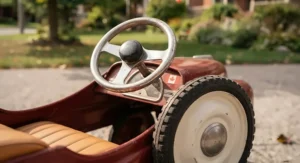
Every single model on this list is steel, and that’s not a coincidence — it’s the defining trait of what makes a pedal car “classic” in the first place. Metal frames like the ones on the Blue Diamond Classics Model A Roadster and the John Deere 4440 Pedal Tractor hold up to years of driveway abrasion, sun exposure, and the occasional collision with a fence post in ways that injection-molded plastic simply cannot. On the other hand, plastic ride-ons have a real advantage in cold Canadian climates: they don’t rust, and a -20°C morning won’t make the material more brittle the way it can with older or lower-grade steel. Reviewers consistently note that the trade-off is worth it for families planning to hand the car down to a younger sibling or even keep it as a memento, since a steel pedal car in decent shape genuinely can outlive plastic equivalents by a decade or more.
Best Pedal Car for a 5 Year Old Boy: Sizing, Weight & Safety Notes
Age five sits right in the sweet spot for most classic pedal cars on this list, but “sweet spot” doesn’t mean every model fits identically. Here’s what actually matters at this specific age.
Most five-year-olds in Canada average somewhere around 18–20 kg (40–44 lb) and roughly 110 cm (43 in) tall, according to typical pediatric growth benchmarks — well within the 60 lb weight limits posted on the Blue Diamond Classics Retro Tri-Five 1955 Chevy, both Kid Trax models, and the John Deere 4440 Pedal Tractor. That gives a five-year-old genuine legroom to grow into most of these options for another year or two before outgrowing them.
For a boy specifically drawn to car styling over tractors or emergency vehicles, the Blue Diamond Classics Model A Roadster rewards that slightly bigger 40-inch frame with room to actually stretch out and steer confidently, rather than feeling cramped the way a toddler-scale pedal car can at this age. If budget is the deciding factor, the Kid Trax Classic Fire Truck Pedal Car covers the same age bracket at roughly half the price with functional steering that keeps a five-year-old genuinely engaged rather than just going through the motions.
On safety, Health Canada’s general guidance on toy safety in Canada is unambiguous: riding toys should match a child’s age, ability, and size, and should never be used near stairs, driveways with traffic, or swimming pools. That single rule eliminates more real-world pedal car injuries than any product feature ever could.
Retro Design: Why Vintage Styling Still Wins Over Kids and Parents
There’s a reason toy companies keep reproducing 1928 Model A curves and 1955 Chevy tailfins instead of inventing brand-new shapes every year: retro design is doing double duty, appealing to the kid riding it and the adult buying it simultaneously.
Pedal cars first appeared in the 1890s, essentially mirroring the birth of the automobile itself, and by the 1940s and 50s, manufacturers were directly copying the styling cues of Detroit’s biggest models — wraparound windshields, bold grilles, chrome everywhere. Canadian toy factories were very much part of that story too; CBC’s archival footage from 1954 shows Ontario and Quebec plants assembling wheeled ride-on toys for that exact holiday season, proof that this isn’t an American-only phenomenon.
What most buyers overlook is that retro styling isn’t just nostalgia marketing — it’s also genuinely simpler engineering. A boxy fendered roadster shape, like the one on the Blue Diamond Classics Retro Tri-Five 1955 Chevy, distributes a child’s weight more evenly across four wheels than the low, angular shapes of modern go-kart-style ride-ons, which often sit lower and wider for speed rather than stability. In practice, that means retro-styled pedal cars tend to tip less easily at walking pace, a small but real safety upside layered on top of the visual appeal.
Collector Appeal: Are These Investment Pieces or Just Toys?
Genuine antique pedal cars from the 1930s–50s — original Garton, Murray, or Steelcraft models — do command real money among serious collectors, sometimes into the thousands for museum-grade restorations. It’s worth being honest here: none of the seven modern products on this list are those originals, and none should be bought purely as a financial investment.
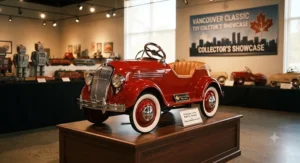
That said, collector appeal isn’t purely about resale value. Models like the Austin J40 — a genuinely famous mid-century British pedal car built by disabled coal miners after WWII — show how deeply pedal cars can become cultural artifacts in their own right, not just children’s toys. Modern reproductions like the Blue Diamond Classics Model A Roadster tap into that same collector instinct on a much smaller budget, offering display-worthy detail without a five-figure price tag.
Practically speaking, if collector appeal genuinely matters to you, prioritize models with the most period-accurate detailing and least plastic trim — that’s the Model A Roadster and the Retro Tri-Five 1955 Chevy on this list — and store them indoors when not in active use. A pedal car left outside through a Canadian winter loses collector value fast, regardless of how well it was built to begin with.
How to Choose a Classic Pedal Car
- Confirm the weight and age range first. Every model reviewed here lists a maximum rider weight; exceeding it stresses welds and axles faster than normal wear would.
- Decide metal vs plastic before you compare brands. As covered above, steel wins on durability and resale, plastic wins on cold-weather resistance and upfront cost.
- Match the theme to your kid’s actual interests, not yours. A gorgeous roadster a child has zero interest in becomes a garage decoration fast.
- Check your storage space realistically. The John Deere 4440 Pedal Tractor with Steel Trailer needs meaningfully more room than a standard two-door pedal car.
- Read the aggregated review sentiment, not just the star average. A 3.9/5 model with clearly explained cosmetic complaints can be a better fit than a 4.6/5 model with vague, unhelpful reviews.
- Budget for basic maintenance tools. A Phillips screwdriver, adjustable wrench, and light silicone spray cover nearly all upkeep across every model here.
- Buy for the coming season, not just the current age. Adjustable-pedal models like the Morgan Cycle line stretch usable life further than fixed-pedal alternatives.
Common Mistakes When Buying a Classic Pedal Car
The most frequent mistake is buying strictly on looks and skipping the weight limit entirely — a stunning Blue Diamond Classics Model A Roadster bought for a two-year-old will sit unused for a year simply because the frame and pedal reach are built for an older child. A close second is assuming all “steel” pedal cars are built to the same gauge; based on the spec comparison across this list, the Blue Diamond Classics line uses noticeably heavier steel than the Morgan Cycle pair, which is exactly why the price gap exists.
Another recurring error, reflected honestly in aggregated reviews across several of these models, is expecting smooth performance on grass or gravel driveways. Nearly every pedal car reviewed here performs best on pavement, and buyers who don’t realize that in advance often end up disappointed by “hard to pedal” complaints that were entirely predictable from the surface, not the product. Finally, don’t skip reading the assembly requirements — a toy advertised as “easy assembly” still typically takes a real 20–30 minutes with tools in hand, not the five minutes some listings imply.
Safety, Regulations & Compliance Guide
All seven products on this list, being sold as children’s toys in Canada, fall under the Canada Consumer Product Safety Act and its associated Toys Regulations, which set mechanical, flammability, toxicological, and thermal safety standards that manufacturers must meet before a toy reaches store shelves or amazon.ca. You can review the official Toys Regulations FAQ from Health Canada for the full technical breakdown if you want to see exactly what’s tested before a pedal car is legally sold here.
Practically, that means responsible parents should still do their own checks on arrival: confirm there are no sharp edges around welded seams, that small hardware (bolts, caps) is tightened beyond a toddler’s reach of removal, and that any painted or chrome-plated surfaces show no chipping that could expose sharp metal underneath. Because pedal cars have no seatbelt or braking system beyond a child’s own feet, supervision near driveways, parking areas, and sloped surfaces matters more here than it would with a stationary toy — a rule that applies just as much to the fastest-looking model on this list as the slowest.
Long-Term Cost & Maintenance
| Cost Factor | Budget Steel (e.g., Morgan Cycle) | Premium Steel (e.g., Blue Diamond Classics) |
|---|---|---|
| Upfront price (CAD) | C$220–C$320 | C$400–C$780 |
| Typical annual maintenance | Minimal — occasional bolt tightening | Light silicone spray, chrome care |
| Expected usable years | 2–3 years per child | 3–5 years, often passed down |
| Resale/hand-me-down value | Modest | Meaningfully higher |
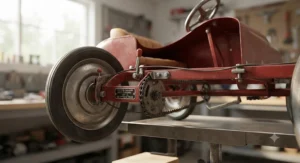
Run the math over three years of ownership, and the gap narrows more than the sticker prices suggest. A budget Morgan Cycle model at roughly C$270 works out to about C$90 per year of use before resale, while a premium Blue Diamond Classics model at roughly C$550 — if it genuinely gets handed down to a younger sibling over five years — works out closer to C$110 per year, a much smaller gap than the upfront prices imply. What most buyers overlook is that the real cost driver isn’t the pedal car itself but storage: an unheated garage or shed adds years of usable life compared to leaving any steel model out in the elements year-round.
Frequently Asked Questions
❓ How fast can a classic pedal car go?
❓ What age is best for a classic pedal car?
❓ Is metal or plastic better for a pedal car in Canada?
❓ Do classic pedal cars meet Canadian toy safety standards?
❓ Can a classic pedal car be a good investment?
Conclusion
Across budget, mid-range, and premium tiers, one theme held up consistently through this research: every genuinely “classic” pedal car worth buying in 2026 is built from steel, not plastic, and that single material choice explains nearly every durability and price difference covered in this article. Whether you land on the chrome-heavy Blue Diamond Classics Model A Roadster for its collector-grade detailing, the instantly recognizable Blue Diamond Classics Retro Tri-Five 1955 Chevy for its balance of price and iconic looks, an affordable Morgan Cycle Retro Style Pedal Car for a smaller rider, a Kid Trax Classic Fire Truck or Police Car Pedal Car for a first-ever ride-on toy, or the farm-themed John Deere 4440 Pedal Tractor with Steel Trailer for a kid who loves tractors more than sedans, the right pick really comes down to matching weight limits, storage space, and your child’s actual interests rather than chasing the flashiest option in photos.
Prices shift constantly on amazon.ca, so treat every range in this article as a starting point for research rather than a locked-in figure, and always confirm current availability and pricing before buying.
✨ Ready to Bring Home a Piece of Classic Design?
🔍 Check current pricing on any of the seven models covered above and pick the one that matches your kid’s personality, your storage space, and your budget. A great classic pedal car turns an ordinary Saturday into the kind of memory that outlasts the toy itself.
Recommended for You
- 7 Best pedal cars for kids under $150 CAD in 2026
- 6v vs 12v vs 24v Ride On: 7 Picks Parents Trust in 2026
- Fastest Electric Ride On Toy: 7 Top Picks for 2026
Disclaimer: This article contains affiliate links. As an Amazon Associate, I earn from qualifying purchases. If you purchase products through these links, we may earn a small commission at no additional cost to you.
✨ Found this helpful? Share it with your friends! 💬🤗
