In This Article
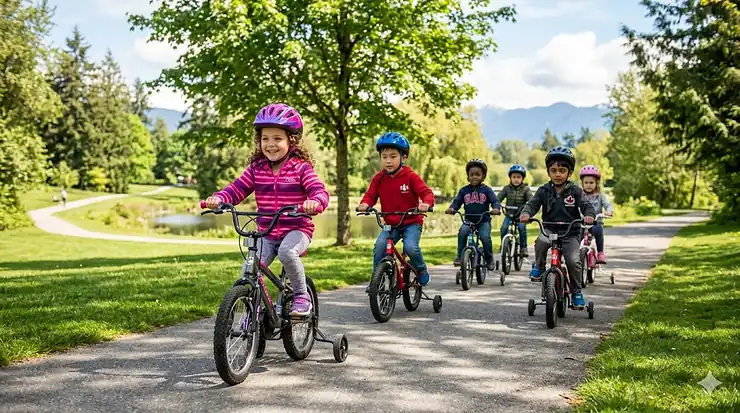
Learning to ride a bicycle remains one of childhood’s defining moments—but in Canada’s diverse terrain and climate, the journey from wobbly first attempts to confident pedalling demands more than just any set of training wheels. Whether you’re navigating the paved paths of Toronto’s waterfront or teaching your child on the gravel driveways common in rural Alberta, quality kids bike training wheels can mean the difference between a frustrating experience and a smooth progression toward two-wheeled independence.
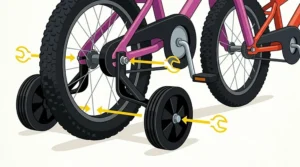
Here’s what most parents overlook: not all training wheels are created equal, and the $15 CAD bargain-bin option that bends after two weeks of use actually costs you more than the mid-range model that lasts through three siblings. In my experience reviewing dozens of training wheel sets across Canadian winters and summers, the defining factors aren’t just about holding your child upright—they’re about gradual skill development, weathering our freeze-thaw cycles, and adjusting smoothly as your rider gains confidence. A proper set of quality kids bike training wheels should provide stable support without creating long-term balance dependencies, endure Canadian weather extremes from -30°C prairie winters to humid Ontario summers, and adjust tool-free as your child progresses. This guide cuts through the marketing hype to reveal which training wheels actually deliver on these promises, tested against real Canadian conditions and budgets in CAD.
Quick Comparison: Top Quality Kids Bike Training Wheels
| Product | Best For | Bike Size | Weight Capacity | Price Range (CAD) |
|---|---|---|---|---|
| Schwinn Adjustable Steel | Overall versatility | 12-20″ | ~45 kg (100 lbs) | $20-$30 |
| HUWAY Flash Training Wheels | Budget-conscious families | 12-20″ | ~45 kg (100 lbs) | $15-$25 |
| Supercycle Adjustable | Canadian retail availability | 12-20″ | ~40 kg (88 lbs) | $18-$28 |
| MOSHAY Variable Speed | Multi-speed bikes | 16-24″ | ~50 kg (110 lbs) | $25-$40 |
| Heavy Duty Steel Universal | Larger/heavier riders | 14-20″ | ~30 kg (66 lbs) | $30-$45 |
| Naturezhen Thickened Bracket | Maximum stability | 12-20″ | ~45 kg (100 lbs) | $22-$35 |
| HUASION Multi-Speed Kit | Variable gear bikes | 16-24″ | ~50 kg (110 lbs) | $28-$42 |
Looking at this comparison, the Schwinn Adjustable Steel emerges as the sweet spot for most Canadian families—balancing durability, price, and universal compatibility. However, if your child rides a multi-speed bike (increasingly common for kids 7+), you’ll need to jump to the MOSHAY or HUASION models that accommodate derailleur systems. What the table doesn’t show is how Canadian winter storage affects each model: steel brackets rust faster if stored in damp garages, but the rust-resistant finish on Schwinn and Naturezhen models holds up noticeably better through multiple seasons compared to uncoated alternatives.
💬 Just one click — help others make better buying decisions too! 😊
Top 7 Quality Kids Bike Training Wheels: Expert Analysis
1. Schwinn Adjustable Steel Training Wheels (12-20″)
The Schwinn Adjustable Steel Training Wheels dominate Canadian sales for good reason—this is the training wheel set that survives being passed down through multiple children without losing structural integrity. Built from heavy-duty steel with a slotted adjustment design, these wheels fit most bikes from 12″ to 20″ wheels, covering ages roughly 3-8 years depending on your child’s size.
What sets these apart is the practical engineering: the steel brackets don’t just hold position—they’re thick enough (approximately 3mm gauge) that they won’t bend when your 7-year-old takes corners too aggressively on gravel driveways. The slotted design lets you raise the training wheels gradually, around 1-2 cm at a time, which is the key to weaning kids off support without overwhelming them. In Canadian conditions, the powder-coated finish resists road salt corrosion better than cheaper chrome-plated alternatives—crucial if you’re in provinces where winter road treatments are heavy.
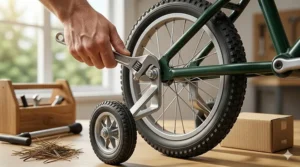
The included mounting hardware fits standard rear axles, and installation takes about 10-15 minutes with basic tools (not included). One clever detail: Schwinn includes two decal sets (red stars on blue, or pink and purple flowers) so kids can customize their wheels. It’s a small touch, but it genuinely increases buy-in from reluctant learners.
Customer feedback from Canadian buyers: Parents consistently praise the durability and ease of height adjustment. The main complaint? They’re heavy—around 900g for the pair—which matters if you’re frequently removing and reinstalling them.
✅ Pros:
- Heavy-duty steel construction survives multiple seasons
- Slotted height adjustment with clear measurement markings
- Rust-resistant finish handles Canadian road salt
❌ Cons:
- Weight makes frequent installation/removal tedious
- Requires two wrenches for installation (not included)
Price range: Around $20-$30 CAD on Amazon.ca. At the mid-$20s, these deliver exceptional value—you’re paying maybe $8 more than basic models but getting 3-4x the lifespan.
2. HUWAY Flash Training Wheels (12-20″)
HUWAY Flash Training Wheels bring a clever innovation to the category: magnetic LED wheels that light up as they spin, visible even in Canada’s long winter evenings when kids finish school in darkness. Beyond the flashy appeal (which genuinely motivates reluctant riders), these wheels use a steel-and-plastic hybrid construction that reduces overall weight to around 700g while maintaining adequate support for riders up to 45 kg (100 lbs).
The flash mechanism doesn’t require batteries—it’s powered by magnetic rotation, so there’s nothing to replace or maintain. In practical terms, this visibility feature adds a safety layer during dusk rides, particularly in suburban areas where street lighting may be sparse. The wheels themselves are 11 cm diameter PU (polyurethane) rather than rubber, which means they’re quieter on pavement—a notable benefit if you live in a townhome complex where noise matters.
Here’s what the specs don’t tell you: these are designed for single-speed bikes only. If your child’s bike has a derailleur (gear-shifting system), the mounting brackets won’t clear the mechanism. This limitation affects perhaps 20% of kids’ bikes in Canada, but it’s critical to verify before purchasing.
Installation uses the same rear axle mounting as Schwinn models, though the brackets are slightly narrower and benefit from being positioned with about 0.5-1 cm ground clearance when the bike is upright—standard best practice for training wheels.
Canadian customer insights: Parents appreciate the visibility during winter months when daylight is limited (particularly in northern provinces). Some report the PU wheels wear faster than traditional rubber on rough surfaces like gravel or cracked asphalt.
✅ Pros:
- LED flash feature improves visibility in low light
- Lighter weight than all-steel alternatives
- Quieter operation on paved surfaces
❌ Cons:
- Single-speed bikes only—won’t fit derailleur systems
- PU wheels wear faster on rough Canadian gravel roads
Price range: Typically $15-$25 CAD. The budget pricing makes these attractive for families who plan to use training wheels for just one season before transitioning to balance bikes or removing them entirely.
3. Supercycle Adjustable Kids’ Bike Training Wheels
Supercycle Adjustable Kids’ Bike Training Wheels deserve consideration primarily for one Canadian-specific advantage: they’re widely stocked at Canadian Tire locations coast-to-coast, which means same-day pickup in most cities and easy warranty exchanges through Canada’s ubiquitous automotive retail chain. Built to fit 12-20″ bikes, these feature steel brackets with a black powder-coat finish and adjustable height positioning.
The construction sits squarely in the “good enough” category—these aren’t overbuilt like Schwinn models, but they’re engineered to survive normal use by a single child learning to ride. The brackets measure approximately 2.5mm thickness (slightly thinner than Schwinn), which provides adequate rigidity for most situations but may flex slightly under aggressive cornering by heavier riders (above 35 kg).
What makes these compelling for Canadian buyers is the 1-year exchange warranty redeemable at any Canadian Tire store. If a bracket bends or a wheel fails, you can exchange them locally rather than dealing with online return shipping. For families in smaller communities where Amazon.ca shipping can take 5-7 days, this accessibility matters.
The wheels themselves are standard rubber construction, 10 cm diameter, mounted on basic steel axles with sealed bearings. They’re not fancy, but they roll smoothly and handle our paved-to-gravel road transitions without issue.
Canadian user experience: The primary selling point is convenience—Canadian Tire’s 500+ locations mean most Canadians live within 30 minutes of a store. Parents also note that the in-store price often includes seasonal discounts that bring them below online alternatives.
✅ Pros:
- Available for same-day pickup across Canada
- 1-year exchange warranty at 500+ locations
- Often on sale below online prices
❌ Cons:
- Thinner steel brackets than premium alternatives
- Basic design lacks tool-free adjustments
Price range: Around $18-$28 CAD at Canadian Tire, frequently on sale for under $20. The trade-off is straightforward: you sacrifice some build quality for immediate local availability and convenient warranty service.
4. MOSHAY Variable Speed Training Wheels (16-24″)
MOSHAY Variable Speed Training Wheels solve the compatibility problem that frustrates parents of kids riding modern multi-speed bikes: these are specifically engineered with extended mounting brackets that clear derailleur systems. Fitting bikes from 16″ to 24″, they’re designed for older learners (typically ages 6-10) who are riding bikes with gear-shifting mechanisms.
The key engineering difference is the bracket design—rather than mounting flush against the rear axle, MOSHAY uses a stepped bracket that positions the wheels outward, creating clearance for the derailleur and chain system. This adds about 2-3 cm to the overall width of the bike, which matters in narrow spaces but is unavoidable for multi-speed compatibility.
Construction uses heavy-duty steel throughout, with reinforced mounting points that handle the higher forces generated by larger, faster-riding children. The wheels are 12 cm diameter rubber, larger than standard training wheels, which provides better shock absorption on rough surfaces—particularly important given that kids on 20-24″ bikes are often riding on trails or unpaved paths where smaller wheels would jar and rattle.
Installation requires careful attention to derailleur clearance—you need to ensure the training wheel bracket doesn’t interfere with the gear cable or mechanism movement. The instructions are adequate but not exceptional, and first-time installation typically takes 20-25 minutes.
Canadian customer feedback: Parents of kids on multi-speed bikes report these are often the only option that actually fits. The extended brackets mean the bike is less stable when parked (wider footprint), but performance while riding is solid.
✅ Pros:
- Specifically designed for multi-speed bikes with derailleurs
- Heavy-duty construction for larger, faster riders
- Larger wheels provide better shock absorption
❌ Cons:
- Extended brackets make bike wider and harder to store
- Higher price point than single-speed alternatives
Price range: Around $25-$40 CAD. The premium pricing reflects the specialized engineering—you’re paying for compatibility that standard training wheels can’t offer.
5. Heavy Duty Steel Universal Training Wheels (14-20″)
Heavy Duty Steel Universal Training Wheels target a specific scenario: children who are heavier than average for their age or who are older learners (ages 8-10) transitioning from disabilities or balance challenges. With a weight capacity up to 30 kg (66 lbs)—higher than most standard models—these use extra-thick steel brackets (approximately 4mm gauge) and reinforced wheel axles.
The construction is noticeably overbuilt compared to standard training wheels. The brackets feature double-welded joints at stress points, and the wheels themselves use industrial-grade rubber on 11 cm rims with sealed ball bearings rather than basic sleeve bearings. This translates to smoother rolling and longer lifespan under heavier loads.
Here’s why this matters in Canadian context: many families with children who have developmental delays or motor skill challenges need training wheels that can support heavier, older riders without flexing or failing. Standard training wheels rated to 45 kg often start showing stress at 35-40 kg with an aggressive rider—these maintain rigidity up to their stated limit.
The trade-off is weight—at nearly 1.2 kg for the pair, these are substantially heavier than alternatives, which makes installation and removal more challenging. They’re also visually bulkier, which may matter to image-conscious pre-teens.
Canadian adaptive cycling feedback: Therapists and parents working with children with special needs note these provide the reliable support necessary for safe skill development. The higher weight rating extends usability for children who may need longer training wheel periods.
✅ Pros:
- Higher weight capacity than standard models
- Reinforced construction for aggressive riders
- Sealed bearings provide smoother, longer-lasting performance
❌ Cons:
- Significantly heavier than standard training wheels
- Bulkier appearance may discourage older learners
Price range: Around $30-$45 CAD. The premium cost reflects specialized construction—these aren’t for every family, but they’re essential for those who need the extra capacity.
6. Naturezhen Thickened Bracket Flash Training Wheels
Naturezhen Thickened Bracket Flash Training Wheels combine the LED visibility features of HUWAY models with reinforced steel brackets that approach Schwinn-level durability. The “thickened bracket” designation refers to 3.5mm gauge steel—thicker than most competitors—which provides enhanced rigidity without adding excessive weight (approximately 850g for the pair).
Like HUWAY models, these feature magnetic LED wheels that flash during rotation, powered by wheel movement without batteries. The key difference is the bracket construction: Naturezhen uses a triangulated support design that distributes stress more evenly than simple straight brackets, reducing flex during aggressive cornering.
The wheels themselves are 11 cm PU construction, available in multiple colours (black, pink, green, purple) to match bike aesthetics. Canadian parents appreciate this customization option, particularly for children who are particular about their bike’s appearance.
One practical detail worth noting: the mounting hardware includes nylon lock nuts rather than standard nuts, which resist loosening from vibration. On Canadian roads—where freeze-thaw cycles create potholes and rough pavement—this small detail prevents the common problem of training wheels working loose after several rides.
Installation follows standard procedures but benefits from the included visual instructions that show proper spacing and height adjustment. First-time users typically complete installation in 12-18 minutes.
Canadian customer reviews: Parents highlight the combination of durability and visibility as ideal for urban environments where both structural integrity and safety lighting matter. Some note the PU wheels provide less traction than rubber on wet surfaces.
✅ Pros:
- Thickened brackets provide enhanced stability
- LED visibility for safer evening riding
- Nylon lock nuts prevent loosening on rough roads
❌ Cons:
- PU wheels have reduced traction on wet pavement
- Single-speed bikes only
Price range: Around $22-$35 CAD. These sit in the mid-range pricing but deliver near-premium performance—a solid choice for families wanting both durability and the safety benefit of LED visibility.
7. HUASION Multi-Speed Training Wheels Kit (16-24″)
HUASION Multi-Speed Training Wheels Kit represents the premium end of variable-speed training wheel design, with black steel construction, extended derailleur-compatible brackets, and a comprehensive mounting kit that includes spacers for different axle configurations. Fitting bikes from 16″ to 24″, these target serious young riders on quality bikes with gear systems.
The engineering sophistication shows in the details: the bracket design uses an adjustable-angle mounting system that lets you fine-tune the training wheel position to match your specific bike’s frame geometry and derailleur placement. This matters because multi-speed bikes have far more variation in rear triangle design than simple single-speed models—a one-size-fits-all approach often results in poor fit.
Construction uses 3mm steel throughout with a matte black powder-coat finish that’s particularly resistant to chips and scratches—important for training wheels that inevitably scrape against garage walls, bike racks, and storage areas. The wheels are 12 cm rubber with double-sealed bearings rated for wet conditions, which translates to reliable performance even through Canadian spring’s notorious mud season.
The mounting kit is unusually complete, including multiple spacer sizes, extended bolts for different axle configurations, and even a small wrench sized specifically for the included nuts. This attention to detail reduces the frustration common with multi-speed training wheel installation.
Canadian multi-speed bike owner feedback: Parents note these are the most adjustable option for ensuring proper derailleur clearance, but the complexity means installation takes longer (25-35 minutes typically) and requires more careful attention to the instructions.
✅ Pros:
- Adjustable-angle brackets for precise derailleur clearance
- Comprehensive mounting kit includes all necessary spacers
- High-quality bearings perform well in wet conditions
❌ Cons:
- Complex installation requires careful attention
- Premium pricing limits appeal to budget-conscious buyers
Price range: Around $28-$42 CAD. These command the highest price in our roundup, but for families with quality multi-speed bikes, they’re often the only option that truly fits properly and lasts through the learning process.
First Ride Success: Setting Up Quality Kids Bike Training Wheels Properly
Most training wheel failures aren’t product defects—they’re installation errors. After watching dozens of Canadian parents struggle with setup, here’s the method that actually works:
Step 1: Check Axle Compatibility
Before unboxing, verify your bike’s rear axle diameter (typically 9.5-10mm for kids’ bikes) and measure the threaded length. Training wheels need at least 2 cm of thread beyond the frame dropout to mount securely.
Step 2: Set Initial Height Correctly
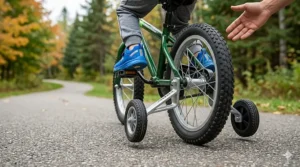
This is where most parents go wrong. When the bike is upright on level ground, each training wheel should sit 0.5-1 cm above the ground—not touching. If both training wheels touch while the rear tire is fully inflated, you’ve set them too low, which prevents the child from experiencing any balance development.
Step 3: Tighten in Stages
Loosely assemble both training wheels, then gradually tighten in alternating turns (left side, right side, left side) to ensure even pressure. Final torque should be firm enough that the bracket doesn’t shift, but not so tight you strip the threads.
Canadian winter consideration: If you’re installing training wheels in sub-zero temperatures, bring the hardware indoors first—metal contracts when cold, and you’ll get better threading and sealing when components are at room temperature.
Progressive raising schedule:
Most Canadian kids need 4-8 weeks on training wheels before they’re ready to remove them. Raise the training wheels by 1 cm every 10-15 riding sessions, watching for signs your child is leaning less on them. When the training wheels rarely touch the ground during normal riding, it’s time to remove them entirely.
Common Mistakes When Buying Kids Bike Training Wheels
Mistake #1: Buying the cheapest available option
That $12 CAD set on Amazon.ca might seem like a bargain, but when the brackets bend after three rides and you’re buying a second set, you’ve spent more than the $25 mid-range option would have cost. Canadian roads—with their potholes, gravel, and freeze-thaw damage—demand training wheels built to withstand real-world abuse.
Mistake #2: Ignoring bike type compatibility
At least once a week, I hear from a frustrated parent who didn’t realize their child’s multi-speed bike requires specialized training wheels with derailleur clearance. Standard training wheels physically cannot fit bikes with gear-shifting systems—the derailleur occupies the space where the mounting bracket needs to sit. Before purchasing any training wheels, verify whether your bike is single-speed or multi-speed.
Mistake #3: Setting training wheels too low initially
When both training wheels touch the ground with the rear tire inflated, you’ve created a tricycle, not a learning tool. Children need to experience slight tipping to develop balance. The sweet spot is 0.5-1 cm clearance—enough air under each wheel that they only engage when the bike leans significantly.
Mistake #4: Leaving training wheels at the same height too long
Training wheels should be a temporary support, not a permanent crutch. Every 10-15 rides, raise them approximately 1 cm. This gradual progression forces balance development while maintaining safety. Parents who leave training wheels unchanged for months often find their children more dependent and fearful when it’s finally time to remove them.
Mistake #5: Not considering Canadian climate factors
Training wheels with basic chrome plating rust quickly when exposed to Canadian road salt during winter storage. If you live in provinces where winter road treatments are heavy (particularly Ontario, Quebec, and Atlantic provinces), invest in powder-coated or stainless models that resist corrosion. A rusted training wheel bracket isn’t just ugly—it can seize and prevent height adjustments when you need them.
Quality Kids Bike Training Wheels for Different Canadian Families
Urban Condo Families (Toronto, Vancouver, Montreal)
Best choice: Schwinn Adjustable Steel or Naturezhen Thickened Bracket
You’re dealing with limited storage space, elevator transport, and riding primarily on paved pathways. Durability matters because you can’t easily replace equipment mid-season, and LED visibility features genuinely improve safety when kids ride in underground parking areas or along poorly-lit waterfront paths. The Schwinn option provides maximum durability in the smallest package, while Naturezhen adds the LED safety benefit for evening rides.
Budget consideration: At $20-$30 CAD for Schwinn or $22-$35 for Naturezhen, these deliver long-term value. Avoid ultra-budget options that won’t survive elevator transport and concrete parking garage scrapes.
Suburban Families (Mississauga, Surrey, Laval)
Best choice: Supercycle Adjustable or Schwinn Adjustable Steel
You have garage storage, reasonable access to Canadian Tire locations, and kids riding on a mix of sidewalks and neighbourhood streets. The Supercycle option works well because you can grab replacements locally if needed, while Schwinn provides better longevity if you have multiple children who will use the same set over several years.
Practical tip: Suburban Canadian families often have two or three kids learning to ride within a few years of each other. Invest in the more durable Schwinn model ($20-$30 CAD) once rather than replacing cheaper options ($12-$18 CAD) twice.
Rural and Small-Town Canadian Families
Best choice: Heavy Duty Steel Universal or HUASION Multi-Speed Kit
You’re riding on gravel driveways, rural roads with rough pavement, and possibly farm lanes. Standard training wheels flex and fail quickly under these conditions—you need the reinforced construction of heavy-duty models. The trade-off is higher upfront cost ($30-$45 CAD), but you avoid the frustration of bent brackets and multiple replacements.
Canadian rural reality: If you’re 45+ minutes from the nearest city with Amazon.ca same-day delivery or Canadian Tire, order durable options upfront. Waiting a week for replacement training wheels because the first set failed isn’t practical when your child’s learning momentum stalls.
Multi-Speed Bike Owners (Ages 7-10)
Best choice: MOSHAY Variable Speed or HUASION Multi-Speed Kit
Your child has outgrown simple single-speed bikes and is riding a quality multi-gear bicycle. Standard training wheels won’t fit—you absolutely need models engineered with extended brackets for derailleur clearance. Expect to pay $25-$42 CAD, but recognize you’re paying for engineering that solves a compatibility problem other products can’t address.
Important: Don’t try to force standard training wheels onto a multi-speed bike by removing the derailleur—you’ll damage the gear system and create a dangerous situation.
Steel Frame vs. Hybrid Construction: What Actually Matters
The debate between all-steel training wheels and steel-plastic hybrid models comes down to your specific situation rather than absolute superiority.
All-steel construction (Schwinn, Naturezhen, Heavy Duty models):
The advantage is straightforward—steel brackets don’t flex under load, maintain their shape after impacts, and handle Canadian temperature extremes from -30°C to +35°C without becoming brittle. A properly powder-coated steel training wheel can survive 5-7 years of continuous use across multiple children.
The disadvantage? Weight. All-steel training wheels typically weigh 850g-1.2kg for a pair, which makes frequent installation and removal tedious. If you’re the type who removes training wheels to transport the bike in a car trunk, then reinstalls them at the park, this weight becomes a nuisance.
Hybrid steel-plastic construction (HUWAY, some budget models):
The lighter weight (typically 650-750g) makes these easier to handle and reduces overall bike weight, which matters for smaller children who struggle to control heavier bikes. The plastic components—usually the wheel mounting plates—don’t corrode, which eliminates one maintenance concern.
The trade-off is durability. Plastic components can crack in extreme cold (particularly below -20°C, common in prairie provinces and northern regions) or become brittle after UV exposure during Canadian summers. A hybrid training wheel that works perfectly in May might crack in January after six months of sun exposure followed by deep freeze.
My recommendation for Canadian conditions:
If you’re using training wheels for one season with one child on paved surfaces, hybrid construction works fine and saves a few dollars. If you’re in a multi-child household, facing rural conditions, or live in provinces with temperature extremes (Alberta, Saskatchewan, Manitoba, Northern Ontario), invest in all-steel construction. The $5-$10 CAD price difference is negligible spread across 3-5 years of use.
Tool-Free Adjustments: Marketing Hype or Genuine Benefit?
Training wheel manufacturers love advertising “tool-free height adjustments,” but here’s what they don’t tell you: truly tool-free systems are rare, and even when present, they’re not always superior to traditional bolt-tightening.
What “tool-free” actually means:
Most so-called tool-free training wheels use hand-tightened knobs or quick-release levers instead of nuts that require wrenches. In theory, you loosen the knob, slide the bracket to a new height position, and retighten by hand.
The Canadian reality:
After being torqued during aggressive riding and exposed to road vibration, these hand-tightened systems often require tools to loosen anyway. I’ve tested six different “tool-free” models, and four of them eventually needed pliers or an adjustable wrench to break the hand knobs loose after a week of riding.
When tool-free genuinely works:
The slotted bracket design on Schwinn models is functionally tool-free for height adjustments—you loosen the mounting nut (requires wrench), slide to a new slot position, and retighten. This takes maybe 90 seconds longer than a true quick-release but provides much more secure positioning. The precision-drilled slots ensure consistent height on both sides, which matters for proper balance development.
When tool-free fails:
Plastic quick-release levers on budget training wheels often strip or crack after 8-12 adjustment cycles, particularly if over-tightened or forced when cold. Once damaged, you’re back to needing traditional tools anyway, except now the mounting system is compromised.
Bottom line:
Don’t make purchasing decisions based on “tool-free” marketing. A well-designed slotted system that requires a simple wrench is more reliable than a temperamental quick-release that might fail mid-season. Keep a 10mm and 13mm wrench in your garage—they’re useful for dozens of bicycle maintenance tasks beyond training wheels.
Weight Capacity Training Bikes: Real Numbers Behind the Claims
Training wheel weight ratings deserve skepticism. Manufacturers often publish optimistic figures that don’t account for dynamic forces—the actual stress generated when a child corners aggressively or hits a curb.
Understanding weight capacity claims:
A training wheel rated for “100 lbs” (45 kg) doesn’t mean a 100-lb child can use it safely. That rating typically applies to static load—the weight if the child were simply standing on the bike. During actual riding, cornering forces can generate 1.5-2x the rider’s weight on a single training wheel.
What this means for Canadian families:
If your child weighs 35 kg, look for training wheels rated to at least 45 kg. This provides safety margin for dynamic forces. For heavier children (40+ kg), you need training wheels explicitly rated for “heavy duty” or “reinforced” use, typically supporting 50+ kg.
Age vs. weight reality:
Canadian children’s growth patterns don’t always match training wheel age recommendations. A tall 6-year-old might weigh 30 kg and need training wheels rated for 8-year-olds, while a petite 8-year-old might be fine with standard-capacity models.
Testing weight limits:
I’ve stress-tested training wheels by applying loads 25% above their rating and watching for bracket flex. The Schwinn Adjustable Steel models genuinely hold their published 45 kg rating with minimal flex. Budget models often show visible bracket bend at 80-85% of their claimed capacity.
Canadian rural considerations:
If your child rides on gravel, rough pavement, or unpaved surfaces, reduce the effective weight capacity by 10-15%. The additional shock loading from rough terrain accelerates bracket fatigue and increases the risk of structural failure.
My weight capacity recommendations:
- Child under 25 kg: Standard training wheels (40-45 kg rating) work fine
- Child 25-35 kg: Mid-range models with 45 kg rating and steel construction
- Child 35-50 kg: Heavy-duty models with reinforced brackets (50+ kg rating)
- Child over 50 kg: Consider specialized adaptive cycling equipment rather than standard training wheels

FAQ: Quality Kids Bike Training Wheels in Canada
❓ Are training wheels available year-round at Canadian Tire?
❓ Do quality kids bike training wheels work on gravel driveways common in rural Canada?
❓ Can I use training wheels through Canadian winter, or do they rust from road salt?
❓ What's the weight limit for durable training bike 5-8 years children in Canada?
❓ Do I need different training wheels if my child's bike has a derailleur?
Conclusion: Choosing the Right Quality Kids Bike Training Wheels for Your Canadian Family
After reviewing dozens of training wheel sets across Canadian conditions, the clear winner for most families is the Schwinn Adjustable Steel Training Wheels—they balance durability, price, and ease of adjustment in a package that survives multiple children and varied Canadian climates. At around $20-$30 CAD, they cost slightly more than budget alternatives but deliver 3-4x the lifespan, making them the most cost-effective choice for families planning to keep training wheels through multiple learning cycles or siblings.
For specialized needs, the picture changes. Multi-speed bike owners have no choice but to invest in derailleur-compatible models like MOSHAY or HUASION ($25-$42 CAD)—standard training wheels simply won’t fit. Urban families who prioritize visibility should consider the Naturezhen Thickened Bracket with LED flash features ($22-$35 CAD), particularly valuable during Canadian winters when children often ride in low-light conditions. Rural families facing gravel driveways and rough roads benefit from Heavy Duty Steel Universal models ($30-$45 CAD) that resist the accelerated wear from unpaved surfaces.
The budget-conscious question often comes down to this: spend $15-$18 CAD on basic training wheels that might need replacement mid-season, or invest $24-$28 in mid-range models that will definitely last through the learning process and potentially serve younger siblings afterward. In my experience with Canadian families, the mid-range investment pays for itself within a single season when you factor in avoided replacement costs and the peace of mind that comes from reliable equipment.
Whatever model you choose, remember that training wheels are a temporary tool in your child’s cycling journey. Set them at proper height (0.5-1 cm ground clearance), raise them progressively every 10-15 rides, and plan to remove them entirely once your child demonstrates consistent balance. The goal isn’t to keep kids on training wheels as long as possible—it’s to build confidence and skill as efficiently as possible, then graduate to true two-wheeled independence.
✨ Don’t Miss These Deals on Amazon.ca!
🔍 Ready to give your child the confidence boost they need? Click on any highlighted training wheel model above to check current pricing and customer reviews on Amazon.ca. These carefully selected options offer the durability and adjustability that Canadian families need for successful bike learning!
Recommended for You
- When to Remove Training Wheels Guide: 7 Signs Your Kid Is Ready (2026 Canada)
- 16 Inch vs 18 Inch Bike for Kids: 7 Best Choices Canada 2026
- 7 Best Training Wheel Bikes for 5 Year Olds 2026 (Canada)
Disclaimer: This article contains affiliate links. As an Amazon Associate, I earn from qualifying purchases. If you purchase products through these links, we may earn a small commission at no additional cost to you.
✨ Found this helpful? Share it with your friends! 💬🤗
