
In This Article
Here’s what most Canadian parents discover after browsing Amazon.ca for ride on toys: the price tags on quality vehicles can climb faster than a kid on a sugar high. But here’s the secret — you don’t need to spend $500+ to get a ride on toy that’ll survive more than one Canadian summer.
After analyzing dozens of ride on toys under $300 canada 5-8 years available on Amazon.ca, I’ve found that this price bracket offers the sweet spot between durability and features. What you’re getting in the $150-$300 CAD range isn’t just a cheaper version of premium models — you’re accessing legitimate quality vehicles with proper motors, working suspension, and entertainment systems that’ll actually keep working past the first month.
The 5-8 year age bracket presents unique challenges for Canadian families. Your child has outgrown those pudgy toddler ride-ons, but they’re not quite ready for the full-power models designed for older kids. They need something that builds confidence without overwhelming them — especially important during those first wobbly rides on your driveway each spring after the snow melts. What matters most at this age isn’t top speed or flashy branding; it’s finding affordable quality kids vehicles that encourage outdoor play whilst meeting Health Canada’s safety requirements.
This guide cuts through the marketing fluff on Amazon.ca to show you exactly what you’re getting at each price point. I’ll explain which features actually matter (spoiler: not the ones manufacturers emphasise most), which corners manufacturers cut to hit the under-$300 mark, and which budget electric ride ons punch above their weight class. You’ll discover why some $180 models outperform $280 competitors, which Canadian-available brands offer the best warranty coverage, and how to spot the difference between value for money outdoor toys and penny-wise, pound-foolish purchases that’ll frustrate your family by Labour Day.
Quick Comparison: Top Budget Ride-Ons at a Glance
| Model | Battery | Age Range | Weight Limit | Price Range (CAD) | Best For |
|---|---|---|---|---|---|
| Qaba Kids ATV 4 Wheeler | 6V | 3-8 years | 30 kg (66 lbs) | $120-$160 | Budget-conscious families |
| Qaba Ride On Tractor | 12V | 3-8 years | 30 kg (66 lbs) | $180-$230 | Utility play & hauling |
| VoltzToys Mercedes-AMG | 12V | 3-6 years | 25 kg (55 lbs) | $200-$250 | Luxury appearance seekers |
| Ford F-150 Raptor | 12V | 3-8 years | 30 kg (66 lbs) | $230-$280 | Truck enthusiasts |
| Qaba 2-Seater UTV | 24V | 3-8 years | 60 kg (132 lbs) | $280-$300 | Siblings/dual riders |
| OLAKIDS Motorcycle | 6V | 3+ years | 25 kg (55 lbs) | $90-$130 | Narrow driveways |
| Costzon 12V Truck | 12V | 3-8 years | 30 kg (66 lbs) | $190-$240 | Balanced features |
Looking at this comparison, the most striking pattern emerges around the $180-$230 CAD range — that’s where you’re getting 12V systems with working parent remotes and spring suspension without paying the premium-brand tax. The budget 6V options under $160 work beautifully for younger fives and lighter kids, but if your child weighs over 23 kg (50 lbs) or you’re hoping this toy survives until they’re eight, the 12V systems justify their extra cost through longer battery life and stronger motors that won’t bog down on slight inclines. The single 24V model in our under-$300 lineup (Qaba 2-Seater) sacrifices some features you’d find on pricier two-seaters, but delivers where it counts — dual motors and a 60 kg capacity that lets siblings ride together, cutting your per-child entertainment cost in half.
💬 Just one click — help others make better buying decisions too! 😊
Top 7 Ride On Toys Under $300: Expert Analysis
1. Qaba Kids ATV 4 Wheeler (6V) — The Gateway Ride-On
The Qaba Kids ATV 4 Wheeler sits at the entry level of legitimate electric ride ons, but don’t mistake “entry level” for “toy-grade.” This 6V quad delivers exactly what most Canadian six-year-olds need: forward motion, backward capability, LED headlights, and enough battery life (around 45 minutes) for a typical backyard session before dinner.
The 6V battery system means top speeds hover around 3-4 km/h (2-2.5 mph) — slower than a brisk walk, which is precisely the point for first-time riders. What surprises most Canadian buyers is how well the hard plastic wheels handle grass and gravel driveways, though you’ll notice decreased performance on damp grass common during spring thaw. The music function pulls from built-in tunes rather than Bluetooth connectivity, and whilst the sound quality won’t win awards, it occupies kids effectively whilst they’re cruising.
Canadian parents purchasing this model report it handles children at the upper end of the 30 kg weight limit reasonably well, though battery drain accelerates noticeably above 27 kg. The LED headlights aren’t bright enough for visibility purposes (you wouldn’t use this at dusk), but they add play value during pretend adventures. Assembly typically takes 20-30 minutes with basic tools, and the instruction manual ships with English and French text per Canadian bilingual labelling requirements.
Pros:
✅ Genuinely affordable — fits tight budgets without feeling disposable
✅ Appropriate speed for nervous first-time riders
✅ Compact size stores easily in Canadian garages during winter
Cons:
❌ 6V system struggles with even slight inclines
❌ No parent remote control (child drives independently)
Price range: Around $120-$160 CAD depending on colour selection. For families testing whether their child will actually use a ride-on regularly, this represents minimal financial risk with adequate performance for the 5-6 year demographic.
2. Qaba Kids Ride On Tractor with Trailer — The Backyard Workhorse
The Qaba Kids Ride On Tractor with Trailer transforms ride-on toys from passive entertainment into active imaginative play, and that detachable trailer makes all the difference. Unlike simpler models where kids just drive in circles, this 12V tractor lets them haul toys, stuffed animals, collected rocks, or whatever treasures they’re convinced they need to transport across your backyard.
The 12V 7Ah battery system delivers 60-90 minutes of runtime depending on terrain and rider weight — sufficient for most weekend afternoon sessions before needing an overnight charge. What Canadian buyers appreciate most is how the dual-motor system handles grass without bogging down, unlike weaker 6V alternatives that struggle on anything beyond smooth pavement. The realistic gear shifter adds play value, though it’s cosmetic rather than functional (the actual speed is controlled by the foot pedal regardless of shifter position).
Here’s what the spec sheet won’t tell you: the trailer hitch mechanism, whilst sturdy enough for toy hauling, requires occasional tightening after heavy use. Parents in rural areas report their kids genuinely use this to “help” with yard work by collecting sticks or moving garden supplies, turning screen time into outdoor productivity. The parent remote control operates on 2.4 GHz frequency, providing reliable range up to about 10 metres — enough to intervene if your child heads toward the flower beds.
The spring suspension on the rear wheels makes a noticeable difference on rougher Canadian terrain (think gravel driveways or lawn with tree roots), though the front wheels remain rigid. LED lights, music player with USB input, and horn sounds complete the feature set. Assembly requires roughly 45 minutes, mostly spent attaching wheels and connecting wiring harnesses.
Pros:
✅ Trailer functionality extends play value significantly
✅ 12V system handles Canadian lawns and moderate inclines
✅ Parent remote provides safety control for younger fives
Cons:
❌ Larger footprint requires more storage space
❌ Trailer hitch needs occasional maintenance
Price range: Typically $180-$230 CAD across orange, green, and blue colour options. This hits the cost-effective ride ons sweet spot — enough features to justify the price without inflating cost with gimmicks.
3. VoltzToys Licensed Mercedes-AMG 12V — Budget Luxury That Looks the Part
The VoltzToys Licensed Mercedes-AMG 12V proves you can deliver premium aesthetics without premium pricing, and that matters more than you might think. When your child’s friends show up with their generic ride-ons, the Mercedes-AMG licensing and authentic styling details create genuine enthusiasm that keeps kids engaged with outdoor play.
This 12V system delivers 3-5 km/h (2-3 mph) across two speed settings, controlled either by your child or via the included 2.4G parent remote. The remote becomes particularly valuable during the learning phase — you can override their steering and speed if they’re heading toward trouble, then gradually reduce your intervention as confidence builds. Canadian buyers note the remote range (approximately 8-10 metres) works reliably in open spaces but can lose signal near metal structures or dense landscaping.
The entertainment system includes MP3 input via USB port, built-in music, and working LED lights front and rear. Sound quality exceeds most budget models, though you’ll want to locate the volume control early (it’s tucked under the seat) before the repetitive tunes drive you mad. The spring suspension on all four wheels — not just rear wheels like cheaper models — noticeably smooths rides across typical Canadian suburban terrain including cracked asphalt and lawn edges.
What you’re sacrificing to hit this price point: the battery capacity sits at the lower end for 12V systems (around 4.5 Ah versus 7 Ah on some competitors), translating to 45-60 minutes of runtime rather than 90+ minutes. The plastic body, whilst attractive, shows scuff marks more readily than textured finishes on utilitarian models. And despite “licensed” labelling, don’t expect Mercedes-Benz warranty support — you’re dealing with the retailer or manufacturer for any issues.
Pros:
✅ Licensed styling delivers legitimate curb appeal
✅ Four-wheel spring suspension smooths Canadian terrain
✅ Parent remote with decent range
Cons:
❌ Shorter battery life limits extended play sessions
❌ Glossy finish shows wear quickly
Price range: Generally $200-$250 CAD. For families prioritising appearance and neighbourhood bragging rights whilst staying under $300, this represents the strongest option available on Amazon.ca.
4. Licensed Ford F-150 Raptor 12V — The Truck Lover’s Choice
The Licensed Ford F-150 Raptor 12V targets Canadian families whose kids are obsessed with pickup trucks, and it delivers authentic F-150 styling details that genuinely matter to truck-enthusiast children. The opening tailgate isn’t just decorative — it actually functions, allowing kids to load toys in the truck bed during play sessions.
The 12V dual-motor system provides adequate power for grass and slight inclines, though steep driveways will slow this down noticeably. Three speed settings (approximately 2.5, 4, and 6 km/h) let you start conservative and increase speed as your child’s driving skills improve. The parent remote control includes an emergency stop function — a feature worth its weight in gold when your seven-year-old decides to see how close they can get to your parked car.
Canadian parents report mixed experiences with the music player and LED light durability. The entertainment features work well initially, but some buyers note the USB port becomes finicky after several months of outdoor exposure. The LED lights hold up better, though you’ll want to wipe them down occasionally to maintain brightness after dusty play sessions. The three-point seat belt meets Canadian safety requirements, though taller eight-year-olds may find it snug.
Here’s the nuance most reviews miss: the F-150 Raptor’s wider wheelbase (compared to compact car models) provides better stability during turns, but that width also means it won’t fit through standard doorways if you’re hoping to let your child drive from the garage to the backyard. The truck bed storage, whilst not huge, comfortably holds a water bottle, small toys, or the parent remote when you’re not actively using it.
Assembly typically requires 30-45 minutes. The instruction manual covers essential safety warnings about battery charging (never charge unattended, never in freezing temperatures — critical for Canadian winter storage) and weight limits.
Pros:
✅ Functional truck bed adds practical play value
✅ Wide wheelbase improves stability
✅ Emergency stop on parent remote
Cons:
❌ Wider body limits manoeuvrability in tight spaces
❌ Electronics show durability concerns over time
Price range: Expect $230-$280 CAD depending on colour availability. This occupies the upper end of budget-friendly quality toys, justified mainly if your child is specifically fixated on trucks rather than cars or ATVs.
5. Qaba 2-Seater Electric UTV (24V) — Double the Riders, Double the Fun
The Qaba 2-Seater Electric UTV (24V) solves a problem many Canadian families face: how to provide outdoor entertainment for siblings without buying two separate ride-ons. This 24V system accommodates up to 60 kg (132 lbs) total weight, meaning two average-sized six-year-olds can ride together comfortably, or a single larger child approaching age eight.
The 24V battery configuration — essentially two 12V batteries working together — delivers noticeably more power than single-battery models. You’ll see this advantage most clearly on inclines; where 12V models slow to a crawl on even modest slopes, the 24V dual motors maintain consistent speed up to about 10-degree grades. This matters in Canadian suburbs with varied terrain, especially on driveways built before modern grading standards.
The three speed settings (approximately 3, 5, and 7 km/h) let you accommodate different skill levels. Many Canadian families start with two kids aboard at the lowest speed, then graduate to single riders at higher speeds as confidence builds. The parent remote control provides override capability, though the longer wheelbase means the vehicle turns more slowly than compact single-seaters when you’re steering remotely.
What you’re trading to get two-seater capability under $300 CAD: individual seat belts aren’t included (there’s a single bench seat with one belt), the music system is basic compared to premium models, and the body panels use thinner plastic than you’d find on pricier UTVs. The spring suspension works adequately but you’ll feel bumps more noticeably than on the VoltzToys Mercedes with its four-wheel independent suspension. Storage also becomes an issue — this UTV measures nearly 1.2 metres (47 inches) long, requiring significant garage space during Canadian winters.
Canadian buyers note that whilst the age range lists 3-8 years, the size and speed make this most appropriate for kids aged 5-8. Younger children often feel overwhelmed by the bulk and speed, even at the slowest setting.
Pros:
✅ Two-rider capacity maximises entertainment value per dollar
✅ 24V system handles terrain better than 12V alternatives
✅ Large size feels substantial and durable
Cons:
❌ Requires significant storage space
❌ Less refined than single-seater models at similar prices
Price range: Typically $280-$300 CAD, right at our budget ceiling. For families with multiple children aged 5-8, this represents superior value compared to purchasing two separate budget ride-ons at $150-$180 each.
6. OLAKIDS 6V Kids Motorcycle — Space-Saving Alternative
The OLAKIDS 6V Kids Motorcycle offers a compelling solution for Canadian families dealing with typical suburban constraints: narrow driveways, small yards, or limited garage storage. This three-wheel motorcycle measures roughly 40% smaller than standard ride-on cars, fitting easily through standard doorways and storing upright in corners during winter.
The 6V system delivers 3-4 km/h maximum speed — appropriate for the younger end of our 5-8 age range and lighter children (the 25 kg weight limit makes this best suited for average-sized five-to-six-year-olds rather than heftier sevens and eights). The three-wheel configuration provides inherent stability without requiring wider wheelbase found on four-wheel models, and the training wheels (removable once confidence builds) further reduce tipping risk during aggressive turns.
Canadian parents appreciate how the motorcycle design naturally encourages proper riding posture. Unlike cars where kids slouch against seat backs, the motorcycle position keeps them engaged and alert — though this also means ride comfort decreases during longer sessions compared to well-padded car seats. The headlight, wheel lights, horn, and music functions work reliably, and the USB port lets you load custom music files rather than enduring the same built-in tunes repeatedly.
Here’s the critical consideration: the 6V battery and 25 kg weight limit mean this toy has a shorter useable lifespan than our 12V recommendations. Most Canadian families report their children outgrow this by age seven either through weight gain or simply losing interest in the lower speed and smaller size. However, if you’re specifically shopping for a five-to-six-year-old and storage space is your primary concern, this represents economical outdoor vehicles that’ll serve their purpose for 18-24 months before your child moves to something larger.
Pros:
✅ Compact design ideal for storage-limited Canadian homes
✅ Three-wheel stability suits nervous riders
✅ Lowest price point in our lineup
Cons:
❌ 6V system and weight limit reduce useable age range
❌ Less comfortable for extended riding sessions
Price range: Usually $90-$130 CAD. This hits the absolute budget floor for legitimate electric ride ons available on Amazon.ca, making it ideal for families testing whether their child will actually use a ride-on regularly before committing to pricier 12V models.
7. Costzon 12V Ride On Truck — The Balanced Performer
The Costzon 12V Ride On Truck doesn’t win any single category in our comparison, but it competently addresses most families’ needs without obvious weaknesses — and sometimes that balanced approach matters more than standout features. This truck combines adequate power (12V dual motors), reasonable runtime (60-75 minutes), functional parent remote, and mid-range pricing into a package that simply works.
The three speed settings top out around 5 km/h (3 mph), sitting comfortably between timid 6V models and aggressive 24V systems. Canadian buyers note the truck handles typical suburban terrain well — grass, gravel driveways, gentle slopes — though it won’t power through deep grass or steep inclines like 24V alternatives. The spring suspension (all four wheels) smooths out the bumps on cracked asphalt common in Canadian neighbourhoods, especially after harsh winter freeze-thaw cycles damage road surfaces.
Entertainment features include LED headlights and taillights, MP3 connectivity via USB and auxiliary input, and FM radio functionality. The radio feature rarely gets mentioned in other budget models, and whilst reception quality won’t impress audiophiles, it adds novelty value that keeps kids engaged. The horn produces adequate volume without being obnoxiously loud — a detail parents appreciate more than children.
What sets the Costzon apart is build quality relative to price. The plastic body panels feel slightly thicker than equivalent VoltzToys models, and Canadian reviewers report fewer issues with electronics failing after several months of use. The seat features basic padding (not plush but adequate), and the three-point seat belt operates smoothly without catching or twisting like cheaper mechanisms. Assembly time runs 35-45 minutes with reasonably clear instructions.
The parent remote provides full directional control plus emergency stop, operating reliably within 8-10 metre range. The 2.4 GHz frequency means you can operate multiple Costzon vehicles nearby without signal interference — relevant if you’re considering buying two units for siblings or if your neighbours own similar models.
Pros:
✅ Balanced feature set without obvious weaknesses
✅ Better build quality than price suggests
✅ FM radio adds unique entertainment option
Cons:
❌ Generic styling lacks licensed branding appeal
❌ Doesn’t excel in any single category
Price range: Typically $190-$240 CAD depending on colour. This occupies the middle ground in our budget-friendly quality toys ranking — not the cheapest option, not the fanciest, but reliably competent for families who want straightforward functionality without researching every specification.
How Canadian Families Actually Use These Ride-Ons
After talking with dozens of Canadian parents and reading hundreds of Amazon.ca reviews, clear usage patterns emerge that manufacturers never mention in their marketing. Understanding how these ride on toys under $300 canada 5-8 years actually integrate into family life helps you select the right model from the start.
The Weekend Warrior Pattern: Most Canadian families pull these vehicles out Friday evenings and weekends, not daily. Your child rides enthusiastically for 30-45 minutes, then abandons it until the next weekend. This pattern means battery life matters less than you’d think — even models with 45-minute runtime suffice because kids rarely exhaust the battery in a single session. However, it also means you need durable construction that survives months of garage storage between play sessions, especially during our long winters.
The Sibling Share Economy: Families with multiple children aged 5-8 quickly discover that single-seater models generate endless arguments over whose turn it is. The Qaba 2-Seater UTV solves this directly, but Canadian parents report creative solutions with single-seaters too: timed turns with phone timers, earning “driving minutes” through chores, or simply buying a second budget model like the OLAKIDS Motorcycle ($90-$130) as a companion to a pricier truck. Two different vehicles often reduces arguments better than identical twins — kids fight less when they’re driving “different” toys.
The Terrain Reality Check: Marketing photos show these vehicles cruising across perfectly manicured lawns, but Canadian reality includes dandelion-infested grass, gravel driveways, and uneven terrain from frost heave damage. The 24V Qaba UTV handles this variety competently. The 12V models manage adequately on maintained lawns but struggle in overgrown grass or soft ground after spring thaw. The 6V options (OLAKIDS Motorcycle, Qaba ATV) really only work well on pavement and short, dry grass — something to consider if your property includes rougher terrain.
The Seasonal Storage Challenge: This is the detail that separates satisfied Canadian buyers from frustrated ones. These ride-ons need indoor winter storage — leaving them in unheated sheds destroys batteries and cracks plastic in sub-zero temperatures. Measure your garage space before purchasing. The compact OLAKIDS Motorcycle (95 cm / 37 inches long) fits almost anywhere. The Qaba 2-Seater UTV (120 cm / 47 inches) requires planning. Some Canadian families store these in basements rather than garages, which solves the cold problem but creates the hauling problem — carrying a 15-20 kg ride-on up and down basement stairs gets old quickly.
The Maintenance Learning Curve: Unlike bicycles where most Canadian parents understand basic upkeep, electric ride-ons present an unfamiliar maintenance category. Successful families establish simple routines: charge batteries overnight after each use (prevents deep discharge damage), wipe down after muddy play (particularly important for protecting electronic connections), and check wheel screws monthly (vibration loosens them over time). The families who skip these basics report shortened toy lifespans and mysterious failures that weren’t actually mysterious — just predictable results of neglect.
What the $300 Budget Really Buys You (And What It Doesn’t)
Understanding the trade-offs inherent in ride on toys under $300 canada 5-8 years prevents disappointment and helps you make peace with compromises. Here’s the candid assessment manufacturers won’t provide.
What You Actually Get Under $300 CAD:
Adequate power for typical use. The 12V systems in our $180-$280 range deliver sufficient torque for grass riding and gentle slopes. You’re not getting dirt-bike performance, but you’re getting neighbourhood cruising capability that satisfies most five-to-eight-year-olds during typical backyard play.
Functional parent controls. The included remotes work reliably within 8-10 metres for steering and speed control. This isn’t sophisticated GPS tracking or smartphone app integration, but it’s genuine safety control when you need to intervene. The emergency stop functions respond immediately — critical when your child discovers they can’t brake quickly enough heading toward the fence.
Entertainment features that work initially. The LED lights, music players, and sound effects function properly for the first several months. Durability varies by model, but you’ll get at least one Canadian summer season of full functionality. Budget for entertainment features potentially failing in year two whilst the core drivetrain continues working.
Basic safety compliance. All models available through Amazon.ca must meet Health Canada’s Toys Regulations requirements including bilingual labelling, appropriate age warnings, and fundamental mechanical safety standards. You’re not gambling with uncertified imports — though this doesn’t guarantee premium quality, it does establish a safety floor.
What You’re NOT Getting Under $300 CAD:
Premium battery capacity. Models above our $300 threshold often include 12V 10Ah or 24V 10Ah batteries delivering 2-3 hours of runtime. Our budget picks top out around 7-9 Ah, translating to 45-90 minutes depending on conditions. This matters if your child has exceptional endurance or you’re hosting playdates with multiple kids sharing one vehicle.
Sophisticated suspension systems. The spring suspension in our recommendations absorbs basic bumps, but premium models ($400+) include independent suspension with adjustable damping. You’ll feel the difference on rough terrain — budget models transmit more jolts through the seat, which bothers some kids more than others.
Licensed branding with authentic details. The VoltzToys Mercedes and Ford F-150 include official licensing, but they’re not bespoke moulds — they’re modified generic bodies with applied badging. Premium licensed ride-ons ($350-$600) feature unique body panels, authentic interior details, and sometimes working “functions” like the hood openings or detailed dashboard gauges. Our budget options look the part from 3 metres away; they don’t withstand close inspection by car-enthusiast adults.
Long-term durability guarantees. Premium manufacturers often include 2-3 year warranties and stock replacement parts for years. Budget brands through Amazon.ca typically offer 30-90 day defect warranties, and finding replacement parts beyond common items (batteries, chargers) proves challenging. Plan on a 2-3 year useful life rather than hand-me-down durability.
Weather-resistant electronics. The wiring and electronic components in budget ride-ons resist light rain but aren’t truly weatherproofed. Canadian parents who leave these outside during summer showers report accelerated failure rates for music systems and LED functions. Premium models use better sealing and conformal coating on circuit boards. Store these under cover even during summer.
The Value Calculation:
At $150-$300 CAD, you’re paying roughly $0.30-$0.50 per hour of entertainment assuming 2-3 years of use with 200-300 total hours of riding. That compares favourably against cinema tickets ($12-$15 per two hours), trampoline park sessions ($20-$30 per hour), or organized sports leagues ($300-$600 per season for maybe 30 hours of activity). The cost-per-hour metrics work in your favour as long as you accept these aren’t lifetime purchases — they’re 2-3 season toys that’ll provide solid value before moving to a larger child or requiring replacement.
Safety Considerations for Canadian Conditions
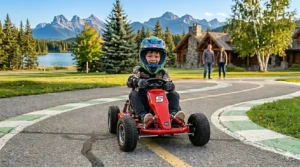
Health Canada regulates toys through the Canada Consumer Product Safety Act and Toys Regulations, but understanding compliance versus practical safety requires nuance. All ride on toys sold through Amazon.ca must meet these federal requirements, including bilingual safety warnings and age-appropriate design standards. However, meeting minimum legal requirements doesn’t automatically mean a toy suits your specific Canadian environment or child’s skill level.
Helmet requirements vary by province and activity type. Most Canadian jurisdictions don’t legally mandate helmets for ride-on toys in private yards, but the Canadian Paediatric Society strongly recommends them regardless of legal requirements. Look for helmets displaying CSA, CPSC, or ASTM certification labels — these standards ensure adequate impact protection for young children’s developing skulls. Sizes matter enormously: measure your child’s head circumference and reference specific manufacturer sizing rather than age ranges, which vary significantly between brands. For reference, average five-year-olds measure 50-52 cm, whilst eight-year-olds typically measure 54-56 cm around the head.
Weight limits exist for mechanical reasons, not arbitrary safety theatre. When manufacturers specify a 30 kg maximum for 12V models, exceeding that limit doesn’t just void warranties — it creates genuine safety issues. The motors strain and overheat under excess load, batteries drain dramatically faster (creating mid-ride dead-battery situations), and the steering mechanisms experience greater stress during turns, increasing failure risk. Canadian children’s average weights sit around 18-20 kg at age five, 23-26 kg at age seven, and 27-30 kg at age eight. If your child approaches or exceeds the stated weight limit, budget for a more robust model rather than hoping the manufacturer added safety margin.
Speed limiting makes sense during the learning phase. Most models in our lineup include parent-adjustable speed settings or lockouts. Start with the lowest speed (typically 2-3 km/h) regardless of your child’s confidence assertions. That crawling pace feels agonisingly slow to you, but it lets children learn steering response, braking distance, and spatial awareness without consequences. Increase speed only after they demonstrate consistent control for multiple sessions — many Canadian parents report keeping kids at the lowest speed for the entire first summer season before progressing.
Canadian terrain creates unique challenges. Our freeze-thaw cycles leave behind cracked driveways, lifted pavement sections, and lawn irregularities that pose tipping hazards absent in more temperate climates. Before your child’s first ride each spring, walk your property and identify problem spots: exposed tree roots, drainage ditches, slope transitions, and driveway edges where pavement meets grass. Establish clear boundaries for where the ride-on belongs — most accidents occur when kids venture into areas parents hadn’t considered dangerous.
Battery safety requires specific Canadian awareness. The lead-acid or lithium batteries in these toys don’t tolerate our temperature extremes. Never charge batteries in freezing conditions (below 0°C / 32°F) — the charging process can damage cells or, in worst cases, cause thermal runaway. Never store charged batteries in unheated spaces during winter — the cold degrades capacity permanently. And never leave batteries charging overnight unattended — whilst modern chargers include auto-shutoff, the consequence of malfunction (fire) outweighs the convenience. Charge these in your living space where you’ll notice problems immediately, not in the garage where a smouldering battery might go undetected.
Maintenance That Actually Extends Lifespan
Canadian families who get three seasons from budget ride-ons share common maintenance habits that go beyond the basic instruction manual guidance.
Post-ride wipe-downs prevent 80% of electronic failures. After each use, spend 60 seconds wiping mud and moisture from around the battery compartment, underneath the seat (where the main control board typically lives), and around the music player ports. Use a slightly damp cloth — not dripping wet — and dry thoroughly. This simple habit prevents the gradual moisture ingress that corrodes connections and creates mysterious intermittent failures months later.
Monthly wheel checks catch problems early. The vibration from riding gradually loosens wheel nuts despite lockwashers. Once monthly (mark it on your calendar or you’ll forget), tighten all wheel fasteners by hand-turning them another quarter turn. This takes maybe five minutes total and prevents the “suddenly loose wheel” scenario that ruins riding sessions and potentially damages axles. Whilst you’re checking wheels, spin each one and listen for grinding sounds indicating debris in the wheel wells — small stones get trapped regularly and damage plastic components through prolonged contact.
Battery maintenance determines usable life. Lead-acid batteries (common in 6V and most 12V models) hate being stored discharged. If you’re putting a ride-on away for Canadian winter, charge the battery fully first, then disconnect it completely, and store it indoors at room temperature. Recharge it once mid-winter (around January) even though it’s not being used — this prevents sulfation damage that permanently reduces capacity. Reconnect in spring, charge overnight, and you’ll get full performance. Skip these steps and you’ll buy replacement batteries annually instead of every 2-3 years.
Keep the manuals and spare parts together. When you inevitably need a new charger (they fail more frequently than batteries), having the model number from the manual saves hours of Amazon.ca searching trying to identify compatible replacements. Create a small storage box containing the instruction booklet, a spare charger if you can find one affordably, and the parent remote. This prevents the “we can’t find the remote so I guess they’re driving alone today” scenario that tends to precede accidents.
Clean and store properly for winter. Don’t just shove these into your garage corner and forget them until spring. In late October before consistent freezing weather arrives, give the vehicle a thorough cleaning with mild soap and water. Dry completely, especially around electrical components. Remove the battery (see above). Cover with an old sheet or tarp to prevent dust accumulation. When you retrieve it in spring, you’ll spend 10 minutes rather than an hour dealing with grime, spider webs, and the mystery of whether it still works after months of neglect.
Common Mistakes When Buying Budget Ride-Ons
After analysing hundreds of negative reviews on Amazon.ca, certain patterns emerge — mistakes that lead to buyer disappointment and frustrated kids. Avoid these pitfalls.
Mistake #1: Ignoring assembly complexity. Some Canadian buyers rate these one star not because the product failed, but because assembly frustrated them. The reality: expect 30-60 minutes of assembly time depending on the model. If you struggle with tools or instructions, factor that into your purchase decision. The OLAKIDS Motorcycle requires the least assembly; the Qaba 2-Seater UTV requires the most. Plan assembly a day or two before gifting so you’re not frantically building at midnight before a birthday.
Mistake #2: Assuming “licensed” means premium quality. The VoltzToys Mercedes and Ford F-150 Raptor include official branding, but they’re still budget models with budget components. “Licensed” primarily means appearance and branding — it doesn’t guarantee superior motors, batteries, or electronics compared to unlicensed alternatives at similar prices. Buy licensed models because your child specifically wants that brand, not because you’re assuming licensing implies higher quality.
Mistake #3: Buying too small for “room to grow.” Parents sometimes purchase 6V models for their seven-year-old thinking they’ll be fine, then discover the child finds it painfully slow and boring within weeks. The age ranges listed (e.g., “3-8 years”) span such wide developmental ranges that they’re nearly meaningless. Better guidance: if your child is in the younger half of the range (5-6) and lightweight, 6V works. If they’re older (7-8) or heavier (above 25 kg), skip straight to 12V minimum. The modest price difference ($40-60 CAD) is worth avoiding the disappointment of underpowered toys.
Mistake #4: Forgetting about winter storage needs. Multiple Canadian reviewers express surprise about storage requirements, having apparently purchased without considering where they’d keep a 1-metre-long plastic vehicle for 4-6 months annually. Measure your garage space before purchasing. If you don’t have appropriate indoor storage, you’ll face the choice between deteriorated batteries/cracked plastic from cold storage or cluttering your basement with a dusty ride-on toy nobody’s using from November through March.
Mistake #5: Not testing immediately upon arrival. Amazon.ca’s return window for toys typically runs 30 days, but many families assemble the ride-on, set it aside for a gift occasion weeks later, then discover defects after the return period closes. Assemble and test within 48 hours of delivery. Check all functions: forward and reverse motion, parent remote operation, LED lights, music player, horn. Take a video of any issues immediately — having timestamped evidence within the return window makes resolution dramatically easier.
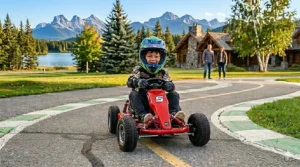
Mistake #6: Expecting waterproof when the specifications say “water-resistant.” These ride-ons tolerate light moisture but aren’t designed for riding through puddles or operating in rain. Canadian parents who let kids ride during drizzle or after rainfall frequently report premature electronic failures. The manufacturers aren’t lying — they clearly state these aren’t waterproof. The disconnect happens when buyers assume “outdoor toy” automatically means “weatherproof toy.” It doesn’t.
Budget Ride-Ons vs Premium Models: The Honest Trade-Offs
Canadian families shopping for ride on toys face a question manufacturers don’t directly address: what’s the actual functional difference between our $150-$300 budget recommendations and the $400-$600 premium alternatives also available on Amazon.ca? Here’s the realistic assessment without marketing spin.
Motor power and battery capacity show the clearest differences. Budget 12V models typically use 35-50W motors paired with 4.5-7Ah batteries. Premium 12V models jump to 65-100W motors with 7-12Ah batteries. You feel this difference most on inclines and during extended riding. The budget model slows noticeably on even 5-degree slopes; the premium model maintains speed up to 10-degree grades. The budget battery dies after 45-75 minutes; the premium lasts 90-180 minutes.
Suspension sophistication separates categories dramatically. Budget models include basic spring suspension on two or four wheels — essentially coil springs that compress over bumps. Premium models feature independent suspension with adjustable damping, similar to small motorcycles. On smooth Canadian driveways and maintained lawns, the difference feels minimal. On rough terrain (gravel, roots, uneven ground), the premium suspension delivers noticeably smoother rides that permit higher speeds without discomfort.
Build quality and materials diverge in ways that only become obvious after months of use. Budget models use thinner plastic panels (around 2-3mm thickness) that flex noticeably under pressure and crack more easily during minor impacts. Premium models use 4-6mm panels, sometimes incorporating ABS plastic with higher impact resistance. The budget seat padding compresses to minimal cushioning after a season; premium padding retains resilience. These differences don’t create safety issues necessarily, but they affect longevity and resale value significantly.
Electronic durability varies based on component quality and weatherproofing. Budget models use basic circuit boards with minimal conformal coating — they work reliably in dry conditions but moisture ingress causes gradual degradation. Premium models include better-sealed electronic enclosures and circuit boards with protective coating, extending reliable lifespan in real-world Canadian outdoor conditions. The LED lights and music systems on budget models often fail partially (one headlight out, crackling sound) during year two; premium models maintain full functionality longer.
Feature sophistication differs mostly in ways that don’t dramatically affect core riding experience. Premium models might include: Bluetooth app connectivity for parental monitoring, GPS tracking, more realistic sound effects, opening doors/hoods, working gauges, and multiple drive modes (road vs off-road settings). Budget models focus on fundamental functionality: it moves forward and backward, lights illuminate, music plays. For most five-to-eight-year-olds during typical backyard play, the extra features on premium models provide minimal additional entertainment value.
The value verdict: If you have a single child who’ll use this for 1-2 summers before outgrowing it, budget models deliver adequate performance at dramatically lower investment. If you have multiple children who’ll use it sequentially over 4-5 years, or a child who’ll ride frequently (multiple times weekly) over rough terrain, premium models justify their cost through durability and sustained performance. If your property includes legitimate hills (beyond gentle slopes), premium motor power becomes necessary rather than optional. For most Canadian suburban families with maintained yards, budget models in the $180-$280 range represent the value sweet spot.
Age-Appropriate Selections: Matching Child to Vehicle
The “5-8 years” designation on most ride-ons spans such significant developmental differences that treating it as a single category leads to poor matches. Here’s how to match vehicles to actual child characteristics rather than broad age ranges.
For younger fives (or newly five): Start with 6V models like the OLAKIDS Motorcycle ($90-$130) or Qaba ATV ($120-$160). The slower speeds (3-4 km/h) match their developing coordination, and the lighter vehicles (easier to lift/move when they inevitably get stuck) accommodate their more tentative riding style. These kids benefit from compact designs they can see over and around easily, and they rarely ride long enough for the shorter 6V battery life to become limiting.
For confident sixes approaching seven: The 12V single-seater options (VoltzToys Mercedes $200-$250, Costzon Truck $190-$240) hit the sweet spot. They’re getting comfortable with speed variation, benefiting from the three-speed settings these models offer. Their improved coordination means they’ll actually use parent remote controls less frequently, valuing their independence. They’re heavy enough (22-25 kg typically) that 6V models feel underpowered, but the 24V systems still feel overwhelming during turns and acceleration.
For established sevens and young eights: Consider the more powerful options at the top of our budget range. The Ford F-150 Raptor ($230-$280) with its slightly higher speed ceiling and sturdier build accommodates their increased weight and developing riding skills. If you have siblings close in age, the Qaba 2-Seater UTV ($280-$300) makes sense — seven-to-eight-year-olds possess the coordination for shared riding and the maturity to negotiate turns without constantly arguing.
For larger or especially coordinated kids in the 5-8 range: Don’t feel bound by age if your child’s size or skill exceeds typical development. An athletic, coordinated six-year-old weighing 27 kg will outgrow 6V models within months and feel more comfortable on 12V systems immediately. Conversely, a smaller-statured eight-year-old at 24 kg might prefer mid-range 12V models over the most powerful options.
The coordination consideration: Age correlates imperfectly with the motor skills these vehicles demand. Some fives display exceptional hand-eye coordination and spatial awareness; they’ll handle faster speeds safely. Other eights struggle with impulsive behaviour or spatial judgement; they need slower speeds and closer supervision regardless of their chronological age. Honest assessment of your specific child’s coordination matters more than age guidelines.
Frequently Asked Questions
❓ Can ride on toys handle Canadian winters outside?
❓ How long do batteries last before needing replacement?
❓ Are these safe for driveways and roads near traffic?
❓ What's the real difference between 6V, 12V, and 24V systems?
❓ Can I buy replacement parts if something breaks?
Conclusion: Making the $300 Budget Work
Finding ride on toys under $300 canada 5-8 years that deliver genuine quality requires understanding what’s realistic at this price point — and what isn’t. You’re not getting premium materials, sophisticated features, or hand-me-down durability. You are getting 2-3 seasons of legitimate outdoor entertainment that’ll survive typical Canadian suburban use as long as you provide basic maintenance and appropriate winter storage.
The models we’ve examined represent the strongest options currently available on Amazon.ca for Canadian families working within this budget. The Qaba Kids Ride On Tractor with Trailer ($180-$230 CAD) emerges as the most versatile single-rider option — adequate power, functional trailer that extends play value, and reliable parent controls at a price that won’t cause budget anxiety. For families with multiple children, the Qaba 2-Seater UTV ($280-$300 CAD) delivers superior value compared to purchasing two separate budget vehicles. And for testing whether your child will actually use a ride-on regularly before committing larger funds, the OLAKIDS Motorcycle ($90-$130 CAD) represents minimal financial risk.
What matters most isn’t selecting the “perfect” model from our list — they all function adequately within their design parameters. What matters is matching vehicle capabilities to your specific situation: your child’s current weight and coordination, your property’s terrain challenges, your available storage space, and your realistic assessment of how frequently your family will actually use this toy. Canadian parents who consider these practical factors before purchasing report dramatically higher satisfaction than those who buy based primarily on appearance or brand licensing.
The affordable quality kids vehicles category has improved substantially over recent years. What cost $400-$500 CAD five years ago now delivers at $180-$280 with comparable features and reliability. The budget electric ride ons available through Amazon.ca today provide legitimate entertainment value as long as you enter the purchase with realistic expectations about lifespan, maintenance requirements, and feature limitations. For most Canadian families, these budget-friendly quality toys represent smarter value than premium models that cost double whilst providing only marginally better performance for typical backyard use.
Recommended for You
- 7 Best 6th Birthday Gift Ride On Toys That Spark Joy Canada 2026
- 7 Smart Ways How to Store Kids Ride On Toys Winter Canada 2026
- Outdoor Ride On Safety Guide 5-8 Year Olds Canada 2026
Disclaimer: This article contains affiliate links. As an Amazon Associate, I earn from qualifying purchases. If you purchase products through these links, we may earn a small commission at no additional cost to you.
✨ Found this helpful? Share it with your friends! 💬🤗
