
In This Article
There’s a very specific sound that fills a Canadian backyard the first time a toddler discovers throttle control: half shriek, half laugh, followed by “again, again!” That’s usually the moment parents start googling a 6v ride on motorcycle for toddlers at 11 p.m., phone glowing, kid finally asleep, wondering if the shiny one in the ad is actually worth the money or just louder plastic. Fair question. A toddler-sized electric motorcycle is a strange little category — part safety gear, part toy, part rite of passage — and the differences between models matter more than the marketing photos let on.
What is a 6v ride on motorcycle for toddlers? It’s a battery-powered ride-on toy built around a single 6-volt rechargeable battery, typically capped at 1.5–3 mph, designed for children roughly 18 months to 6 years old, and almost always equipped with training wheels for stability while little riders learn balance and steering.
This guide breaks down seven genuinely available models — budget, mid-range, and premium — with honest analysis of specs, aggregated review sentiment, and the kind of real-world context Amazon listings never bother to mention: how long the battery actually lasts on carpet versus driveway, which models tip on turns, and which ones survive a Canadian winter in the garage. We’ll also walk through Health Canada’s Toys Regulations requirements so you know what “certified safe” is actually supposed to mean before you swipe your card.
Quick Comparison Table
| Product | Battery | Top Speed | Weight Capacity | Best For |
|---|---|---|---|---|
| Kid Trax Toddler Motorcycle | 6V | 1.5 mph | 44 lbs | Youngest first-time riders |
| Kid Trax 6V Glow Electric Motorcycle | 6V | 2.2 mph | 65 lbs | Lights-and-sound lovers |
| Best Choice Products 6V Motorcycle w/ Training Wheels | 6V | 2 mph | 44 lbs | Budget-conscious families |
| Lil’ Rider Electric Motorcycle | 6V, 4.5Ah | 3 mph (fwd/rev) | 45 lbs | Kids ready for reverse function |
| Stopsad 6V Kids Electric Motorcycle | 6V, 4.5Ah | 2 mph | 66 lbs | Tech-forward parents (Bluetooth) |
| Costzon 6V Chopper Motorcycle | 6V | 2 mph | ~55 lbs | Classic chopper styling |
| OLAKIDS 6V Electric Ride On | 6V | 2 mph | ~50 lbs | Novelty bubble-feature seekers |
Scanning this table, the split between “toddler-first” and “preschooler-ready” models is really about top speed and weight capacity, not price. The Kid Trax Toddler Motorcycle caps out at a genuinely toddler-safe 1.5 mph, while the Lil’ Rider Electric Motorcycle pushes to 3 mph with reverse — a meaningful jump for a kid who’s already comfortable steering. If your child is closer to 18–24 months, weight capacity and low top speed should outrank flashy features every time.
💬 Just one click — help other Canadian parents make safer buying decisions too!😊
Top 7 6V Ride-On Motorcycles for Toddlers: Expert Analysis
1. Kid Trax Toddler Motorcycle — safest speed for first-time riders
The Kid Trax Toddler Motorcycle is built for the 1.5- to 3-year range, and its defining feature is restraint: a capped top speed of 1.5 mph, which sounds almost comically slow until you’ve watched a barely-walking toddler try to steer anything faster. That governed speed is the whole point — it lets kids build coordination without outrunning their own reflexes.
Specs-wise, it runs on a rechargeable 6-volt battery with a wall charger included, supports up to 44 lbs, and drives via a simple foot-pedal accelerator rather than a hand throttle, which suits toddlers who don’t yet have the grip strength or attention span for handlebar controls. It includes a working headlight, horn and engine sound effects, and two small traffic cones for imaginative play.
Based on the spec comparison, this is squarely a first-motorcycle pick rather than something that’ll grow with a 5-year-old — the 44 lb capacity and 1.5 mph ceiling mean most kids outgrow it within a year or two. Reviewers consistently report that the pedal-to-go mechanic is intuitive even for kids who’ve never operated a powered toy before, and several note the traction-strip tires hold up well on driveways and sidewalks.
Pros:
- ✅ Genuinely toddler-safe top speed of 1.5 mph
- ✅ Simple foot-pedal control suits 18–30 month olds
- ✅ Rechargeable battery with charger included
Cons:
- ❌ Lower 44 lb weight capacity limits use to about a year
- ❌ No reverse function for backing out of tight corners
At around C$70-C$90 range, this is one of the most affordable entry points into powered ride-ons, and the value case is strong specifically because the safety ceiling matches the age group it’s aimed at.
2. Kid Trax 6V Glow Electric Motorcycle — best for lights-and-sound obsessed kids
The Kid Trax 6V Glow Electric Motorcycle leans hard into sensory appeal — LED headlights, glowing body panels, and realistic engine and horn sounds — while still running on the same trusted 6-volt platform as its sibling model above.
It reaches a controlled 2.2 mph, a notch faster than the base Kid Trax model, and supports a considerably higher 65 lb weight capacity, which stretches its usable window well into the preschool years. The sturdy frame and contoured seat are designed with stability in mind rather than raw speed, and assembly is described as quick and straightforward.
What most buyers overlook about this model is that the “glow” feature isn’t just cosmetic — for parents dealing with early-evening riding sessions in shoulder-season daylight (a real Canadian reality come October), the lit-up body and headlight genuinely improve visibility, not just fun factor. Reviewers consistently note the coordination-building value, with several parents mentioning steady improvements in balance and confidence within the first few rides.
Pros:
- ✅ Higher 65 lb capacity extends usable age range
- ✅ LED lights improve visibility in low light
- ✅ Sturdy, well-balanced frame for first-time riders
Cons:
- ❌ Only rated for smooth, indoor/outdoor surfaces
- ❌ Louder sound effects may overstimulate some toddlers
Priced in the C$90-C$120 range, the extra investment over the base Kid Trax model buys real functional upside — namely capacity and visibility — not just novelty lighting.
3. Best Choice Products 6V Motorcycle w/ Training Wheels — best budget pick with certified safety
The Best Choice Products 6V Motorcycle w/ Training Wheels is one of the more widely available budget options, and its standout feature is the pairing of a low 2 mph top speed with sturdy dual training wheels for lateral stability.
The 6V rechargeable battery delivers up to 40 minutes of continuous play per charge, and the toy meets ASTM and CPSIA safety certifications with a 44 lb weight capacity. Treaded tires and working headlights round out a feature set that, on paper, punches above its price point for a toddler-first ride-on.
Here’s what to weigh: this model trades premium styling for functional basics done well. Reviewers consistently flag the training wheels as the standout for anxious first-time riders — they meaningfully reduce tip-overs during the learning phase, which matters more for very young toddlers than horsepower ever will. A common complaint in user reviews is that the plastic build feels a bit lighter-duty than pricier competitors, so it’s best suited to smooth driveways and indoor play rather than gravel or grass.
Pros:
- ✅ Dual training wheels reduce tip-over risk
- ✅ ASTM and CPSIA certified for safety
- ✅ Strong value at its price point
Cons:
- ❌ Lighter plastic build than premium alternatives
- ❌ Best suited to smooth surfaces only
At an around C$70 price point, this is arguably the best entry-level buy for parents who want certified safety features without paying for extras like Bluetooth or bubble machines.
4. Lil’ Rider Electric Motorcycle — best for kids ready for reverse function
The Lil’ Rider Electric Motorcycle stands out for one specific reason: it’s one of the few 6V toddler motorcycles with a genuine reverse gear, letting kids back out of a corner instead of getting stuck facing a wall — a small feature that saves a surprising number of parental interventions.
It’s recommended for kids aged 3 to 6, runs on a 6-volt, 4.5Ah rechargeable battery, and reaches a maximum forward and reverse speed of about 3 mph. The frame supports up to 45 lbs and includes two training wheels for stability while riders adjust to the added speed and reverse function.
On paper this means a slightly steeper learning curve than the slower models above, so Lil’ Rider is a better match for a child who’s already comfortable on a push-ride toy or balance bike and ready to graduate. What the spec sheet won’t tell you, but reviewers note, is that the reverse function takes most kids a few sessions to master — expect some awkward three-point turns in the driveway before it clicks.
Pros:
- ✅ Genuine forward and reverse function
- ✅ Phthalate-free plastic construction
- ✅ Training wheels support the added speed range
Cons:
- ❌ 3 mph top speed may be too fast for under-2s
- ❌ Assembly required before first ride
Typically found in the C$100-C$150 range, this model earns its price premium through the reverse feature and higher top speed, which genuinely extends how long a growing toddler will stay interested.
5. Stopsad 6V Kids Electric Motorcycle — best tech-forward pick with Bluetooth
The Stopsad 6V Kids Electric Motorcycle is the most feature-dense option on this list, built around a low-center-of-gravity frame with LED headlights, Bluetooth audio, a small storage box, and simulated horn and music functions.
It runs on a 6V 4.5Ah rechargeable battery supporting 30–40 minutes of continuous riding, tops out at a toddler-appropriate 2 mph, and carries a notably high 66 lb weight capacity — one of the largest in this class — for children aged 3 to 6.
Based on the spec comparison, the rounded-edge, low-slung frame design is a genuine safety differentiator rather than marketing fluff: a lower center of gravity meaningfully reduces tip-over risk during sharp turns compared to taller-bodied competitors. What most buyers overlook is the Bluetooth speaker — it lets parents queue up their own playlist instead of relying on the built-in chip tunes, which after the fortieth replay of the factory jingle becomes a genuinely appreciated feature.
Pros:
- ✅ Low center of gravity improves turning stability
- ✅ Bluetooth audio replaces repetitive built-in music
- ✅ High 66 lb weight capacity for extended use
Cons:
- ❌ More components mean more potential points of failure
- ❌ Storage box adds bulk versus simpler models
In the C$100-C$140 range, this model is a strong pick for parents who specifically want the extra tech layer and don’t mind a slightly bulkier footprint in the garage.
6. Costzon 6V Chopper Motorcycle — best classic chopper styling
The Costzon 6V Chopper Motorcycle goes for old-school chopper aesthetics — a lower, longer silhouette with a stretched front end — paired with a bubble-maker feature, working horn, and LED headlight for a genuinely playful ride experience.
It runs on a 6V battery-powered system with forward and backward drive, sits on a stable three-wheel base, and is designed for toddlers who benefit from the extra footprint of a three-wheel configuration over a strict two-wheel-plus-training-wheels design.
Reviewers consistently note that the three-wheel chopper layout feels noticeably more stable during pivot turns than narrower two-wheel models, which matters if your toddler tends to yank the handlebars hard rather than steering gradually. The bubble-maker is a nice-to-have rather than a core safety feature, but it does add a layer of sensory engagement that keeps younger toddlers interested longer than styling alone would.
Pros:
- ✅ Wide three-wheel stance improves pivot-turn stability
- ✅ Bubble-maker adds sensory play value
- ✅ Distinctive styling stands out from generic models
Cons:
- ❌ Longer frame needs more storage space
- ❌ Bubble solution requires separate refills
Generally priced in the C$90-C$130 range, this is a solid mid-tier pick for parents prioritizing stability and play-value over minimalist design.
7. OLAKIDS 6V Electric Ride On — best novelty bubble-feature pick
The OLAKIDS 6V Electric Ride On rounds out the list with an automatic bubble function alongside foot-pedal operation, a working headlight, built-in music, and three anti-skip wheels for added grip on varied surfaces.
The anti-skip wheel design is the functional standout here — rather than smooth plastic tires, the textured surface is engineered to resist slipping on tile, hardwood, and painted concrete alike, which matters a great deal for families doing most of their riding indoors or on a finished garage floor.
What most buyers overlook about foot-pedal designs like this one is that they demand less fine motor coordination than hand-throttle systems, making OLAKIDS a reasonable pick for younger toddlers on the lower end of the recommended age range. Aggregated reviewer sentiment points to the automatic bubble feature as a genuine differentiator for keeping toddlers engaged beyond the initial novelty of simply driving around, though as with any consumable-refill feature, ongoing bubble solution costs are worth factoring in.
Pros:
- ✅ Anti-skip wheels grip varied indoor surfaces
- ✅ Foot-pedal control suits younger toddlers
- ✅ Automatic bubble function adds engagement
Cons:
- ❌ Bubble solution is an ongoing consumable cost
- ❌ Foot-pedal-only limits speed control precision
At around C$80-C$110, this model is a sensible pick for indoor-heavy households where surface grip and sensory play matter more than raw speed or capacity.
Practical Usage Guide: Setup, Charging, and the First 30 Days
Getting a new 6v ride on motorcycle for toddlers right in the first month prevents most of the frustration parents report later. Start with a full initial charge — most 6V batteries need 8-12 hours before the first ride, even if the listing says less, because a fully saturated charge on day one meaningfully extends the battery’s long-term lifespan. Skipping this step is the single most common first-week mistake, and it’s also the quiet cause behind a lot of “the battery died fast” reviews you’ll see online.
Set the top-speed and forward/reverse switches (where present) to their lowest setting for the first several rides, even if your child seems ready for more — confidence at a manageable pace transfers far better than fear from an early tumble. Keep charging sessions to overnight or during naptime, never mid-play, since repeated partial charges shorten most 6V lead-acid or SLA battery packs faster than full-cycle charging does.
On the maintenance side, wipe down tires after outdoor rides to prevent grit from working into the axles, and inspect the battery terminal connections monthly for corrosion, especially in humid basements common to many Canadian homes. Store the unit somewhere temperature-stable; extreme cold in an unheated garage measurably reduces 6V battery output, which is worth remembering before a disappointing “why is it slow today?” moment in January.
Real-World Scenarios: Matching the Right Motorcycle to Your Toddler
Picture three very different Canadian households, each shopping the same keyword with different needs in mind. First, there’s the family with an 18-month-old who’s just mastered walking and is desperate to keep up with an older sibling’s bike — for them, the Kid Trax Toddler Motorcycle‘s 1.5 mph ceiling and simple pedal control make it the obvious, safest starting point, even if it means an upgrade purchase down the line.
Then there’s the apartment-dwelling parent with a 4-year-old who mostly rides on tile flooring and hardwood — surface grip matters more than raw speed here, making the OLAKIDS 6V Electric Ride On‘s anti-skip wheels a genuinely practical fit, especially paired with the bubble feature for indoor entertainment on rainy days.
Finally, consider the family with a confident, coordinated 5-year-old who’s outgrown a balance bike and wants a “real” motorcycle experience — the Lil’ Rider Electric Motorcycle‘s reverse function and 3 mph top speed give them room to grow into the toy rather than out of it within a season. In each case, the right choice comes down to matching top speed and control complexity to the child’s actual coordination level, not just their age on paper.
How to Choose a 6V Ride On Motorcycle for Toddlers
- Match top speed to coordination, not age. A 3-year-old with strong gross motor skills may handle 3 mph fine, while a cautious 4-year-old might do better at 1.5-2 mph.
- Check weight capacity against a realistic growth window. A 44 lb cap suits most toddlers for about a year; a 60+ lb cap stretches usable life into the preschool years.
- Prioritize training wheels or a wide three-wheel base for first-time riders. Stability features matter more than styling in the first few months of ownership.
- Confirm the control mechanism suits your child’s motor skills. Foot-pedal designs demand less fine coordination than hand-throttle or steering-column controls.
- Verify battery runtime against your actual play patterns. A 30-40 minute runtime is standard, but consider whether your child rides in short bursts or long sessions.
- Look for CPSIA or ASTM certification markers, and cross-reference against Health Canada’s own Toys Regulations requirements for electrically operated toys.
- Factor in surface type at home. Textured or anti-skip tires matter far more on hardwood or tile than on carpet or asphalt.
6V vs 12V Ride-On Motorcycles: What the Voltage Actually Means
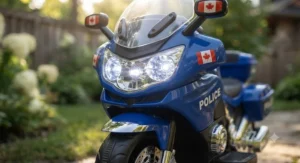
The jump from 6V to 12V isn’t just a bigger number on the box — it’s a meaningfully different riding experience. A 6V ride on motorcycle for toddlers typically tops out around 1.5-3 mph, governed intentionally low for children still developing balance and reaction time, while 12V models commonly reach 4-5 mph with more torque for inclines and grass.
For toddlers specifically — the 18-month to 4-year range this guide focuses on — that extra speed and torque isn’t an upgrade, it’s a liability. Reviewers consistently note that 12V ride-ons, while great for kids aged 5 and up, are genuinely harder for younger toddlers to control safely, with more reported tip-overs on turns. The trade-off runs the other way too: 6V batteries charge faster and cost less to replace, but they also deliver noticeably shorter range and struggle on grass, gravel, or any incline steeper than a driveway apron. If your child is under 4 and mostly riding on flat pavement or indoor flooring, a 6V model is very likely the more appropriate — not just cheaper — choice.
Common Mistakes When Buying a Toddler Ride-On Motorcycle
Even careful parents make predictable errors here. The most common is buying based on max weight capacity alone, without checking whether the top speed and control scheme actually suit a toddler’s current coordination — a 65 lb capacity model with a 3 mph top speed can be genuinely too much motorcycle for an 18-month-old, regardless of size.
A second frequent mistake is skipping the certification check. Reviewers consistently note that not every listing clearly states ASTM or CPSIA compliance, and Health Canada’s own guidance stresses that compliance verification remains the importer’s or seller’s responsibility rather than something guaranteed simply by being sold on a major marketplace. Always look for explicit certification language in the listing itself.
A third mistake is underestimating charging discipline. Parents who let the battery run flat repeatedly, or who unplug a partial charge to squeeze in one more ride, report noticeably shorter battery lifespans within the first six months — patience during charging genuinely pays off in longevity.
What to Expect: Real-World Performance on Canadian Surfaces
Specs on a listing rarely translate directly into backyard reality, especially once Canadian weather and terrain enter the picture. On smooth asphalt driveways, most 6V models perform close to their rated top speed, but grass — even short, well-maintained lawn — can cut effective speed by a third or more due to increased rolling resistance on small plastic wheels.
Cold weather matters too. A 6V battery that delivers a full 40-minute runtime at room temperature may only manage 25-30 minutes once the mercury drops toward 5°C (41°F), which is worth knowing before an autumn birthday gift disappoints during a chilly test ride. Reviewers consistently mention that indoor-only use on hardwood or tile tends to maximize both battery life and tire longevity, since outdoor debris and temperature swings are the biggest long-term wear factors for these toys.
Safety, Regulations, and Compliance Guide for Canadian Parents
In Canada, ride-on toys fall under the Canada Consumer Product Safety Act and its associated Toys Regulations (SOR/2011-17), which set out mechanical, thermal, and electrical safety requirements for products manufactured, imported, or sold in Canada. Electrically operated toys specifically must meet Canadian Standards Association Standard C22.2 No. 149-1972, covering everything from surface temperature limits to safe electrical design.
Health Canada’s consumer guidance is refreshingly practical beyond the legal text: choose a ride-on toy that suits a child’s age, size, and ability; only adults should install or charge batteries, since improper handling can cause overheating; and parents should scan the play area for hazards like stairs, pools, or loose cords before every session, since a toddler on a powered ride-on can cover ground faster than expected. For the full breakdown of requirements manufacturers must meet, the Industry Guide to Health Canada’s Safety Requirements for Children’s Toys is worth a skim if you want the regulatory detail behind the certification stickers on the box.
✨ Don’t Miss These Exclusive Deals!
🔍 Take toddler ride-on shopping to the next level with these carefully researched picks. Click on any highlighted model to check current pricing and availability on amazon.ca. These safety-conscious choices will help create the kind of backyard memories your family will actually look back on fondly!
Long-Term Cost and Maintenance: What Ownership Really Costs
Beyond the initial purchase price, a 6V ride-on motorcycle carries a few predictable ongoing costs worth budgeting for. Replacement 6V batteries typically run in the C$20-C$40 range and are usually needed after 1-2 years of regular use, depending on charging discipline and storage conditions. Charger units rarely fail but are inexpensive to replace individually if lost or damaged, generally under C$20.
Where these toys genuinely deliver value is longevity of the frame itself — the plastic bodies, tires, and mechanical components on reputable brands like Kid Trax or Best Choice Products routinely outlast the battery by several years, meaning a single battery swap can extend usable life well beyond the toddler years into hand-me-down territory for a younger sibling. Factoring in a likely one-time battery replacement, total realistic ownership cost over 2-3 years sits meaningfully below buying a second, newer unit outright — a point worth remembering before assuming a “cheap” toy is genuinely the most economical option long-term.
Features That Actually Matter (And Those That Don’t)
Marketing copy on ride-on toys tends to bury the genuinely important specs under flashier ones. Top speed, weight capacity, and training-wheel or wide-base stability are the features that actually determine safety and satisfaction — everything else is largely aesthetic.
Sound effects, glowing body panels, and Bluetooth audio are pleasant but functionally optional; they add engagement without meaningfully changing the riding experience. Bubble-maker functions fall into a similar bucket — genuinely fun, but an ongoing consumable cost rather than a core value driver. What’s easy to overlook, but shouldn’t be, is tire texture and surface compatibility — a toy with beautiful styling but smooth plastic wheels can be genuinely frustrating on hardwood or tile, regardless of how capable the motor and battery are.
Buyer’s Decision Framework
If your child is under 2 years old and just learning to walk confidently, choose a 1.5 mph pedal-controlled model like the Kid Trax Toddler Motorcycle, because low speed and simple controls minimize both physical risk and frustration during the earliest learning phase.
If your child is 3-4 years old and rides mostly indoors on hardwood or tile, choose a model with anti-skip or textured tires like the OLAKIDS 6V Electric Ride On, because surface grip will matter more day-to-day than top speed.
If your child is a confident 4-6 year old ready to graduate from a balance bike, choose a higher-speed model with reverse function like the Lil’ Rider Electric Motorcycle, because the added control complexity will hold their interest longer than a toy they’ve already outgrown in coordination.
Problem → Solution Guide
Problem: The battery seems to die faster than advertised. Solution: check whether charging sessions have been full 8-12 hour cycles rather than quick top-ups, and store the unit at a stable indoor temperature rather than an unheated garage during winter months.
Problem: My toddler keeps tipping over on turns. Solution: switch to a model with training wheels or a wide three-wheel chopper base like the Costzon 6V Chopper Motorcycle, and practice on flat, obstacle-free surfaces before introducing turns.
Problem: The toy struggles on grass or gravel. Solution: 6V motors are intentionally underpowered for rough terrain; stick to paved driveways, sidewalks, or indoor flooring, or consider a 12V model once your child is developmentally ready for higher speeds.
Problem: My child seems bored after the first few weeks. Solution: models with added sensory features — bubble makers, Bluetooth music, or LED lighting like the Stopsad 6V Kids Electric Motorcycle — tend to sustain engagement longer than purely functional designs.
Problem: Assembly instructions are confusing. Solution: most 6V models require only basic tool-free or single-tool assembly (handlebars, seat, mirrors); set aside 20-30 minutes and check for a printed or QR-linked instruction sheet before starting.
Frequently Asked Questions
❓ How fast does a 6V ride on motorcycle for toddlers go?
❓ What age is appropriate for a 6V toddler motorcycle?
❓ How long does the battery last on a full charge?
❓ Are 6V ride-on motorcycles certified safe in Canada?
❓ Can a 6V motorcycle be used outdoors on grass?
Conclusion
Choosing the right 6v ride on motorcycle for toddlers really comes down to matching three things honestly: your child’s actual coordination level, the surfaces they’ll ride on most, and how much room you want for growth before an upgrade. The Kid Trax Toddler Motorcycle remains the safest true starting point for the youngest riders, while options like the Lil’ Rider Electric Motorcycle and Stopsad 6V Kids Electric Motorcycle offer more runway for kids who are ready for a bit more speed, tech, or reverse-gear independence.
None of these are “wrong” choices in isolation — they’re built for slightly different stages of the same wobbly, thrilling journey from first steps to confident steering. Whichever model you land on, the fundamentals matter most: full initial charges, supervised early rides, a hazard-checked play area, and certification you’ve actually verified rather than assumed. Do that, and the toy will earn its keep in backyard memories long before the battery ever needs replacing.
✨ Ready to pick the safest ride for your little rider? Check current availability and pricing on amazon.ca before this season’s favourites sell out!
Recommended for You
- 6v Ride On ATV for Kids: 7 Safest Picks for 2026
- 6V Ride On Car With Remote Control: 7 Top Picks for 2026 (Canada)
- Kids Mountain Bike 8-12: 7 Proven Picks Reviewed for 2026
Disclaimer: This article contains affiliate links. As an Amazon Associate, I earn from qualifying purchases. If you purchase products through these links, we may earn a small commission at no additional cost to you.
✨ Found this helpful? Share it with your friends! 💬🤗
