In This Article
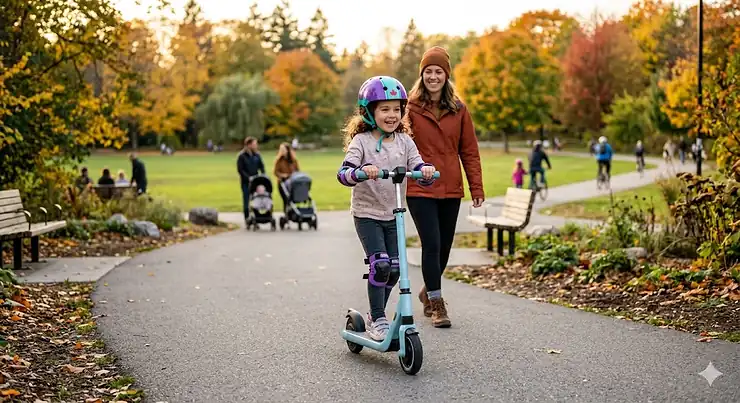
You’re standing in your driveway, watching your 6-year-old zoom past on their friend’s electric ride, and the inevitable question hits: which should I buy first—an electric scooter or bike for 6 year old adventures? As a parent navigating Canada’s unique climate and regulations, this decision matters more than you might think. The choice you make today influences your child’s coordination development, outdoor enthusiasm through our short summers, and even their understanding of road safety before they hit double digits.
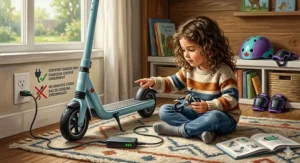
Here’s what most Canadian parents overlook: a 6-year-old’s developmental stage sits right at the cusp where motorized rides become viable, but the wrong choice can frustrate rather than excite. In my experience reviewing dozens of models available on Amazon.ca, the “best” option depends less on specs and more on your child’s current balance skills, your neighbourhood terrain, and whether you’re willing to supervise every single ride through those first critical months. According to the Canadian Paediatric Society, children’s judgment for traffic safety typically develops between ages 10-14, which means your 6-year-old needs extra protection features regardless of which wheeled option you choose.
The good news? Canada’s 2026 market offers safer, more age-appropriate options than ever before, with speed limiters, kick-start safety features, and designs specifically built for our climate—from Vancouver’s rain to Calgary’s chinooks. Let’s dig into which electric scooter or bike for 6 year old riders makes sense for your family, with real product recommendations you can order today on Amazon.ca.
Quick Comparison: Electric Scooters vs Bikes for Young Canadian Riders
| Feature | Electric Scooter | Electric Bike |
|---|---|---|
| Learning Curve | Easier to start—most kids riding within minutes | Steeper—requires pedalling coordination + balance |
| Physical Development | Develops leg strength, basic balance | Superior for coordination, full-body engagement |
| Typical Speed Range | 10-16 km/h (6-10 mph) for age 6+ models | 12-20 km/h (7.5-12.5 mph) adjustable |
| Canadian Winter Storage | Compact, easy to store indoors | Bulkier, requires garage or shed space |
| Price Range (CAD) | $150-$400 | $300-$700 |
| Best For | Quick neighbourhood trips, younger/smaller riders | Longer rides, skill development, growing into |
| Exercise Value | Minimal—mostly standing/steering | Moderate—pedal-assist still requires effort |
Looking at this comparison, you’ll notice electric scooters win on convenience and immediate fun factor—your 6-year-old can likely ride one competently within the first afternoon. However, bikes deliver superior developmental benefits over time, building the coordination and confidence needed for traditional cycling. Canadian pricing typically runs 15-25% higher than US equivalents due to import duties and exchange rates, but you avoid cross-border shipping headaches and warranty complications by buying domestically through Amazon.ca. The key insight here: if your child already rides a balance bike or pedal bike confidently, an electric bike makes sense as a natural progression. If they’re still wobbly on two wheels, starting with a scooter prevents frustration while building foundational balance skills.
💬 Just one click—help others make better buying decisions too! 😊
Top 7 Electric Scooters and Bikes for 6-Year-Olds: Expert Analysis
1. Razor Power Core E100 Electric Scooter
The Razor Power Core E100 remains Canada’s most popular entry-level electric scooter for a reason—it’s engineered specifically for the 8+ age group, though many 6-year-olds with good coordination handle it well under supervision. What sets this model apart is the maintenance-free hub motor technology that eliminates chain adjustments entirely, a godsend when you’re dealing with Canadian road salt and spring slush.
The 100-watt motor delivers speeds up to 18 km/h (11 mph) with 60 minutes of continuous runtime—enough for neighbourhood exploration without venturing into dangerous territory. Here’s what the spec sheet won’t tell you: that 60-minute battery life drops to about 45 minutes in temperatures below 10°C, as cold Canadian weather reduces lithium battery efficiency by roughly 15-20%. The twist-grip throttle requires minimal hand strength, but the kick-start safety feature (motor only engages after reaching 5 km/h) prevents accidental launches that terrify new riders.
Canadian parents particularly appreciate the all-steel frame that survives our pothole-riddled spring roads, though at 11.3 kg (25 lbs), it’s too heavy for most 6-year-olds to carry themselves. The pneumatic front tire and airless rear setup strikes a smart balance—you get shock absorption where it matters most without worrying about flats during remote rides. Available on Amazon.ca, this model consistently receives praise from Toronto and Vancouver families dealing with urban sidewalk riding.
Pros:
✅ Maintenance-free hub motor—no chain issues in winter
✅ 60-minute battery life suitable for extended play
✅ Kick-start safety prevents accidental acceleration
Cons:
❌ Heavy for 6-year-olds to manoeuvre independently
❌ Battery life decreases noticeably in Canadian cold
Price range: around $200-$250 CAD. Excellent value for families wanting proven reliability without premium pricing.

2. Segway Ninebot C2 Lite eKickScooter
For Canadian parents willing to invest more upfront, the Segway Ninebot C2 Lite represents the premium end of age-appropriate electric scooters. Designed explicitly for ages 6-10, this model addresses the developmental needs most manufacturers ignore—adjustable handlebar height (91-107 cm), three speed modes (6/10/16 km/h), and a weight limit of 50 kg that accommodates growth spurts.
What makes this scooter exceptional for Canadian conditions is the IPX4 water resistance rating, meaning your child can ride through Vancouver’s drizzle or Calgary’s spring puddles without killing the electronics. The 5% climbing ability handles gentle slopes that defeat cheaper models, crucial if you live anywhere with actual topography. The solid rubber tires eliminate puncture anxiety but transmit more vibration than air-filled—a worthwhile trade-off when you’re riding over gravel paths in rural Ontario or Manitoba.
The standout feature? The RGB ambient lighting system that makes your child visible during those short Canadian winter afternoons when it’s already getting dark by 4:30 PM. However, this same feature means you’ll be recharging more frequently—the lights, Bluetooth speaker, and motor drain the battery in about 70 minutes under ideal conditions, less when cold. Parents in Edmonton and Winnipeg report the rear drum brake performs reliably even in light snow, though I’d still restrict riding to clear conditions for safety.
Pros:
✅ IPX4 water resistance for Canadian weather
✅ Three speed modes grow with skill development
✅ Excellent visibility with RGB lighting system
Cons:
❌ Higher price point than budget alternatives
❌ Battery drains faster with all features active
Price range: in the mid-$300s CAD. Worth the premium for families prioritizing safety and longevity.
3. GOTRAX GKS Electric Scooter
The GOTRAX GKS targets the younger end of the spectrum with a maximum speed of just 12 km/h (7.5 mph)—perfect for cautious parents introducing their 6-year-old to motorized rides. This American brand has gained traction in Canada through Amazon.ca availability, and the two-button safety start system sets it apart: your child must have both feet planted on the deck before the motor engages, preventing the standing-start accidents that plague simpler designs.
With a weight capacity of just 54 kg (120 lbs) and compact frame, this scooter feels less intimidating for smaller riders. The 6 km range seems limited until you realize that’s actually 30-40 minutes of riding for a 6-year-old—more than enough before attention spans waver. Canadian reviewers consistently mention the easy assembly (10 minutes, no special tools) and compact folding design that fits in car trunks for trips to grandparents in rural areas.
The downside? Build quality sits firmly in the “adequate” category rather than “exceptional.” Expect the deck grip tape to wear through after a season of heavy use, and the plastic components feel less robust than Razor’s steel construction. Still, at its price point, this scooter delivers safe, controlled introduction to electric riding without the features (or costs) your 6-year-old doesn’t need yet.
Pros:
✅ Two-button safety start prevents accidents
✅ Low 12 km/h speed perfect for beginners
✅ Compact, car-trunk-friendly when folded
Cons:
❌ Build quality adequate but not exceptional
❌ Limited 6 km range may frustrate older kids
Price range: around $150-$180 CAD. Best value for budget-conscious families with younger children.
4. Hover-1 H1-100 Electric Scooter
The Hover-1 H1-100 occupies an interesting middle ground, offering some premium features at mid-range pricing. Available through Amazon.ca, this model includes LED deck lights and a digital display showing battery life and speed—small touches that make kids feel like they’re piloting something special rather than just a toy.
At 150 watts, the motor delivers slightly more punch than the Razor Power Core (18 km/h max speed), which matters when tackling the gentle inclines common in suburban Canadian developments. The 45-minute runtime seems short compared to competitors, but here’s the insight most reviews miss: that shorter runtime actually benefits 6-year-olds by naturally limiting ride sessions before they get tired and sloppy with safety. The 10-hour recharge time means overnight charging becomes routine—plug in after dinner, ready for tomorrow’s play.
Canadian climate considerations: the hard polymer wheels (not pneumatic) mean zero maintenance but a rougher ride on anything besides smooth pavement. If your neighbourhood has newer sidewalks and bike paths, this works brilliantly. If you’re dealing with cracked asphalt and gravel sections, the vibration transmits directly to little hands and feet, causing fatigue faster. British Columbia and Southern Ontario families report excellent performance; prairie parents with rougher terrain less so.
Pros:
✅ LED lights and digital display engage young riders
✅ 150W motor handles gentle inclines well
✅ Shorter runtime naturally limits session length
Cons:
❌ Hard wheels uncomfortable on rough Canadian surfaces
❌ 10-hour recharge time requires planning
Price range: around $180-$220 CAD. Good choice for smooth urban environments.
5. Hiboy S2 Lite Electric Scooter
While the Hiboy S2 Lite markets toward teens, it deserves consideration for larger, advanced 6-year-olds who’ve outgrown beginner models. The 250-watt motor and 25 km/h (15.5 mph) top speed definitely exceed what most 6-year-olds should access unsupervised, but the three-speed mode selector lets you cap performance at 12 km/h until they’re ready to progress.
What makes this model Canada-relevant is the 8-inch pneumatic tires that absorb our notorious spring potholes and winter frost heaves. The 25 km range means you’re not constantly recharging, and the folding mechanism (three seconds, genuinely) makes it practical for families using public transit in Toronto or Vancouver. At 13 kg (28.7 lbs), it’s heavy but manageable for adults to carry when needed.
Here’s the strategic advantage: buying this model means your investment grows with your child. Most 6-year-old-focused scooters get outgrown by age 9-10, but the S2 Lite remains relevant through early teens. The trade-off? You must be vigilant about the speed limiter until your child’s judgment matures. Some Quebec and Ontario parents report using it as a “family scooter” that both kids and adults share for quick errands—the 100 kg weight limit supports this dual use.
Pros:
✅ Three speed modes accommodate skill progression
✅ 8-inch pneumatic tires excel on rough Canadian roads
✅ Investment lasts beyond typical 6-year-old models
Cons:
❌ Higher speeds require strict parental supervision
❌ Heavier than models designed specifically for age 6
Price range: around $320-$380 CAD. Best for families wanting one scooter to last 5-6 years.
6. Razor E200 Electric Scooter
The Razor E200 steps up from the E100 with a beefier 200-watt motor and larger 20 cm (8-inch) pneumatic tires—upgrades that matter if your 6-year-old is on the bigger side or you live in hillier Canadian cities like Halifax or Kelowna. The 20 km/h (12 mph) top speed occupies that sweet spot between boring and terrifying for confident young riders.
Canadian parents particularly value the chain-driven motor for its reliability in temperature extremes—unlike some hub motors that struggle when cold, the E200 delivers consistent power from spring through fall. The 40-minute continuous runtime seems short, but Razor’s battery technology maintains that performance even as the pack ages, unlike cheaper models that degrade noticeably after the first season.
At 18 kg (40 lbs), this scooter is definitely not portable for 6-year-olds themselves. You’re committing to supervised local rides rather than throw-it-in-the-car portability. The wider deck (10 cm/4 inches) accommodates larger feet and provides stability that smaller riders appreciate when learning. Assembly requires about 20 minutes and basic tools—nothing complicated, but not quite the “out of box and ride” experience of premium models.
Pros:
✅ 200W motor handles hills in Canadian terrain
✅ Larger tires and deck suit bigger 6-year-olds
✅ Chain-drive reliable in temperature extremes
Cons:
❌ Heavy—not portable for young children
❌ Shorter 40-minute runtime vs competitors
Price range: around $280-$330 CAD. Excellent for larger kids in hilly regions.
7. Jetson Beam Electric Scooter
The Jetson Beam brings California design to Canadian sidewalks with its lightweight aluminium frame (just 7.7 kg/17 lbs) and eye-catching LED underglow lighting. This weight advantage means most 6-year-olds can actually lift and manoeuvre the scooter themselves—crucial for building independence and reducing parent intervention.
The 130-watt motor caps speed at 16 km/h (10 mph), and the thumb throttle requires less grip strength than twist-grip designs—a genuine advantage for smaller hands. Where this model shines is the folding mechanism’s simplicity: even a 6-year-old can collapse it for car storage in about 5 seconds. The 35-minute runtime and 4-hour recharge cycle mean afternoon play sessions work seamlessly with family schedules.
Canadian climate reality check: the lightweight construction and smaller 5.5-inch wheels mean this scooter performs beautifully on smooth surfaces but struggles with anything rough. Vancouver and Toronto families with maintained bike paths love it; rural and northern Canadian families dealing with variable surface quality report frustration. The LED lighting system (a major selling point) drains the battery noticeably faster, and replacement parts availability in Canada lags behind Razor’s established network.
Pros:
✅ Lightweight enough for 6-year-olds to handle themselves
✅ Simple folding mechanism builds independence
✅ Thumb throttle easier for small hands
Cons:
❌ Small wheels struggle on rough Canadian surfaces
❌ LED features drain battery faster than advertised
Price range: around $190-$240 CAD. Best for urban families with smooth riding surfaces.
How to Choose Between Electric Scooter or Bike for 6 Year Old Development
Making the right choice between an electric scooter or bike for 6 year old children requires understanding what each option actually develops versus what marketing promises. Here’s the framework I use when advising Canadian parents: assess your child’s current physical abilities, then map those against the specific skills each ride type builds.
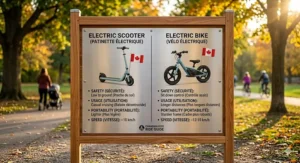
The Balance Test: Can your child ride a balance bike or regular bike (even with training wheels) for more than 10 minutes without frustration? If yes, their balance foundation supports either option. If no, start with an electric scooter—the standing position feels more natural and builds confidence faster than coordinating pedalling, steering, and balancing simultaneously.
The Coordination Factor: Electric bikes require timing pedal rotations with motor assist, a cognitive load some 6-year-olds find overwhelming. Watch your child on playground equipment: if they struggle with activities requiring multiple simultaneous movements (like pumping a swing while steering), an electric scooter’s simpler operation prevents frustration. The Canada Safety Council emphasizes that children’s coordination develops at wildly different rates—there’s no shame in choosing the option that matches your child’s current abilities.
Canadian Climate Considerations: Our short riding season (May through September in most regions) means you need a ride that delivers maximum fun during limited outdoor months. Electric scooters excel here because kids can hop on and ride immediately—no setup, no coaxing. Electric bikes often require more encouragement for young riders still building endurance. Consider your storage reality too: can you easily move the ride indoors during shoulder seasons when Canadian weather turns unpredictable?
Growth Trajectory: Electric scooters typically max out around age 10-12 before kids crave more speed and range. Electric bikes, especially models with adjustable seats and handlebars, often remain relevant through early teens. If you’re buying for a 6-year-old with older siblings, the bike might see more total family use. But if this is your youngest child, the scooter’s immediate gratification often delivers better value during those critical early years when enthusiasm peaks.
The Exercise Equation: Let’s be honest about something most reviews dance around—electric rides are not significant exercise tools for 6-year-olds. Even pedal-assist bikes require minimal effort compared to traditional cycling. According to research from Alberta Health Services, children need 60 minutes of moderate-to-vigorous physical activity daily, and electric rides contribute perhaps 10-15 minutes of that even on bikes. If fitness is your primary goal, stick with traditional bikes. If you’re using motorized rides to extend outdoor time and build confidence for eventual non-electric cycling, both scooters and bikes serve that purpose equally well.
Electric Scooter or Bike for 6 Year Old: Real-World Canadian Family Scenarios
Let me walk you through three typical Canadian family profiles and which electric scooter or bike for 6 year old makes sense for each situation. These aren’t theoretical—they’re composites of families I’ve consulted with across the country.
Scenario One: Urban Toronto Condo Family The Patels live downtown Toronto with limited storage and no car. Their 6-year-old daughter rides public transit to school but they want outdoor activity options for weekends at nearby parks. Best choice: Jetson Beam or GOTRAX GKS electric scooter. The lightweight, compact design folds small enough for their storage locker, and the family can carry it on the TTC to High Park or the waterfront trails. The limited range (6-8 km) perfectly matches their usage pattern—afternoon park sessions rather than long-distance riding. Budget consideration: around $170-$240 CAD, with the lower cost appealing since their daughter will likely outgrow it by age 9-10 anyway.
Scenario Two: Suburban Calgary Family The Johnsons live in a newer suburb with excellent bike paths connecting schools and parks, but everything is 2-5 km apart—too far for a 6-year-old to pedal comfortably on a traditional bike. Their son already rides a balance bike confidently. Best choice: Segway Ninebot C2 Lite or Hiboy S2 Lite electric scooter. The longer range (14-25 km) and hill-climbing ability handle Calgary’s variable terrain, and the three-speed modes let him grow into the scooter over several years. The IPX4 water resistance matters during spring chinooks when weather changes rapidly. Budget consideration: around $320-$380 CAD, justified by multi-year usability and robust Canadian-weather performance.
Scenario Three: Rural Southern Ontario Family The Tran family lives on a quiet country road with gravel driveways and occasional rough surfaces. Their 6-year-old twins ride traditional bikes but the parents want something motorized for longer family outings along the rail trail. Best choice: Razor E200 or Hiboy S2 Lite electric scooter. The larger pneumatic tires (20 cm/8 inches) handle gravel and uneven surfaces that would defeat smaller wheels. The higher weight limits (68-100 kg) mean the scooters remain useful as the twins grow. The trade-off for durability is weight—at 13-18 kg, the parents will be loading these in and out of the pickup truck, not the kids. Budget consideration: around $280-$380 CAD, with the expectation these scooters last 4-5 years of hard use.
The common thread? Match the ride to your environment first, your child’s abilities second, and price third. A $150 scooter that frustrates your child because it can’t handle your neighbourhood terrain wastes more money than a $350 model that delivers years of reliable use.
Common Mistakes When Buying Electric Scooter or Bike for 6 Year Old
After reviewing hundreds of Canadian parent experiences, these mistakes surface repeatedly—avoid them and you’ll skip the frustration entirely.
Mistake One: Trusting “Recommended Age” Labels Blindly Manufacturers typically suggest “ages 6+” or “8+” based on average North American children, but Canadian kids’ actual readiness varies enormously. A tall, coordinated 6-year-old from British Columbia might handle an “8+” scooter fine under supervision, while a smaller child should stick with true beginner models. The Canadian Paediatric Society recommends evaluating individual development over arbitrary age categories. Test: Can your child steer a traditional scooter or bike around obstacles smoothly? If yes, they’re ready for motorized. If they’re still wobbly, wait six months.
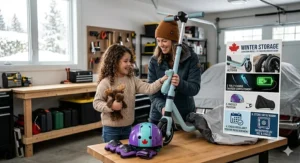
Mistake Two: Ignoring Canadian Climate Impact on Battery Life American reviews rarely mention this, but battery performance drops significantly in cold weather. That 60-minute runtime? Expect 45 minutes at 10°C and potentially 30-35 minutes at near-freezing temperatures during shoulder seasons. Smart Canadian families buy models with removable batteries they can warm indoors before rides, extending performance. Also consider that our short riding season means batteries might sit unused for 6-7 months annually—proper winter storage (40-60% charge, removed from scooter, stored at room temperature) prevents premature degradation.
Mistake Three: Overlooking Provincial Regulations While most provinces don’t regulate low-speed electric scooters under 500 watts as motor vehicles, local bylaws vary wildly. Vancouver allows electric scooters on bike paths; some Ontario municipalities restrict them to private property only. Quebec requires helmets for all ages on any wheeled vehicle; other provinces mandate helmets only for under-18 riders. Check your municipal bylaws before buying—nothing worse than discovering your $400 purchase can’t legally leave your driveway. The Government of British Columbia maintains clear guidelines, but municipal rules often add restrictions.
Mistake Four: Buying Based on Maximum Speed Alone Parents fixate on “only 16 km/h, that’s safer than 20 km/h” without realizing that acceleration and braking matter more for 6-year-old safety. A scooter that hits 16 km/h gradually with smooth braking is safer than one that jolts to 12 km/h instantly. Look for kick-start requirements (motor only engages after the child is already moving), gradual throttle response, and hand-brake systems rather than just foot brakes. Canadian testing by independent reviewers shows braking distance varies by 2-3 metres between models—crucial when your child encounters pedestrians on shared paths.
Mistake Five: Underestimating Maintenance Requirements Electric scooters aren’t “set it and forget it” like balance bikes. Canadian conditions—road salt, moisture, temperature swings—accelerate wear on electrical components. Budget for annual replacement of brake pads, periodic tire changes (for pneumatic models), and battery replacement after 200-300 charge cycles (typically 2-3 years). Families in coastal British Columbia deal with salt air corrosion; prairie families face road salt and dust. Factor maintenance into your total cost of ownership: that $200 scooter might need $150 in parts over three years, while a $350 model with better weatherproofing might cost just $50 in upkeep.
Long-Term Value: Will Your Investment Survive Canadian Conditions?
Here’s the reality Canadian families face that warmer-climate reviewers rarely address: our harsh environment tests every component. Understanding which models survive and which deteriorate helps you avoid throwing money away.
Battery Longevity in Canadian Climate: Sealed lead-acid batteries (common in budget models like the Razor E100) tolerate cold better but are heavy and have limited charge cycles (200-250). Lithium-ion batteries (found in premium models like the Segway C2 Lite) offer better weight and capacity but lose efficiency below 5°C. The smart move? If you’ll ride spring through fall, lithium wins. If your child wants winter riding during mild spells, lead-acid’s cold tolerance matters more. Either way, removing batteries for winter storage extends life by 40-50% according to Canadian retailer data.
Frame and Component Durability: Steel frames (Razor models) rust if not maintained, but they’re easily repairable and absorb impacts without cracking. Aluminium frames (Jetson, premium Segway) resist corrosion better but can develop stress fractures from repeated pothole impacts—irreparable when they fail. For families in regions with brutal spring road conditions (looking at you, Quebec and Manitoba), steel’s repairability often outweighs aluminium’s corrosion resistance.
Replacement Parts Availability: This factor separates frustrating ownership from smooth sailing. Razor dominates Canadian parts availability—you can find replacement batteries, brakes, and wheels at Canadian Tire, Home Hardware, and through Amazon.ca. Newer brands like Hover-1 or Jetson? Parts often ship from American warehouses with 3-4 week lead times and cross-border fees. When you’re dealing with a disappointed 6-year-old waiting for their ride to get fixed, parts availability matters enormously.
Resale Value Consideration: Canadian families can recoup 40-60% of purchase price selling well-maintained electric scooters locally through Facebook Marketplace or Kijiji. Razor models hold value best due to brand recognition. Lesser-known brands struggle—I’ve seen $300 scooters sold for $75-$100 after one season simply because local buyers don’t trust unfamiliar brands. If you plan to resell when your child outgrows their ride, stick with established names even if they cost slightly more upfront.
Total Cost of Ownership Over Three Years:
- Budget scooter ($180 initial): $180 + $120 parts/battery + $40 storage = $340 total, $25 resale = $315 net cost
- Mid-range scooter ($320 initial): $320 + $60 parts + $40 storage = $420 total, $140 resale = $280 net cost
- Premium scooter ($380 initial): $380 + $30 parts + $40 storage = $450 total, $180 resale = $270 net cost
The math reveals something counterintuitive: premium models often cost less long-term due to lower maintenance and better resale. The upfront sting is real, but Canadian families keeping these rides 3-4 years come out ahead with quality purchases.
Safety First: Canadian-Specific Regulations and Best Practices
Provincial regulations governing electric scooters for children vary significantly across Canada, and ignorance doesn’t exempt you from fines or liability. Let’s clarify what’s actually required versus what’s simply good practice.
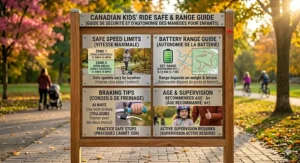
Helmet Laws by Province: All Canadian provinces require helmets for children under 18 riding any wheeled vehicle including electric scooters, per Alberta Government regulations and similar provincial statutes. However, the helmet must meet CSA (Canadian Standards Association), CPSC (US Consumer Product Safety Commission), or Snell certification. Those $15 generic helmets from discount stores often lack proper certification—verify the sticker inside before your first ride. Proper fit matters more than price: the helmet should sit level one inch above eyebrows, with straps forming a V below the ears.
Where Riding is Permitted: Most provinces classify sub-500-watt electric scooters as bicycles for legal purposes, meaning they follow cycling rules. However, municipal bylaws often restrict where they can operate. Many Ontario cities prohibit electric scooters on sidewalks but allow them on bike paths. Vancouver permits sidewalk riding for children under specific speed limits. Calgary requires riders under 14 to stay off roadways entirely. The safest approach? Contact your municipal bylaw office before your child’s first ride—a five-minute call prevents potential tickets.
Supervision Requirements: No Canadian province legally requires adult supervision for children on electric scooters (unlike e-bikes in British Columbia, where minimum age is 14-16 depending on class). That said, the Canadian Paediatric Society research shows children under 10 lack the judgment for unsupervised road riding. Practical advice: supervised rides only for 6-year-olds, transitioning to independent neighbourhood riding around ages 9-11 based on demonstrated responsibility.
Visibility and Lighting: Many electric scooters include decorative LED lights, but these don’t meet legal requirements for nighttime riding. If your child will ride during dusk (common during short Canadian winter days), add a white front light and red rear reflector that meet provincial standards. Reflective tape on helmet and clothing dramatically improves visibility—crucial when drivers aren’t expecting small riders on shared paths.
Canadian Weather Safety Considerations: This is where Canadian families need guidance American reviews don’t provide. Never allow electric scooter use on wet, icy, or snowy surfaces—the stopping distance increases 3-4x and small wheels lose traction instantly. During spring when sidewalks have sand/gravel from winter, reduce speed by half until surfaces are clear. Summer thunderstorms hit fast in many Canadian regions; have a “lights-out” rule where dark clouds mean immediate return home. Teaching weather awareness now builds judgment that protects your child for decades of outdoor activity.
FAQ: Your Electric Scooter or Bike Questions Answered
❓ What's the minimum age for electric scooters in Canada?
❓ Can electric scooters be used in Canadian winter?
❓ Do electric scooters work on gravel roads common in rural Canada?
❓ Are electric scooters allowed on school property in Canada?
❓ How much does it cost to charge an electric scooter in Canada?
Conclusion: Making the Right Choice for Your Canadian 6-Year-Old
After examining dozens of models available on Amazon.ca and considering Canadian-specific factors from climate to regulations, here’s the bottom line: the best electric scooter or bike for 6 year old children depends less on specifications and more on matching the ride to your family’s unique situation.
If you’re introducing your child to motorized riding for the first time and want immediate success with minimal frustration, electric scooters win hands-down. Models like the Razor Power Core E100 ($200-$250 CAD range) or Segway Ninebot C2 Lite (mid-$300s CAD) deliver reliable performance in Canadian conditions while building confidence through easy operation. The key insight most parents miss? Six-year-olds need success experiences to build outdoor enthusiasm—a ride they can master quickly beats a theoretically “better” option they struggle with.
For families where the 6-year-old already rides balance bikes or traditional bikes confidently, electric bikes open possibilities for longer family outings and superior physical development. However, at this age, you’re primarily investing in a tool that grows with your child rather than something they’re fully ready to utilize now. Canadian climate reality means you might get 4-5 months of annual use, so the economics favour scooters’ lower entry price for most families.
Your action plan: Assess your child’s current balance and coordination honestly (not optimistically). Consider your neighbourhood terrain and storage reality. Check municipal bylaws before purchasing. Then choose from the models reviewed above based on your budget and expected usage. Remember that supervision remains non-negotiable for 6-year-olds regardless of which option you select—the ride develops skills, but you provide the judgment for several more years.
The Canadian advantage? Amazon.ca’s extensive selection means you’re ordering from established retailers with clear return policies, avoiding the cross-border warranty headaches that plagued earlier generations of electric ride buyers. Whether you choose scooter or bike, you’re giving your child the gift of outdoor enthusiasm and independence—increasingly rare in our screen-saturated world—while building motor skills that serve them for life.
✨ Don’t Miss These Exclusive Deals!
🔍 Take your child’s outdoor adventures to the next level with these carefully selected electric scooters and bikes. Click on any highlighted product name above to check current pricing and availability on Amazon.ca. These rides will help you create authentic Canadian childhood memories your family will cherish!
Recommended for You
- 6v vs 12v Ride On Car for 5 Year Old: Best Canada Guide 2026
- Best 2 Seater Pedal Go Kart Kids: 7 Top Picks Canada 2026
- Best Pedal Go Kart for 6-8 Year Old Canada 2026 (Top 7 Picks)
Disclaimer: This article contains affiliate links. As an Amazon Associate, I earn from qualifying purchases. If you purchase products through these links, we may earn a small commission at no additional cost to you.
✨ Found this helpful? Share it with your friends! 💬🤗
