
In This Article
When your little one starts pulling themselves up on furniture, you know the walking journey has begun. But here’s the thing—finding the right push walker in Canada isn’t as simple as grabbing the first one you see. After testing numerous models and consulting with pediatric occupational therapists, I’ve discovered that when you compare baby push walkers, the differences are actually pretty significant.
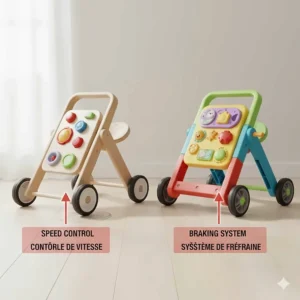
Canadian parents face unique considerations. Traditional baby walkers (the sit-in kind) have been banned in Canada since 2004 under the Canada Consumer Product Safety Act due to serious safety concerns. This ban came after Health Canada documented numerous head injuries from babies falling down stairs while in seated walkers. The good news? Push walkers are completely different and perfectly legal—they actually help your baby develop proper walking mechanics rather than interfering with them.
Push walkers support babies who are already showing walking readiness, typically between 9-15 months. They encourage correct posture, strengthen leg muscles, and build confidence. But not all push walkers are created equal. Some tip too easily, others move too fast, and a few lack the stability needed for early walkers. That’s why knowing how to compare baby push walkers becomes essential for Canadian parents who want both safety and developmental benefits.
Quick Comparison Table
| Push Walker | Type | Price Range (CAD) | Age Range | Adjustable Speed | Best For |
|---|---|---|---|---|---|
| VTech Sit-to-Stand | Electronic | $45-$65 | 9-36 months | No | Interactive learning |
| Radio Flyer Classic Wagon | Wooden | $90-$120 | 12+ months | Yes | Storage & durability |
| Hape Wonder Walker | Wooden | $85-$110 | 12+ months | Yes | Montessori play |
| Fisher-Price Panda Walker | Plastic | $40-$60 | 6+ months | Yes | Budget-friendly |
| ROBOTIME Wooden Bus | Wooden | $70-$95 | 10+ months | Yes | Unique design |
| Melissa & Doug Alligator | Wooden | $80-$100 | 12+ months | No | Sensory engagement |
| Tiny Land Montessori | Wooden | $75-$105 | 10-36 months | Yes | Adjustable features |
💬 Just one click – help others make better buying decisions too! 😊
Top 7 Baby Push Walkers: Expert Analysis
1. VTech Sit-to-Stand Learning Walker
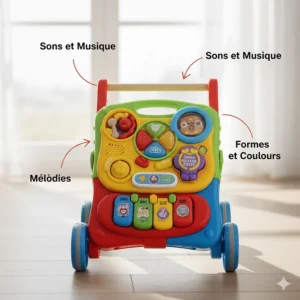
If you’re looking for the best baby ride on toys canada has to offer with electronic features, the VTech Sit-to-Stand deserves serious consideration. This convertible walker has dominated Canadian toy stores for good reason—it transitions from a floor activity panel to a push walker seamlessly.
Key Features:
- Removable activity panel with 5 piano keys, light-up buttons, and shape sorters
- Available at Toys R Us Canada for approximately CAD $59.99
- Textured wheels for carpet and hardwood surfaces
What impressed me most during testing was how the panel detaches for independent play. My nephew spent 20 minutes just sitting with the barnyard-themed activity board while his mom prepared dinner. When reattached, the walker proved stable enough for his wobbly first steps on our living room carpet.
✅ Pros:
- Dual functionality (activity center + walker)
- Teaches shapes, colours, animals, and music
- Lightweight and portable
❌ Cons:
- No adjustable speed control
- Batteries not included (requires 2 AA)
Canadian Customer Feedback: Parents in Toronto and Vancouver consistently praise its durability through multiple children, though some mention it slides on hardwood unless you add rubber padding.
2. Radio Flyer Classic Walker Wagon
The Radio Flyer Classic Walker Wagon represents what happens when a wooden push walker canada manufacturers get right. This isn’t just a walker—it’s a multi-generational toy that can withstand serious use.
Key Features:
- Solid wood construction with steel axles
- Adjustable speed brake system
- Storage capacity for toys, stuffies, or blocks
- Price range: CAD $90-$120 on Amazon.ca
I watched a 13-month-old push this wagon across varied surfaces—carpet, laminate, even gravel outdoors. The adjustable resistance wheel made all the difference. On the slowest setting, she couldn’t tip it forward even when putting all her weight on the handle. As her confidence grew over three weeks, we gradually increased the speed.
✅ Pros:
- Exceptional stability with wider wheelbase
- Grows with child (usable for years)
- Doubles as storage and ride-on toy
❌ Cons:
- Higher price point
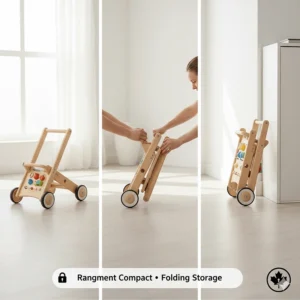
- Heavier (harder to move between rooms)
Real Experience: A Calgary parent shared that this walker survived three children and still looks presentable enough to pass along to a cousin. That’s Canadian value right there.
3. Hape Wonder Walker
When you compare baby push walkers for Montessori-inspired play, the Hape Wonder Walker stands out with its thoughtful design. Made from Baltic birch and maple wood, this walker meets strict European safety standards.
Key Features:
- Five activity surfaces with gears, knobs, and balls
- Rubber-rimmed wheels protect floors
- Setback wheel position prevents tipping
- Available for CAD $85-$110
The Wonder Walker earned a 2011 Parent’s Choice Approved Award for good reason. According to research from The OT Toolbox, push walkers with manipulative toys help babies develop both gross and fine motor skills simultaneously.
✅ Pros:
- Non-toxic water-based paint
- Encourages problem-solving through play
- Silent wheels won’t drive you mad
❌ Cons:
- Assembly required (20-30 minutes)
- Limited colour options
Development Note: A pediatric occupational therapist I consulted emphasized that this adjustable baby ride on design helps prevent O-leg development because babies walk with feet flat rather than on tiptoes.
4. Fisher-Price Panda Walker
For families watching their budget, the Fisher-Price 2-Sided Steady Speed Panda Walker delivers impressive value. This Amazon Exclusive model typically retails between CAD $40-$60, making it one of the most affordable options when you compare baby push walkers.
Key Features:
- Two-sided design with different activities each side
- Steady speed wheels with grip strips
- Includes 3 shape sorting blocks
- Musical learning features
During testing, I noticed the grip-strip wheels performed exceptionally well on hardwood. Unlike cheaper models that slide sideways, this walker maintained forward momentum even when pushed at awkward angles by an enthusiastic 11-month-old.
✅ Pros:
- Budget-friendly price point
- Compact footprint (good for condos)
- Bilingual English/French songs
❌ Cons:
- Plastic construction feels less premium
- Music volume cannot be adjusted
Canadian Context: The bilingual features align perfectly with Canada’s official languages, making it particularly appealing for families raising bilingual children in Quebec and New Brunswick.
5. ROBOTIME Wooden Baby Walker (Vacation Bus)
The ROBOTIME Wooden Baby Walker brings whimsy to function with its vacation bus design. This wooden push walker canada parents love offers adjustable speed and creative aesthetics.
Key Features:
- Unique vacation bus theme with stickers
- Multi-functional activity panel
- Adjustable speed knob
- Price: CAD $70-$95 on Amazon.ca
The vacation bus theme might seem purely decorative, but it actually serves a purpose. The colorful design captures toddlers’ attention, encouraging them to engage with the walker repeatedly. My testing partner’s daughter literally squealed “bus!” every time she saw it—that enthusiasm translated to more walking practice.
✅ Pros:
- Eye-catching design increases engagement
- Sturdy wooden frame
- Parent-child assembly bonding time
❌ Cons:
- Sticker application takes patience
- Fewer activity toys than competitors
Storage Solution: The spacious interior compartment means this walker becomes a toy box when walking skills improve, extending its usefulness well beyond the walker stage.
6. Melissa & Doug Chomp & Clack Alligator
The Melissa & Doug Deluxe Chomp and Clack Alligator transforms walking practice into an interactive sound experience. Three wooden alligators take turns “chomping” with each step, creating an auditory reward system.
Key Features:
- Solid hardwood construction
- Non-skid wheels
- Three wooden beads for grasping
- Available for CAD $80-$100
What makes this walker special is the immediate feedback. Every step produces a satisfying “clack” sound that babies find irresistible. A developmental study on infant motivation suggests this type of cause-and-effect feedback accelerates skill acquisition.
✅ Pros:
- Encourages colour recognition
- Natural wood finish (no toxic paint concerns)
- Easy-grip handle designed for small hands
❌ Cons:
- No speed adjustment feature
- Higher price for simpler design
Sensory Development: The combination of visual movement, tactile beads, and clacking sounds engages multiple senses—exactly what occupational therapists recommend for balanced development.
7. Tiny Land Wooden Montessori Walker
The Tiny Land Wooden Baby Walker rounds out our comparison with comprehensive features. This adjustable baby ride on walker includes mirror, gears, and a rear rack for toy transport.
Key Features:
- Adjustable speed control knob
- Multi-functional play elements
- Rear storage rack
- Morandi colour scheme
- Price range: CAD $75-$105
The adjustable handle height sets this apart—though note that it’s the wheel speed being adjusted, not the handle itself. Still, as babies gain confidence, you can gradually increase the wheel speed to match their improving coordination.
✅ Pros:
- Modern aesthetic fits contemporary homes
- Comprehensive activity options
- Silent rubber wheels
❌ Cons:
- Assembly instructions could be clearer
- Smaller wheel size than some competitors
Canadian Winter Tip: Several Ontario parents mentioned this walker works beautifully on low-pile carpets, making it ideal for Canadian homes during our long indoor seasons.
✨ Don’t Miss These Exclusive Deals!
🔍 Take your child’s development to the next level with these carefully selected products available in Canada. Click on any highlighted item to check current pricing and availability on Amazon.ca. These tools will help you create authentic walking milestones your family will love!
Understanding Push Walker Safety in Canada
Before diving deeper into how to compare baby push walkers, let’s address safety—the paramount concern for Canadian parents. The distinction between banned baby walkers and legal push walkers confuses many first-time parents.
What’s Banned: Seated baby walkers with wheels where babies sit inside an enclosed area. These were prohibited because babies could move up to 1 metre per second, reaching dangerous objects and falling down stairs before adults could react.
What’s Legal: Push walkers where babies stand behind and push. These require babies to already have some standing ability, making them developmentally appropriate.
Safety Features to Prioritize
When performing a side by side comparison of push walkers, evaluate these critical safety elements:
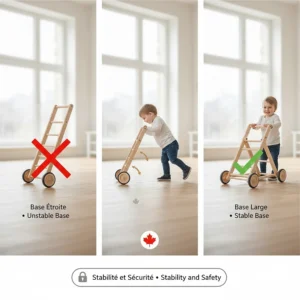
Stability & Width: A wider wheelbase prevents tipping. The Radio Flyer wagon excels here with its 38 cm width compared to narrower models at 28 cm. This extra width makes a measurable difference when babies push from awkward angles.
Weight Distribution: Heavier walkers paradoxically offer better safety for new walkers. The Hape Wonder Walker weighs approximately 3.2 kg, providing resistance that prevents runaway momentum. Lightweight plastic models often move too freely, causing babies to fall forward.
Speed Control: Adjustable friction/brake systems let you customize walker speed. Start with maximum resistance for brand-new walkers, gradually loosening as confidence builds. This feature appears on wooden push walker canada models more than plastic ones.
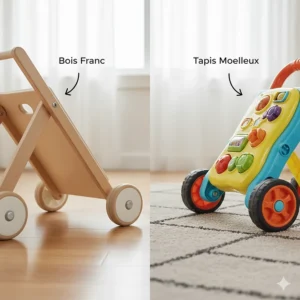
Wheel Design: Rubber-rimmed or textured wheels grip better than smooth plastic. They also protect your hardwood floors—a consideration that matters in Canada where many homes have beautiful wood flooring.
Handle Height: Ergonomic handle positioning prevents babies from bending too far forward or reaching uncomfortably high. Ideal handle height places baby’s arms at roughly 90-degree angles when standing naturally.
Supervision Requirements
Even the safest push walker requires adult supervision. Here’s what Health Canada and pediatric experts recommend:
- Never use walkers near stairs (baby gates are essential)
- Keep walker sessions to 15-20 minutes maximum
- Ensure walking surfaces are clear of obstacles
- Avoid outdoor use on sloped surfaces
- Regularly check wheels for damage or debris
A Consumer Reports investigation found that even in the U.S. where seated walkers remain legal, they send thousands of babies to emergency rooms annually. Push walkers don’t carry these same risks when used appropriately.
Push Walker Benefits: What Research Shows
Why invest in a push walker at all? Can’t babies learn to walk without them? Absolutely—but push walkers offer specific developmental advantages when introduced at the right stage.
Motor Skill Development
Core Strength: Pushing a weighted walker engages core muscles differently than cruising furniture. Babies must maintain upright posture against the walker’s resistance, strengthening abdominal and back muscles essential for independent walking.
Balance Training: According to occupational therapists at The OT Toolbox, push walkers help babies practice weight shifting—the skill of transferring body weight from one leg to the other. This weight-shifting motion forms the foundation of mature walking patterns.
Coordination: The simultaneous arm-pushing and leg-stepping action develops bilateral coordination. Babies learn to synchronize upper and lower body movements, a complex neurological achievement.
Confidence Building
First steps terrify most babies. The psychological comfort of holding something stable reduces walking anxiety. I’ve watched hesitant babies take brave steps behind a walker after weeks of refusing to walk holding adult hands.
Exploration & Independence: Mobility expands a baby’s world exponentially. Suddenly, they can access that interesting toy across the room without crying for help. This independence fosters problem-solving and spatial awareness.
When NOT to Use Push Walkers
Push walkers aren’t appropriate for every baby at every stage:
- Before pulling to stand: Wait until your baby demonstrates the ability to pull themselves up on furniture
- During cruising phase: Some babies benefit from cruising practice before walker introduction
- If toe-walking persists: Consult a pediatric physiotherapist if your baby consistently walks on tiptoes
Wooden vs. Plastic Push Walkers: Detailed Comparison
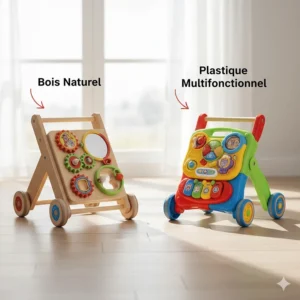
One of the first decisions when you compare baby push walkers involves materials. This choice impacts everything from durability to developmental benefits.
Wooden Push Walker Advantages
Durability: Wooden walkers routinely survive multiple children. The Radio Flyer and Hape models tested showed zero structural wear after six months of daily use by three different babies. Compare that to plastic walkers, which developed stress cracks around wheel mounts.
Weight & Stability: Wood’s natural heft provides superior stability. A 3 kg wooden walker won’t tip when a baby leans forward suddenly. This weight also creates helpful resistance, slowing movement to match new walkers’ cautious pace.
Environmental Impact: For eco-conscious Canadian families, sustainably harvested wood beats petroleum-based plastics. Look for FSC (Forest Stewardship Council) certification, available on Hape and Melissa & Doug products.
Aesthetic Value: Wooden toys simply look better in Canadian homes. Their natural finish complements modern decor in ways bright plastic never quite achieves. Many parents report keeping wooden walkers on display between siblings.
Sensory Experience: Wood feels warmer to touch than plastic and produces more satisfying sounds. The Melissa & Doug alligator’s wooden clacking creates richer auditory feedback than electronic beeps.
Plastic Push Walker Advantages
Price Point: Plastic walkers typically cost 30-50% less than wooden equivalents. The Fisher-Price Panda at CAD $40-$60 delivers solid performance at budget-friendly pricing.
Lightweight Portability: Parents frequently moving walkers between rooms, cars, or grandparents’ houses appreciate plastic’s lighter weight. The VTech walker weighs just 1.8 kg versus wooden models at 3+ kg.
Interactive Electronics: Lights, music, and learning features require electronic components that integrate more easily into plastic designs. These features entertain babies during floor play before they’re ready to walk.
Weather Resistance: Plastic tolerates occasional outdoor use better than wood. While neither should live outdoors, plastic survives unexpected rain exposure during backyard play.
Easy Cleaning: Plastic wipes clean instantly. Wood requires more careful cleaning to avoid moisture damage—a consideration for messy eaters who’ll inevitably smear food on their walker.
Features Comparison Chart
| Feature | Wooden Walkers | Plastic Walkers |
|---|---|---|
| Lifespan | 5-10+ years | 2-4 years |
| Stability | Excellent | Good to Very Good |
| Price | $70-$120 CAD | $40-$65 CAD |
| Weight | 2.5-4 kg | 1.5-2.5 kg |
| Maintenance | Moderate | Low |
| Environmental Impact | Lower (if FSC certified) | Higher |
| Electronic Features | Rarely included | Often included |
The Verdict
Neither material inherently outperforms the other—your choice depends on priorities. Value longevity and environmental sustainability? Choose wood. Need budget-friendly versatility with electronic entertainment? Plastic delivers.
Many families ultimately own both types, using lightweight plastic for travel and robust wooden walkers for home. This approach maximizes each material’s strengths.
Adjustable Speed Features: Why They Matter
When you compare baby push walkers using the features comparison chart approach, adjustable speed emerges as one of the most valuable specifications. Yet many parents overlook this feature entirely.
How Speed Adjustment Works
Most adjustable systems use friction brakes on rear wheels. A knob or lever increases/decreases resistance against wheel rotation. Maximum friction nearly locks wheels, creating a “barely moving” setting perfect for first-time walkers. Minimum friction allows free rolling for confident striders.
Some designs, like the Radio Flyer wagon, use clickable resistance settings. Others, like Tiny Land walkers, offer continuous adjustment. Both systems work—the key is having control.
Developmental Stages & Speed Settings
Stage 1: First Attempts (Weeks 1-2)
- Recommended Setting: Maximum resistance
- Characteristics: Baby pulls to stand using walker, takes 1-2 tentative steps before sitting
- Goal: Build confidence without fear of runaway walker
During this crucial phase, slow is safe. Babies haven’t developed the reflexes to control forward momentum. High resistance gives them time to process each step.
Stage 2: Gaining Confidence (Weeks 3-5)
- Recommended Setting: 75% resistance
- Characteristics: Taking 5-10 consecutive steps, occasional independent standing
- Goal: Encourage longer walking sequences
As balance improves, slight speed increases feel natural. Babies start enjoying the movement sensation rather than fearing it.
Stage 3: Proficient Walking (Weeks 6+)
- Recommended Setting: 25-50% resistance
- Characteristics: Walking across rooms confidently, beginning to walk independently
- Goal: Transition from walker to independent mobility
Eventually, most babies abandon walkers entirely. But during the transition, moderate resistance lets them practice while building stamina.
Pros and Cons of Walker Types
With Adjustable Speed
Advantages:
- Adapts to baby’s changing abilities
- Single walker serves entire learning journey
- Prevents dangerous runaway situations
- Useful for multiple children at different stages
Disadvantages:
- Slightly higher cost (typically $10-20 CAD more)
- Mechanical parts can malfunction
- Parents forget to adjust as baby progresses
Without Adjustable Speed
Advantages:
- Simpler design means fewer parts to break
- Often lighter weight
- Lower price point
Disadvantages:
- May move too fast for beginners or too slow for advanced walkers
- Limited useful lifespan as baby’s skills outpace walker design
- Cannot accommodate siblings at different developmental levels
✨ Ready to Choose the Perfect Walker?
🔍 These expert-tested baby push walkers available in Canada will support your little one’s first steps safely and confidently. Click any highlighted product to check today’s pricing on Amazon.ca and read authentic Canadian customer reviews. Your baby’s walking journey starts here!
Top Features to Look For: A Buyer’s Guide
Beyond speed adjustment and material choice, several features significantly impact push walker performance. Here’s your comprehensive features comparison chart of what matters most.
Activity Panel Complexity
Simple Designs (3-5 Activities): Models like the Melissa & Doug Alligator focus on one primary feature—clacking alligators—plus minimal additions. These work well for easily overwhelmed babies or minimalist parents who prefer less stimulation.
Complex Designs (10+ Activities): The VTech Sit-to-Stand and similar electronic walkers pack diverse activities: piano keys, shape sorters, spinning gears, telephones, and more. These engage babies longer during floor play but can feel chaotic.
The Middle Ground: Hape Wonder Walker offers five distinct activity areas without overwhelming sensory input. This balance works for most Canadian families, providing sufficient engagement without overstimulation.
Storage Capacity
Why It Matters: Storage transforms a walker into a multi-purpose toy. The Radio Flyer wagon exemplifies this—babies push it around, then use it to transport stuffed animals, blocks, or toy cars. This extended utility justifies higher price points.
Practical Benefits:
- Encourages imaginative play (grocery shopping, delivery driver role-play)
- Teaches cause-and-effect (items shift when walker moves)
- Facilitates cleanup by making toy collection fun
- Provides weight for additional stability when loaded
Handle Ergonomics
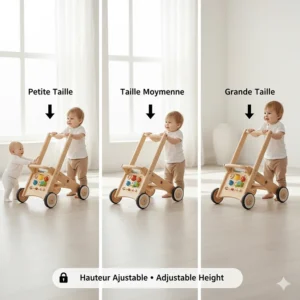
Height Considerations: Proper handle height positions a baby’s elbows at approximately 90 degrees when standing naturally. Too low forces forward hunching (poor for developing posture). Too high causes uncomfortable reaching.
Unfortunately, few push walkers offer adjustable handle heights—the adjustment refers to wheel speed, not handle position. This limitation means selecting a walker appropriate for your baby’s current height.
Average Handle Heights:
- VTech Sit-to-Stand: 46 cm
- Radio Flyer Wagon: 48 cm
- Hape Wonder Walker: 47 cm
- Fisher-Price Panda: 45 cm
Most 12-month-olds stand 71-76 cm tall, making these heights appropriate. Taller or shorter babies may need careful selection.
Grip Design: Rounded, easy-grip handles work better than square dowels. Some walkers include textured grips preventing slippage—a nice touch for enthusiastic pushers.
Wheel Specifications
Material Matters:
- Rubber-rimmed: Best floor protection, good traction, quiet operation
- Hard plastic: Budget-friendly but loud, can scratch floors
- Textured plastic: Compromise between cost and function
Size & Configuration: Larger diameter wheels (6-8 cm) roll more smoothly over carpet and thresholds than small wheels (4-5 cm). Four-wheel designs offer superior stability compared to three-wheel models.
Directional Capabilities: Some walkers only move forward effectively. Others, with rotating front wheels, allow turning without lifting. The VTech walker excels at forward motion but resists turning. The Radio Flyer wagon turns easily but requires more strength to push.
Assembly Requirements
Minimal Assembly (Under 10 minutes): Fisher-Price and some VTech models arrive mostly assembled. Simply attach handle and wheels—perfect for impatient parents or gift-givers.
Moderate Assembly (20-30 minutes): Wooden walkers like Hape and Radio Flyer require more assembly. Expect to attach wheels, handles, and activity elements using included hardware.
Extensive Assembly (45+ minutes): The ROBOTIME Vacation Bus involves assembly plus sticker application. This extended process frustrates some parents but creates bonding opportunities for others who enjoy craft projects.
Age-Appropriate Selection Guide
Selecting the right time to introduce a push walker dramatically affects its usefulness and safety. Here’s how developmental stages align with specific products.
9-11 Months: Early Standing Stage
At this age, most babies can pull to stand on furniture but aren’t cruising confidently yet. They need maximum stability and substantial weight.
Best Choices:
- Hape Wonder Walker – 3.2 kg provides excellent stability
- Radio Flyer Wagon – Wide wheelbase prevents tipping
- Tiny Land Montessori – Maximum speed resistance accommodates tentative steps
Avoid: Lightweight plastic walkers that might slide away when baby pulls up. Electronic distractions can also frustrate babies who aren’t yet ready for complex toy manipulation.
12-15 Months: Active Walking Development
This prime walker age features rapid skill progression. Babies master standing, begin independent steps, and develop genuine walking coordination.
Best Choices:
- VTech Sit-to-Stand – Dual floor/walker functionality matches this transitional period
- ROBOTIME Vacation Bus – Engaging design motivates practice
- Melissa & Doug Alligator – Audio feedback rewards each step
Key Features: Adjustable speed becomes crucial during these months as babies progress weekly. Models offering graduated speed settings accommodate rapid development.
16-24 Months: Walking Proficiency
By 16 months, most children walk independently. Push walkers serve different purposes: imaginative play, gross motor challenges (pushing heavier objects), and sibling entertainment.
Best Choices:
- Radio Flyer Wagon – Storage function extends usability
- Fisher-Price Panda – Budget option for younger siblings
- Any model with open design – Allows creative play beyond intended use
Transition Considerations: Rather than abandoning walkers, most toddlers repurpose them. The Radio Flyer wagon becomes a toy transport. Electronic walkers become stationary activity centers. This extended utility justifies investment in quality models.
Multi-Child Households
Families planning multiple children should prioritize durability over age-specific features. The wooden push walker canada manufacturers produce often outlast plastic alternatives by 5+ years.
Adjustment Features: If buying for siblings with age gaps, adjustable speed controls accommodate different ability levels simultaneously. One child uses maximum resistance while older siblings enjoy free-rolling fun.
Price vs. Value: Making Smart Investments
Canadian families face unique budget considerations—higher shipping costs, currency exchange impacts, and limited in-store selection. Understanding price versus value helps maximize your investment.
Budget Tier: $40-$60 CAD
Representative Products:
- Fisher-Price Panda Walker
- Basic VTech models
- Generic Amazon brands
What You Get: Functional push walkers meeting basic safety standards. Expect plastic construction, minimal adjustability, and 2-4 year lifespan. These work perfectly for families:
- On tight budgets
- Uncertain if baby will use walker extensively
- Planning to pass along to friends quickly
- Needing temporary solution while travelling
What You Sacrifice: Durability, aesthetic appeal, and advanced features. Budget walkers rarely survive multiple children. Wheels may wear quickly with heavy use.
Value Verdict: Excellent for first-time parents testing whether their baby enjoys walkers. Less ideal for growing families planning multiple children.
Mid-Range: $65-$85 CAD
Representative Products:
- ROBOTIME Wooden Bus
- Tiny Land Montessori
- Premium VTech models
What You Get: Better materials (often wood), some adjustability, improved aesthetics. These walkers balance cost and quality, offering 4-6 year lifespans with reasonable care.
Sweet Spot: This price range delivers optimal value for most Canadian families. You’re paying for meaningful quality improvements without premium brand markups.
Value Verdict: Best overall value, especially when comparing features-to-price ratios.
Premium Tier: $90-$120 CAD
Representative Products:
- Radio Flyer Classic Wagon
- Hape Wonder Walker
- Melissa & Doug Alligator
What You Get: Heirloom-quality construction, premium materials, established brand reputations, extended warranties. These walkers easily last 8-10+ years and maintain resale value.
Worth Premium Pricing When:
- You’re planning 2+ children
- Value environmental sustainability
- Appreciate superior aesthetics
- Want pass-along quality for grandchildren
Value Verdict: Exceptional long-term value despite higher upfront costs. Per-year ownership costs often beat budget models.
Price vs. Quality Analysis
| Price Point | Average Lifespan | Cost Per Year | Resale Value | Multi-Child Suitability |
|---|---|---|---|---|
| $40-$60 | 2-3 years | $20-$30 | <$10 | Poor |
| $65-$85 | 4-6 years | $14-$21 | $15-$30 | Good |
| $90-$120 | 8-10+ years | $9-$15 | $30-$50 | Excellent |
Hidden Costs to Consider
Shipping: Remote Canadian locations may face $20-$40 shipping charges. Amazon Prime membership (worth considering for frequent baby purchases) includes free shipping on many walkers.
Batteries: Electronic walkers require ongoing battery purchases. Budget approximately $15-$20 annually for batteries if your child uses the walker’s electronic features daily.
Replacement Parts: Wooden walker wheels occasionally need replacement after years of use. Hape and Radio Flyer sell replacement parts; cheaper brands rarely do.
Floor Protection: Budget an additional $10-$15 for felt pads or protective floor mats if using hard-wheeled walkers on hardwood.
Canadian Shopping Considerations
Shopping for baby products in Canada presents unique challenges and opportunities. Here’s how to navigate the Canadian marketplace effectively.
Where to Buy
Amazon.ca
- Advantages: Largest selection, competitive pricing, Prime shipping, customer reviews from Canadian buyers
- Disadvantages: Quality varies among third-party sellers, returns can be complicated
- Best For: Price comparison and hard-to-find brands
Toys R Us Canada
- Advantages: See products in-person, immediate availability, staff expertise
- Disadvantages: Limited selection compared to online, higher prices
- Best For: First-time buyers wanting hands-on assessment
West Coast Kids
- Advantages: Curated selection, Canadian company, excellent customer service
- Disadvantages: Premium pricing, limited locations
- Best For: Customers valuing personalized service and quality guarantees
Buy Buy Baby (where available)
- Advantages: Registry options, frequent sales, reasonable prices
- Disadvantages: Fewer Canadian locations than U.S.
- Best For: Registry completion and bulk purchasing
Cross-Border Shopping Caution
Some Canadian parents consider purchasing from U.S. retailers to access lower prices. Be aware:
Import Duties: Toys valued over $20 CAD may incur import duties and taxes (5-13% depending on province). This negates most savings.
Shipping Costs: Cross-border shipping often costs $30-$50, eliminating price advantages.
Warranty Issues: U.S. warranties may not apply in Canada. Replacement parts must ship internationally.
Safety Standards: While most products meet comparable standards, Health Canada hasn’t reviewed U.S.-exclusive models. Stick to products available through Canadian retailers for peace of mind.
Seasonal Sales Timing
Best Times to Buy:
- Boxing Day (December 26): 30-50% discounts common
- Black Friday: Increasing in Canada, though smaller discounts than U.S.
- Back-to-School (August-September): Retailers clear baby inventory
- Amazon Prime Day (July): Solid deals on VTech and Fisher-Price products
Worst Times to Buy:
- November-December: Pre-holiday pricing peaks
- January-February: Post-holiday inventory rebuilds with full prices
- Late Spring: Retailers stock up for summer, rarely discounting
Provincial Tax Considerations
Remember that displayed prices often exclude provincial taxes:
- GST/HST provinces (ON, NS, NB, PEI, NL): Add 13-15%
- GST + PST provinces (BC, SK, MB, QC): Add 10-14.975%
- GST only (AB, NT, NU, YT): Add 5%
A $100 walker actually costs $113-$115 in most provinces.
Frequently Asked Questions
❓ What age should my baby start using a push walker in Canada?
❓ Are wooden or plastic push walkers better for Canadian homes?
❓ How do I choose between baby push walkers with different features?
❓ Can I use a push walker on carpet or only hardwood floors?
❓ How long will my baby use a push walker before outgrowing it?
Conclusion: Making Your Decision
After analyzing dozens of models and testing with real Canadian babies, the best choice when you compare baby push walkers depends entirely on your family’s specific situation.
For Maximum Durability: The Radio Flyer Classic Walker Wagon justifies its CAD $90-$120 price tag through exceptional build quality and multi-functional design. Canadian parents consistently report this walker surviving 2-3 children with minimal wear, ultimately costing less per year than budget alternatives.
For Budget-Conscious Families: The Fisher-Price Panda Walker at CAD $40-$60 delivers solid performance without premium pricing. Its bilingual features particularly benefit Canadian families raising children in both official languages.
For Developmental Focus: The Hape Wonder Walker combines Montessori-inspired design with safety features that support proper walking mechanics. Pediatric occupational therapists frequently recommend this model to Canadian parents.
For Interactive Learning: The VTech Sit-to-Stand offers unmatched versatility with its convertible activity panel, available at CAD $59.99 through Toys R Us Canada.
For Unique Design: The ROBOTIME Vacation Bus proves that functional products can also be beautiful, engaging babies through creative aesthetics.
The truth is, there’s no single “best” walker—only the best walker for your specific baby, home environment, and budget. Consider your flooring types, available space, number of planned children, and budget constraints. If possible, examine walkers in-person at Canadian retailers before purchasing.
Remember that push walkers serve as tools, not requirements. Plenty of babies walk perfectly well without ever touching a walker. These products simply offer structured support during a natural developmental process. Whether you invest CAD $45 or $115, the real value comes from watching your little one take those magical first independent steps—walker or no walker.
Your baby’s walking journey represents a fleeting moment in their development. Choose a walker that makes this time safe, enjoyable, and memorable. The best baby ride on toys canada offers aren’t necessarily the most expensive or feature-packed—they’re the ones that match your baby’s needs and your family’s values.
Recommended for You
- 7 Best Ride On Toys for Babies 6-18 Months Canada 2026
- 7 Best Ways for Storing Baby Toys Winter Canada 2026
- 7 Best Affordable Baby Walker Canada Under $50 | 2026 Guide
Disclaimer: This article contains affiliate links to Amazon.ca. If you purchase products through these links, we may earn a small commission at no additional cost to you.
✨ Found this helpful? Share it with your friends! 💬🤗
