In This Article
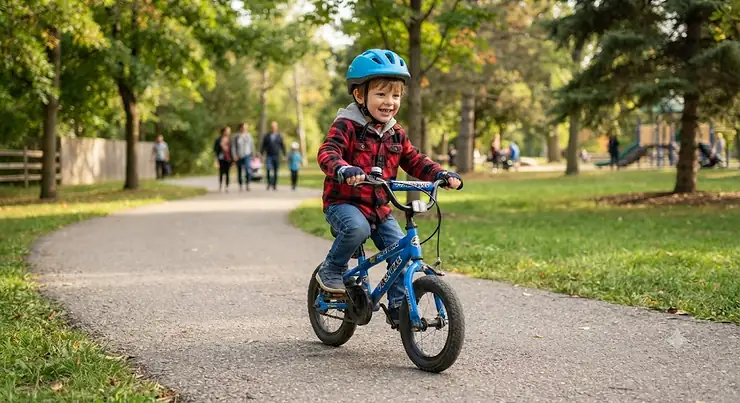
There’s a particular sound a preschooler makes the first time the training wheels lift half an inch off the pavement and stay there — a kind of surprised, delighted shriek that has nothing to do with speed and everything to do with realizing their own body just did something new. That moment is really what you’re shopping for. The bike is just the vehicle (sorry, couldn’t resist).
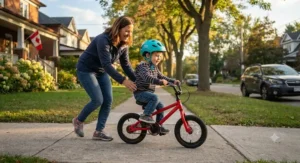
A first pedal bike for preschoolers is a small, single-speed bicycle — usually with 12- to 16-inch wheels — built with a low standover height, a light frame, and simplified brakes so a three- or four-year-old can steer, pedal, and stop with minimal help. Get the size wrong and you’ll spend a summer wrestling a bike that fights your kid at every turn. Get it right, and a rider who was wobbling in the driveway in June is doing loops around the cul-de-sac by August.
This guide compares seven real bikes sold in Canada — from bargain steel frames under C$250 to a featherweight aluminum model that costs as much as a decent stroller. We’ll dig into what actually matters (weight, brake type, seat height range) versus what’s just marketing noise, and we’ll walk through the pedal trike vs tricycle for outdoor play question that trips up a lot of first-time parents, plus how training wheels, balance skills, and preschool development all fit together. It’s worth noting up front that bike riding isn’t just a fun errand for a Saturday afternoon — the Canadian physical activity guidelines for the early years recommend preschoolers get at least three hours of activity spread across the day, and energetic play like pedaling counts toward that in a way screen time never will. None of this is guesswork — every spec and every review theme below comes from real product listings and real tester feedback, cited as we go.
Quick Comparison Table
Before we get into the weeds, here’s the fast version for parents reading this on a phone in a toy-store parking lot.
| Bike | Wheel Size | Weight | Brake Type | Best For |
|---|---|---|---|---|
| Strider 14x Sport w/ Pedal Kit | 14″ | 6.9 kg (15.1 lb) | Coaster | Balance-bike grads with zero pedal panic |
| RoyalBaby Freestyle 14″ | 14″ | 9.8 kg (21.7 lb) | Coaster + hand | Budget-first families |
| JOYSTAR Pluto 14″ | 14″ | ~9.5 kg (21 lb) | Coaster | Reluctant riders who need a fun hook |
| Schwinn Koen 14″ | 14″ | ~9.6 kg (21 lb) | Coaster + caliper | Families wanting a trusted brand |
| Guardian AIROS 16″ | 16″ | 8.3 kg (18.3 lb) | SureStop dual-hand | Safety-first parents |
| Retrospec Koda Plus 16″ | 16″ | 7.9 kg (17.5 lb) | V-brake + coaster | Smaller preschoolers, low seat height |
| Woom GO 2 14″ | 14″ | 5.6 kg (12.3 lb) | Dual hand brake | Parents prioritizing pure lightness |
At a glance, the split is really between weight and price. The Woom GO 2 undercuts every steel-frame competitor here by 4 kg (nearly 9 lb) — roughly the weight of a bowling ball your kid isn’t hauling around the driveway — but it costs two to three times what the budget options run. The Strider 14x takes a completely different approach by skipping training wheels altogether, which matters if your preschooler already has balance-bike miles under their belt. Meanwhile RoyalBaby, JOYSTAR, and Schwinn Koen compete in the same crowded, wallet-friendly lane, so the differences between them come down to details like brake redundancy and how forgiving the geometry is for a nervous rider.
💬 Just one click — help other Canadian parents make better buying decisions too!😊
Top 7 First Pedal Bikes for Preschoolers: Expert Analysis
We’re covering budget, mid-range, and premium picks, plus one that skips the whole training-wheels debate entirely. Every bike below is a real, currently sold model — no invented names, no rewritten spec sheets.
1. Strider 14x Sport Balance Bike with Pedal Kit — the 2-in-1 that never forces a re-learn
The clever part of the Strider 14x isn’t the bike itself — it’s the sequencing. Your preschooler starts in balance mode, feet flat, gliding and steering with zero pedals attached, then you bolt on the Easy-Ride pedal kit whenever they’re ready, and the bike they already trust suddenly pedals.
Specs-wise, the seat height adjusts from about 38 to 56 cm (15 to 22 in), which is an unusually wide range for a bike aimed at ages 3 to 7, and even with the pedal kit installed it weighs just 6.9 kg (15.1 lb) — lighter than most steel 14-inch bikes despite having a drivetrain bolted on. The chainguard is ISO 8098 compliant, and the whole rig is rated CPSC 1512 tested with the pedal kit attached.
Here’s the honest analytical case for it: kids who’ve already logged hours on a Strider balance bike tend to skip the wobbly, white-knuckle training-wheels phase entirely, because they’ve already mastered the hardest part — balance — before a single pedal enters the picture. That’s a genuinely different learning path than every other bike on this list, and it’s worth considering even if your preschooler has never touched a Strider before, since the 14x can simply start in balance mode from day one. Reviewers on retailer sites consistently mention the “instant success” framing holding up in practice, with several noting kids pedaling confidently within the same week the kit went on.
Pros:
- ✅ Skips training wheels entirely via the balance-first sequence
- ✅ Unusually light at 6.9 kg even with pedals installed
- ✅ Seat height range covers roughly ages 3 through 7
Cons:
- ❌ Coaster brake only — no hand brake option on this model
- ❌ Pedal kit is sold separately from the base balance bike in some bundles
Price-wise, the bundled 14x Sport with the pedal kit sits in the C$340-C$400 range at the time of research, though prices shift often, so check current pricing before you commit. For families who value the balance-first philosophy over dual hand brakes, it’s a genuinely strong value at that range.
2. RoyalBaby Freestyle 14 Inch — the reliable budget standby
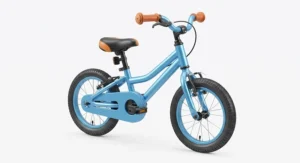
If you’ve browsed kids’ bikes on Amazon for more than five minutes, you’ve seen this one. The RoyalBaby Freestyle 14-inch shows up with over 14,000 reviews and a 4.5-star average, which sounds like a slam dunk until you dig into independent testing, where the picture gets more nuanced.
The bike ships with a Hi-Ten steel frame, sealed bearing hubs for smoother pedaling, a rear coaster brake paired with a front hand brake on the standard Freestyle 3 trim (dual hand brakes on the pricier Freestyle 5), and training wheels included out of the box. Seat height runs roughly 49 to 56 cm (19.25 to 22 in), and it tips the scale at 9.8 kg (21.7 lb) with training wheels attached.
What most buyers overlook when they see that huge review count is that independent testers rate it closer to three stars once you strip away the “Amazon’s Choice” halo effect — not because it’s a bad bike, but because the seat height starts relatively high and the frame runs heavier than most 14-inch competitors, which can matter a lot for a smaller three-year-old still building leg strength. On paper, this makes the Freestyle a better fit for a taller or more physically confident four-year-old than for a petite three-year-old just off the balance bike.
Pros:
- ✅ Training wheels, kickstand, and water bottle holder included
- ✅ Sealed bearing hubs reduce squeaky, sticky pedaling over time
- ✅ Wide colour selection and broad Canadian retailer availability
Cons:
- ❌ Heavier than most 14-inch rivals at 9.8 kg
- ❌ Seat height starts high, which can crowd out smaller riders
At the time of research, pricing sits around C$220-C$260, and prices may vary by colour and seller, so it’s worth checking current pricing before adding to cart. As a budget entry point with genuinely useful included accessories, the value case holds up — just don’t assume the star rating alone tells the full story.
3. JOYSTAR Pluto 14 Inch — light-up training wheels kids actually want to use
Every parent who’s tried to coax a reluctant preschooler onto a bike knows the battle isn’t really about balance — it’s about motivation. The JOYSTAR Pluto leans into that reality with light-up training wheels, a decal kit kids can use to personalize the frame with their name, and a basket-and-bottle-holder combo on several colourways.
Underneath the fun factor, it’s a Hi-Ten steel-frame bike with a rear coaster brake, an adjustable saddle and stem, and deliberately low gearing that makes the first few pedal rotations less punishing on tiny leg muscles. Training wheels come installed and are removable once your preschooler is ready to graduate.
Here’s what the spec sheet doesn’t capture: low gearing sounds like a minor footnote, but for a three-year-old whose quads haven’t done much more than run around a playground, that reduced resistance is often the difference between “I did it!” and a meltdown twenty seconds in. Reviewers frequently mention the light-up wheels as a genuine incentive — kids who were dragging their feet about riding suddenly want to go outside specifically to watch the wheels flash. That’s honest psychology dressed up as a bike feature, and it works.
Pros:
- ✅ Light-up training wheels double as a motivation tool
- ✅ Low gearing eases the first few pedal strokes
- ✅ DIY decal kit lets kids personalize the frame
Cons:
- ❌ Steel frame adds noticeable weight versus aluminum rivals
- ❌ Entry-level components may need more frequent tightening
Pricing runs in the C$150-C$220 range depending on the sale cycle, since JOYSTAR rotates promotions fairly often — never assume a listed “sale” price is permanent, and always verify what’s current before buying. For a budget-conscious family whose preschooler needs a nudge rather than a lecture about bike safety, this is a smart, honest pick.
4. Schwinn Koen 14 Inch — the SmartStart fit for small hands
Schwinn has been building kids’ bikes long enough that the brand name itself functions as a trust signal for a lot of Canadian parents, and the Koen line backs that up with genuinely kid-proportioned engineering rather than a scaled-down adult frame.
The SmartStart design means narrower pedal spacing to match smaller hips, smaller-diameter grips sized for small hands, and a tool-free adjustable seatpost that lets the bike grow with your child across a full riding season. Brakes are a rear coaster paired with a front caliper (hand) brake, and the bike comes with removable training wheels, a chainguard, and a seat handle that doubles as a parent-tow point and a garage-carrying handle.
What stands out in independent testing is that dual-brake setup — rear coaster plus front hand brake — because it gives your preschooler a bridge toward the hand-brake-only bikes they’ll ride in a year or two. Based on the spec comparison against pure coaster-brake bikes on this list, that head start on hand-brake coordination is a real, practical advantage, not a marketing checkbox. The trade-off testers flag is that the Koen line runs slightly taller than some 14-inch competitors, so if your child is on the smaller end of the 3-to-5 age bracket, sizing down to the 12-inch Koen may fit better than the 14.
Pros:
- ✅ Dual coaster-plus-hand-brake setup builds transferable skills
- ✅ Tool-free adjustable seatpost keeps pace with growth spurts
- ✅ Wide Canadian dealer network for parts and warranty support
Cons:
- ❌ Minimum seat height runs taller than some competitors
- ❌ Single-speed drivetrain limits use once kids outgrow it
Expect to pay somewhere around C$200-C$260 at the time of research, though exact pricing shifts with retailer and colourway, so check current pricing before purchase. For families who want a name-brand bike with a genuine coaster-to-hand-brake bridge built in, the Koen earns its spot.
5. Guardian AIROS 16 Inch — one-lever braking that prevents over-the-bars spills
Most kids’ bikes treat braking as an afterthought. Guardian Bikes built an entire company around the opposite idea, and the AIROS 16 is where that shows most clearly.
The bike’s signature feature is the SureStop system: a single brake lever that intelligently distributes stopping force to both wheels, rather than relying on a coaster brake (which requires backpedaling — a coordination skill many preschoolers haven’t nailed yet) or two separate hand levers (which require independently timed squeezes most four-year-olds can’t reliably manage). The frame is steel, seat height runs roughly 46 to 57 cm (18.25 to 22.6 in), and the whole bike weighs 8.3 kg (18.3 lb) with kickstand and pedals attached. There’s no coaster brake at all, and training wheels are compatible but sold separately.
The honest analytical case here centres on what happens in a panic-stop scenario. A coaster brake needs a backward pedal motion a scared kid often forgets mid-fright; a standard front-and-rear hand brake setup risks a kid grabbing the front lever alone and pitching over the handlebars. SureStop sidesteps both failure modes by putting full, balanced stopping power behind a single, easy squeeze. Testers who work with nervous or coordination-challenged riders specifically call this out as the AIROS’s biggest edge over coaster-brake competitors, and it’s the kind of detail that never shows up if you’re just comparing spec sheets.
Pros:
- ✅ SureStop single-lever brake balances stopping force front and rear
- ✅ Upright, kid-specific geometry builds confidence quickly
- ✅ Brake lever reach is tool-adjustable for small hands
Cons:
- ❌ Single-cable brake design means one point of failure if the cable stretches
- ❌ Training wheels aren’t included and must be purchased separately
At the time of research, the AIROS sits in the C$370-C$420 range, which puts it firmly in mid-to-premium territory — but for parents specifically worried about panic-stop accidents, the SureStop system is the single most differentiated feature on this entire list.
6. Retrospec Koda Plus 16 Inch — aluminum-light and ready to ditch the trainers
The Retrospec Koda Plus occupies a genuinely useful middle ground: it’s not steel-heavy like the budget bikes, and it’s not premium-priced like the ultralight options, but it borrows real advantages from both categories.
Built on an aluminum frame rather than steel, it weighs a comparatively light 7.9 kg (17.5 lb), and it pairs EasySafe front-and-rear V-brakes with a rear coaster brake for genuinely redundant stopping power — meaning if your preschooler forgets to pedal backward, the hand brakes still work, and vice versa. The minimum seat height is an extra-low 48 cm (19 in), which is meaningfully lower than several steel competitors on this list, and the gain ratio (essentially how much speed each pedal stroke produces) sits at 4.0, tuned for easier starts.
What most buyers overlook about aluminum-frame kids’ bikes at this price point is that the weight savings aren’t just about comfort — they directly affect how quickly a preschooler masters balance, because a lighter bike is easier to correct mid-wobble. Based on the spec comparison against the steel-framed Freestyle and Pluto, the Koda Plus’s roughly 1.9 kg weight advantage is significant on a bike this small; that’s proportionally a much bigger deal for a 16 kg preschooler than it would be for an adult rider. The low 19-inch minimum seat height also means it can fit a smaller four-year-old comfortably, not just the taller end of the range.
Pros:
- ✅ Aluminum frame trims real, meaningful weight
- ✅ Redundant braking via V-brakes plus a coaster brake
- ✅ Extra-low 19″ minimum seat height suits smaller preschoolers
Cons:
- ❌ Costs more than comparable steel-frame budget bikes
- ❌ 16-inch sizing skews toward the older half of the preschool range
Pricing runs around C$240-C$330 depending on colourway and current promotions, so it’s worth checking the live listing before buying. For a family that wants aluminum-frame performance without paying premium-brand prices, this is arguably the sharpest value on the list.
7. Woom GO 2 14 Inch — the featherweight upgrade confident graduates deserve
There’s a reason independent testers keep naming a Woom model their top pick for first pedal bikes, and it comes down to one number: weight. The Woom GO 2 weighs roughly 5.6 kg (12.3 lb) — nearly 4 kg lighter than the RoyalBaby Freestyle covered above, and lighter even than the aluminum Koda Plus.
The bike skips coaster brakes entirely in favour of color-coded hand brake levers (one colour per lever, matched to each brake, which genuinely helps small kids remember which is which), and the geometry is built specifically around a confidence-inspiring, upright riding position rather than an adult bike scaled down. Recessed wheel hardware and premium component choices — the kind of detail that never shows up in a bullet-point spec sheet — reduce the maintenance fiddling that budget bikes tend to need after a season of driveway abuse.
Here’s the honest trade-off: this is a genuinely premium bike, priced accordingly, and it skips training wheels and coaster brakes altogether, which means it’s a better fit for a preschooler who’s already shown some pedaling competence — say, on a balance bike or borrowed sibling’s bike — rather than a true first-ever attempt. What most buyers overlook is that the weight advantage isn’t just a nice-to-have; independent testers report that lighter bikes measurably speed up the learning curve, because kids can recover from a wobble that would tip over a heavier bike. If your budget stretches, reviewers consistently describe this as the bike that turns “learning to ride” from a summer-long project into a weekend one.
Pros:
- ✅ Dramatically lighter than every steel competitor on this list
- ✅ Color-coded hand brakes simplify brake coordination
- ✅ Refined components reduce ongoing maintenance fuss
Cons:
- ❌ Premium price is a real barrier for budget-conscious families
- ❌ No training wheels or coaster brake option offered
Expect a price in the C$600-C$650 range at the time of research — easily the most expensive bike here — but for families prioritizing a fast, low-frustration learning curve, it’s the pick that testers return to again and again.
Practical Usage Guide: Setting Up and Sizing Your Preschooler’s First Pedal Bike
Getting the bike home is the easy part. Here’s what actually determines whether it gets ridden daily or abandoned in the garage by week two.
Sizing before you buy. Measure your child’s inseam standing barefoot, then compare it against the seat height range (not just the wheel size) listed for each bike above. Wheel diameter is a rough guide at best — a 14-inch wheel bike with a 56 cm (22 in) minimum seat height can be a poor fit for a small three-year-old who’d actually do better on a 16-inch bike with a lower minimum seat height, like the Koda Plus.
First-30-days setup. Lower the seat further than you think you need to. Your preschooler should be able to place both feet flat on the ground while seated, with a slight bend in the knees — not tiptoes. This single adjustment prevents more early falls than any brake system on this list. Check tire pressure weekly for the first month (soft tires make pedaling noticeably harder for small legs), and re-tighten the seat clamp and handlebar stem bolts after the first week of riding, since factory bolts commonly loosen slightly during initial use.
Common first-week mistakes. Parents often start on grass “for safety,” but grass actually adds resistance that makes early pedaling harder, not easier — a flat, smooth driveway or empty parking lot is the better training ground. Don’t remove training wheels the same week the bike arrives; let your preschooler get comfortable with steering and braking first.
Maintenance schedule. A monthly once-over — chain lubrication, brake lever tension, tire pressure — keeps a first bike running smoothly through a full riding season, and it takes about five minutes.
✨ Ready to find the right fit? Compare current listings and lock in the size your preschooler needs before they outgrow it!
Real-World Scenarios: Matching the Right Bike to Your Preschooler
The cautious three-year-old who’s never pedaled anything. A family in this spot typically wants maximum stability and minimum coordination demands. The RoyalBaby Freestyle or JOYSTAR Pluto, both with included training wheels and a rear coaster brake, are forgiving starting points — the light-up wheels on the Pluto specifically help nervous riders associate the bike with fun rather than risk.
The balance-bike graduate who’s ready to skip training wheels. If your preschooler already glides confidently on a balance bike, the Strider 14x with its pedal kit is purpose-built for exactly this transition, since it’s often the same physical bike they’ve already mastered, just with pedals bolted on.
The budget-conscious family with a smaller four-year-old. Here, the Retrospec Koda Plus solves two problems at once: its 19-inch minimum seat height accommodates a smaller rider, and its aluminum frame keeps weight manageable without hitting premium pricing.
The safety-focused parent worried about panic stops. A preschooler who tends to freeze up or forget instructions under stress benefits most from the Guardian AIROS, whose single-lever SureStop system removes the coordination demand of a traditional dual-brake setup entirely.
The family ready to invest for a faster learning curve. If budget genuinely isn’t the constraint, the Woom GO 2‘s dramatic weight advantage consistently shows up in tester feedback as the difference between a summer of frustration and a weekend of triumphant loops around the block.
Problem → Solution: Fixing the Most Common First-Ride Struggles
Problem: My preschooler can steer but can’t get the pedals moving. This is almost always a gearing or weight issue, not a coordination one. Bikes with lower gain ratios — like the JOYSTAR Pluto‘s intentionally low gearing — reduce the resistance of that first pedal stroke. A quick push-start from a parent for the first rotation or two also helps break the initial inertia.
Problem: They keep grabbing the front brake and going over the handlebars. This is exactly the failure mode Guardian’s SureStop system was engineered to prevent. If you’re not ready to switch bikes, a simpler fix is practicing “squeeze the back brake first” as a verbal cue before every ride, or temporarily taping over the front lever until hand-brake coordination improves.
Problem: The bike feels too heavy and my kid tips over constantly. Weight is the single biggest lever here. Moving from a 9.8 kg steel bike like the Freestyle to a lighter aluminum option like the Koda Plus, or a truly featherweight bike like the Woom GO 2, often resolves this faster than any amount of practice on the heavier frame.
Problem: Training wheels are on, but my kid still can’t balance once they come off. This usually means training wheels were removed too early, before balance — not just pedaling — was solid. A middle step many Canadian parents skip: raise the training wheels slightly off the ground (most are adjustable) for a week or two before removing them entirely, so your child starts self-correcting small wobbles while the safety net is still technically there.
Problem: My preschooler loves the idea of biking but won’t actually get on it. Motivation problems respond better to psychology than mechanics. Light-up wheels, letting your kid choose the colour, or a simple sticker reward system for each ride often does more than a better bike ever could.
Pedal Trike vs Tricycle for Outdoor Play: Which Comes First?
This is one of the most common points of confusion for Canadian parents shopping for a first pedal bike for preschoolers, so it’s worth untangling clearly.
A tricycle — the classic three-wheeled ride with a low seat and big front pedal wheel — is built for toddlers roughly 18 months to 3 years old. It’s stable by design, requires zero balance, and is genuinely meant for backyard and sidewalk play rather than developing cycling skill. A pedal trike, by contrast, usually refers to a slightly more advanced three- or four-wheeled ride-on that still doesn’t require balance but introduces steering and pedaling coordination in a more bike-like riding position.
| Feature | Tricycle | Pedal Trike | Two-Wheel Pedal Bike |
|---|---|---|---|
| Balance required | None | None | Yes |
| Typical age | 18 months–3 years | 2–4 years | 3–6 years |
| Skill built | Pedaling only | Steering + pedaling | Balance + steering + pedaling + braking |
| Best For | Toddler backyard play | Bridge toy before a real bike | Genuine bike-riding skill |
The analysis here matters for planning, not just shopping. A tricycle or pedal trike is genuinely useful outdoor play equipment, but it doesn’t meaningfully prepare a child for balancing on two wheels — the two skill sets barely overlap, since tricycles are stable specifically because they eliminate the balance challenge a two-wheeler requires. Families who skip straight from a tricycle to a two-wheel pedal bike with training wheels often find their preschooler needs just as long to master balance as a child with no wheeled-toy experience at all, because training wheels also remove that balance demand. A true balance bike (no pedals, two wheels) bridges that gap far more directly than either three-wheeled option, which is part of why the Strider approach covered above resonates with so many testers.
How to Choose the Best Pedal Bike for a 4 Year Old in Canada
Shopping for the best pedal bike for 4 year old Canada families actually need involves a slightly different calculus than shopping for a three-year-old, since four-year-olds are typically stronger, more coordinated, and more willing to tolerate a genuine learning curve. Here’s the expert-reasoned checklist:
- Measure inseam, not just age. A four-year-old’s height varies enormously — pull a tape measure rather than trusting the age label on the box.
- Prioritize weight over features. A lighter bike that’s slightly plainer will almost always outperform a heavier bike loaded with extras, because weight directly affects how easily your child recovers from a wobble.
- Decide on brake philosophy early. Coaster brakes suit kids who haven’t yet mastered hand coordination; dual hand brakes (or SureStop-style single-lever systems) suit kids ready for that next step.
- Check the minimum seat height, not the maximum. Bikes marketed for “ages 3-7” often have a minimum seat height that’s actually too tall for a smaller four-year-old — this is the single most common sizing mistake.
- Consider Canadian climate realities. A bike that’ll spend serious time on gravel driveways, cracked sidewalks, or light dirt paths benefits from wider tires and a sturdier frame than one destined purely for a smooth suburban cul-de-sac.
- Budget for a helmet and pads as part of the total cost, not as an afterthought — this is non-negotiable and covered in detail further down.
- Buy for this season, not three years out. A bike sized to “grow into” often just sits unused for a year, which defeats the purpose entirely.
Training Wheels, Balance Skills, and Preschool Development: The Real Story
Training wheels get a bit of a bad reputation in cycling circles these days, and the criticism has some merit — but the full picture is more nuanced than “training wheels bad, balance bikes good.”
When training wheels genuinely help. For a preschooler who’s never been on any wheeled toy, training wheels remove enough of the coordination burden that pedaling, steering, and stopping can be learned one at a time rather than all at once. That’s a legitimate developmental scaffold, not a crutch.
When they get in the way. The problem arises when training wheels stay on too long, because a bike that can’t tip over never actually forces a child to develop the inner-ear and core-muscle balance skills that real cycling requires. Reviewers and physical therapists alike consistently note that kids transition off training wheels faster when the wheels are raised slightly (rather than left flush to the ground) in the weeks before full removal, since this reintroduces just enough wobble to build genuine balance.
Balance skills as a developmental milestone. Learning to balance on two wheels draws on the vestibular system, core strength, and proprioception — body-awareness skills that Canadian early-childhood development guidance identifies as central to healthy preschool motor development generally, not just cycling specifically. National guidelines recommend that preschoolers aged three to four accumulate at least 180 minutes of physical activity at any intensity spread throughout the day, including activities that build movement skills, and bike riding sits squarely in that category as genuinely energetic play, not passive screen time disguised as activity.
Preschool development beyond the bike. What most parents don’t realize is that the confidence built from mastering a physical skill like pedaling tends to transfer to other domains — social confidence, willingness to try new things, frustration tolerance. That’s not marketing fluff; it’s a fairly well-documented pattern in early-childhood development literature, and it’s a genuine reason to prioritize getting the bike-fit right rather than treating this as a purely recreational purchase.
Common Mistakes When Buying a First Pedal Bike for Preschoolers
Mistake 1: Buying based on age range alone. As covered above, seat height and inseam matter far more than the age printed on the box.
Mistake 2: Chasing the cheapest possible bike. A rock-bottom price often means a heavier steel frame, looser tolerances, and components that need frequent re-tightening — all of which make the learning process harder, not easier, potentially costing more in frustration than the price difference between tiers.
Mistake 3: Ignoring weight entirely. As multiple testers note throughout independent reviews, bike weight has an outsized effect on how quickly a small child masters balance — this is arguably the single most under-considered spec on any listing.
Mistake 4: Buying “room to grow” sizing. A bike sized for two years from now sits unused today. Buy for the current season.
Mistake 5: Skipping the test-sit. If at all possible, have your preschooler sit on the bike — feet flat, knees slightly bent — before finalizing a purchase, even if that means visiting a store before buying online.
Mistake 6: Forgetting the helmet is part of the budget. A CSA- or CPSC-certified helmet isn’t optional safety gear; it’s as essential to the purchase as the bike itself, and it needs its own line in the budget. The Canadian Paediatric Society’s guidance on kids’ bike helmets is a good place to double-check proper fit before your preschooler’s first ride.
Features That Actually Matter (And Those That Don’t)
What matters: total bike weight, minimum seat height, brake type matched to your child’s coordination level, and tire width if you’re riding on anything besides smooth pavement. These four specs predict how quickly a preschooler masters riding far more reliably than anything else on a spec sheet.
What doesn’t matter as much as marketing suggests: the number of “speeds” (irrelevant on a single-speed first bike), decorative graphics packages, and basket/accessory bundles, which are fun but have zero bearing on how well a bike teaches riding. A water bottle holder is nice; it will not make your kid balance better.
A genuinely useful feature that’s easy to overlook: a chainguard. It seems minor, but an exposed chain is a real pinch hazard for small fingers and pant legs, and every bike reviewed here except the training-wheel-free options includes one.
Long-Term Cost & Maintenance: What a Pedal Bike Really Costs Over Three Years
The sticker price is never the whole story. Here’s the fuller cost picture Amazon listings won’t show you.
| Cost Category | Budget Bike (e.g. RoyalBaby/JOYSTAR) | Premium Bike (e.g. Woom GO 2) |
|---|---|---|
| Purchase price | C$150–C$260 | C$600–C$650 |
| Helmet + pads | C$40–C$80 | C$40–C$80 |
| Annual tune-up (if DIY skipped) | C$20–C$40 | C$20–C$40 |
| Resale value after 1–2 seasons | Low (parts often loosen/wear) | Moderate-to-high (durable components, strong resale demand) |
| Typical replacement timeline | 1–2 seasons before sizing out | Can often be resold and repurchased in a larger size |
Looking at the table above, the budget bikes win decisively on upfront cost, but the value gap narrows somewhat once resale is factored in — premium bikes with better components tend to hold value in Canada’s active secondhand kids’-bike market, partly because parents specifically search for lightly used Woom or Guardian models. A budget steel bike, by contrast, often isn’t worth reselling by the time a child outgrows it, which functionally makes its true cost closer to the sticker price than the premium option’s true cost is to its own sticker price. Neither approach is objectively “better” — a family planning for just one child and one riding season gets excellent value from the budget tier, while a family expecting to pass the bike down to younger siblings may find the premium tier’s durability pays for itself.
✨ Don’t Miss These Exclusive Deals! 🔍
Compare current prices on today’s top picks before sizing changes — click through to check availability now!
Safety, CSA Standards & Provincial Helmet Laws in Canada
Safety gear is not optional here, and Canadian rules genuinely vary enough by province that it’s worth double-checking your own.
Helmets sold in Canada must carry an approved certification label — CSA, CPSC, Snell, or ASTM — and parents should look for that sticker inside the shell before buying, per Canadian paediatric guidance referenced earlier in this guide. A bike helmet is a single-impact design, meaning it must be replaced after any hard fall, even if it looks undamaged afterward.
The stakes are real: research published in the British Columbia Medical Journal found that a properly worn helmet can reduce the chance of head injury by roughly 85 percent in a bicycle fall, which is about as strong a safety case as any single piece of gear makes. It’s also worth noting that most serious injuries among young cyclists come from simple falls — hitting a curb, a fence, or another rider — rather than dramatic traffic incidents, which is exactly the kind of low-speed spill a wobbling preschooler is most likely to have.
Helmet laws themselves aren’t uniform across the country, with several provinces requiring helmets for all minors and a few having no formal legislation at all — so it’s worth checking your own province’s rule rather than assuming. Regardless of the legal requirement where you live, every reviewer and paediatric source referenced in this guide treats a properly fitted, certified helmet as mandatory equipment for a first pedal bike, not an optional accessory.
Fit matters as much as certification: the helmet should sit level, roughly two finger-widths above the eyebrows, with straps forming a snug V-shape around each ear and one finger of room under the buckled chin strap. A helmet that rocks side to side or slides forward over the eyes isn’t doing its job even if it’s technically certified.
Frequently Asked Questions
❓ What age should a child get their first pedal bike?
❓ Do preschoolers need training wheels?
❓ What size bike does a 4 year old need?
❓ Are coaster brakes or hand brakes better for a first bike?
❓ How much should I budget for a first pedal bike in Canada?
Conclusion
Choosing among these seven bikes really comes down to three honest questions: how much weight can your budget absorb, how much coordination has your preschooler already built, and how nervous is your kid about falling? A budget steel bike with training wheels and a coaster brake handles the cautious first-timer just fine; a lightweight aluminum or premium option pays for itself in faster learning if your child is already halfway there. None of these seven is objectively “the best” — they’re built for genuinely different starting points, which is exactly why we compared them side by side rather than crowning a single universal winner.
What matters most, across every price tier covered here, is fit — seat height matched to inseam, brake type matched to coordination, and weight kept as low as your budget allows. Get those three things right and the rest tends to sort itself out. Add a properly certified helmet — worth a quick check of how helmet laws vary by province before your first ride — start on a flat driveway instead of grass, and give your preschooler permission to wobble for a week or two before expecting smooth loops around the block.
Recommended for You
- 7 Best Pedal Trikes With Push Handle for Toddlers in 2026
- 7 Best Pedal Trikes for Toddlers in Canada 2026
- 7 Best Pedal Go-Karts for Backyard Racing in 2026 (Ranked)
Disclaimer: This article contains affiliate links. As an Amazon Associate, I earn from qualifying purchases. If you purchase products through these links, we may earn a small commission at no additional cost to you.
✨ Found this helpful? Share it with your friends! 💬🤗
