

In This Article
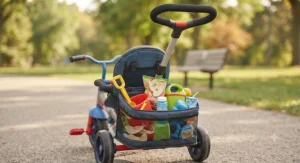
Somewhere between “I want my toddler outside” and “I do not want to chase a runaway tricycle into traffic” sits a genuinely useful category of ride-on toy that most first-time parents don’t know exists until a friend mentions it at a playground. A pedal trike with push handle is exactly what it sounds like: a tricycle built with pedals for the child and a long steering handle for the adult, so a toddler can sit and pretend to pedal while you actually control speed and direction from behind.
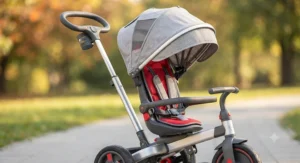
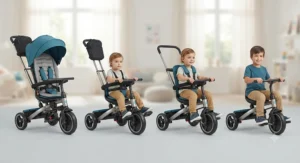
In practice, a pedal trike with push handle is a three-wheeled ride-on vehicle built around a parent push handle that converts through two or more stages — from a fully parent-steered stroller-style mode for babies as young as nine or ten months, through a hybrid stage where the child pedals but you still steer, and finally into an independent tricycle once the handle comes off entirely. That staged design is the whole appeal: one purchase covers roughly four years of development instead of forcing you to buy a new ride-on every few months. Health Canada’s toy safety overview is worth a quick read before any ride-on purchase, since it explains how federal safety rules apply to the toys and wheeled products sold across Canadian retailers and Amazon.ca.
At the time of research, the Canadian market for this category runs from lightweight sub-C$100 budget trikes with foam wheels up to feature-loaded premium models with patented touch-steering consoles. This guide covers seven real, currently available products, with honest analysis of push-handle design, weight capacity, growth stages, and exactly which pedal trike with push handle suits your toddler’s age, your budget, and how you actually plan to use it — whether that’s daily walks, a genuine stroller alternative for errands, or simply somewhere to put a wiggly two-year-old on a Saturday afternoon.
Quick Comparison Table: Top Picks at a Glance
Here’s the short version before the full seven-product breakdown, for parents who want the highlights first.
| Trike | Push Handle Type | Age Range | Price Range (CAD) | Best For |
|---|---|---|---|---|
| KRIDDO Navi-Go 2-in-1 Kids Tricycle | Adjustable, push-only | 18 months–5 years | Around C$70–C$100 | Lightest budget pick |
| Little Tikes Perfect Fit 4-in-1 Trike | Detachable, steering | 9 months–5 years | C$70–C$100 range | Big-brand budget 4-in-1 |
| INFANS 4-in-1 Kids Tricycle | Adjustable, steering | 10 months–5 years | C$90–C$120 range | Most accessories for the price |
| Schwinn Easy-Steer Tricycle | Removable, steering | 2–4 years | C$100–C$130 range | Sturdiest steel-frame build |
| Joovy Tricycoo 4.1 | Removable, steering | 10 months–3 years | C$150–C$190 range | Best tip-resistant ride quality |
| Radio Flyer 4-in-1 Stroll ‘N Trike | Removable, steering | 1–5 years | C$140–C$180 range | Best stroller-style features |
| smarTrike Dream Touch Steering 4-in-1 | Telescopic, touch-steer | 10 months–3 years | C$160–C$210 range | Most precise parent steering |
Reading across this table, the price gap tracks closely with how much real steering control the handle actually gives you — a push-only handle like the one on the budget-tier KRIDDO Navi-Go 2-in-1 Kids Tricycle gets your toddler moving forward but leaves direction up to them, while every model from the Schwinn Easy-Steer Tricycle upward lets you genuinely steer the front wheel from behind. Families whose main goal is exercise on a flat, enclosed backyard can reasonably start at the low end; anyone planning to use the trike on sidewalks, in parking lots, or near any kind of traffic should budget for a model with true steering control.
💬 Just one click — help others make better buying decisions too!😊
Top 7 Pedal Trikes With Push Handle: Expert Analysis
Here’s the complete lineup, ordered from most budget-friendly to premium, with honest commentary on where each one earns its keep.
1. KRIDDO Navi-Go 2-in-1 Kids Tricycle — lightest trike in this entire roundup
The standout here is sheer portability: at roughly 5.6 kg (12.3 lb), this is the lightest trike in the lineup by a wide margin, which matters enormously if you’re the one lifting it in and out of a car trunk or up an apartment stairwell every day. The adjustable push bar extends from about 96 cm to 102 cm (37.7–40.3 in), and foldable footrests drop down automatically in push mode so little feet stay supported instead of dragging.
Based on the spec comparison, the trade-off for that light weight is a push handle that pushes but doesn’t steer — the bar propels the trike forward while your toddler’s own hands on the handlebar determine direction, which works fine on an open lawn but matters a lot less on a sidewalk with curbs or driveways nearby. Reviewers consistently note the never-flat EVA tires as a genuine maintenance win, since there’s no air pressure to check and no puncture risk on driveways with gravel or debris. Aggregated feedback across retailers points to easy at-home assembly and a stated 50 kg (110 lb) weight capacity that comfortably outlasts most toddlers’ time in the seat, though the trade-off is a bare-bones build with no canopy, tray, or storage.
Pros:
- ✅ Lightest trike here at about 5.6 kg for easy carrying
- ✅ Never-flat EVA tires need zero air or maintenance
- ✅ Push bar adjusts to fit both tall and short parents
Cons:
- ❌ Push bar doesn’t steer, so toddler still controls direction
- ❌ No canopy, tray, or storage bucket included
Price sits around C$70–C$100 at the time of research, making it one of the lightest and most affordable genuine push-handle options on the Canadian market.
2. Little Tikes Perfect Fit 4-in-1 Trike — best big-brand budget 4-in-1
The standout advantage is brand trust paired with a genuinely wide age window: four transformable stages carry a child from nine months of stroller-style riding through full independence around thirty months and beyond, all under a name most Canadian parents already recognize from playroom toys. The detachable parent push handle does steer in the early stages, and a 5-point harness plus a protective waist bar cover the youngest riders.
Here’s what to weigh: the 22.7 kg (50 lb) weight capacity and adjustable seat give this trike genuine growing room, and the removable tray with a beverage holder plus a large rear storage bucket add real stroller-replacement value for short errands. What most buyers overlook about lightweight plastic-frame trikes at this price point is that the trade-off for portability is stability — aggregated review sentiment across major retailers repeatedly flags a tendency to feel tippy on sharp turns or uneven pavement compared to steel-frame competitors, which is worth factoring in if your usual route includes curbs or slanted driveways. Reviewers do consistently praise the tray, canopy, and overall value for a big-name brand at this price.
Pros:
- ✅ Four genuine growth stages from 9 months to 5 years
- ✅ 5-point harness plus protective waist bar for young riders
- ✅ Recognizable brand with wide parts and support availability
Cons:
- ❌ Feels tippy on sharp turns per aggregated review feedback
- ❌ Plastic build feels less sturdy than steel-frame rivals
Expect to pay in the C$70–C$100 range at the time of research, positioning it as a genuinely solid budget 4-in-1 pick backed by brand reliability.
3. INFANS 4-in-1 Kids Tricycle — most accessories for the price
The standout feature is sheer feature density for a budget-tier trike: a removable UV canopy, a detachable sponge guardrail, a storage basket, and a lockable pedal system with front-wheel clutch control are all included at a price point that usually buys a bare-bones frame elsewhere. The iron frame and EVA tires give it a sturdier feel than the plastic-bodied budget trikes one tier down.
On paper this means a 22.7 kg (50 lb) weight capacity paired with an age range stretching from 10 months to 5 years, matching the coverage of trikes costing considerably more. Based on the spec comparison, the honest trade-off is weight: at roughly 9.1 kg (20 lb), this is the heaviest trike in the entire lineup, which makes lifting it into a trunk noticeably more effort than the lighter budget options. Aggregated feedback for lesser-known budget brands like this one tends to run more mixed than for household names, with some buyers reporting stiffer canopy-mount hinges out of the box, though the core frame and harness draw consistent praise for the price.
Pros:
- ✅ Removable canopy, guardrail, and storage basket all included
- ✅ Lockable pedals with front-wheel clutch control
- ✅ 50 lb weight capacity matches pricier competitors
Cons:
- ❌ Heaviest trike here at about 9.1 kg to lift and carry
- ❌ Canopy hinges reported stiff out of the box by some buyers
Price generally runs C$90–C$120 at the time of research, making it a strong value pick for parents who want the most accessories per dollar.
4. Schwinn Easy-Steer Tricycle — sturdiest steel-frame build
The standout advantage is genuine build quality: a heavy-duty steel trike frame with a concealed steering mechanism gives this trike a noticeably more solid feel underfoot than the plastic 4-in-1 systems dominating this category. The removable push/steer handle is a true steering handle, not just a push bar, letting a parent control both speed and direction from behind.
Based on the spec comparison, the high-back saddle with a 3-point seat belt and wide, enclosed EVA tires point to a trike built more like a classic tricycle than a stroller substitute, which shows up in the rear gravity-lock dump bin and front basket rather than a canopy or tray. What the spec sheet won’t tell you is how much that steel frame matters once a toddler starts leaning into turns — reviewers consistently note it tracks straighter and feels less prone to tipping than lighter plastic frames at a similar price. The narrower two-to-four-year age window is the honest trade-off for that sturdier build, since it skips the youngest stroller-mode stage entirely.
Pros:
- ✅ Heavy-duty steel frame feels sturdier than plastic rivals
- ✅ Removable handle genuinely steers, not just pushes
- ✅ High-back saddle with 3-point harness for security
Cons:
- ❌ No canopy or UV protection included
- ❌ Narrower 2–4 year age window than 4-in-1 competitors
At the time of research, pricing lands around C$100–C$130, reflecting its position as the durability specialist in this roundup.
5. Joovy Tricycoo 4.1 — best tip-resistant ride quality
The standout feature here is genuinely engineered stability: wide rear wheels are the design element Joovy leans on hardest, and the difference is noticeable the moment a toddler leans sideways reaching for something on the ground. Four clearly defined growth stages run from a parent-steered push trike at 10 months through a training trike with pedal-locking at 24 months and on to full independence past 30 months.
Here’s what to weigh: the removable UPF 50 canopy, height-adjustable steering rear handle, and 5-point harness combine for a genuinely stroller-like early experience, while rear brakes and a machine-washable seat pad add practical touches most budget trikes skip. Aggregated review sentiment across parenting sites consistently credits the wide-wheel stance with reducing tip-overs on grass and uneven sidewalk sections compared to narrower-wheelbase trikes, a real point of differentiation rather than marketing language. The honest downside is price — at 22.4 kg (44 lb) weight capacity, it’s not the highest in this lineup, and the mid-premium cost sits above most 4-in-1 budget rivals for a comparable feature set.
Pros:
- ✅ Wide rear wheels measurably reduce tipping on turns
- ✅ Removable UPF 50 canopy plus machine-washable seat pad
- ✅ Four clearly staged modes from push trike to independence
Cons:
- ❌ Mid-premium price above most 4-in-1 budget rivals
- ❌ Canopy adds bulk that can complicate trunk storage
Pricing generally falls in the C$150–C$190 range at the time of research, positioning it as the stability specialist for parents prioritizing ride quality over price.
6. Radio Flyer 4-in-1 Stroll ‘N Trike — best stroller-style features
The standout advantage is how deliberately this trike is built to double as a stroller replacement: a UV-blocking adjustable canopy, a removable wraparound tray with a cup holder, and a rear storage bucket combine for genuinely useful errand-running functionality that most competitors treat as an afterthought. Radio Flyer’s decades of heritage in the ride-on category back that design with a steel frame and four riding configurations spanning infant trike through classic trike.
On paper this means a 22.2 kg (49 lb) weight capacity and a removable front-wheel footrest for younger riders, paired with an adjustable seat that grows with the child across the full 1-to-5-year age range. Based on the spec comparison, the parent steering push handle removes cleanly once a child is ready for independent riding, and the 3-point safety harness with a high-back seat covers the earliest stroller-mode stage properly. Reviewers and parenting bloggers consistently praise the tray and canopy combination for genuine stroller-alternative use on walks and errands, with the honest caveat that its weight capacity sits mid-pack rather than class-leading, and several 4-in-1 rivals undercut it on price for similar stage coverage.
Pros:
- ✅ UV canopy and wraparound tray genuinely replace a stroller
- ✅ Rear storage bucket adds real cargo capacity for errands
- ✅ Trusted heritage brand with wide parts and support network
Cons:
- ❌ 49 lb weight capacity is mid-pack, not class-leading
- ❌ Several 4-in-1 rivals undercut it on price
Pricing generally runs C$140–C$180 at the time of research, positioning it as the genuine stroller-alternative specialist in this lineup.
7. smarTrike Dream Touch Steering 4-in-1 — most precise parent steering
The standout feature is smarTrike’s patented touch-steering console: a light fingertip touch on the handle adjusts the front wheel’s direction, which reviewers describe as noticeably easier and less physically demanding than wrestling a conventional steering bar through a full turn. The telescopic parent handle adjusts height to comfortably fit both tall and shorter parents, a detail that’s easy to underrate until you’ve pushed a trike for twenty minutes with a handle set wrong for your height.
Based on the spec comparison, four stages carry a child from a padded high-back seat at 10 months, through back-support removal at 18 months and pedal practice at 24 months, to independent riding with the handle fully removed around 36 months. What most buyers overlook about touch-steering systems is how much they reduce the physical effort of steering compared to a standard handle, which matters on longer walks or when maneuvering around obstacles at a park. Aggregated reviewer sentiment consistently singles out the steering ease and quick 20-minute assembly as standout strengths, alongside genuine satisfaction with the UV canopy and handlebar accessories like a cup holder and toy phone; the honest trade-off is the shortest top-end age range in this roundup, so a fast-growing toddler ages out of the parent-controlled stages sooner than with other 4-in-1 systems.
Pros:
- ✅ Touch-steering console needs only light fingertip pressure
- ✅ Telescopic handle comfortably fits tall and short parents
- ✅ UV canopy plus handlebar accessories keep toddlers engaged
Cons:
- ❌ Shortest top-end age range in this roundup at 3 years
- ❌ Premium price sits at the top of this entire lineup
At the time of research, pricing lands around C$160–C$210, reflecting its position as the precision-steering specialist for parents who prioritize ease of control.
Practical Usage Guide: Setup, Handle Adjustment and Retiring the Handle
Most pedal trikes with push handle arrive partially assembled, and the first ten minutes matter more than people expect. Before the first ride, check every bolt on the seat, steering column, and rear axle with the included tools, since shipping vibration can loosen fasteners even on a brand-new frame — this matters especially on models like the Schwinn Easy-Steer Tricycle where the steering mechanism is fully concealed inside the frame and harder to spot-check visually later.
Adjusting the parent push handle to your own height, not just your child’s seat, is a step reviewers across nearly every product in this roundup mention getting wrong the first time. Trikes like the smarTrike Dream Touch Steering 4-in-1 and KRIDDO Navi-Go 2-in-1 Kids Tricycle both offer telescopic or extendable handles specifically so a taller or shorter parent isn’t stooping or overreaching on every walk — set it once you’re actually wearing your usual walking shoes, since a couple of centimetres genuinely changes comfort over a twenty-minute stroll. A common first-month mistake is leaving the handle at delivery height indefinitely rather than rechecking it once, which quietly turns a comfortable walk into a sore-back one.
Retiring the handle is its own milestone worth planning for rather than reacting to. Once a child is reliably pedaling and steering independently — usually somewhere in the 30-to-36-month range across the 4-in-1 models here — removing the handle for good is generally a simple tool-free or single-bolt process, and most parents report it’s an easy transition once the child has clearly outgrown wanting to be steered.
Real-World Scenarios: Matching Your Family to the Right Pedal Trike With Push Handle
Consider a parent living in a condo or apartment who needs to carry the trike down a flight of stairs or into an elevator every single outing. For this situation, the featherweight KRIDDO Navi-Go 2-in-1 Kids Tricycle at roughly 5.6 kg genuinely solves a problem that a heavier 4-in-1 system creates daily, even if it means giving up true steering control on the handle.
Now consider a parent who regularly walks to the corner store, the park, or a sibling’s school pickup and wants the trike to double as a genuine stroller alternative rather than a backyard-only toy. Here, the Radio Flyer 4-in-1 Stroll ‘N Trike or the smarTrike Dream Touch Steering 4-in-1 make far more practical sense, since both combine a UV canopy with real cargo or storage capacity and — critically — a handle that actually steers the front wheel around curbs, parked cars, and pedestrians rather than just pushing forward.
A third scenario: a family with a toddler who’s already outgrown the youngest stroller-mode stage and is actively learning to pedal and steer with light supervision. For that stage specifically, the Schwinn Easy-Steer Tricycle or Joovy Tricycoo 4.1 make sense precisely because they’re built around that middle stage rather than trying to also serve a nine-month-old, and both offer genuinely sturdier frames for a toddler who’s starting to test the trike’s limits on turns and uneven ground.
Problem → Solution: Fixing the Most Common Push-Handle Trike Headaches
Problem: the trike tips on sharp turns. This is the single most common complaint across lighter, plastic-frame 4-in-1 systems, and the fix is partly about product choice and partly about habit — models with a wider wheelbase, like the Joovy Tricycoo 4.1, are measurably more tip-resistant, and slowing down before any turn rather than during it prevents most tip-overs regardless of which trike you own.
Problem: my toddler won’t pedal and just wants to be pushed. This is developmentally normal, not a product flaw — most 4-in-1 systems are explicitly designed with a pedal-locking feature for exactly this stage, letting the wheels turn freely so a child gets used to the motion of sitting and steering before pedal power is expected of them.
Problem: the push handle feels wrong for my height. As covered above, nearly every model here offers height adjustment; the fix is simply re-checking it while wearing normal outdoor shoes rather than assuming the factory setting fits.
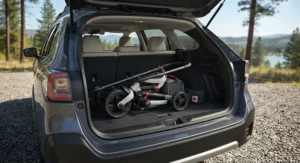
Problem: the canopy or tray gets in the way of loading the trike into a car. Removable components exist for exactly this reason — on models like the Radio Flyer 4-in-1 Stroll ‘N Trike and INFANS 4-in-1 Kids Tricycle, popping off the tray or canopy before a car trip genuinely reduces the footprint without any tools.
Problem: my toddler keeps grabbing the handlebar and fighting the parent steering. This is common in the earliest stage and usually resolves as fine motor control develops; in the meantime, models with a genuine steering handle, like the smarTrike Dream Touch Steering 4-in-1, let you maintain control even while small hands explore the handlebar.
How to Choose a Pedal Trike With Push Handle
Picking the right pedal trike with push handle for your family means weighing a handful of specific factors most buyers skip past when comparing prices alone. Here’s the process worth following.
- Confirm the handle actually steers, not just pushes. A push-only bar, like the one on the budget-tier KRIDDO Navi-Go 2-in-1 Kids Tricycle, moves your toddler forward but leaves direction control with them — fine for an enclosed yard, less ideal near curbs or driveways.
- Match the age range to how long you actually need the handle. A trike with a 10-month starting age, like the smarTrike Dream Touch Steering 4-in-1, covers the youngest stroller-mode stage that a 2-to-4-year model like the Schwinn Easy-Steer Tricycle simply skips.
- Weigh the trike’s own weight against how often you’ll lift it. Apartment living or frequent car trips favour lighter models; a heavier build like the INFANS 4-in-1 Kids Tricycle trades portability for included accessories.
- Decide whether you need stroller-replacement features. A canopy, tray, and storage bucket, as seen on the Radio Flyer 4-in-1 Stroll ‘N Trike, matter enormously if this trike is replacing actual errand walks rather than just backyard play.
- Check the weight capacity against your child’s growth curve, not just their current size. A 50 lb (22.7 kg) capacity, common across several models here, generally covers the full toddler range with room to spare.
- Consider frame material for stability on real terrain. Steel-frame builds like the Schwinn Easy-Steer Tricycle track straighter on uneven sidewalks than lighter plastic frames.
- Plan for the handle-removal stage from day one. Every model in this roundup transitions to an independent tricycle eventually, so confirm the removal process is genuinely tool-free or simple before you commit.
Pedal Trike vs Balance Bike for 2 Year Olds
This is one of the most common questions parents actually search before buying either product, so it deserves a direct answer rather than a vague “it depends.” A pedal trike with push handle, by design, lets a 2 year old sit securely with three-point-of-contact stability while a parent controls speed and steering — the child doesn’t need to balance at all, which is exactly why the stroller-mode and push-trike stages exist on 4-in-1 systems like the Joovy Tricycoo 4.1 and Little Tikes Perfect Fit 4-in-1 Trike. A balance bike, by contrast, has two wheels and no pedals at all, asking a toddler to develop core balance and steering coordination independently from the very first ride.
A 2022 study published in the British Journal of Developmental Psychology found that balance bike experience was more strongly associated with the development of independent cycling skill than traditional pedal-first tricycles or training-wheel bicycles, largely because balancing on two wheels is the actual skill a child eventually needs for a real bicycle. That doesn’t make a pedal trike with push handle the wrong choice for a 2 year old — it makes it a different tool for a different job. A trike with a genuine steering handle, like the Schwinn Easy-Steer Tricycle, gives a parent real control during a stage when a toddler simply isn’t ready to be unsupervised on any wheeled toy, balance bike included, while a balance bike better prepares an older toddler specifically for the transition to pedal bicycles down the road. Many Canadian families reasonably own both, using the push-handle trike for controlled walks and errands at age 2, then introducing a balance bike closer to age 3 as independent balance and confidence develop.
Common Mistakes When Buying a Pedal Trike With Push Handle
The single most common mistake is assuming every “push handle” gives you real steering control, when several budget models — including the KRIDDO Navi-Go 2-in-1 Kids Tricycle in this roundup — only push forward while the child’s own handlebar grip determines direction. If your plan involves sidewalks, parking lots, or anywhere near vehicle traffic, that distinction genuinely matters more than price.
A second frequent error is buying based on the youngest possible starting age without checking how long the handle stays useful; a trike that starts at 10 months but tops out its handle-assisted stages around 30 to 36 months, like the smarTrike Dream Touch Steering 4-in-1, may age out sooner than a family expects if they were picturing years of use. Parents also commonly underestimate storage needs for canopy-and-tray models, only to find the fully assembled footprint doesn’t fit their intended closet or trunk space as neatly as photos suggested. Finally, skipping the weight-capacity check is a recurring theme in aggregated buyer feedback — a trike rated for 44 lb (20 kg), like the Joovy Tricycoo 4.1, still comfortably covers most toddlers, but it’s worth confirming against your own child’s growth trajectory rather than assuming every model’s capacity is identical. Treat these as toddler safety basics rather than optional fine print, since a mismatched weight rating or a misunderstood push handle is exactly how a comfortable ride turns into a stressful one.
Pedal Trike With Push Handle as a Stroller Alternative
For short errands — a walk to pick up milk, a stroll to a sibling’s bus stop, a lap around the block before nap time — a pedal trike with push handle can genuinely function as a stroller alternative, provided you pick a model built for that job specifically. The features that make the difference are the same ones that separate a stroller from a backyard toy: a UV canopy for sun protection, a secured harness for a child too young to reliably stay seated, and some form of storage for the inevitable snacks, water bottle, or dropped toy.
Among this roundup, the Radio Flyer 4-in-1 Stroll ‘N Trike is the most purpose-built stroller alternative, pairing its canopy and tray with a genuine rear storage bucket sized for more than a single item. The smarTrike Dream Touch Steering 4-in-1 makes a strong secondary case thanks to its touch-steering system, which noticeably reduces the physical effort of steering around obstacles compared to a standard handle — a real consideration if you’re covering actual distance rather than a few backyard laps. What a pedal trike with push handle won’t replicate is a stroller’s reclining seat for napping mid-walk or its typically superior all-weather coverage, so families doing longer outings or relying on nap-on-the-go schedules may still want to keep a traditional stroller in rotation alongside a push-handle trike for shorter, more active outings.
Toddler Safety: Helmets, Harnesses and Supervision
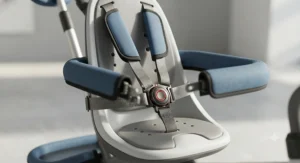
Toddler safety on any wheeled ride-on starts with matching the product to the child’s actual stage, not just their age in months, and every 4-in-1 trike in this roundup is designed around that principle through its harness and handle-removal stages. A properly buckled 3-point or 5-point harness, present on every model here, keeps a younger rider secure during the stroller-mode and push-trike stages when a toddler can’t yet be trusted to stay seated independently.
Helmet rules for wheeled ride-on toys vary meaningfully by province, and Canadian requirements are generally written around bicycles rather than tricycles specifically, so checking your own province’s current rules is worth the two minutes it takes. Canadian public health research on mandatory helmet bylaws found that municipalities with enforced helmet legislation for cyclists under 18 saw measurably higher helmet use, a pattern worth taking seriously even for a slow-moving toddler trike, since a fall from any height onto pavement carries real head-injury risk. Beyond helmets, the practical toddler-safety habits that matter most are keeping riding areas away from driveways and vehicle traffic, checking that the seat harness is properly buckled every single outing rather than just the first few times, and never letting a toddler use a trike unsupervised, even a model with genuine steering control like the Schwinn Easy-Steer Tricycle. Parachute, Canada’s national injury prevention charity, maintains ongoing resources on childhood product safety that are worth bookmarking as your child moves through multiple ride-on stages over the coming years.
Long-Term Cost and Maintenance
A budget model like the KRIDDO Navi-Go 2-in-1 Kids Tricycle carries almost no ongoing cost — EVA tires never need air or replacement, and the simple frame has few moving parts to wear out over its roughly three-to-four-year usable window. The Little Tikes Perfect Fit 4-in-1 Trike and INFANS 4-in-1 Kids Tricycle sit in a similar low-maintenance category, with occasional harness or canopy cleaning being the main upkeep required.
The steel-frame and premium models — the Schwinn Easy-Steer Tricycle, Joovy Tricycoo 4.1, Radio Flyer 4-in-1 Stroll ‘N Trike, and smarTrike Dream Touch Steering 4-in-1 — carry a higher upfront cost but generally a longer usable runway, since their broader age ranges and harness stages let one trike serve a child from under a year old through independent riding. Factor in that several of these models can realistically be resold or handed down to a younger sibling once the handle comes off for good, which meaningfully changes the effective cost per year compared to a cheaper trike that gets outgrown just as quickly. Where the premium models lose ground is in a fairly niche secondhand market for ride-on toys generally, so resale recoups only a fraction of the original price regardless of which trike you choose.
Full Comparison Table: Specs, Price Range and Best For
| Product | Weight Capacity | Frame Material | Price Range (CAD) | Best For |
|---|---|---|---|---|
| KRIDDO Navi-Go 2-in-1 Kids Tricycle | 110 lb (50 kg) | Steel with EVA tires | C$70–C$100 | Lightest, most portable pick |
| Little Tikes Perfect Fit 4-in-1 Trike | 50 lb (22.7 kg) | Plastic | C$70–C$100 | Big-brand budget 4-in-1 |
| INFANS 4-in-1 Kids Tricycle | 50 lb (22.7 kg) | Iron frame with EVA tires | C$90–C$120 | Most included accessories |
| Schwinn Easy-Steer Tricycle | Not publicly specified | Heavy-duty steel | C$100–C$130 | Sturdiest overall build |
| Joovy Tricycoo 4.1 | 44 lb (20 kg) | Steel with wide rear wheels | C$150–C$190 | Best tip resistance |
| Radio Flyer 4-in-1 Stroll ‘N Trike | 49 lb (22.2 kg) | Steel | C$140–C$180 | Best stroller-style features |
| smarTrike Dream Touch Steering 4-in-1 | Not publicly specified | Steel with touch-steer console | C$160–C$210 | Most precise steering |
Scanning this table, weight capacity and price don’t move in lockstep the way you might expect — the budget-tier KRIDDO Navi-Go 2-in-1 Kids Tricycle actually carries the highest stated capacity in the entire roundup, while two of the pricier models don’t publish a weight rating at all, relying instead on their age range as the practical guide. That’s worth remembering before assuming a higher price automatically means a higher weight ceiling; frame material, steering type, and included accessories are driving the price difference here far more than raw capacity numbers.
Pedal Trike With Push Handle vs Traditional Alternatives
| Option | Parent Control | Price Range (CAD) | Best For |
|---|---|---|---|
| Pedal trike with push handle | Full steering (on true steering-handle models) | C$70–C$210 | Controlled walks, errands, staged development |
| Balance bike | None — child balances independently | C$80–C$250 | Older toddlers building balance for a real bike |
| Standard tricycle (no handle) | None | C$40–C$100 | Independent riders in enclosed, flat areas |
| Umbrella stroller | Full, reclining seat available | C$50–C$200 | Naps on the go, longer outings, all-weather coverage |
This table makes the practical trade-off explicit: a pedal trike with push handle occupies a genuinely useful middle ground between a stroller’s full control and a standard tricycle’s full independence, letting a toddler feel like they’re “driving” while a parent retains real authority over speed and direction. A balance bike removes parental control entirely in favour of building a developmental skill a tricycle doesn’t teach, which is exactly why several of the products discussed in the earlier comparison section serve a genuinely different purpose than balance bikes rather than competing directly with them. For families specifically wanting a toddler-safety-first option for walks and errands before a child is ready for independent wheels, the math consistently favours a genuine steering-handle trike over either alternative.

FAQ
❓ What age is right for a pedal trike with push handle?
❓ Is a pedal trike with push handle better than a balance bike for a 2 year old?
❓ Can a pedal trike with push handle really replace a stroller?
❓ Do toddlers need a helmet on a push-handle tricycle in Canada?
❓ How do I remove the parent push handle once my toddler can pedal alone?
Conclusion
Choosing the right pedal trike with push handle really comes down to two honest questions: how much real steering control do you actually need, and how long do you realistically need the handle to stay useful? For families wanting the lightest, most portable option for occasional outings, the KRIDDO Navi-Go 2-in-1 Kids Tricycle or the budget-friendly Little Tikes Perfect Fit 4-in-1 Trike cover the basics without overspending.
For parents planning to genuinely replace stroller walks with trike outings, the Radio Flyer 4-in-1 Stroll ‘N Trike earns its reputation as the stroller-alternative specialist, while the smarTrike Dream Touch Steering 4-in-1 rewards anyone who values precise, low-effort steering enough to pay a premium for it. Families prioritizing sheer stability and build quality should look closely at the Schwinn Easy-Steer Tricycle or the Joovy Tricycoo 4.1, both of which trade a narrower feature set for a noticeably sturdier ride.
Whichever route fits your family, the underlying goal stays the same: real parent control through a genuine parent push handle, matched honestly to your toddler’s actual stage and everyday toddler safety needs, so outings feel safe now and the trike still makes sense as your child grows into independent riding. ✨ Don’t miss these picks while current stock and pricing hold steady!
🔍 Take your toddler’s outdoor time to the next level with a pedal trike with push handle matched to your family’s real routine — click through on any highlighted model above to check current pricing and availability before deciding.
Recommended for You
- 7 Best Pedal Trikes for Toddlers in Canada 2026
- 7 Best Pedal Go-Karts for Backyard Racing in 2026 (Ranked)
- 7 Best Off-Road Pedal Go-Karts for Rural Yards 2026
Disclaimer: This article contains affiliate links. As an Amazon Associate, I earn from qualifying purchases. If you purchase products through these links, we may earn a small commission at no additional cost to you.
✨ Found this helpful? Share it with your friends! 💬🤗
