In This Article
Somewhere between the tricycle and the “can I get a real dirt bike, please” phase sits a machine that quietly ends a thousand driveway arguments: the kids electric dirt bike 12v with training wheels. It looks like a mini motocross machine, sounds like one (thanks to a speaker chip and some enthusiastic sound effects), and moves at a pace that lets a five-year-old feel like a hero without giving their parents a heart attack. A kids electric dirt bike 12v with training wheels is, in plain terms, a battery-powered ride-on toy shaped like a motorbike, built with a low top speed, stabilizer wheels, and safety features specifically designed for beginners aged roughly 3 to 8.
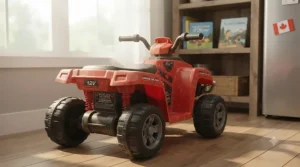
The category has grown up a lot since the wobbly plastic scooters of a decade ago. Today’s models come with dual motors, spring suspension, adjustable speed switches, and — crucially for Canadian winters — sealed battery housings that hold up in a cold garage. But not every listing tells you what actually matters once the box is open and the neighbourhood kids are watching. Some “12V” bikes barely crawl. Some training wheels bolt on so awkwardly that parents give up and return the whole thing.
This guide digs into seven real products currently sold through amazon.ca, comparing genuine specs, aggregated reviewer feedback, and honest trade-offs so you can pick the one that actually suits your rider — not just the one with the shiniest product photo. Before you shop, it’s worth skimming Health Canada’s ride-on toy safety guidance, since it flags hazards specific to fast-moving wheeled toys that generic “buying guide” advice tends to skip. We’ll also cover setup, common mistakes, and when it’s time to unbolt those training wheels for good.
Quick Comparison Table
| Bike | Top Speed | Runtime | Best For |
|---|---|---|---|
| TOBBI 12V Electric Dirt Bike | ~8 km/h (5 mph) | 40-60 min | First-time riders, all-around value |
| Aosom 12V Kids Motorcycle | 3-8 km/h (1.86-5 mph) | ~45 min | Safety-conscious parents, ages 3-5 |
| JOYLDIAS 12V7AH Ride-On | High/low adjustable | ~45 min | Budget-minded families |
| Qaba Aprilia-Licensed Motorcycle | ~6 km/h (3.7 mph) | Up to 60 min | Brand-loving kids, realistic styling |
| Hyper GoGo Electric Dirt Bike | Up to 16 km/h (10 mph) | Up to 60 min | Kids who’ll grow into more speed |
| AOKOY 12V Ride-On Motorcycle | 2-speed adjustable | ~40-45 min | Tightest budgets |
| Awjaisca 12V Motorcycle | Up to 14 km/h (9 mph) | ~45 min | Bigger toddlers needing more seat room |
Reading across this table, the spread in top speed is the single biggest differentiator — the Aosom and Qaba models cap out well under 8 km/h, which suits nervous first-timers, while the Hyper GoGo pushes closer to 16 km/h for kids who’ve already got some ride-on experience. Runtime is fairly consistent across the lineup at 40-60 minutes, so battery life shouldn’t be your deciding factor; fit, speed ceiling, and how easily the training wheels come off should be.
💬 Just one click — help other Canadian parents make a safer, smarter choice too!😊
Top 7 Kids Electric Dirt Bikes: Expert Analysis
1. TOBBI 12V Electric Dirt Bike — best all-around first ride
The TOBBI 12V Electric Dirt Bike earns its “all-around” tag by nailing the basics without over-promising. Its dual 35W motors and 12V 7AH battery deliver 40-60 minutes of ride time, which is enough for an after-school lap of the driveway without a mid-play recharge scramble. The two-speed switch (roughly 2.5-8 km/h) lets you cap things at a crawl for a nervous three-year-old, then bump it up once they’ve found their footing — or rather, their throttle hand. Based on the spec sheet, the EVA-ringed wheels are the quiet hero here: they’re non-slip on wood floors and cement alike, which matters more than glossy paint jobs once winter boots and sandbox grit enter the picture. Reviewers consistently report that assembly takes under 20 minutes and that the bike handles small bumps and lawn transitions without tipping. What most buyers overlook is the LED headlight and horn combo, which does double duty as a “found you” locator when your kid disappears around the side of the house.
Pros:
- ✅ Dual motors handle inclines better than single-motor rivals
- ✅ Two-speed switch grows with rider confidence
- ✅ Fast, tool-light assembly reported by most owners
Cons:
- ❌ Plastic body shows scuffs quickly on pavement
- ❌ Battery indicator light is easy to miss
Priced around C$150-C$200 at the time of research, the TOBBI 12V Electric Dirt Bike is a genuinely solid value pick — check current price, as these fluctuate.
2. Aosom 12V Kids Motorcycle — safest certified pick for nervous parents
If you’re the parent who reads every safety label before checkout, the Aosom 12V Kids Motorcycle is worth a longer look. It’s certified to ASTM F963, CPSIA, and carries UL battery certification — a combination that isn’t universal in this category and one worth confirming on any bike you’re considering. On paper, the adjustable 1.86-5 mph (3-8 km/h) range paired with front and rear suspension means it smooths out driveway cracks better than bikes with a single rear shock. The detachable side training wheels are genuinely removable with basic tools, rather than the permanently-bolted stabilizers some budget competitors use. Aggregated owner feedback highlights the treaded tires as a standout for grip on both grass and asphalt, though a few reviewers note the seat runs a touch narrow for bigger four- and five-year-olds. Here’s what to weigh: this bike targets ages 3-5 specifically, so if your child is already tall for their age, sizing up to another model on this list may serve you better long-term.
Pros:
- ✅ Multiple safety certifications, unusually thorough for the category
- ✅ Front and rear suspension smooths rough pavement
- ✅ Treaded tires grip well on grass and asphalt
Cons:
- ❌ Narrower seat than some rivals
- ❌ Age range tops out earlier at 5 years old
Expect a price in the C$180-C$230 range; given the certification stack, that premium feels justified rather than padded.
3. JOYLDIAS 12V7AH Ride-On Motorcycle — best value spring suspension
The JOYLDIAS 12V7AH Ride-On Motorcycle is proof that spring suspension doesn’t have to be a premium-only feature. Its 12V 7AH battery mirrors the TOBBI’s capacity, delivering roughly 45 minutes of continuous riding, and the rear-wheel-drive layout gives it a slightly more authentic “motorbike” feel than front-driven competitors. What the spec sheet won’t tell you, but reviewers note, is that the high/low speed switch is genuinely easy for small hands to reach — a small detail that saves a lot of “mom, can you do it” moments. Aimed at ages 3-7, it splits the difference between the Aosom’s younger focus and the Hyper GoGo’s older-kid speed ceiling. Based on the spec comparison, this is the bike to pick if your priority is a comfortable ride quality at a friendly price point rather than top-end speed or brand licensing.
Pros:
- ✅ Spring suspension rare at this price tier
- ✅ Easy-reach speed switch for young hands
- ✅ Rear-wheel drive feels more authentic
Cons:
- ❌ Fewer colour options than competitors
- ❌ Music/sound features are basic compared to rivals
Typically priced around C$140-C$190, the JOYLDIAS 12V7AH Ride-On Motorcycle is one of the strongest dollar-for-dollar picks on this list — always check current price before buying.
4. Qaba Aprilia-Licensed Kids Motorcycle — best realistic styling for brand-loving kids
For kids who already know their motorcycle brands from watching racing highlights with a parent, the Qaba Aprilia-Licensed Kids Motorcycle brings officially licensed styling that’s a genuine step up from generic dirt-bike shapes. Reviewers frame this as the closest a 12V ride-on gets to “looks like a real bike,” and the detachable training wheels are specifically designed to be removed as confidence builds — Qaba markets this progression directly, which lines up with what parents actually want from the category. The dual motors keep top speed intentionally modest at 3.7 mph (about 6 km/h), which reads as a deliberate safety choice rather than a limitation once you consider the target age range of roughly 3-8. Up to 60 minutes of runtime on a charge outlasts most of its rivals here, and the USB port for music is a nice touch that doesn’t compromise the core ride experience. What most buyers overlook is that the 13.2-inch PP wheels are noticeably larger than the wheels on the TOBBI or JOYLDIAS models, which translates to a smoother ride over uneven backyard terrain.
Pros:
- ✅ Officially licensed Aprilia styling and branding
- ✅ Longest runtime in this lineup at up to 60 minutes
- ✅ Larger wheels smooth out backyard terrain
Cons:
- ❌ Licensing pushes price above generic competitors
- ❌ Lower top speed may feel slow for older kids
At around C$200-C$260, this is the premium pick of the group — the branding and runtime are the trade-offs you’re paying for.
5. Hyper GoGo Kids Electric Dirt Bike — best battery life and room to grow
The Hyper GoGo Kids Electric Dirt Bike stands out for one simple reason: it’s built to be ridden for longer and faster than most of its rivals, without abandoning the training-wheel safety net. Up to 60 minutes of battery life pairs with a top speed that reviewers place closer to 10 mph (16 km/h) — notably quicker than the JOYLDIAS or Qaba models — so this is the bike your kid won’t outgrow in a single summer. Adjustable handlebars are the other quiet advantage here; most competitors fix handlebar height, but being able to raise it as your child grows means one purchase can realistically stretch across a couple of years rather than one riding season. Based on the spec comparison, the lights-and-music combo is fairly standard for the category, but the higher speed ceiling means this isn’t the bike for a true first-timer — it suits a kid who’s already logged some hours on a slower model and is ready to go faster.
Pros:
- ✅ Highest realistic top speed in this roundup
- ✅ Adjustable handlebars extend usable years
- ✅ Long 60-minute runtime matches longer play sessions
Cons:
- ❌ Too quick for absolute beginners under 4
- ❌ Higher speed means closer supervision is non-negotiable
Expect to pay in the C$190-C$240 range, which is reasonable given the extended growth window this bike offers.
6. AOKOY 12V Electric Ride-On Motorcycle — best budget alternative
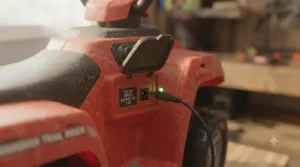
Not every family needs — or wants — every bell and whistle, and the AOKOY 12V Electric Ride-On Motorcycle is the lesser-known name on this list that quietly covers the fundamentals. Two speeds, a basic music player, and a shock absorber cover the essentials without the price creep that licensing or certification stacks add to other entries here. Reviewers consistently describe it as “does what it says” — not flashy, but functional, with training wheels that install without excessive tool fiddling. What the spec sheet won’t tell you is that budget-tier ride-ons like this one tend to have shorter component lifespans under heavy daily use, so if your child will be riding constantly rather than occasionally, this may need earlier parts replacement than the certified options above. For occasional backyard or driveway riders, though, it’s a genuinely sensible entry point into the category before committing to a pricier upgrade.
Pros:
- ✅ Lowest price point in this comparison
- ✅ Straightforward two-speed operation
- ✅ Training wheels install without excess fuss
Cons:
- ❌ Build quality feels lighter under heavy daily use
- ❌ Fewer safety certifications listed than premium rivals
Usually found under C$150, the AOKOY 12V Electric Ride-On Motorcycle is the pick for families testing whether their kid will actually stick with ride-on riding.
7. Awjaisca 12V Motorcycle Electric Dirt Bike — best large seat for bigger toddlers
Seat size is an underrated spec, and the Awjaisca 12V Motorcycle Electric Dirt Bike addresses it directly with a noticeably larger seat than most competitors here — a genuine advantage for taller toddlers or kids on the upper edge of the age range who feel cramped on narrower models like the Aosom. Top speed reaches up to 9 mph (14 km/h), putting it in the same speed tier as the Hyper GoGo, while the auxiliary training wheels provide the stabilizing support beginners need before going solo. Aggregated review sentiment points to the roomier seat and handlebar spacing as the standout, with several parents specifically mentioning it as the reason they chose this model over cheaper, narrower alternatives. Here’s what to weigh: the extra size does add a bit of storage footprint, so if garage space is tight, measure before you buy rather than after the box arrives.
Pros:
- ✅ Noticeably roomier seat than most rivals
- ✅ Speed ceiling matches faster-tier competitors
- ✅ Auxiliary wheels ease the beginner learning curve
Cons:
- ❌ Larger footprint needs more storage space
- ❌ Weight makes it less portable between locations
Priced in the C$150-C$200 range, this is a strong pick specifically for bigger kids who’ve felt squeezed by smaller ride-ons.
Top 7 Products at a Glance
| Bike | Speed Tier | Standout Feature | Best For |
|---|---|---|---|
| TOBBI 12V Electric Dirt Bike | Beginner-mid | Dual motors, easy assembly | First-time riders |
| Aosom 12V Kids Motorcycle | Beginner | Full safety certification stack | Cautious parents, ages 3-5 |
| JOYLDIAS 12V7AH Ride-On | Beginner-mid | Spring suspension at low price | Comfort-focused budgets |
| Qaba Aprilia-Licensed Motorcycle | Beginner | Licensed styling, 60-min runtime | Brand-loving kids |
| Hyper GoGo Electric Dirt Bike | Mid-fast | Adjustable handlebars, top speed | Kids ready to go faster |
| AOKOY 12V Ride-On Motorcycle | Beginner | Lowest price | Testing the waters |
| Awjaisca 12V Motorcycle | Mid-fast | Roomiest seat | Bigger toddlers |
Looking at the full lineup side by side, there’s a clear split between beginner-tier bikes capped near 5 mph (8 km/h) — the Aosom, JOYLDIAS, and Qaba — and the faster-tier options like the Hyper GoGo and Awjaisca that push toward 9-10 mph (14-16 km/h). The TOBBI and AOKOY sit in between as flexible middle-ground choices. Your child’s age, riding experience, and how much backyard space you have for supervised runs should drive which tier you shop first.
✨ Don’t Miss These Exclusive Deals!
🔍 Take backyard rides to the next level with these seven picks. Click through to check current pricing and availability before deals shift. Any one of these bikes can turn an ordinary Saturday into your kid’s favourite memory of the summer!
Practical Usage Guide: Getting the New Ride Ready
Unboxing day matters more than most parents expect. Start by fully charging the battery for the recommended time before the first ride — most 12V units need 8-12 hours on the initial charge even if the box says less, and a full first charge sets the pattern for battery longevity. Health Canada’s guidance on ride-on toys is direct on this point: only adults should install and charge batteries, since mismatched battery types or improper installation can cause overheating.
Once charged, do a five-minute “everything tight” check: wheel bolts, seat bolts, and — critically — the training wheel brackets, which loosen fastest during shipping vibration. In the first 30 days, the most common mistake is skipping a weekly bolt check; ride-on toys shake components loose faster than adult bikes because of their smaller frame tolerances. Set the speed switch to low for at least the first week regardless of how confident your child seems on day one — confidence outpaces skill in nearly every case, and low-speed practice on flat pavement builds the muscle memory for steering and stopping before speed becomes a factor. Finally, before every session, do a quick sweep of the riding area: furniture, cords, and other trip hazards a fast-moving ride-on toy can catch or knock over should be cleared first.
Real-World Scenarios: Matching the Bike to Your Rider
Picture three different households shopping this exact category. First, there’s the family with a cautious three-year-old who’s never ridden anything with a motor — for them, the Aosom 12V Kids Motorcycle or Qaba Aprilia-Licensed Motorcycle make sense specifically because of their capped low speeds and heavy safety certification, letting a nervous first-timer build confidence without the bike outrunning their reflexes. Second, consider the family with a seven-year-old who’s already burned through a slower ride-on toy and is asking for “something faster” — here, the Hyper GoGo Electric Dirt Bike or Awjaisca 12V Motorcycle fit because their higher speed ceilings and larger frames give an experienced rider room to actually progress rather than feeling babied by a bike they’ve outgrown.
Third, picture the budget-conscious family testing whether ride-on riding is even going to stick as a hobby before investing more — the AOKOY 12V Ride-On Motorcycle or TOBBI 12V Electric Dirt Bike are sensible entry points precisely because they cover the fundamentals without asking you to gamble C$250 on something that might sit in the garage by August. In each case, the “right” bike isn’t the one with the best reviews in isolation — it’s the one whose speed tier and price point match where your specific kid actually is today.
How to Choose a Kids Electric Dirt Bike 12V With Training Wheels
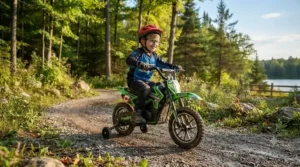
Picking the right kids electric dirt bike 12v with training wheels comes down to seven practical checks:
- Confirm the age and weight range matches your child today, not who they’ll be in two years — an oversized bike is harder to control, not easier.
- Check the top speed ceiling against your child’s experience level; 3-5 mph (5-8 km/h) suits true beginners, while 8-10 mph (13-16 km/h) suits kids with some ride-on hours logged.
- Look for detachable, not fixed, training wheels — you want a bike that can graduate with your child rather than one they’ll outgrow entirely.
- Verify battery runtime against how your family actually plays — 40-60 minutes covers most backyard sessions, but check if a spare battery is available for longer outings.
- Prioritize suspension if your riding surface includes grass, gravel, or uneven pavement — a rigid frame transmits every bump straight to a small rider.
- Scan for safety certifications like ASTM F963 or CPSIA on the listing; not every manufacturer lists them prominently, but the strongest options do.
- Read aggregated reviews for durability complaints, not just star ratings — a 4.5-star average can still hide a recurring battery or wheel issue worth knowing about first.
Common Mistakes When Buying an Electric Dirt Bike for Kids
The single most common mistake is buying based on top speed alone. A faster bike isn’t a better bike if your child has never ridden anything motorized — it’s simply a faster way to end up in the flowerbed. A second frequent misstep is ignoring weight capacity; parents often size a bike for their child’s current age rather than their current weight, and a heavier-than-average kid on an undersized frame will strain the motor and shorten its lifespan.
Third, many buyers skip checking whether the training wheels are actually removable versus permanently fixed — a detail that matters enormously once your child is ready to ride solo. Fourth, some households underestimate charging time and end up disappointed on Christmas morning when the “quick charge” battery needs a full overnight cycle. Finally, skipping the manufacturer’s suggested supervision guidelines is a mistake worth naming directly: these are motorized toys, and even a 5 mph motor deserves the same attention you’d give a real bicycle on a driveway.
Kids Ride On Motorcycle 12V Training Wheels vs Traditional Pedal Bikes
A kids ride on motorcycle 12v training wheels setup and a traditional pedal bike with training wheels solve two different problems, and it’s worth being honest about the trade-off. A pedal bike builds leg strength, balance, and pedaling coordination — skills that transfer directly to riding a “real” bike without training wheels eventually. An electric ride-on, by contrast, builds throttle control, steering confidence, and comfort with speed, but doesn’t develop the same physical coordination a pedal bike does.
| Factor | Electric 12V Ride-On | Traditional Pedal Bike |
|---|---|---|
| Builds leg strength/balance | No | Yes |
| Builds throttle/speed confidence | Yes | No |
| Typical starting age | 3 | 3-4 |
| Transition to “real” biking | Indirect | Direct |
| Supervision needs | Higher (motorized) | Moderate |
Looking at this comparison, the two aren’t really substitutes — many families use an electric ride-on as a confidence-builder before or alongside pedal-bike lessons, not instead of them. If your goal is purely motor-skill development, a pedal bike wins; if your goal is a lower-stress introduction to “riding something with two wheels,” the electric option removes the fear of falling that stops a lot of kids from ever getting comfortable on a pedal bike in the first place.
Removable Training Wheels Dirt Bikes: What Changes When You Take Them Off
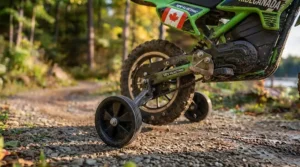
Every bike on this list ships with some form of stabilizer wheel, but removable training wheels dirt bikes are specifically designed to be unbolted as your child’s balance improves — and knowing when to do that matters as much as the bike itself. The general signal is consistency: if your child can steer confidently, brake smoothly, and stop without tipping toward one side across several sessions, they’re likely ready. Removing the wheels too early risks frustrating falls; leaving them on too long can actually slow balance development, since the stabilizers do some of the balancing work the child’s core and steering should be learning instead.
Practically, most of the bikes here use a bolt-on bracket system, so removal typically takes a wrench and ten minutes rather than a specialty tool. Reviewers across several of these models note that reinstalling the wheels for a “confidence day” — after a fall, say, or before trying a new surface — is a smart middle step rather than an all-or-nothing switch.
Electric Dirt Bikes for Ages 5-8: What Changes at This Stage
Electric dirt bikes for ages 5-8 sit at a different point in the category than toys built for toddlers, and shopping this age bracket well means paying attention to a few specific shifts. First, weight capacity becomes a real constraint rather than a formality — kids in this range often exceed the limits of toddler-focused models like the base Aosom 12V Kids Motorcycle, which is why bikes such as the Hyper GoGo Electric Dirt Bike or Awjaisca 12V Motorcycle, with their higher speed ceilings and larger frames, tend to fit this age group better. Second, kids in this bracket typically want the training wheels off sooner, so removable stabilizer systems matter even more here than for younger riders. Third, attention span and independent problem-solving are higher at this age, meaning features like adjustable handlebars and multi-speed switches actually get used, rather than sitting on a “someday” setting a toddler never touches.
What Makes a Safe Electric Motorbike for Kids?
A genuinely safe electric motorbike for kids comes down to a handful of concrete factors rather than marketing language. Speed governance matters most: a capped, adjustable top speed lets a parent match the bike to a child’s actual skill level rather than trusting the child to self-regulate. Battery safety is next — sealed, certified battery housings with auto-shutoff charging reduce the overheating risk covered in Health Canada’s industry guide to toy safety requirements, which addresses electrical and thermal hazards in children’s products specifically. Stable, wide-set training wheels and a low centre of gravity reduce tip-over risk on uneven ground, and a properly fitted helmet remains non-negotiable even at low ride-on speeds — the Canadian Paediatric Society’s helmet guidance notes that a certified helmet must fit snugly and sit level, not tipped back off the forehead. Finally, supervision remains the single biggest safety factor no spec sheet can replace — even the safest-rated bike on this list still needs an adult watching, not just nearby.
Long-Term Cost & Maintenance
The sticker price is only part of the ownership cost. Replacement batteries for 12V ride-ons typically run C$40-C$80 depending on brand, and most families need one replacement after 18-24 months of regular use as battery capacity naturally degrades with charge cycles. Tires and training wheel brackets are the next most common wear item, particularly on bikes ridden daily on pavement rather than grass — budget C$15-C$30 for replacement wheels if a bracket cracks. Charger cables are a surprisingly frequent failure point across the category generally, since kids (and parents in a hurry) tend to yank cords rather than unplug them cleanly.
Weighed against these costs, the certified, higher-build options like the Aosom 12V Kids Motorcycle or Qaba Aprilia-Licensed Motorcycle may justify their higher upfront price through fewer early failures, while budget picks like the AOKOY 12V Ride-On Motorcycle make more sense if you’re not sure the hobby will stick past one season anyway.
Features That Actually Matter (And Those That Don’t)
Cutting through the marketing copy, a few features genuinely affect the riding experience: adjustable speed switches, suspension, removable training wheels, and battery runtime all directly shape how safely and how long your kid actually rides. Weight capacity headroom matters too, since a bike running near its limit strains the motor and shortens battery life.
What matters far less than the listing photos suggest: elaborate sound effects, extra LED colour options, and “extra accessories” bundles rarely affect the actual ride quality, and a working horn is functionally identical whether it plays one tone or five. Reviewers consistently mention motor performance and build durability as the features they’d prioritize on a second purchase — not the bells and whistles that sold them the first time around.
Frequently Asked Questions
❓ How fast does a kids electric dirt bike 12v with training wheels go?
❓ What age is best for electric dirt bikes for ages 5-8?
❓ Do removable training wheels dirt bikes actually come off easily?
❓ How long does a 12V kids ride on motorcycle battery last per charge?
❓ Are these considered safe electric motorbikes for young kids?
Conclusion
Choosing among these seven bikes really comes down to matching speed tier, seat size, and safety features to the kid actually riding it — not the flashiest listing photo. Cautious first-timers do best with the capped, certified Aosom 12V Kids Motorcycle or the licensed Qaba Aprilia-Licensed Motorcycle, while experienced riders ready for more get better mileage — literally — from the Hyper GoGo Electric Dirt Bike or Awjaisca 12V Motorcycle‘s higher speed ceilings. Budget-first families can start smart with the AOKOY 12V Ride-On Motorcycle or TOBBI 12V Electric Dirt Bike without sacrificing the core safety features that matter.
Whichever kids electric dirt bike 12v with training wheels you land on, the fundamentals stay the same: full charge before the first ride, low speed for the first week, a fitted helmet every time, and an adult watching, not just nearby. Helmet rules do vary by province, so it’s worth a quick check of your local requirements — Alberta’s cycling safety equipment rules are a useful example of how specific these provincial standards can get. Get those right, and the bike itself becomes the easy part.
Recommended for You
- 12v ride on quad: 7 Best Picks for 2026
- Ride On Jeep Gift for Christmas 2026: 7 Top Picks Compared
- Kids Electric Jeep with Remote Control: 7 Best Picks for 2026
Disclaimer: This article contains affiliate links. As an Amazon Associate, I earn from qualifying purchases. If you purchase products through these links, we may earn a small commission at no additional cost to you.
✨ Found this helpful? Share it with your friends! 💬🤗
