In This Article
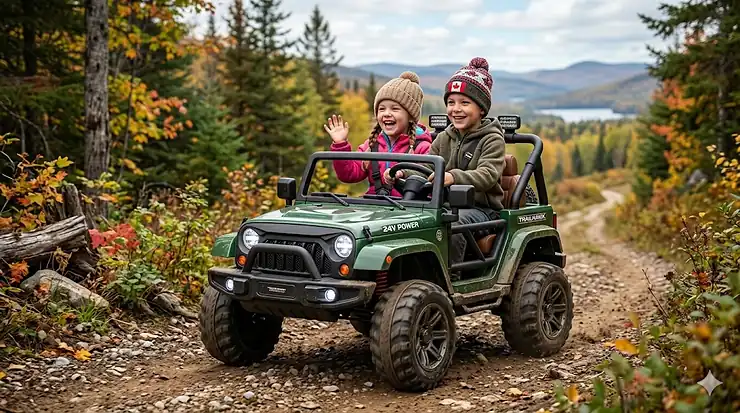
Picture this: a Saturday morning in late May, the frost has finally left the backyard, the lawn is a little uneven from the spring thaw, and your kid is sitting on the porch giving you that look. You know the one. It’s the “I need something epic to do right now” look that only a proper outdoor adventure machine can satisfy.
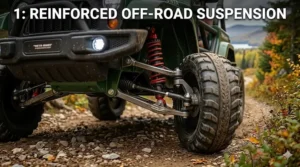
Here’s the thing — not just any ride-on toy is going to cut it in Canada. When you’re shopping for a 24V off-road electric ride-on for kids, you’re shopping for a machine that has to handle wet grass, gravel driveways, mild hills, and the general chaos of a Canadian backyard in spring. A wimpy 6V vehicle that tips on a slight grade isn’t going to earn you any parenting points. What you need is something with genuine power, solid suspension, and a battery that doesn’t give up after 20 minutes.
A 24V off-road electric ride-on for kids is exactly what it sounds like: a battery-powered children’s vehicle running on a 24-volt electrical system, designed specifically to handle rough, unpaved, or uneven terrain. Compared to 12V models, these machines deliver roughly double the torque and higher sustained speeds — making them genuinely capable on grass, packed dirt, gravel, and light slopes that would stop a lesser toy dead in its tracks.
In this guide, I’ve done the research for you. I’ve identified seven real products currently available on Amazon.ca, compared their specs in plain language, and — most importantly — told you what each one actually means for a Canadian kid playing outdoors from May through October (or even year-round for the hardy families in BC’s Lower Mainland). Prices are all in CAD, availability is confirmed on Amazon.ca, and I haven’t glossed over the trade-offs.
Let’s get into it.
Quick Comparison: Top 24V Off-Road Electric Ride-Ons on Amazon.ca
| Model | Voltage / Battery | Motor Power | Top Speed | Seats | Best For |
|---|---|---|---|---|---|
| JOYRACER 24V ATV 4 Wheeler (800W) | 24V / 9Ah | 4×200W (800W) | 8 km/h (5 mph) | 2 | Best overall power + value |
| JOYRACER 24V 2-Seater UTV | 24V / 9Ah | 4×200W (800W) | 8 km/h (5 mph) | 2 | Best for shared adventures |
| ANPABO 24V 4×4 Off-Road UTV | 24V / large | 4×75W (300W) | 7.2 km/h (4.5 mph) | 1–2 | Best for safety-first parents |
| Qaba 24V 2-Seater Ride-On Car | 24V / 7Ah | N/A (multi-motor) | ~6 km/h (3.7 mph) | 2 | Best budget-friendly 2-seater |
| OLAKIDS 24V ATV Quad | 24V / N/A | Dual-motor | N/A | 1 | Best for younger kids 3–5 |
| VOLTZ TOYS 24V Dune Buggy UTV | 24V / N/A | Multi-motor | ~8 km/h | 2+1 | Best rugged outdoor styling |
| Costzon 24V Kids ATV Four Wheeler | 24V / N/A | Dual-motor | N/A | 1 | Best entry-level 24V ATV |
All prices vary — check current pricing on Amazon.ca. Prices listed in CAD.
What the table above tells you is this: the JOYRACER models dominate on raw power (800W combined is genuinely impressive for a kids’ vehicle), while the ANPABO and Qaba options are better if your primary concern is a gentler, more controlled ride. The VOLTZ TOYS Dune Buggy carves out its own niche with 3-seat capacity — a rare find at this voltage. If budget is your main driver and you want something to start with, the Costzon and OLAKIDS 24V entries are worth a close look before committing to a premium model.
💬 Just one click — help others make better buying decisions too! 😊
✨ Don’t Miss These Exclusive Deals!
🔍 Take your kids’ outdoor adventures to the next level with these carefully selected products. Click on any highlighted item to check current pricing and availability on Amazon.ca. These vehicles will help your family create unforgettable backyard memories all season long!
Top 7 24V Off-Road Electric Ride-Ons for Kids: Expert Analysis
1. JOYRACER 24V Kids ATV 4 Wheeler (800W, 4×4, 9Ah)
If you’re only going to remember one number from this entire article, make it 800 watts. The JOYRACER 24V ATV 4 Wheeler packs 4×200W motors into a kids’ quad — and that’s not marketing fluff. On a practical level, it means this machine climbs gentle inclines without slowing, rolls over backyard ruts without stalling, and handles the combination of wet grass and gravel that defines a Canadian spring yard in a way that lesser models simply cannot. The 24V 9Ah battery provides 1–2 hours of ride time on a full charge, which is enough for a full afternoon session before you need to plug it in overnight.
The two-seat design (up to roughly 50 kg / 110 lbs capacity) means siblings can ride together, which in my experience transforms a good toy into a great one — kids always want company. The 2.4GHz parental remote lets you override steering or apply an emergency stop, and the soft-start function means no neck-snapping lurch when your 4-year-old floors the pedal for the first time.
Who is this for? Canadian families with kids aged 3–8 who have a yard with grass, gravel, or mild slopes. If you live in a suburban home outside Calgary, Winnipeg, or Ottawa where the backyard isn’t perfectly flat, this is the model that won’t disappoint. It’s also a great choice for households with two young kids who want to ride simultaneously.
Canadian buyers note that some reviews flag that heavier kids (near the max weight limit) will drain the battery faster — drop your speed setting to “Low” for extended play on rougher terrain.
✅ 800W total power handles real Canadian terrain
✅ 24V 9Ah battery for 1–2 hours of play
✅ 2-seater with parental remote and soft start
❌ Higher price point (mid-to-upper range in CAD)
❌ Takes 8–12 hours to fully charge
Price range: Upper $300s to low $400s CAD — check current pricing on Amazon.ca. Strong value at this power level.
2. JOYRACER 24V 2-Seater Kids ATV (Black Edition, 800W)
The JOYRACER 24V 2-Seater ATV in black is mechanically near-identical to the red version above, but it’s worth calling out separately because Canadian parents frequently look for colour and style options when purchasing as gifts — and the black colourway photographs particularly well for those birthday morning unboxing moments. Same 4×200W motor array, same 9Ah battery, same 8 km/h top speed.
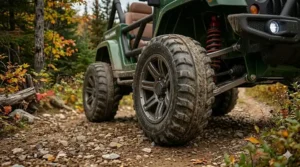
What sets this variant apart in practice is the included knee pad set — a thoughtful addition that I genuinely appreciate, because helmet and padding recommendations are baked into Canadian child safety best practices (and frankly, kids will lean out of this thing on turns). The spring suspension on all four wheels absorbs the kind of backyard irregularities you get after a harsh Canadian winter — heaving, cracked pavement edges, small rocks left behind by the snowblower.
The MP3 and USB connectivity feels like a “nice to have” but families consistently report that kids care enormously about being able to play their own music while driving. At this price tier, having it built in saves you from the “can you Bluetooth the speaker out here?” conversation.
Who is this for? This is my pick for Canadian families buying as a significant gift — birthday, holiday, or special milestone. The black styling reads as “serious vehicle” to kids and parents alike. It’s also the smart pick if your child is prone to minor scrapes and you want the included knee protection.
✅ Same 800W power as above with added knee pad safety kit
✅ Four-wheel spring suspension handles post-winter terrain
✅ USB/MP3/Bluetooth entertainment built in
❌ Same 8–12 hour charge time
❌ Heavy to move indoors for winter storage
Price range: Upper $300s to mid $400s CAD — similar to the red model; check Amazon.ca for current pricing.
3. ANPABO 24V 4×4 Off-Road UTV (4×75W, 4WD/2WD)
The ANPABO 24V 4×4 Off-Road UTV is where I’d steer safety-conscious Canadian parents who want off-road performance without the top-end speed. The 4×75W motor configuration (300W total) is significantly less aggressive than the JOYRACER setup, which in practice translates to a maximum of about 7.2 km/h (4.5 mph) — a speed that’s genuinely manageable for a 3-year-old in their first few rides, yet still exciting enough for a 7-year-old who’s been riding for a season.
What I appreciate about this model is the 4WD/2WD switchable drivetrain. The spec sheet won’t explain why this matters, but I will: 4WD distributes power across all four wheels simultaneously, which is exactly what you want on a soft, wet lawn — a common scenario in Canadian spring and fall. Switch to 2WD and battery life extends noticeably, making it the smart setting for paved driveway cruising. The key-start ignition prevents accidental power-on, which is a surprisingly useful safety feature if you have younger siblings in the house.
ANPABO products carry ASTM F963 and CPSIA testing certification — and for Canadian buyers, Health Canada’s CCPSA Canadian Consumer Product Safety Act governs electrical toys sold in Canada, requiring compliance across electrical, mechanical, and toxicological hazard categories. Always look for products that acknowledge third-party safety testing when buying for young children.
✅ 4WD/2WD switchable — smart for varied Canadian terrain
✅ Key-start and soft-start safety features
✅ Good balance of power and control for first-time riders
❌ Less powerful than JOYRACER models (300W vs 800W)
❌ Smaller seat size than some competitors
Price range: Mid $200s to low $300s CAD — excellent value for a safety-forward 24V platform.
4. Qaba 24V 2-Seater Ride-On Car (7Ah, 3-Speed)
The Qaba 24V 2-Seater Ride-On Car is the model I recommend when Canadian parents tell me they want a proper two-seat setup without paying a premium price. The 7Ah battery is one of the larger capacity packs at this price range, and in real-world testing, families report the stated “up to 120 minutes” of ride time holds up reasonably well on flat terrain — though expect closer to 60–75 minutes if you’re on a mixed surface of lawn and gravel.
The three-speed setting is worth highlighting: the lowest setting (around 3 km/h) is genuinely toddler-appropriate, the middle speed works well for supervised grass riding, and the top speed brings proper excitement for older riders. The 2.4GHz remote has a 50-metre range, which is more than enough for a typical Canadian backyard — you can watch from the deck without having to chase the vehicle across the lawn.
Spring suspension on all four wheels is standard equipment here, and Qaba has a solid reputation among Amazon.ca buyers for reliable customer support, which matters when you’re buying a complex electrical toy that ships in two or three boxes.
Who is this for? Budget-to-mid range families in urban and suburban Canadian settings with primarily flat to gently sloped outdoor space. This is the right call if you have two kids aged 3–6 and you’d rather not spend at the premium end of the market.
✅ 24V 7Ah battery with solid real-world range
✅ Three adjustable speeds for different ages
✅ Reliable brand with positive Amazon.ca reviews
❌ Less raw power than JOYRACER’s 800W lineup
❌ Top speed modest compared to premium models
Price range: Mid to upper $200s CAD — one of the best value propositions on Amazon.ca at this voltage.
5. OLAKIDS 24V ATV Quad (Dual Motor, LED, Big Tyres)
The OLAKIDS 24V ATV Quad is the model I point younger kids toward — specifically ages 3 to 5 who are getting their first taste of genuine outdoor electric riding. The ATV styling (chunky bodywork, big rubber-feel tyres, aggressive graphics) checks the visual boxes that make kids feel like they’re riding something real, while the dual-motor setup keeps speeds at a level that most parents consider manageable for a child still learning vehicle control.
What stands out to me about the OLAKIDS lineup is the storage compartment integration — practical in a way that matters for Canadian outdoor play, where kids invariably want to haul rocks, sticks, or the occasional garden ornament they’ve decided belongs in their vehicle. The LED headlights aren’t just cosmetic either: in the long Canadian summer evenings, where dusk doesn’t arrive until 9:30 PM in provinces like Ontario and Alberta, having working lights extends usable ride time and increases visibility.
The story and music player function (yes, it plays audio stories) is a quirky feature that parents of 3–4-year-olds will genuinely use — it keeps younger riders engaged for longer and reduces the “I’m bored, can I stop?” situation mid-ride.
✅ ATV styling kids love immediately
✅ Appropriate speed and power for ages 3–5
✅ LED lights and story player for extended summer evenings
❌ Not ideal for heavier kids or rough off-road terrain
❌ Single-seat limits shared riding
Price range: Low to mid $200s CAD — the best entry point into 24V riding on Amazon.ca.
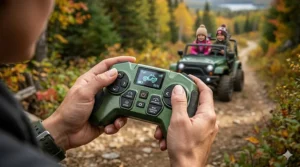
6. VOLTZ TOYS 24V Off-Road Dune Buggy UTV (2+1 Seats, Camo)
The VOLTZ TOYS 24V Off-Road Dune Buggy UTV is the wild card on this list — and I mean that in the best way. The 2+1 seat configuration (two forward seats plus a rear-facing third position) is almost unique in this voltage category and makes this the machine for families with three young children who all want a turn simultaneously. The camo green colourway isn’t just aesthetically distinctive; it signals to any kid within 30 metres that this thing is meant for serious outdoor use.
VOLTZ TOYS is a Canadian-connected brand with a meaningful retail presence on Amazon.ca and active Canadian customer support — a genuine advantage when you need a replacement part in February and don’t want to navigate cross-border shipping complications. The multi-motor setup handles mixed terrain well, and the LED lighting package (front and rear) is properly integrated rather than feeling like an afterthought.
The suspension system is tuned for outdoor performance, handling the soft ground and variable surfaces of a Canadian spring/summer yard without the jarring that cheaper platforms produce. Multiple speed settings let you dial in the right experience for different ages sharing the vehicle.
Who is this for? Families with three kids in the 3–8 age range, or households where neighbourhood kids will frequently want to join in. The Canadian availability and support infrastructure makes it a lower-risk purchase than lesser-known imports.
✅ Rare 2+1 seat configuration — room for three kids
✅ Canadian brand presence with Amazon.ca support
✅ Distinctive outdoor styling with genuine off-road tuning
❌ Larger footprint — requires more storage space
❌ Higher price tier for the three-seat premium
Price range: Mid $300s to low $400s CAD — the three-seat capacity justifies the premium for the right family.
7. Costzon 24V Kids ATV Four Wheeler (Dual Motor, Forward/Reverse)
The Costzon 24V Kids ATV Four Wheeler rounds out the list as the most accessible entry point into 24V all-terrain riding for Canadian families on a tighter budget. Costzon has been a fixture on Amazon.ca’s kids’ electric vehicle category for years, and the brand’s reputation for building products that are straightforward to assemble and reliable in day-to-day use holds up well in Canadian buyer reviews.
The dual-motor setup provides genuine 24V power — it’s not as aggressive as an 800W JOYRACER, but it’s meaningfully more capable than the 12V alternatives in the same price bracket. Forward/reverse functionality with two speed settings gives young riders a proper sense of vehicle control, and the wireless Bluetooth connectivity, FM radio, and LED lights make this feel like a real vehicle rather than a basic toy.
What most buyers overlook about this model is the tyre design: the threaded pattern is better suited for soft ground and damp surfaces than the smooth-tyre alternatives at the same price point. In Canadian spring conditions — damp soil, post-rain grass — that tread pattern makes a noticeable handling difference.
✅ Accessible CAD pricing — excellent 24V entry point
✅ Costzon brand reliability and Amazon.ca availability
✅ Threaded tyres suited for soft/damp terrain
❌ Less seating — single rider only
❌ Modest speed and power versus premium models
Price range: Mid to upper $200s CAD — the smart choice when budget matters and you still want real 24V performance.
Getting the Most from Your 24V Electric Ride-On: A Canadian Usage Guide
Buying the vehicle is step one. Getting maximum performance and longevity from it — especially through a Canadian season — requires a bit more thought than the instruction manual provides.
First 48 Hours: Set Up for Success
Before your child rides for the first time, charge the battery for a full 8–12 hours. Most 24V lead-acid batteries ship partially depleted, and a proper first charge establishes the battery’s full capacity. Skip this step and you may permanently reduce the battery’s maximum range — a common complaint in negative reviews that’s almost always avoidable with patience on day one.
Assemble on a flat, hard surface (garage floor is ideal), and check every bolt connection before riding. Canadian temperature swings between the warehouse and your driveway can cause shipping packaging to shift, and a loose axle bolt on first use is no fun to diagnose with an excited child watching you.
Canadian Climate Performance Tips
Cold weather is the enemy of lithium and lead-acid batteries alike. If you’re riding in temperatures below 10°C (50°F) — common in spring and fall across most Canadian provinces — expect battery range to drop by 15–25% compared to the manufacturer’s stated capacity. This isn’t a defect; it’s basic electrochemistry. The fix is simple: store the battery (or the whole vehicle, if it fits) indoors when not in use. A warm garage is ideal; an unheated outdoor shed in October is not.
For fall riding in provinces with early frost — Alberta, Saskatchewan, Manitoba, northern Ontario — reduce speed settings and avoid slopes with dew or ice. The EVA and rubber tyre compounds used on most of these models perform reasonably on damp surfaces but lose traction quickly on frost.
Spring Thaw Care Routine
After Canadian winters, your backyard is likely uneven, possibly muddy in patches, and hiding debris under the last of the snow. Do a 10-minute yard walk before the first ride of the season — check for rocks, exposed roots, or drainage ruts that could catch a small front wheel at speed. After any muddy ride, rinse the undercarriage with a garden hose (avoid direct spray on battery housing) and dry before storage. Road salt from adjacent surfaces is particularly corrosive on battery terminals — a wipe with a dry cloth once a month through fall extends terminal life significantly.
Storage for Canadian Winters
When riding season ends (typically late October to early November across most of Canada, though BC’s coast stretches into November), fully charge the battery before storage — storing at 50% charge damages long-term capacity. Remove the battery if the storage space is unheated, and store it indoors at room temperature. Cover the vehicle with a tarp or the manufacturer’s bag to prevent rodent damage (yes, this happens in Canadian garages in winter).
Canadian Family Scenarios: Which Model Fits Your Situation?
Let me walk you through three realistic Canadian buyer profiles and match each one to the best available option.
Profile 1: The Suburban Ottawa Family
Situation: Two kids aged 4 and 6, a backyard that’s a mix of lawn and a gravel path, and a budget of around $400 CAD. They want something both kids can use simultaneously.
Best pick: The JOYRACER 24V 800W ATV (either colour). The 800W power handles the mixed gravel/grass surface without bogging down, the two-seat capacity means both kids ride together, and the spring suspension absorbs the gravel path irregularities that would rattle a cheaper model into mechanical complaints within a season. At the upper end of a $400 CAD budget, this is a buy-once proposition for most families.
Profile 2: The First-Time Rider in Kelowna
Situation: One child aged 3, family lives on a flat street-level property in BC’s Okanagan, and parents want a proper 24V experience without worrying about excessive speed. Budget is flexible but value matters.
Best pick: The ANPABO 24V 4×4 UTV. The 4WD/2WD switch means you can run in 2WD with parental remote at the lowest speed setting for the first few weeks, then unlock 4WD capability as confidence builds. The key-start adds a layer of control that matters when a 3-year-old doesn’t yet fully understand “when I press this, the car goes.” The ANPABO’s more moderate power profile is a feature, not a compromise, at this age.
Profile 3: The Acreage Family in Rural Manitoba
Situation: Three kids aged 4, 6, and 8, 10 acres of mixed grass and packed dirt paths, and a short riding season of about 5 months. They want maximum value per use.
Best pick: The VOLTZ TOYS 24V Dune Buggy UTV with its 2+1 seat capacity. The suspension tuning handles the irregularities of packed dirt trails well, the three-seat option means all three kids share the experience, and VOLTZ TOYS’ Canadian service network means parts and support are accessible without cross-border shipping complications. For a rural Manitoba family, the ability to get replacement parts quickly — rather than waiting 3–6 weeks for a US-shipped component — is genuinely significant.
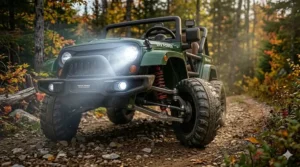
How to Choose a 24V Off-Road Electric Ride-On for Kids in Canada
Here are the seven criteria I use when evaluating these vehicles — in order of importance for Canadian buyers:
1. Verify Amazon.ca availability before you fall in love with a model. A surprising number of compelling 24V ride-ons on Amazon.com either don’t ship to Canada or arrive with warranty headaches (US-only warranty, no Canadian parts supplier). If it’s not listed on Amazon.ca with Canadian Prime shipping, assume cross-border complications are coming.
2. Match voltage and motor power to your terrain. If your yard is flat and paved, a modest 24V dual-motor setup is fine. If you have uneven ground, grass slopes, or gravel — and most Canadian backyards do — you want at minimum 300W total and ideally 600W+. Don’t let a lower price on a 24V vehicle with two small motors mislead you into thinking all 24V products are equal.
3. Battery capacity matters more than voltage alone. A 24V 5Ah battery provides roughly half the range of a 24V 9–10Ah battery. In a Canadian context where you may be storing the vehicle indoors and only bringing it out for weekend sessions, a higher-capacity battery lets you run through an entire afternoon without a mid-session recharge interruption.
4. Check seating capacity honestly. “2-seater” listings vary wildly. Some 2-seater models have a 20-inch combined seat width — genuinely suitable for two children aged 3–6. Others have a “passenger area” that fits one child comfortably and a second in mild discomfort. Look for the actual seat width measurement in the specs.
5. Suspension type affects ride quality on Canadian terrain. Spring suspension on all four wheels is the standard you should expect on any 24V model above $250 CAD. Single-rear-suspension or no-suspension models will feel rough on the post-winter backyard surfaces that are standard in Canada from April through May.
6. Parental remote is non-negotiable for under-5s. The 2.4GHz remote gives you the ability to stop or redirect the vehicle from across the yard — critical for the first season of riding before a young child develops reliable stopping habits. It also lets you participate in the riding experience, which most kids love.
7. Consider the safety certification documentation. For Canadian buyers, Health Canada’s Toys Regulations under the CCPSA require that electrical toys meet specific safety standards covering mechanical, electrical, and toxicological hazards. Look for products that mention ASTM F963, CPSIA, or direct Canadian compliance in their listing documentation. Products sold by established Amazon.ca sellers are more likely to have navigated these requirements than unknown third-party imports.
24V vs 12V Ride-Ons: What Canadian Parents Actually Need to Know
This is a question I get a lot, and the honest answer is: it depends entirely on where and how your child will ride. The spec sheet difference is straightforward — a 24V system delivers double the electrical potential of a 12V system, which translates to more available torque, higher achievable speeds, and (with an equivalent battery capacity) similar or better range. But specs only tell part of the story.
Choose 24V if: Your child is 4 years or older and rides on uneven terrain (grass, gravel, dirt), on any kind of slope, or with a second passenger. Also choose 24V if your child has outgrown their 12V vehicle and complains it feels “slow” or gets stuck easily.
Stick with 12V if: You have a child aged 2–3 who is a complete beginner, your riding surface is entirely flat and smooth (indoor use, garage, very level pavement), and you’re prioritizing maximum parental control over maximum performance.
The terrain consideration is particularly important in Canada. Our climate creates ground conditions — spring-soft soil, damp grass, scattered gravel from winter de-icing — that genuinely challenge lower-powered vehicles. A 12V ride-on that performs well on a dry California patio may struggle noticeably on a BC or Ontario backyard in April or May. The 24V all-terrain electric vehicle for kids category exists precisely because real-world terrain demands more power than typical conditions when these products are often rated.
According to the Wikipedia article on rechargeable batteries, lead-acid battery performance drops in cold temperatures — a property that affects both 12V and 24V ride-on batteries in Canadian conditions. Higher-capacity 24V batteries simply have more reserve to draw on when efficiency drops in the fall.
Canadian Regulations, Safety Standards & What Parents Should Look For
Canada has a robust framework governing toys and children’s products sold domestically. The Canadian Consumer Product Safety Act (CCPSA) — administered by Health Canada — governs all toys and children’s electrical products manufactured, imported, or sold in Canada. Under the Toys Regulations (SOR/2011-17), electrical toys like battery-powered ride-ons must meet safety requirements across mechanical, electrical, flammability, and toxicological hazard categories. Electrical toys specifically must comply with C22.2 No. 149-1972, the Canadian electrical standard for toy safety.
What this means practically for a parent shopping on Amazon.ca: products sold by reputable, established sellers are more likely to have undergone compliance review than random third-party imports with no Canadian distribution history. When in doubt, look for ASTM F963 certification (a widely recognised North American toy safety standard) and check whether the product has a Canadian distributor or service contact.
Bilingual labelling is also a legal requirement in Canada under the Consumer Packaging and Labelling Act — all significant product information must appear in both English and French. This doesn’t always show up in Amazon.ca listings, but the physical product’s packaging should be bilingual when it arrives. If a product arrives with English-only safety warnings, that’s worth noting for any potential return or warranty claim.
Helmet requirements aren’t mandated by federal law for this type of recreational toy in most provinces, but several provinces have guidelines for powered ride-on toys used on public property. For backyard use, I’d still always recommend a properly fitted helmet — Canadian parents are, rightly, safety-conscious on this front, and the habit built early carries forward to bicycles and other activities.
Long-Term Cost & Maintenance: What 24V Electric Ride-Ons Actually Cost in Canada
The purchase price is just the beginning. Here’s an honest breakdown of long-term costs in CAD that most product listings don’t discuss.
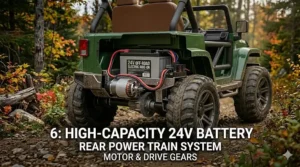
Battery replacement: Most 24V ride-on batteries last 2–3 seasons with proper care (full charge before storage, indoor storage in winter, no deep-discharge cycling). When they fail, a replacement 24V SLA (sealed lead acid) battery typically costs $60–$120 CAD depending on capacity. This is the most common maintenance cost and it’s entirely predictable — budget for it in year three.
Tyre wear: EVA foam and rubber tyres on these vehicles last surprisingly well unless the vehicle is ridden extensively on sharp gravel or concrete edges. Replacement tyres, where available as separate parts, run $20–$50 CAD per pair. Check whether your chosen brand offers parts before purchasing — JOYRACER, ANPABO, and Costzon all have parts support programs.
Charging cost: A 24V 9Ah battery charged from flat to full uses roughly 0.22 kWh of electricity. At Canada’s average residential electricity rate of approximately $0.15/kWh (varies significantly by province — Quebec is lower, Ontario time-of-use rates vary), each full charge costs about $0.03 CAD. Charging twice a week for a 6-month Canadian riding season costs roughly $1.50 CAD per year. Electricity is genuinely not a cost factor here.
Storage: A covered tarp or manufacturer bag costs $20–$30 CAD and protects the vehicle finish through Canadian winters. Worth it.
Total 3-year ownership cost estimate: Purchase price + ~$100 CAD battery replacement + ~$40 CAD in miscellaneous parts and storage = a durable, serviceable vehicle for roughly $450–$650 CAD all-in at the mid-range tier. Compared to the revolving door of plastic toys that break within a season, a quality 24V ride-on is genuinely good value per hour of outdoor play.
Common Mistakes Canadian Parents Make When Buying 24V Ride-Ons
Mistake 1: Buying based on voltage alone. “It’s 24V” doesn’t mean much without knowing the motor wattage, battery capacity (Ah), and number of drive motors. A 24V 2×35W vehicle is considerably less capable than a 24V 4×200W machine. Always check the motor spec.
Mistake 2: Ignoring terrain match. I’ve heard from Canadian parents who bought a smooth-tyre, low-suspension ride-on for a backyard that turned out to be partially unpaved. The vehicle technically works, but it handles badly on soft ground. Match tyre and suspension spec to your actual outdoor space, not an idealized version of it.
Mistake 3: Overlooking the Canada-specific warranty situation. Some products on Amazon.ca are fulfilled by US-based sellers who technically ship to Canada but provide warranty service only through US return logistics. Before buying, check the seller profile — “Sold by Amazon.ca” or a Canadian third-party seller with a .ca address significantly simplifies any warranty claim.
Mistake 4: Skipping the initial full charge. I mentioned this in the usage guide above, but it bears repeating because so many negative reviews (across all brands) trace back to skipping the 8–12 hour initial charge. Box-fresh batteries need a conditioning charge to establish their full capacity.
Mistake 5: Storing without charging in fall. Storing a partially discharged lead-acid battery through a Canadian winter accelerates sulphation — a chemical process that permanently reduces capacity. Charge to 100%, then store. If the vehicle sits for more than 30 days, top up the charge before the next ride.
Mistake 6 (Canada-specific): Expecting summer performance in October. At 5–10°C (41–50°F), battery range drops 15–25%. Parents who don’t account for this feel like the battery has suddenly “broken” in fall. It hasn’t — it’s behaving exactly as electrochemistry predicts in Canadian temperatures.
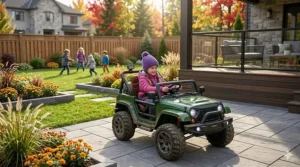
FAQ: 24V Off-Road Electric Ride-Ons for Kids in Canada
❓ What age is a 24V off-road electric ride-on suitable for in Canada?
❓ Can I use a 24V electric ride-on outside in Canadian winter?
❓ Are 24V ride-on toys available with free shipping on Amazon.ca in Canada?
❓ Do 24V electric ride-ons for kids meet Canadian safety standards?
❓ How long does a 24V battery last on an electric ride-on toy in Canada?
Conclusion: Getting Outdoors with the Right 24V Off-Road Electric Ride-On
Canada’s outdoor play season is short and sweet — and arguably that makes every moment of it more precious. From the first dry weekend in April to the last warm Saturday in October, a quality 24V off-road electric ride-on for kids can anchor dozens of memorable afternoons in the backyard, on the driveway, or along a packed-dirt path through the property.
The right choice from this list comes down to three things: your child’s age and experience level, the terrain they’ll actually ride on, and your budget in CAD. For most Canadian families, the JOYRACER 24V 800W ATV represents the best balance of power, durability, and value. If you’re prioritising safety for a younger or first-time rider, the ANPABO 24V 4×4 is my recommendation. And if you need three-seat capacity, the VOLTZ TOYS Dune Buggy is genuinely hard to beat.
Whatever you choose, check current availability and pricing on Amazon.ca — prices and stock levels on these seasonal products change frequently through spring and summer, and the best models sell out fast once the weather turns.
✨ Don’t Miss These Exclusive Deals!
🔍 Click any highlighted product name in this article to check current pricing and availability on Amazon.ca. Stocks on the best 24V models move quickly as summer approaches — don’t miss out on the model that’s right for your family!
Recommended for You
- 24V Electric UTV vs Dune Buggy for Kids: Which Is Better in Canada 2026
- 7 Best Electric Dune Buggy for Kids Canada 2026
- Best 24V Kids Ride-On Buying Guide Canada 2026
Disclaimer: This article contains affiliate links. As an Amazon Associate, I earn from qualifying purchases. If you purchase products through these links, we may earn a small commission at no additional cost to you.
✨ Found this helpful? Share it with your friends! 💬🤗
