In This Article
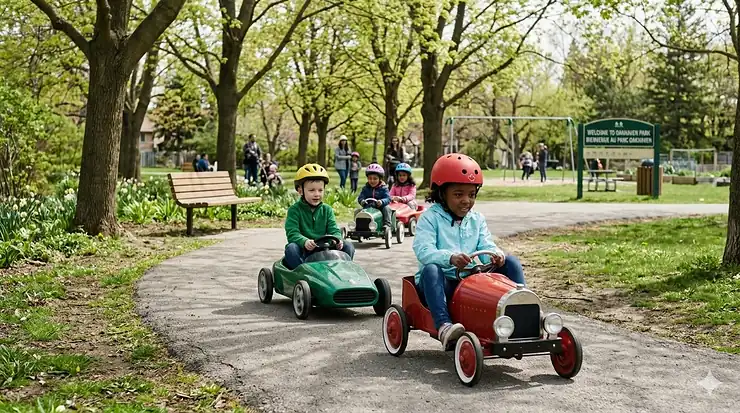
Picture this: It’s a sunny Saturday morning in your Canadian neighbourhood, and while other kids are glued to tablets, your preschooler is zooming down the driveway in a gleaming pedal car, cheeks flushed with excitement, legs pumping furiously. There’s something beautifully old-school about pedal cars for preschoolers—they’re essentially gym equipment disguised as toys, and kids absolutely love them.
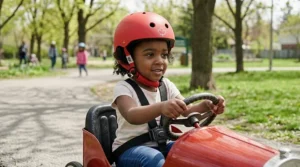
I’ve spent the last month researching pedal cars available in Canada, and here’s what surprised me most: these aren’t your grandfather’s rusty yard ornaments anymore. Today’s pedal cars for preschoolers combine that nostalgic charm with modern safety features, adjustable components that grow with your child, and price points ranging from budget-friendly $120 CAD models to premium vintage replicas pushing $400 CAD. Whether you’re drawn to classic pedal vehicles that look like they rolled out of the 1950s or sporty metal pedal car for 3-5 year olds designs, Canadian parents now have more options than ever.
The real magic? While your little one thinks they’re just playing race car driver or fire chief, they’re actually building leg strength, improving coordination, and getting cardiovascular exercise—all without realizing they’re working out. According to developmental research, active play with exercise toys for kids like pedal cars helps preschoolers meet recommended daily activity levels while developing spatial awareness and motor skills. In a country where winter keeps us indoors for months, having an engaging outdoor pedal car durable enough to withstand our weather makes those precious warm months even more valuable.
Quick Comparison Table: Top 7 Pedal Cars at a Glance
| Product | Type | Age Range | Price (CAD) | Best For | Rating |
|---|---|---|---|---|---|
| VEVOR Kids Pedal Go Kart | Modern Go-Kart | 3-8 years | $139-$169 | All-around value | 4.4/5 |
| Costzon 4-Wheel Pedal Car | Sport Go-Kart | 3-6 years | $119-$153 | Budget pick | 4.4/5 |
| Little Tikes Jett Car Racer | Sport Racer | 3-7 years | $140-$170 | Unique steering | 4.0/5 |
| Baghera Classic Pedal Car | Vintage Metal | 3+ years | $320-$400 | Collectors/Premium | 4.7/5 |
| Aosom Kids Pedal Go Kart | Utility Go-Kart | 5-12 years | $150-$190 | Older kids | 4.3/5 |
| hauck Hurricane Pedal Kart | Racing Style | 4-10 years | $160-$200 | Durability | 4.2/5 |
| HONEY JOY Pedal Go Kart | Feature-Rich | 3-8 years | $130-$180 | Features | 4.3/5 |
💬 Just one click – help others make better buying decisions too!😊
✨ Don’t Miss These Exclusive Deals!
🔍 Take your outdoor play to the next level with these carefully selected pedal cars available in Canada. Click on any highlighted item to check current pricing and availability on Amazon.ca. These retro ride on toys will help you create authentic childhood memories your family will cherish!
Top 7 Pedal Cars for Preschoolers: Expert Analysis
1. VEVOR Kids Pedal Go Kart – Best Overall Value
If I had to pick one pedal car for most Canadian families, this would be it. The VEVOR Kids Pedal Go Kart strikes that sweet spot between quality, features, and affordability that’s hard to beat.
Key Specifications:
- Adjustable 2-position seat (grows with your child)
- Weight capacity: 30 kg (66 lbs)
- EVA rubber non-slip wheels
- Steel frame with powder-coated finish
Price: $139-$169 CAD
Canadian Availability: Ships within 1-2 weeks via Amazon.ca
What makes this model stand out is its no-nonsense construction. The steel frame feels reassuringly solid—important when you consider how preschoolers treat their toys—and the adjustable seat means you’ll get at least 3-4 years of use before they outgrow it. Canadian parents in Alberta and Saskatchewan especially appreciate the EVA rubber wheels, which handle everything from smooth driveways to slightly rough grass without getting stuck.
✅ Pros:
- Excellent build quality for the price point
- Seat adjusts as child grows (ages 3-8)
- Handles Canadian weather well (rust-resistant coating)
❌ Cons:
- Assembly takes about 45 minutes
- Heavier than plastic alternatives (13 lbs)
Customer Feedback: Ontario parent Sarah M. notes, “My 4-year-old has been using this daily for six months through rain and sun, and it still looks brand new. The adjustable seat was clutch—we started at the closest position and just moved it back as he grew.”
2. Costzon 4-Wheel Pedal Car – Best Budget Option
For families wanting quality without breaking the bank, the Costzon 4-Wheel Pedal Car delivers impressive performance at a wallet-friendly price.
Key Specifications:
- 2-position adjustable ergonomic seat
- Premium PP plastic and iron frame
- Hand brake system
- Suitable for ages 3-6 years
Price: $119-$153 CAD
Canadian Availability: In stock, fast shipping from Amazon.ca
This is the pedal car I recommend when parents ask for something reliable but affordable. The combination of PP plastic body panels with an iron frame keeps the weight manageable (around 13 lbs) while maintaining structural integrity. The hand brake is a nice touch that helps teach cause-and-effect thinking—pull the lever, the car stops.
✅ Pros:
- Most affordable quality option
- Lightweight enough for 3-year-olds to maneuver
- Hand brake develops coordination
❌ Cons:
- Plastic body less nostalgic than metal
- Maximum weight limit lower than premium models
Customer Feedback: British Columbia buyer mentions, “Perfect starter pedal car. My son learned the pedaling motion within days, and the hand brake gave him confidence to go faster knowing he could stop.”
3. Little Tikes Jett Car Racer – Most Unique Steering System
The Little Tikes Jett Car Racer takes a different approach with its dual-handle rear-wheel steering system, creating a driving experience unlike any other pedal car on this list.
Key Specifications:
- Innovative dual-handle steering
- Rear-wheel drive system
- Adjustable seat back
- Rugged off-road style tires
Price: $140-$170 CAD
Canadian Availability: Available at Toys R Us Canada and Amazon.ca
Here’s what makes this unusual: instead of a traditional steering wheel, kids grip two handles and turn them to steer the rear wheels. It sounds strange, but watch a preschooler use it for five minutes and you’ll see the appeal. The turning radius is incredibly tight, making it perfect for navigating around garden furniture or creating elaborate obstacle courses in your driveway.
✅ Pros:
- Unique steering develops different motor skills
- Extremely maneuverable in tight spaces
- Little Tikes brand reliability
❌ Cons:
- Learning curve for the steering system
- Less “realistic” than wheel-based models
Customer Feedback: A Manitoba parent shares, “My daughter struggled with traditional steering wheels, but these handles clicked immediately. She can do 180-degree turns in our narrow garage with ease.”
4. Baghera Classic Pedal Car – Premium Vintage Metal Choice
If you’re looking for a true vintage style pedal car kids will treasure (and maybe pass down someday), the Baghera Classic Pedal Car is in a league of its own as a metal pedal car for 3-5 year olds with timeless design.
Key Specifications:
- All-metal construction (23 lbs)
- Dimensions: 32.5″ × 17″ × 19″
- French design, quality craftsmanship
- Adjustable pedals
Price: $320-$400 CAD
Canadian Availability: Through specialty retailers like Kids On Wheelz, Posh Baby & Kids
This isn’t just a toy—it’s an heirloom. Designed in France with attention to detail that shows in every rivet and weld, Baghera pedal cars look like they drove straight out of a 1950s European street. The all-metal construction means serious weight and durability. According to retailers, these classic pedal vehicles are built to last generations, complying with both EU and U.S. safety standards.
✅ Pros:
- Museum-quality vintage aesthetics
- Extremely durable metal construction
- Holds value as collectible
❌ Cons:
- Premium price point
- Heavy (challenging for smaller 3-year-olds initially)
Customer Feedback: Quebec collector notes, “Yes, it’s expensive, but the quality is unmistakable. My 4-year-old uses it, I take photos with it, and when she outgrows it, this will be a display piece worth every penny.”
5. Aosom Kids Pedal Go Kart – Best for Older/Larger Preschoolers
The Aosom Kids Pedal Go Kart targets the upper end of the preschool age range and younger elementary kids, making it ideal for larger 5-year-olds or siblings sharing.
Key Specifications:
- Extended age range: 5-12 years
- Rubber wheels with shock absorption
- Ergonomic adjustable seat
- Safety hand brake
Price: $150-$190 CAD
Canadian Availability: Amazon.ca with Prime shipping
This model shines when you need something that’ll last beyond preschool. The shock-absorbing rubber wheels make it one of the smoothest-riding pedal cars available, and Canadian parents with gravel driveways or rougher terrain particularly appreciate this feature. The seat adjustment range is exceptional, accommodating kids from about 42 inches tall up to 5 feet.
✅ Pros:
- Longest usable lifespan (ages 5-12)
- Excellent shock absorption
- Smooth on varied terrain
❌ Cons:
- Too large for typical 3-year-olds
- Higher initial cost
Customer Feedback: An Ontario parent with three kids reports, “We bought this for our 6-year-old, but our 4-year-old can just reach the pedals at the closest setting. It’ll genuinely serve all three kids for years.”
6. hauck Hurricane Pedal Kart – Most Durable Construction
German engineering meets outdoor pedal car durable standards in the hauck Hurricane Pedal Kart, designed to withstand serious wear and tear.
Key Specifications:
- Ages 4-10 years
- Rubber tires for all-surface use
- 4-spoke rims with 10-inch wheels
- Sporty 3-point steering wheel
Price: $160-$200 CAD
Canadian Availability: Amazon.ca
The hauck stands out for its commercial-grade build quality. Preschools and daycares across Canada choose this model because it survives dozens of kids using it daily. The rubber tires are notably thick—they’re the same kind you’d find on a child’s bike—and the welded steel frame has reinforcements in all the high-stress areas.
✅ Pros:
- Commercial-grade durability
- Rubber tires excel on any surface
- German engineering quality
❌ Cons:
- Minimum age of 4 years (too big for younger preschoolers)
- Premium pricing
Customer Feedback: A childcare provider in Nova Scotia states, “We’ve had two hauck pedal karts for three years with constant daily use. They look battle-worn but function perfectly. Can’t say that about cheaper models that lasted six months.”
7. HONEY JOY Pedal Go Kart – Most Features for the Money
Rounding out our list, the HONEY JOY Pedal Go Kart packs an impressive feature set into a mid-range price point, making it an excellent exercise toys for kids option.
Key Specifications:
- Forward/backward pedaling capability
- Ergonomic seat with backrest
- Safety hand brake
- Steering wheel with horn button
Price: $130-$180 CAD (varies by color)
Canadian Availability: Amazon.ca, multiple color options
What I appreciate about HONEY JOY models is their attention to the details that make playtime more engaging. The reversible pedaling (yes, they can go backwards!) is surprisingly entertaining for preschoolers and helps develop more complex motor skills. The horn button is purely cosmetic but absolutely delights kids under 6.
✅ Pros:
- Reverse pedaling capability
- Great feature-to-price ratio
- Multiple attractive color schemes
❌ Cons:
- Build quality slightly below premium brands
- Assembly instructions could be clearer
Customer Feedback: A Saskatchewan parent shares, “The reverse function was the deciding factor—my twins spend hours creating elaborate parking scenarios in our driveway. The backwards movement adds a whole new play dimension.”
What Are Pedal Cars for Preschoolers? A Modern Parent’s Guide
Pedal cars for preschoolers are human-powered ride-on toys that children propel by pedaling, similar to bicycles but with four wheels and a car-like design. These retro ride on toys combine nostalgic styling with modern safety features, providing children ages 3-7 with outdoor exercise disguised as imaginative play. Unlike battery-powered ride-ons, pedal cars require physical effort to operate, making them effective exercise tools that develop leg strength, coordination, and cardiovascular fitness while children enjoy pretend driving adventures.
The concept dates back to the 1890s, when pedal cars first appeared shortly after automobiles became commercially available. According to historical records from the Smithsonian’s National Museum of American History, early pedal cars were luxury items modeled after real vehicles of the era, crafted from wood and metal for wealthy families. The golden age arrived between the 1920s-1950s, when companies like Garton Toy Company, Murray, and Steelcraft mass-produced affordable models that became fixtures in Sears catalogs across North America, including Canada.
Today’s pedal cars maintain that vintage appeal while incorporating modern materials and safety standards. Health Canada’s toy safety regulations ensure that all pedal cars sold in Canada meet strict requirements for mechanical safety, stability, and construction quality. Contemporary models range from faithful vintage style pedal car kids designs with all-metal construction to sporty modern go-karts with adjustable seats, hand brakes, and weather-resistant finishes—all engineered to withstand Canadian climate conditions from coast to coast.
The Physical Development Benefits You Didn’t Know About
When you watch your preschooler pedaling furiously around your backyard, you’re witnessing far more than simple play. Research on active childhood development reveals that pedal-powered toys deliver a comprehensive workout that builds foundational physical skills in ways that feel completely natural to children.
Cardiovascular Fitness Without the Lecture
The continuous pedaling motion required to propel these vehicles provides genuine aerobic exercise. Your 4-year-old isn’t thinking, “I’m doing cardio today”—they’re racing to the maple tree, zooming away from imaginary bad guys, or pretending to deliver packages. But their heart rate is elevated, their breathing increases, and they’re building endurance with every lap around your driveway.
Pediatric exercise specialists note that pedal toys engage large muscle groups repeatedly and rhythmically, similar to cycling. For preschoolers aged 3-7, this builds stamina and cardiovascular health without structured exercise sessions. The World Health Organization recommends at least 180 minutes of physical activity daily for children aged 3-5, and pedal cars can contribute substantially to meeting those goals during our limited Canadian summer months.
Strength Development Through Play
Here’s what surprised me during my research: the pedaling motion simultaneously works the quadriceps, hamstrings, calves, and core muscles. Watch a preschooler trying to get their pedal car moving from a standstill—they’re essentially doing a series of mini leg presses. As they gain proficiency, they learn to use their entire body weight to generate power through the pedals, engaging core stabilization muscles without realizing it.
This strength building is progressive and self-paced. A 3-year-old might tire after pedaling for 5 minutes, then gradually build up to 20-30 minute sessions by age 5. Unlike adult exercise where we force ourselves through fatigue, children simply stop when tired and return when refreshed—perfect natural interval training.
Coordination and Motor Skill Mastery
Operating a pedal car requires coordinating multiple body systems simultaneously: legs pedaling, hands steering, eyes tracking obstacles, and spatial awareness preventing collisions. This multi-tasking develops bilateral coordination (using both sides of the body together) and improves overall motor planning skills that transfer to other activities like sports, dance, or even learning to write.
The hand-eye-foot coordination needed to navigate a pedal car around obstacles, make tight turns, or reverse direction (on models with that capability) builds neural pathways that support more complex physical tasks later. Canadian occupational therapists sometimes recommend pedal cars as therapeutic tools for preschoolers working on gross motor skill development.
Vintage vs. Modern: Which Style Fits Your Family?
Walking through the pedal car market feels like choosing between a classic vinyl record collection and a streaming service—both deliver music, but the experience differs dramatically. Let me break down what you’re actually getting with each approach.
The Vintage Appeal: Metal Classics
True vintage style pedal car kids models like the Baghera Classic or authentic restored 1950s-1960s pieces offer something modern toys simply can’t replicate: soul. These metal pedal car for 3-5 year olds designs feature hand-welded steel bodies, chrome detailing, and styling that echoes automotive design from eras when cars had personality. Parents who choose vintage pedal cars often value aesthetics as much as function—these double as lawn ornaments and photo props when not in use.
The weight of all-metal construction (typically 20-25 lbs) provides natural stability. A 4-year-old can’t easily tip a 23-pound Baghera, and the momentum they build while pedaling feels satisfyingly real. However, that same weight makes these challenging for smaller 3-year-olds to get moving initially. Consider your child’s size and strength honestly before committing to a heavy metal model.
Maintenance requirements differ too. Metal pedal cars need occasional inspection for rust, especially in coastal Canadian regions with salt air or areas using road salt in winter. A protective coat of car wax applied annually keeps them looking showroom-fresh for decades. Many vintage models become legitimate collectibles—well-maintained examples from premium brands appreciate in value over time.
Modern Go-Karts: Function First
Contemporary pedal go-karts like the VEVOR, Costzon, or HONEY JOY models prioritize adjustability, features, and weather resistance. These typically combine steel frames with durable PP plastic body panels, reducing weight to 12-15 lbs while maintaining structural integrity. The result? Even a 3-year-old can propel these confidently from day one.
Modern designs incorporate thoughtful features vintage models lack: adjustable seats that accommodate growth spurts, hand brakes teaching cause-and-effect, reversible pedaling for backwards movement, and powder-coated finishes resisting Canadian weather without maintenance. The aesthetic trades vintage charm for sporty contemporary styling—bright colours, racing decals, and designs mimicking real off-road vehicles.
Longevity comes from different sources. While vintage models last through generational use if maintained, modern go-karts last through intensive use by multiple siblings over 5-8 years before components wear out. They’re designed for high-volume play rather than heirloom preservation.
The Hybrid Solution
Some families split the difference with new pedal cars styled after vintage designs. Companies like Baghera offer modern manufacturing with retro aesthetics—you get metal construction, vintage looks, and current safety compliance without hunting for authentic pieces or worrying about lead paint from decades past. These hybrid options cost 30-50% more than purely modern go-karts but less than authenticated vintage collectibles.
Safety Considerations for Canadian Parents
Health Canada maintains comprehensive toy safety regulations that all pedal cars sold in Canada must meet, but parental supervision remains the most critical safety factor. Here’s what you need to know to keep pedal car play both fun and safe in Canadian conditions.
Understanding Canadian Toy Safety Standards
The Canada Consumer Product Safety Act (CCPSA) and accompanying Toys Regulations establish mandatory requirements for children’s ride-on toys. These regulations address mechanical hazards (pinch points, sharp edges, stability), material safety (lead content, toxic substances), and structural integrity. Any pedal car legally sold in Canada has undergone testing to ensure it won’t tip over during normal use, contains no small detachable parts that pose choking hazards for children under 3, and uses materials meeting Health Canada’s restrictions on harmful chemicals.
Pay attention to age recommendations—they’re not just suggestions. A pedal car rated for ages 4-8 has been tested assuming a 4-year-old’s coordination and strength. Using it for a determined 2-year-old might exceed its stability parameters. Conversely, maximum weight limits (typically 66-77 lbs for preschool models) ensure the structural integrity won’t fail during use.
Helmet Use: The Canadian Standard
While pedal cars move slower than bicycles, helmets remain recommended protective equipment, especially during the learning phase or when using pedal cars on sloped driveways. Canadian pediatric safety guidelines suggest helmets for any wheeled toy capable of exceeding walking speed. Look for helmets meeting Canadian Standards Association (CSA) certification—these have undergone impact testing specific to our regulations.
The good news? Most preschoolers using pedal cars on flat, smooth surfaces like driveways rarely reach speeds requiring helmets from a pure physics perspective. The educational value of establishing helmet habits early, however, pays dividends when they transition to bicycles, scooters, and eventually skateboards where helmets become non-negotiable.
Supervision Zones: Where to Ride
Pedal cars operate best on smooth, flat surfaces away from traffic. Ideal locations include:
✅ Perfect Locations:
- Residential driveways (supervise near street edges)
- Backyard patios and paved areas
- Community park pathways (low pedestrian traffic)
- Schoolyards or empty parking lots
❌ Avoid These Areas:
- Hills or slopes (limited braking capability)
- Near swimming pools or water features
- Streets with vehicle traffic
- Rough terrain (roots, large rocks, deep gravel)
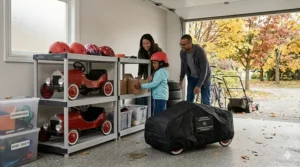
Canadian winters present unique storage challenges. Pedal cars should be stored indoors or under waterproof covers to prevent rust and material degradation. Metal models especially benefit from dry storage—a garage, shed, or even covered porch extends their lifespan significantly.
Pre-Ride Inspection Routine
Teach your preschooler a simple safety check before each ride:
- Wheels – Spin each wheel to ensure they rotate freely
- Pedals – Check for loose or wobbly pedals
- Seat – Verify adjustment lock is secure
- Steering – Turn wheel/handles through full range of motion
This 30-second routine builds responsibility and catches problems before they cause accidents. It also teaches your child that vehicles require maintenance—a lesson that’ll serve them well into teenage driving years.
How to Choose the Perfect Pedal Car for Your Preschooler
Walking into this market cold feels overwhelming—dozens of models, price ranges spanning $120-$400 CAD, conflicting reviews, and a preschooler convinced they need “the red one” without further criteria. Here’s how to cut through the noise and make a confident decision.
Step 1: Assess Your Child’s Physical Development
Pedal cars require specific physical capabilities that vary dramatically between a newly-turned-3-year-old and a mature 5-year-old. Measure your child’s inseam (crotch to floor while standing) and compare it to the pedal car’s seat-to-pedal distance at its closest adjustment. Their feet should comfortably reach the pedals with knees slightly bent—full leg extension indicates they’ll outgrow it within months, while inability to reach means frustration and abandonment.
Strength matters as much as size. Lighter children (under 35 lbs) often struggle getting heavier pedal cars moving from a standstill. If your preschooler is petite for their age, prioritize models under 14 lbs with smooth-rolling EVA wheels. Conversely, robust 5-year-olds comfortable with balance bikes might handle heavier vintage metal models just fine.
Step 2: Define Your Primary Use Case
How you envision using this pedal car should heavily influence your choice:
Frequent outdoor play (daily use April-October): Invest in mid-to-premium durability. Models with rust-resistant coatings, replaceable components, and robust frames justify higher costs through extended lifespan. Consider modern go-karts from VEVOR, hauck, or Aosom.
Occasional backyard fun: Budget-friendly options like the Costzon provide excellent value. They’ll handle regular but not intensive use over 3-4 years before components wear out.
Collectible/display + moderate use: Vintage metal pedal cars like Baghera serve dual purposes as heirloom toys and decorative pieces. You’re paying for aesthetics and longevity beyond typical toy lifespans.
Shared among siblings: Adjustable seats become non-negotiable. Calculate total years of use across all children—a $180 pedal car serving three kids over 8 years costs just $22.50 per child-year.
Step 3: Consider Canadian Climate Factors
Our weather extremes punish outdoor toys. Prioritize these features for Canadian conditions:
- Powder-coated steel frames resist rust better than plain painted metal
- EVA rubber wheels handle temperature fluctuations without cracking (unlike cheaper plastics)
- UV-resistant plastics prevent sun damage during intense summer exposure
- Sealed bearings keep moisture away from critical rotation points
If you live in coastal regions (Atlantic provinces, coastal BC), rust resistance moves from “nice to have” to “essential.” Invest in higher-quality metal finishes or choose primarily plastic construction.
Step 4: Match Aesthetics to Your Preferences
Be honest: you’ll see this pedal car daily for years, likely in your front yard or driveway. If vintage aesthetics make you smile every time you spot it, the premium cost of a Baghera might justify itself through pure joy. If you genuinely don’t care about appearances and prioritize pure function, modern go-karts deliver better features-per-dollar.
Consider photography too. Many Canadian parents use pedal cars as props for annual birthday photos, seasonal photoshoots, or holiday cards. A photogenic vintage model serves double duty as a toy and perennial photo opportunity.
Step 5: Set a Realistic Budget
Price ranges for quality pedal cars in Canada:
- Budget tier ($120-$150 CAD): Costzon, basic HONEY JOY models. Expect 3-4 years of regular use.
- Mid-range ($150-$200 CAD): VEVOR, Aosom, hauck. These balance quality, features, and longevity for 5-6+ years.
- Premium ($200-$400+ CAD): Baghera, collector pedal cars, specialized models. Generational durability or specific aesthetic appeal.
Factor in Canadian shipping costs and taxes. Amazon.ca Prime shipping eliminates one variable, while specialty retailers might charge $30-$60 shipping for bulky items to remote areas.
Step 6: Read Canadian Customer Reviews Specifically
Reviews from American customers, while helpful, don’t reflect Canadian purchase experiences. Search for reviews mentioning Canadian locations—these buyers dealt with our shipping realities, currency conversions, and climate challenges. They’ll flag issues like “arrived damaged due to long shipping” or “rusted after one winter” that American reviews miss.
Look for review patterns across multiple sources (Amazon.ca, Toys R Us Canada, specialty retailer sites). A pedal car with 50 reviews averaging 4.3 stars across three Canadian retailers shows consistent quality. One with 4.8 stars on one site and 3.2 on another suggests inconsistent batches or seller-specific problems.
Step 7: Verify Replacement Part Availability
Kids break things. Premium brands like Little Tikes and Baghera maintain Canadian parts inventory for repairs. Budget brands might not. Before purchasing, search “[brand name] replacement parts Canada” to see what’s available. Can you get a replacement wheel if one cracks? New pedals if they strip? A replacement seat if the plastic cracks?
This research takes 10 minutes but could save you from a $150 paperweight when an inexpensive component fails.
Maintenance Tips for Canadian Climates
Canadian weather beats up outdoor toys like nowhere else on Earth. Here’s how to extend your pedal car’s lifespan through our extreme seasonal shifts.
Spring Awakening (March-May)
After months of storage, your pedal car needs a thorough inspection before first use:
- Deep clean – Remove winter dust, spider webs, and any moisture-related residue with mild soap and water
- Lubricate moving parts – Apply WD-40 or similar lubricant to wheel bearings, pedal joints, and steering mechanisms
- Check for rust – Inspect metal components for surface rust; remove with fine steel wool and touch up with rust-resistant paint
- Tighten all fasteners – Temperature fluctuations loosen bolts and screws over winter months
- Test functionality – Ensure steering, pedaling, and braking (if equipped) operate smoothly
Pro tip: Apply a protective coat of car wax to metal surfaces in spring. This creates a barrier against summer moisture and UV exposure.
Summer Care (June-August)
During active use season, minimal maintenance keeps everything running smoothly:
- Weekly quick check: Spin wheels, wiggle seat, test steering (takes 60 seconds)
- Monthly wash: Rinse off dirt, tree sap, and bird droppings before they stain or corrode
- Lubricate after rain: Water washes away protective lubricants; reapply to moving parts after wet weather
- Store under cover: Even during summer, overnight dew can accumulate; a simple tarp prevents unnecessary moisture exposure
Watch for these common summer issues: plastic components warping in extreme heat (store in shade during 30°C+ days), rubber wheels collecting pine needles or thorns, and chrome details showing water spots from sprinkler/rain exposure.
Fall Preparation (September-November)
As temperatures drop and outdoor play winds down, prepare for storage:
- Final deep clean – Remove all dirt, grass, and organic matter that could attract moisture or pests
- Dry thoroughly – Use towels and allow several hours of air drying to eliminate all moisture
- Lubricate generously – Extra lubrication protects against condensation during storage
- Check for damage – Repair or replace worn components now rather than discovering problems next spring
- Store indoors – Garages, sheds, or basements protect against freeze-thaw cycles
Storage position matters: Store pedal cars off concrete floors if possible (moisture wicks up through concrete). Wooden pallets, old tires, or even cardboard create a protective barrier.
Winter Storage (December-February)
Proper winter storage determines whether your pedal car emerges pristine or damaged come spring:
Ideal storage: Heated garage or basement maintains stable temperatures and humidity, preventing metal oxidation and plastic brittleness. Cover with an old sheet to keep dust off.
Acceptable storage: Unheated garage or shed. Add desiccant packs near the pedal car to absorb moisture. Cover with waterproof tarp secured to prevent condensation underneath.
Avoid: Outdoor storage even under tarps. Canadian freeze-thaw cycles (especially in Ontario, Quebec, and Atlantic provinces) create moisture that penetrates any covering, causing rust and material degradation.
Check mid-winter (January) to ensure storage conditions remain dry and stable. A quick 5-minute inspection catches problems before they become serious.
Comparison: Pedal Cars vs. Other Ride-On Toys
Canadian parents face no shortage of ride-on toy options. Here’s how pedal cars stack up against alternatives popular in our market.
Pedal Cars vs. Battery-Powered Ride-Ons
| Factor | Pedal Cars | Battery Ride-Ons |
|---|---|---|
| Exercise Value | High – constant pedaling required | Low – child sits passively |
| Initial Cost | $120-$400 CAD | $150-$800+ CAD |
| Ongoing Costs | Minimal maintenance | Battery replacements ($50-$100 every 1-2 years) |
| Noise Level | Silent operation | Motor noise |
| Speed Control | Child-controlled pace | Limited by motor governor |
| Environmental Impact | Zero emissions | Battery disposal concerns |
| Weight | 12-25 lbs | 30-60 lbs (harder to store/move) |
Winner: Pedal cars for families prioritizing physical activity and lower lifetime costs. Battery ride-ons excel if your child has physical limitations preventing pedaling or if realism (working headlights, radio, remote control) matters most.
Pedal Cars vs. Traditional Tricycles
Both pedal-powered, but the experience differs:
Pedal cars offer: Enclosed body design appeals to imaginative play (driving a “real” car), four-wheel stability for younger children still developing balance, and often cooler aesthetics that older preschoolers prefer over “baby” tricycles.
Tricycles offer: Lighter weight for easier maneuverability, better steering precision for following paths or sidewalks, and lower price points ($40-$120 vs $120-$400 for pedal cars).
Many Canadian families own both—tricycles for 2-4 year olds learning pedaling, then transitioning to pedal cars for 4-7 year olds seeking more adventurous play. Tricycles also store more compactly, important in urban Canadian homes with limited garage space.
Pedal Cars vs. Balance Bikes
Balance bikes prepare children for eventual bicycles by teaching balance and coordination without pedaling. They serve different developmental purposes than pedal cars:
Balance bikes excel at: Teaching balance and steering in preparation for two-wheel bicycles, portability for trips to parks, and low weight enabling toddlers to control them easily.
Pedal cars excel at: Building leg strength through pedaling resistance, imaginative play scenarios (rescue missions, deliveries, races), and use on varied terrain where balance bikes tip easily.
Consider balance bikes complementary rather than competitive with pedal cars. Many active Canadian preschoolers use balance bikes for neighbourhood rides and pedal cars for backyard adventures—each serves distinct play patterns.
Frequently Asked Questions
❓ What age is best for a child's first pedal car in Canada?
❓ How much should I expect to pay for a quality pedal car in Canada?
❓ Are pedal cars safe for Canadian winters and cold weather?
❓ Do pedal cars require assembly, and how difficult is it?
❓ What's the difference between vintage and modern pedal cars?
Conclusion: Finding Your Perfect Pedal-Powered Match
After researching dozens of models, comparing specifications, and analyzing Canadian customer experiences, here’s my honest take: there isn’t one “perfect” pedal car for every family—but there’s definitely a perfect one for your family based on your specific priorities.
If you’re seeking the best all-around value that’ll serve most Canadian preschoolers well, I’d point you toward the VEVOR Kids Pedal Go Kart at $139-$169 CAD. It balances quality construction, practical features, weather resistance, and a price point that won’t cause financial stress if your child’s interests shift next season. The adjustable seat ensures 4-5 years of use, and Canadian customer feedback consistently praises its durability through our climate extremes.
For families on tighter budgets, the Costzon 4-Wheel Pedal Car delivers surprising quality at $119-$153 CAD. You sacrifice some longevity and aesthetics compared to premium models, but you gain an affordable entry point that still provides legitimate exercise value and outdoor engagement. It’s the pedal car I recommend when parents say, “I want to try this without major financial commitment.”
When aesthetics and heirloom quality matter most—perhaps you’re building a collection or want something photo-worthy for years of family portraits—the Baghera Classic Pedal Car justifies its $320-$400 CAD premium through museum-quality construction and timeless design. Yes, you’re paying 2-3x budget model prices, but you’re also getting a piece that could realistically serve grandchildren decades from now.
The real magic of pedal cars lies beyond specifications and price comparisons, though. It’s in watching your preschooler’s face light up when they successfully navigate an obstacle course you created with garden cones. It’s hearing their delighted laughter as they race imaginary villains down your driveway. It’s knowing they’re building strength, coordination, and confidence while having too much fun to realize they’re exercising.
In our screen-saturated world where childhood obesity rates keep climbing, pedal cars for preschoolers offer something increasingly precious: genuine active play that children choose enthusiastically rather than endure reluctantly. That value transcends price tags and product specifications entirely.
Whatever model you choose, you’re giving your preschooler the gift of outdoor adventure, physical development, and those childhood memories that last forever—the kind they’ll describe to their own children someday with the phrase, “When I was your age, I had this amazing pedal car…”
Recommended for You
- 7 Best Balance Bikes with Hand Brake for 3 Year Old Canada 2026
- Wooden Balance Bike vs Metal Balance Bike: 7 Best Canada 2026
- 7 Best 6v Electric ATV for Toddlers Canada 2026 | Top Picks
Disclaimer: This article contains affiliate links to Amazon.ca. If you purchase products through these links, we may earn a small commission at no additional cost to you.
✨ Found this helpful? Share it with your friends! 💬🤗
