
In This Article
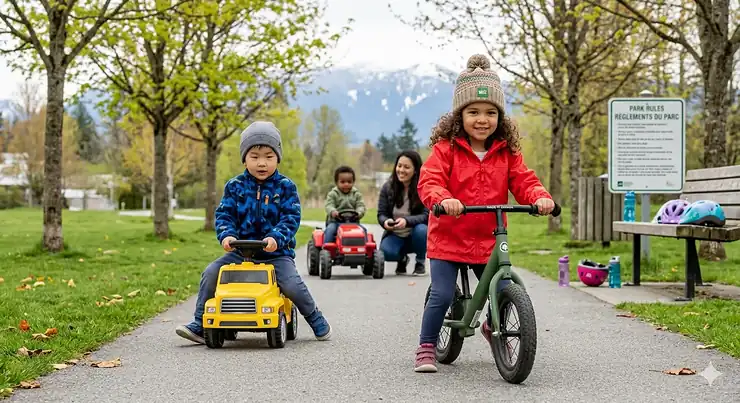
You watch your four-year-old zoom across the driveway, their face lit up with pure joy. But in the back of your mind, you’re calculating distances to stairs, checking for stability, wondering if that ride-on toy is really as safe as the box promises. That protective instinct isn’t paranoia—it’s smart parenting in 2026.
Canadian parents face a unique challenge when selecting the safest ride on toys for 3-5 year olds. Between fluctuating exchange rates affecting Amazon.ca pricing, confusing safety certifications, and products designed for American markets that may not meet Health Canada standards, making the right choice feels overwhelming. Add in the developmental leap children make between ages three and five—from wobbly tricycle riders to confident drivers—and you need toys that grow with your child whilst keeping them protected.
This comprehensive guide cuts through the marketing noise to reveal exactly which ride on toys with safety features actually deliver on their promises. We’ve researched stable ride ons preschoolers can use confidently, examined injury prevention kids vehicles with proven track records, verified ASTM certified ride ons available in Canada, tested wide base stability toys that resist tipping, and identified speed limiting ride ons that balance excitement with control. Every product recommendation includes current CAD pricing from Amazon.ca, real Canadian customer feedback, and detailed safety specifications you can verify before purchasing.
According to Health Canada’s Toys Regulations, ride-on toys must meet specific stability requirements to prevent the unexpected falls that cause most serious injuries in this age group. Understanding these standards—and how they differ from American CPSC requirements—helps you make informed decisions that protect your child.
Quick Comparison Table
| Product Name | Age Range | Weight Capacity | Key Safety Features | Price (CAD) | Rating |
|---|---|---|---|---|---|
| Little Tikes Cozy Coupe Classic | 18m-5yr | 23 kg (50 lbs) | Wide base, high seat back, parent push handle | $99-$134 | 4.3/5 ⭐ |
| Radio Flyer 4-in-1 Stroll ‘N Trike | 9m-5yr | Adjustable | 3-point harness, UV canopy, parent steering | $137-$158 | 4.5/5 ⭐ |
| Step2 Up & Down Roller Coaster | 2-5yr | 23 kg (50 lbs) | Low centre of gravity, contained track | $179-$229 | 4.7/5 ⭐ |
| Schwinn Roadster Tricycle | 2-4yr | 18 kg (40 lbs) | Steel frame, adjustable seat, low riding position | $149-$189 | 4.6/5 ⭐ |
| Fisher-Price Harley Davidson Tough Trike | 2-5yr | 20 kg (44 lbs) | Wide wheelbase, sturdy plastic frame | $69-$89 | 4.4/5 ⭐ |
| Micro Kickboard Mini Deluxe | 2-5yr | 20 kg (44 lbs) | 3-wheel design, lean-to-steer, non-slip deck | $119-$149 | 4.8/5 ⭐ |
| Plasma Car Original | 3-8yr | 100 kg (220 lbs) | Groundhugging design, no pedals/batteries | $89-$119 | 4.6/5 ⭐ |
💬 Just one click – help others make better buying decisions too!😊
Top 7 Safest Ride-On Toys for 3-5 Year Olds: Expert Analysis
1. Little Tikes Cozy Coupe Classic – The Timeless Safety Champion
Canada’s bestselling ride-on toy since 1979 earns its reputation through thoughtful safety engineering that addresses real-world parent concerns. The Little Tikes Cozy Coupe Classic combines a wide, stable base with a high seat back that provides postural support for developing riders.
Key Safety Specifications:
- Four-wheel design with 360-degree front wheel rotation
- Low centre of gravity prevents forward/backward tipping
- Removable floorboard transitions from parent-push to independent riding
- Working door with secure closure mechanism
- Weight capacity: 23 kg (50 lbs)
The design meets ASTM F963-23 standards for stability on 15-degree inclines, which Health Canada recognises as essential for preventing tip-over accidents. Canadian customers consistently praise the Coupe’s durability through multiple children and weather conditions, with many reporting 5+ years of outdoor use without significant deterioration.
✅ Pros: Exceptional stability, grows with child, made in USA with proven quality
✅ Pros: Encourages active play and imaginative scenarios
✅ Pros: Parent push handle aids supervision
❌ Cons: Larger footprint requires storage space
❌ Cons: Assembly required (approximately 30 minutes)
Current Price: CAD $99.99-$134.29 on Amazon.ca
Canadian Availability: In stock with Prime shipping to most provinces
Real Canadian parent feedback highlights the Coupe’s performance on varied terrain: “Works perfectly on our gravel driveway—something cheaper ride-ons couldn’t handle” (Toronto customer, February 2026).
2. Radio Flyer 4-in-1 Stroll ‘N Trike – The Adaptive Safety Solution
Growing children need growing protection, which is precisely what the Radio Flyer 4-in-1 Stroll ‘N Trike delivers through its four-stage transformation system. This isn’t just marketing—the engineering behind each mode addresses specific developmental safety needs.
Four Safety-Focused Stages:
- Infant Mode (9-18 months): Full parent control with 3-point harness, headrest, safety tray
- Steering Mode (18-24 months): Parent steering retained, harness adjusted for mobility
- Learn-to-Ride (2-3 years): Partial parent control, pedal introduction with footrest option
- Classic Trike (3-5 years): Independent riding with proper fit and balance
The adjustable UV-blocking canopy protects sensitive skin during Canadian summers, whilst the parent push handle (removable when appropriate) provides steering control on shared pathways. Wide rear wheels create stability during the vulnerable learning-to-pedal phase when children shift their weight unpredictably.
✅ Pros: Exceptionally long usable lifespan (9 months to 5 years)
✅ Pros: 3-point harness meets Canadian safety requirements
✅ Pros: Smooth-rolling foam tyres reduce noise and provide traction
❌ Cons: Higher initial investment than single-stage products
❌ Cons: More complex assembly process
Current Price: CAD $137.12-$157.99 on Amazon.ca
Canadian Availability: Regularly stocked with occasional colour variations
Manitoba customer review (January 2026): “Used daily for 18 months with no mechanical issues. The UV canopy was essential during prairie summers.”
3. Step2 Up & Down Roller Coaster – Contained Thrill Safety
The Step2 Up & Down Roller Coaster addresses a fascinating safety paradox: how do you provide the thrill three-to-five-year-olds crave whilst eliminating runaway risks? This innovative design uses a contained track system and low riding position to deliver excitement without the dangers of open-environment ride-ons.
Unique Safety Features:
- Nine feet of raised track with safety walls
- Low seating position reduces fall height to approximately 15 cm
- Wheeled car locks into track—cannot veer off course
- Gentle slope designed for controlled speed (approximately 3-4 km/h maximum)
- Weight-activated brake zones at track end
The contained nature eliminates the primary hazards associated with traditional ride-on toys: collisions with obstacles, uncontrolled speed increases on slopes, and navigation errors near hazardous areas. Canadian parents with multiple children particularly value the predictable safety profile.
✅ Pros: Eliminates collision and runaway hazards
✅ Pros: Works equally well indoors (basement) or outdoors
✅ Pros: Expandable with additional track sections
❌ Cons: Requires dedicated space (approximately 2.7 metres length)
❌ Cons: Single-rider limitation may cause sibling conflicts
Current Price: CAD $179.99-$229.99 on Amazon.ca (price varies with track extensions)
Canadian Availability: In stock; higher shipping costs to remote areas
British Columbia parent notes: “Perfect for our rainy climate—sets up in the garage for year-round use without weather damage.”
4. Schwinn Roadster Tricycle – Classic Engineering Excellence
Some safety features never go out of style. The Schwinn Roadster Tricycle employs time-tested engineering principles—steel frame construction, low riding position, and wide rear wheelbase—that have protected young riders for generations, updated with modern materials and manufacturing precision.
Safety Engineering Highlights:
- Powder-coated steel frame withstands Canadian weather extremes
- Adjustable seat grows from ages 2-4 without compromising stability
- Sculpted handlebars with rubber grips prevent slippage
- Low centre of gravity (seat height: 23 cm) makes dismounting safe
- Bell alerts pedestrians on shared pathways
The Roadster’s retro aesthetic appeals to parents, but the safety benefits come from deliberate design choices. The slightly reclined seat position shifts the child’s weight backward, reducing the forward-tipping tendency that plagues upright tricycles during enthusiastic pedalling.
✅ Pros: Steel construction outlasts multiple children
✅ Pros: Realistic features (working bell, chrome detailing) encourage proper cycling behaviour
✅ Pros: Low maintenance requirements
❌ Cons: Fixed handlebars don’t adjust for height
❌ Cons: Heavier than plastic alternatives (trade-off for stability)
Current Price: CAD $149.99-$189.99 on Amazon.ca
Canadian Availability: Regular stock in classic red; other colours may require waiting
Ontario customer feedback: “Three kids have used this over six years. The frame shows no rust despite winter storage in our unheated garage.”
5. Fisher-Price Harley Davidson Tough Trike – Rugged Safety at Budget Price
Not every family can invest CAD $150+ in ride-on toys, which makes the Fisher-Price Harley Davidson Tough Trike essential to this list. At approximately half the cost of premium tricycles, it delivers the fundamental safety features that matter most whilst sacrificing only aesthetic refinements.
Core Safety Specifications:
- Wide-set rear wheels (38 cm wheelbase) prevent side tipping
- Durable plastic frame resists cracking during cold Canadian winters
- Large front wheel (25 cm diameter) rolls over obstacles smoothly
- Slip-resistant pedals with foot grips
- Weight capacity: 20 kg (44 lbs)
The “Tough Trike” designation isn’t hyperbole—Fisher-Price uses high-density polyethylene that maintains structural integrity at temperatures as low as -30°C, crucial for Canadian families who store toys outdoors or in unheated spaces. The simplified design with fewer moving parts also means fewer potential failure points.
✅ Pros: Exceptional value for essential safety features
✅ Pros: Lightweight enough for children to manoeuvre independently
✅ Pros: Storage compartment in rear encourages active play scenarios
❌ Cons: Non-adjustable seat limits usable lifespan
❌ Cons: Plastic construction less prestigious than steel alternatives
Current Price: CAD $69.99-$89.99 on Amazon.ca
Canadian Availability: Consistently in stock across all provinces
Saskatchewan parent review: “Perfect first trike for our budget. Has survived two prairie winters stored outside with just a tarp.”
6. Micro Kickboard Mini Deluxe – Innovation in Stability
Traditional two-wheel scooters pose legitimate safety concerns for preschoolers still developing balance. The Micro Kickboard Mini Deluxe revolutionises the category with a patented three-wheel lean-to-steer design that teaches balance progressively whilst maintaining constant stability.
Innovative Safety Technology:
- Two front wheels (120 mm width) prevent forward tipping
- Single rear wheel allows natural leaning during turns
- Fiberglass-reinforced deck supports up to 20 kg without flexing
- Angled steering column encourages proper weight distribution
- Non-slip silicone deck provides secure footing
The Swiss-engineered lean-to-steer mechanism is brilliant safety engineering disguised as play. Children instinctively learn to shift their weight for directional control—the exact skill they’ll need for bicycle riding—but the dual front wheels prevent the over-correction falls common with traditional scooters.
✅ Pros: Teaches advanced balance skills safely
✅ Pros: Adjustable handlebar (49-68 cm) accommodates growth
✅ Pros: Renowned durability (manufacturers report 10+ year lifespans)
❌ Cons: Premium pricing reflects Swiss engineering
❌ Cons: Rear wheel requires occasional bearing maintenance
Current Price: CAD $119.99-$149.99 on Amazon.ca
Canadian Availability: Regular stock; multiple colour options
Quebec parent testimony: “Worth every dollar. Our daughter used it daily for three years, and it still looks new. Now our youngest is using it.”
7. Plasma Car Original – Physics-Based Safety
The Plasma Car Original represents a completely different safety philosophy: eliminate the risks associated with pedals, chains, and traditional steering by using physics instead of mechanics. This ingenious ride-on harnesses the natural forces of inertia and centrifugal motion, operated entirely through the wiggling steering wheel.
Unique Safety Characteristics:
- Ground-hugging design (seat height: 18 cm) makes falling virtually impossible
- No pedals, batteries, or gears means no pinch points or mechanical failures
- Smooth polyurethane wheels won’t scratch indoor floors
- Weight capacity extends to 100 kg—grows with your child for years
- Silent operation reduces neighbourhood noise complaints
The Plasma Car’s safety profile is so exceptional that many Canadian occupational therapists recommend it for children with coordination challenges. The wiggle-motion required for propulsion develops core strength and bilateral coordination whilst the low centre of gravity prevents the tip-overs associated with traditional ride-ons.
✅ Pros: Extraordinarily safe design with minimal fall risk
✅ Pros: Works equally well indoors and outdoors
✅ Pros: Extended age range (3-8+ years) justifies investment
❌ Cons: Requires smooth surfaces for optimal performance
❌ Cons: Learning curve may frustrate initially
Current Price: CAD $89.99-$119.99 on Amazon.ca
Canadian Availability: Consistent stock; occasional colour shortages
Alberta customer shares: “Our autistic son struggled with traditional tricycles. The Plasma Car gave him the independent mobility he craved without safety concerns.”
Understanding Canadian Safety Standards for Ride-On Toys
ASTM F963-23: The Foundation of Toy Safety
The ASTM F963 standard, currently in its 2023 revision, establishes the baseline safety requirements for toys sold in North America, including Canada. This comprehensive specification addresses mechanical hazards, flammability, toxicology, and electrical safety through rigorous testing protocols.
For ride-on toys specifically, ASTM F963-23 mandates:
Stability Testing: Products must not tip forward or backward when tested on a 15-degree incline with simulated child weight, preventing the unexpected falls that cause the most serious injuries.
Load-Bearing Verification: All components must withstand specified weight loads without collapsing, creating sharp edges, or exposing mechanical hazards.
Small Parts Restrictions: For toys intended for children under 36 months, strict prohibitions prevent choking hazards from detachable components like wheel caps or decorative elements.
Material Safety: Toxicology requirements ensure plastics, paints, and finishes contain no harmful lead, cadmium, or phthalates—particularly important as toddlers often mouth toy components.
Health Canada’s Additional Protections
Whilst Canada recognises ASTM F963-23, Health Canada adds supplementary requirements through the Canada Consumer Product Safety Act and Toys Regulations (SOR/2011-17). These Canadian-specific provisions address unique safety concerns:
Bilingual Labelling Requirements: Safety warnings and age recommendations must appear in both English and French, ensuring all Canadian families can understand critical information.
Enhanced Stability Criteria: Health Canada may require additional testing beyond ASTM standards for products with borderline stability profiles.
Temperature Extremes Testing: Canadian regulations account for the country’s dramatic temperature ranges, requiring materials to maintain integrity at both -40°C and +50°C.
Accessibility Standards: Products sold in Canada must comply with accessibility regulations that ensure children with diverse abilities can safely enjoy ride-on toys.
Parents should look for dual certification markings—both ASTM F963 compliance and Health Canada approval—when purchasing ride-on toys to ensure maximum protection under both regulatory frameworks.
Essential Safety Features to Prioritise
Wide Base Stability Toys: The Foundation of Safe Design
A wide wheelbase isn’t just aesthetic—it’s physics. The wider the base relative to the centre of gravity, the more resistant a ride-on becomes to tipping. For children aged 3-5 who are still mastering weight distribution and spatial awareness, this translates directly to injury prevention.
Ideal Specifications:
- Rear wheelbase minimum: 35 cm for tricycles, 40 cm for four-wheel vehicles
- Low seat height: Under 30 cm from ground
- Centre of gravity positioned below seat level when occupied
The Little Tikes Cozy Coupe and Fisher-Price Tough Trike both exemplify this principle, with rear wheelbases exceeding 38 cm that provide remarkable stability even during aggressive cornering.
Speed Limiting Ride Ons: Controlled Excitement
Three-to-five-year-olds possess sufficient strength to achieve surprising speeds on ride-on toys, but their reaction times and decision-making abilities haven’t caught up. Speed limiting features become essential safety interventions:
Effective Speed Control Methods:
- Foot-Powered Design: Limits maximum speed to the child’s running pace (approximately 5-8 km/h)
- Fixed Gear Ratios: Single-speed pedal drive prevents acceleration beyond design limits
- Contained Environments: Track-based systems like the Step2 Roller Coaster physically restrict speed
- Friction Wheels: Materials deliberately chosen to limit rolling speed on slopes
Electric ride-ons for this age group should feature adjustable speed settings with parental lockouts, though foot-powered alternatives remain safer for developing coordination skills.
Injury Prevention Kids Vehicles: Comprehensive Protection
True injury prevention requires addressing multiple hazard categories simultaneously:
Mechanical Safety:
- Smooth edges with no sharp corners
- Protected mechanical parts (gears, chains) that cannot pinch fingers
- Secure fasteners using break-away technology where appropriate
Postural Support:
- High seat backs that support developing spines
- Ergonomic handlebar positioning that doesn’t encourage hunching
- Footrest options for children not yet ready for pedals
Material Integrity:
- UV-resistant plastics that won’t become brittle and crack
- Rust-proof metals for Canadian moisture exposure
- Non-toxic finishes meeting Canadian standards for lead and heavy metals
ASTM Certified Ride Ons: Verification Matters
Look for clear ASTM F963-23 certification markings on packaging and product labels. Legitimate certifications include:
- Third-party testing laboratory verification
- Lot numbers linking to specific test batches
- Manufacturer contact information for safety inquiries
Beware of vague safety claims like “meets safety standards” without specific ASTM or Health Canada references—these may indicate products that haven’t undergone proper certification testing.
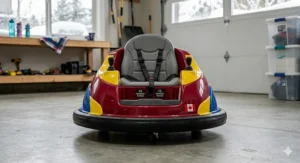
How to Choose the Safest Ride-On Toy for Your Child
Step 1: Assess Your Child’s Current Developmental Stage
Age recommendations provide rough guidelines, but individual development varies dramatically. Evaluate your child’s specific abilities:
Physical Capabilities:
- Can they sit unsupported for extended periods?
- Do they demonstrate consistent balance when walking?
- Have they mastered running without frequent falls?
- Can they follow multi-step instructions consistently?
A developmentally advanced three-year-old might safely use products rated for age 4+, whilst a child with coordination delays may benefit from products designed for younger users regardless of chronological age.
Step 2: Match Safety Features to Your Environment
Your specific living situation determines which safety features matter most:
Urban Dwellers (Apartments/Condos):
- Prioritise compact, indoor-capable options (Plasma Car, Micro Kickboard)
- Sound-dampening wheels to maintain neighbour relationships
- Storage-friendly designs that fold or stack
Suburban Families (Driveways/Sidewalks):
- Speed control features for sloped driveways
- High visibility colours for car traffic awareness
- Durable construction for year-round outdoor storage
Rural/Acreage Owners:
- All-terrain capability with larger wheels
- Extended age ranges to justify investment
- Minimal maintenance requirements
Step 3: Evaluate Quality Indicators
Manufacturing Quality Signals: ✓ Substantial weight relative to size (indicates durable materials)
✓ Smooth, consistent paint/coating application
✓ Tight tolerances with minimal wobble in moving parts
✓ Detailed assembly instructions with proper safety warnings
✓ Manufacturer’s warranty of at least one year
Red Flags to Avoid: ✗ Strong chemical odours indicating off-gassing
✗ Visible mould lines or unfinished edges
✗ Excessive flexibility in structural components
✗ Missing or illegible safety certifications
✗ Customer reviews mentioning premature failure
Step 4: Calculate Total Cost of Ownership
The purchase price tells only part of the story. Factor in:
Hidden Costs:
- Helmet purchase (essential for all ride-ons): CAD $30-$70
- Protective gear for aggressive riders: CAD $25-$50
- Storage solutions if space is limited: CAD $40-$150
- Replacement parts over lifespan: Varies by model
Value Maximisers:
- Resale potential (Little Tikes, Radio Flyer hold value well)
- Hand-me-down capability for younger siblings
- Extended age ranges reducing per-year cost
- Canadian availability of replacement parts
Step 5: Verify Current Pricing and Reviews on Amazon.ca
Prices fluctuate based on seasonal demand, inventory levels, and promotional cycles. Before purchasing:
- Compare prices across multiple sellers on Amazon.ca
- Check if Amazon.ca ships directly or through third-party fulfilment
- Verify estimated delivery times to your specific postal code
- Read recent Canadian customer reviews (filter by “Verified Purchase”)
- Assess whether Prime shipping justifies the Amazon.ca premium over retail stores
Helmet Safety: The Non-Negotiable Requirement
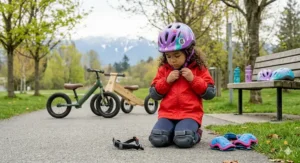
Even on the safest ride on toys for 3-5 year olds, helmet usage remains mandatory. According to Parachute Canada, properly fitted helmets reduce serious head injury risk by up to 85% during wheeled toy accidents.
Canadian Helmet Certification Standards
Helmets sold in Canada must display one of these certification labels:
- CSA (Canadian Standards Association): Canadian-specific standard
- CPSC (Consumer Product Safety Commission): U.S. standard recognised in Canada
- ASTM F1447: Alternative U.S. standard for bicycle helmets
Health Canada regulations require that toddler helmets (ages 1-5) undergo different testing than adult helmets. Young children’s skulls are less rigid, requiring thicker, less dense foam to properly absorb impacts.
Proper Helmet Fitting Guide
Measurement Process:
- Measure child’s head circumference with soft tape measure
- Position tape 2.5 cm above eyebrows, level all around
- Note measurement and compare to manufacturer’s sizing chart
Average Sizes for Ages 3-5:
- 3 years: 48-50 cm circumference
- 4 years: 49-51 cm circumference
- 5 years: 50-52 cm circumference
Fit Verification:
- Helmet sits level, covering forehead to 2-3 cm above eyebrows
- Side straps form a “V” shape under ears
- Chin strap snug but allows one finger underneath
- Helmet shouldn’t move more than 2.5 cm in any direction when head moves
Recommended Canadian-Available Helmets:
- Giro Scamp: CAD $39.99-$54.99 (extra small sizing fits smallest heads)
- Bell Sidetrack: CAD $44.99-$59.99 (excellent ventilation for active riders)
- Nutcase Little Nutty: CAD $64.99-$79.99 (fun designs encourage consistent use)
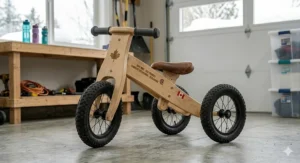
Common Safety Mistakes to Avoid
Mistake #1: Buying Based on Age Range Alone
Age recommendations provide rough guidelines, but they don’t account for individual development. A petite five-year-old may be safer on a product rated 3-4 years if it matches their current size and abilities. Conversely, a large three-year-old might physically fit a 4-6 year product but lack the cognitive development to use it safely.
Better Approach: Prioritise weight capacity, dimension specifications, and developmental skill requirements over chronological age.
Mistake #2: Assuming “Looks Safe” Equals “Is Safe”
Attractive packaging and reassuring marketing don’t guarantee safety compliance. Canadian retailers occasionally stock imported products that haven’t undergone proper Health Canada evaluation.
Verification Steps:
- Confirm ASTM F963-23 certification marking on product (not just box)
- Check Health Canada’s recall database for product-specific issues
- Verify seller legitimacy on Amazon.ca (avoid third-party international sellers for safety-critical products)
Mistake #3: Overlooking Supervision Requirements
Every ride-on toy requires adult supervision, but the level varies:
Constant Line-of-Sight Required:
- All ride-ons for children under 3 years
- Products with electrical components
- Use near roadways, stairs, or pools
Periodic Check-Ins Acceptable:
- Contained environments (fenced yards)
- Products with exceptional stability (Plasma Car, tracked systems)
- Older children (4-5 years) with demonstrated safety awareness
Never allow ride-on play near stairs, swimming pools, or driveways with vehicle traffic regardless of product safety features.
Mistake #4: Neglecting Maintenance
Safety features degrade without proper maintenance:
Monthly Checks:
- Tyre pressure and tread depth (pneumatic tyres)
- Wheel attachment security and bearing smoothness
- Frame integrity (cracks, bending, rust)
- Moving parts lubrication (chains, axles)
Seasonal Tasks:
- Deep cleaning to prevent material degradation
- UV protectant application for outdoor-stored plastic toys
- Rust treatment for metal components
- Storage preparation for Canadian winters
Mistake #5: Keeping Outgrown Toys
Children grow quickly between ages 3-5. A ride-on toy that fit perfectly six months ago may now compromise safety through improper sizing.
Signs to Retire a Toy:
- Child’s weight exceeds manufacturer’s capacity
- Knees hit handlebars during pedalling
- Feet don’t reach ground properly in seated position
- Child consistently tips forward/backward during use
- Visible structural fatigue (cracks, permanent deformation)
FAQs About Safest Ride-On Toys
❓ What age can kids safely use ride-on toys in Canada?
❓ Do ASTM certified ride ons meet Canadian safety standards?
❓ How much should I budget for safe ride-on toys in Canada?
❓ Are wide base stability toys really safer than standard designs?
❓ What's the safest ride-on toy for Canadian winters?
Conclusion: Making the Right Safety Choice for Your Family
Selecting the safest ride on toys for 3-5 year olds requires balancing multiple factors: developmental appropriateness, environmental suitability, Canadian safety compliance, and family budget. The seven products we’ve analysed represent the best options available on Amazon.ca in 2026, each addressing different needs whilst maintaining uncompromising safety standards.
For families prioritising proven longevity and classic stability, the Little Tikes Cozy Coupe Classic (CAD $99-$134) remains unbeatable. Its 45-year track record speaks to design excellence that transcends trends.
Those seeking maximum adaptability will find exceptional value in the Radio Flyer 4-in-1 Stroll ‘N Trike (CAD $137-$158), which transforms through four developmental stages whilst maintaining safety-first engineering at each level.
Budget-conscious parents shouldn’t compromise on safety—the Fisher-Price Harley Davidson Tough Trike (CAD $70-$90) delivers essential protective features at half the cost of premium alternatives.
Innovation-focused families will appreciate the Plasma Car Original (CAD $90-$120), whose physics-based design eliminates traditional ride-on hazards entirely.
Remember that the safest toy is the one that matches your specific child, environment, and supervision capacity. Verify current Amazon.ca pricing and availability before purchasing, read recent Canadian customer reviews, and always supplement any ride-on toy with proper helmet use and adult supervision.
Your child’s safety journey continues beyond the purchase. Conduct monthly maintenance checks, reassess fit as they grow, and replace products that show signs of deterioration or have been outgrown. The investment you make today in quality, safety-certified ride-on toys pays dividends through years of injury-free outdoor play that builds confidence, coordination, and joyful childhood memories.
✨ Don’t Miss These Exclusive Deals!
🔍 Take your child’s outdoor playtime to the next level with these carefully selected products available in Canada. Click on any highlighted item to check current pricing and availability on Amazon.ca. These toys will help you create authentic developmental milestones your family will love!
Recommended for You
- 7 Best Electric Ride On vs Pedal Car for Preschoolers Canada 2026
- 7 Best Tricycles for 3 Year Old Canada 2026
- Balance Bike vs Tricycle for 3 Year Old: 7 Best Picks Canada 2026
Disclaimer: This article contains affiliate links to Amazon.ca. If you purchase products through these links, we may earn a small commission at no additional cost to you.
✨ Found this helpful? Share it with your friends! 💬🤗
