In This Article
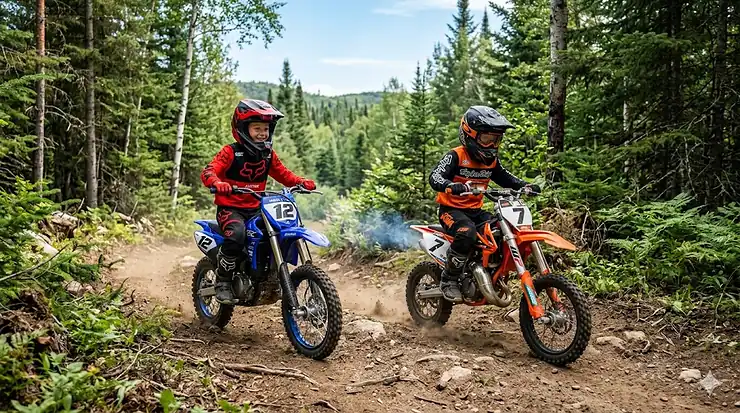
An electric vs gas dirt bike for kids decision usually starts the same way: your child has been begging for one since their friend got a Razor for their birthday, and now you’re staring at a wall of listings with no idea what 24V, 36V, or 49cc actually means for a seven-year-old. The short version — electric dirt bikes are quieter, lighter, and easier for younger riders to control, while gas dirt bikes deliver more raw speed and longer ride times but come with fuel, maintenance, and noise that most Canadian neighbourhoods (and HOAs) won’t love.
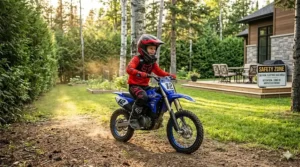
We dug through real Amazon.ca listings, Canadian off-road vehicle law, and Health Canada’s battery safety guidance to put together a guide that’s actually useful — not just a recycled spec sheet. Below you’ll find seven real models you can buy today, what they cost in CAD, and which Canadian families they actually fit, from a backyard in suburban Calgary to a cottage trail in the Kawarthas.
✅ Quick definition: An electric dirt bike for kids is a battery-powered, motorcycle-style ride-on vehicle built for off-road use, typically running on a 12V to 48V system with speeds from 8–50 km/h depending on the model and age range. A gas dirt bike for kids uses a small 2-stroke or 4-stroke engine (usually 49cc–125cc) for higher top speeds and longer fuel-based range, but with more weight, noise, and upkeep.
Quick Comparison: Electric vs Gas Dirt Bike for Kids
| Factor | Electric Dirt Bike | Gas Dirt Bike |
|---|---|---|
| Typical price (CAD) | $150–$800 | $280–$1,900+ |
| Noise level | Near-silent | Loud (2-stroke especially) |
| Best age range | 3–13 | 8–16 |
| Maintenance | Charge battery, check brakes | Oil/gas mix, air filter, spark plug |
| Canadian winter use | Battery loses 10–20% range in cold | Cold starts can be finicky |
| Best for | Backyards, condos, quiet streets | Rural property, farms, off-grid cottages |
Looking at the table, electric models win on convenience and apartment/condo-friendly noise levels, which matters in places like the GTA or Metro Vancouver where bylaws and neighbours are unforgiving of a 2-stroke engine at 8 a.m. on a Saturday. Gas bikes pull ahead for families with acreage who want a bike that can run all weekend without a charger — but that convenience comes with a real maintenance learning curve and a higher price ceiling once you move past the smallest pocket bikes.
💬 Just one click — help others make better buying decisions too!😊
✨ Don’t Miss These Exclusive Deals!
🔍 Take your search for the right electric vs gas dirt bike for kids to the next level with the picks below. Click any highlighted model to check current pricing and availability on Amazon.ca — these picks will help your family find a ride they’ll actually use all summer.
Top 7 Kids Dirt Bikes You Can Actually Buy in Canada
These are real, currently listed products — no invented model numbers. Availability and pricing shift constantly on Amazon.ca, so treat the CAD figures below as ballpark ranges, not quotes.
1. Razor MX125 Dirt Rocket (Electric, Ages 7+)
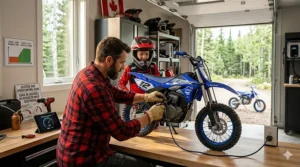
The MX125 is Razor’s entry point into electric dirt bikes, and it’s the one most Canadian parents land on for a first powered ride. Its 100-watt, chain-driven motor and authentic motocross geometry mean it actually looks and handles like a real dirt bike — just scaled down and de-fanged for younger riders. In practice, that low wattage is a feature, not a limitation: it keeps top speed low enough that a parent can jog alongside on a first ride in the backyard, which matters when Health Canada’s e-mobility safety guidance specifically flags battery-powered ride-on devices as needing close supervision with young children.
What most buyers overlook is that the MX125’s lower power also means a smaller, lighter battery pack — useful in a Canadian winter when lithium batteries lose charge capacity in cold garages, but it also means shorter ride times than the step-up models below.
Customer feedback: Reviewers consistently describe it as a confidence-builder for kids transitioning off a pedal bike, with the most common complaint being that faster kids outgrow it within a season.
✅ Pros: True motocross styling; low speed is beginner-safe; lightweight for small riders
❌ Cons: Limited speed ceiling frustrates kids over 9; smaller battery than step-up models
Price: around $200–$280 CAD |
Verdict: the safest starting point for ages 7–9. Check current availability — Amazon.ca Razor dirt bikes
2. Razor MX350 Dirt Rocket (Electric, Ages 8+)
The MX350 is the bike most Canadian parents have actually heard of, and for good reason — it’s been Razor’s flagship kids’ electric dirt bike for years and shows up constantly in Amazon.ca’s best-seller lists. The 24V (two 12V) sealed lead-acid battery system delivers up to 14 mph (22 km/h) in high-speed mode, with a low-speed setting that stretches battery life to roughly 60 minutes of continuous riding.
What the spec sheet won’t tell you: that 22 km/h top speed sits right at the threshold the Canadian Paediatric Society highlighted in its 2025 statement on off-road vehicles, noting that powered vehicles above casual walking-jogging pace require full protective gear and active supervision regardless of how the box markets the age range. In real-world Canadian backyards, this is the bike that holds a kid’s interest for multiple seasons rather than getting outgrown in three months — the trade-off is a 22-kg bike that’s noticeably heavier to load into a hatchback for cottage trips than the lighter MX125.
Customer feedback: This is one of the most-reviewed kids’ electric dirt bikes on the market, with the bulk of complaints centred on the lead-acid battery’s weight and a charge time that can stretch past 12 hours from empty.
✅ Pros: Genuine motocross feel; long track record and parts availability; manageable 22 km/h top speed
❌ Cons: Heavy lead-acid battery; slow full recharge time
Price: around $500–$730 CAD |
Verdict: the default “step-up” bike for ages 8–12. Razor MX350 Dirt Rocket — Amazon.ca
3. Hiboy DK1 (Electric, Ages 3–10)
The DK1 stands out because it’s built around three distinct, parent-selectable speed modes — 8 km/h, 12 km/h, and 25 km/h — rather than a single fixed top speed. That matters more than it sounds: it lets a parent lock a 4-year-old to the slowest setting in week one, then unlock the faster modes as coordination improves, without buying a second bike. The 36V lithium pack (rather than Razor’s heavier lead-acid setup) also means a noticeably lighter bike and a full charge in 4–5 hours instead of overnight.
In practice, families who’ve tried both report the DK1’s hydraulic front fork and rear shock spring make it noticeably quieter and smoother on lawns and gravel than cheaper no-name 24V competitors — useful if you’re in a townhouse complex where a screeching motor draws noise complaints fast.
Customer feedback: Parents frequently mention the tiered speed system as the standout feature, with occasional notes that the seat height isn’t adjustable, which matters for tall 9- and 10-year-olds nearing the bike’s limit.
✅ Pros: Three genuinely useful speed modes; lighter lithium battery; quieter ride
❌ Cons: Fixed seat height; smaller dealer network in Canada than Razor
Price: around $300–$420 CAD
| Verdict: best pick for a wide age range in one bike. Search Hiboy DK1 on Amazon.ca
4. Voltz Toys 24V 350W Electric Dirt Bike (Electric, Ages 8–13)
This is a Canadian-stocked option from a Toronto-area ride-on toy retailer that sells directly through its own Amazon.ca storefront — useful if you want a model with local seller support rather than a cross-border import. The 24V 10Ah battery and 350W motor push it to roughly 24 km/h, putting it in the same speed bracket as the Razor MX350, but in a notably lighter chassis with a built-in MP3 speaker (a detail kids care about far more than parents do).
The Canadian angle that matters here: because Voltz Toys ships from within Canada, you avoid the cross-border duty and customs-delay questions that come up with some U.S.-warehoused competitors, and warranty claims go through a Canadian seller rather than a U.S. address.
Customer feedback: Most reviews are positive on assembly and battery life; a recurring complaint involves battery connection issues after the first few months, so checking connections periodically is worth building into routine maintenance.
✅ Pros: Canadian-based seller and stock; light chassis; MP3 speaker kids love
❌ Cons: 60 kg weight limit is lower than some competitors; battery connector issues reported
Price: around $300–$400 CAD |
Verdict: strong pick if you want a Canadian-stocked seller. Voltz Toys Electric Dirt Bike — Amazon.ca
5. Wildeway 36V 500W Electric Dirt Bike (Electric, Ages 4–10)
The Wildeway shows up regularly in Amazon.ca’s best-seller list for kids’ electric vehicles, and its 36V/500W setup with three speed modes up to 25 km/h slots it between the entry-level MX125 and the more powerful MX350 — more punch than a 24V beginner bike, but still capped at a manageable top speed. Its 12-inch wheels and dedicated off-road tread give it a slightly better grip on grass and gravel than smaller-wheeled competitors, which matters on the uneven backyards common outside dense urban cores.
For a Canadian buyer trying to decide between this and the Hiboy DK1, the practical difference is wheel size and ground clearance — the Wildeway’s bigger tires handle the bumpy, root-covered yards typical of older suburban builds slightly better, while the DK1’s tiered speed system gives parents finer control over how fast a very young rider can go.
✅ Pros: Strong 500W motor for the price tier; bigger 12-inch wheels for rough yards; 3-speed control
❌ Cons: Newer brand with a smaller long-term track record than Razor
Price: around $280–$380 CAD |
Verdict: good middle-ground power-to-price pick. Amazon.ca Best Sellers — Kids’ Electric Vehicles
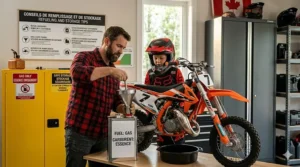
6. 49cc 2-Stroke Gas Mini Dirt Bike (Gas, Ages 8–14)
This is the realistic entry point into gas dirt bikes available directly through Amazon.ca rather than a dedicated powersports dealer. With a 49cc 2-stroke engine, 12-inch off-road tires, and front/rear disc brakes, it’s built more like a “pocket bike” than a true 110cc+ youth motocross machine — manufacturer specs list a top speed around 40 km/h, which puts it well past the speed bracket the Canadian Paediatric Society considers safe without full motorcycle-grade gear.
Here’s the Canadian-specific catch most listings don’t spell out: true 110cc–125cc youth motocross bikes from brands like Tao Motor or Coleman are rarely sold as direct Amazon.ca purchases — they’re shipped through dedicated powersports retailers (more on that below) because of size and hazardous-materials shipping rules. What you’ll actually find on Amazon.ca under “gas dirt bike for kids” are smaller 2-stroke pocket bikes like this one, which need a 25:1 gas-to-oil mix and a pull-start, not a key.
Customer feedback: Reviews are mixed — riders who follow the gas-oil mix ratio carefully report a fun, manageable first gas bike, while a chunk of low ratings trace back to flooded engines from incorrect fuel mixing.
✅ Pros: Real gas-engine experience at a lower price than full youth motocross bikes; disc brakes standard
❌ Cons: Requires correct 2-stroke oil mix; 40 km/h is fast for a beginner without full gear
Price: around $280–$420 CAD |
Verdict: the realistic gas starting point on Amazon.ca itself. 49cc Gas Mini Dirt Bike — Amazon.ca
7. BLAZEGO 49cc Kids Gas Dirt Bike (Gas, Ages 8–14)
BLAZEGO’s 49cc 2-stroke model competes directly with the pick above but pushes harder on suspension — front fork and rear shock absorption plus dual disc brakes — aimed at riders who’ll actually take it onto rougher trail terrain rather than a flat backyard. Top speed claims run up to 45 km/h depending on tune, which again lands it in territory where Transport Canada and provincial off-road vehicle rules expect a proper motorcycle helmet, not a bicycle helmet, plus closed footwear and riding gloves.
The practical trade-off versus the plain 49cc option above is suspension travel for a slightly higher price — worth it if your “off-road” actually means a rutted farm trail or cottage road rather than a mowed lawn.
✅ Pros: Better suspension than base 49cc competitors; dual disc brakes; sturdy welded frame
❌ Cons: Higher top speed needs real motorcycle-grade gear; heavier than electric equivalents
Price: around $320–$460 CAD |
Verdict: the trail-ready gas pick for rural and cottage-area families. Search BLAZEGO 49cc Dirt Bike on Amazon.ca
Top 7 Comparison Table
| Model | Type | Age | Top Speed | Price (CAD) | Best For |
|---|---|---|---|---|---|
| Razor MX125 | Electric | 7+ | ~13 km/h | $200–$280 | First-ever powered bike |
| Razor MX350 | Electric | 8+ | ~22 km/h | $500–$730 | Multi-season step-up |
| Hiboy DK1 | Electric | 3–10 | ~25 km/h (tiered) | $300–$420 | Wide age range, one bike |
| Voltz Toys 24V | Electric | 8–13 | ~24 km/h | $300–$400 | Canadian-stocked seller |
| Wildeway 36V | Electric | 4–10 | ~25 km/h | $280–$380 | Rough backyards |
| 49cc 2-Stroke Mini | Gas | 8–14 | ~40 km/h | $280–$420 | First gas bike |
| BLAZEGO 49cc | Gas | 8–14 | ~45 km/h | $320–$460 | Trail/rural use |
The pattern in this table is hard to miss: every electric model that stays under $400 CAD also caps out under 25 km/h, while every gas model — even the cheapest 49cc pocket bikes — pushes 40 km/h or beyond. That gap is the real decision point for most Canadian parents, not brand loyalty: a 25 km/h ceiling is forgiving enough to skip full motorcycle gear in a fenced backyard, while anything gas-powered in this category should be treated as a real motorcycle from day one, helmet and all.
How to Choose an Electric or Gas Dirt Bike for Your Child in Canada
- Match voltage or engine size to age, not marketing copy. 12V–24V electric (or 49cc 2-stroke gas) suits ages 7–10; 36V+ electric or 110cc+ gas suits 11 and up with riding experience.
- Decide where it’ll actually be ridden. A condo backyard or quiet cul-de-sac points toward electric. A farm, acreage, or cottage road opens the door to gas without immediate noise complaints.
- Budget for gear, not just the bike. A CSA- or DOT-rated motorcycle helmet, gloves, and knee/elbow pads typically add $100–$200 CAD on top of the bike itself — non-negotiable for anything over 20 km/h.
- Check your municipality’s bylaws before assuming “private property” means “anything goes.” Provincial rules like Ontario’s off-road vehicle regulations and British Columbia’s off-road vehicle safety rules still apply to many private and Crown land situations, particularly around helmets and supervision.
- Buy from a brand with a Canadian return path. Razor, Hiboy, and Voltz Toys all have established Canadian distribution; lesser-known third-party sellers on Amazon.ca can be harder to get warranty support from.
- For true gas motocross bikes (110cc+), look beyond Amazon.ca. Canadian powersports retailers like Kids On Wheelz and Q9 PowerSports carry youth Tao Motor and Coleman gas dirt bikes that simply aren’t shipped as standard Amazon parcels.
Real-World Scenarios: Matching Bikes to Canadian Families
The Calgary suburban backyard: A family with a 7-year-old and a fenced quarter-acre lot wants something quiet enough not to bother neighbours and slow enough for a first powered ride. The Razor MX125 or Wildeway 36V fits — both stay under 25 km/h, both are light enough for a parent to physically catch up to on foot.
The rural Manitoba acreage: A 12-year-old who’s outgrown a pedal bike and has open land to ride on, away from roads and neighbours, is the textbook case for a gas dirt bike. The BLAZEGO 49cc’s suspension handles uneven ground better than the base 49cc model, and noise isn’t a factor when the nearest house is half a kilometre away.
The Ottawa townhouse with siblings ages 5 and 10: One bike, two riders, very different needs — this is where the Hiboy DK1’s tiered speed modes earn their price premium, letting the younger sibling stay locked to 8 km/h while the older one runs the 25 km/h top setting.
First 30 Days: Setup, Safety Gear, and Canadian Climate Care
- Charge fully before first ride (electric models) and let your child practice the throttle and brake at walking pace before opening it up.
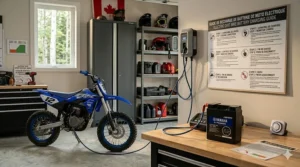
- Store lithium battery packs indoors over winter. Health Canada’s e-mobility safety guidance notes that lithium-ion batteries are more vulnerable to damage in extreme cold and should never be modified or charged with non-original chargers.
- For gas bikes, mix fuel exactly to spec (commonly 25:1 gas-to-oil for 2-stroke engines) — incorrect ratios are the single most common cause of early engine failure in budget gas mini bikes.
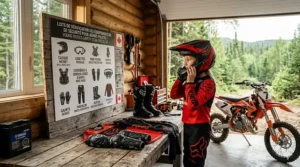
- Fit a properly rated helmet on day one, not “once they’re faster.” Several provinces, including Quebec under its off-road vehicle rules and Alberta under its OHV helmet law, require certified helmets for off-road riding even on private land in many circumstances.
- Common first-30-day mistake: letting a child ride the highest speed setting immediately because “they’re a good bike rider.” Off-road throttle control is a different skill than pedal-bike balance, and most manufacturer instructions recommend starting at the lowest available speed regardless of age.
Electric vs Gas: The Real Differences Beyond the Spec Sheet
On paper, voltage and cubic centimetres look like simple numbers. In practice, the difference that matters most to a Canadian household is maintenance season length. Electric bikes are essentially zero-maintenance for 8–10 months of riding, with the main task being battery storage over winter. Gas bikes need fuel mixed correctly every ride, periodic air filter cleaning, and spark plug checks — work that a lot of first-time gas-bike parents underestimate until the bike won’t start on a Saturday morning.
Noise is the other under-discussed factor. A 49cc 2-stroke engine is loud enough to draw attention (and occasionally bylaw complaints) in suburban Canada, while every electric model on this list runs near-silent — genuinely useful if you live within earshot of neighbours who work shifts or have a baby napping.
Canadian Regulations, Helmet Laws, and Safety Standards
Off-road vehicle rules in Canada are set provincially, not federally, and they vary more than most parents expect. Ontario requires ORV riders to be at least 12 unless directly supervised, and mandates approved motorcycle helmets for both drivers and passengers, per the Government of Ontario’s ORV driving rules. British Columbia layers on supervision requirements for children plus mandatory off-road safety helmets under its Off-Road Vehicle Regulation. Quebec requires riders aged 16–17 to hold both a driver’s licence and a training certificate to use an ORV on trails or public land, detailed on Québec’s off-road vehicle rules page.
In a February 2025 statement covered by The Globe and Mail, the Canadian Paediatric Society went further, recommending governments treat off-road vehicles like cars: a minimum driving age of 16 and a passenger minimum of 12, with mandatory certified helmets, since unhelmeted riders are roughly five times more likely to suffer severe head or neck injuries. Most of the bikes in this guide fall well under licensing thresholds because they’re marketed as toys rather than registered ORVs — but the underlying safety logic (helmet, supervision, no public roads) still applies regardless of how a product is labelled on Amazon.
For battery safety specifically, Health Canada’s guidance on lithium-ion batteries in e-mobility devices recommends sticking to original chargers and batteries and watching for the ANSI/CAN/UL 2272 and 2849 safety standards on electric ride-on products — standards worth checking for on a listing page before buying a no-name budget model.
Long-Term Cost & Maintenance in CAD
| Cost Factor | Electric (annual estimate) | Gas (annual estimate) |
|---|---|---|
| Energy/fuel | $5–$15 (electricity) | $60–$150 (gas + 2-stroke oil) |
| Replacement parts | Battery every 2–3 seasons (~$80–$150) | Spark plug, air filter, tires (~$50–$100) |
| Safety gear | $100–$200 one-time | $150–$250 one-time (full motorcycle-grade) |
| Resale value | Moderate (Razor holds value well) | Lower for budget pocket bikes |
Electric bikes are cheaper to run year to year, but the eventual battery replacement is a lump cost that gas bikes don’t have — a worn-out 2-stroke engine, by contrast, can usually be kept running indefinitely with basic carburetor and spark plug maintenance. Over a 3-year ownership window, the two options land closer in total cost than the sticker price suggests, once you factor in gas, oil, and the safety gear gas riding actually requires.
Common Mistakes Parents Make When Buying a Kids Dirt Bike
- Buying based on age range alone, ignoring weight and height. A 9-year-old who’s tall for their age may already be too big for a 12V entry bike’s frame.
- Skipping the helmet “because it’s just the backyard.” Most serious off-road injuries in Canadian paediatric data happen close to home, not on registered trails.
- Choosing a no-name 24V+ bike with under 50 reviews to save $50. Budget, unbranded listings account for most of the sub-3.5-star ratings in the kids’ electric dirt bike category, largely tied to battery failures and missing hardware.
- Assuming any gas mini bike on Amazon.ca is a true youth motocross bike. As covered above, real 110cc+ youth bikes generally come from dedicated Canadian powersports dealers, not standard Amazon shipping.
- Forgetting Canadian winter battery storage. Leaving a lithium pack in an unheated garage all winter shortens its lifespan noticeably faster than indoor storage.
FAQ
❓ Is an electric or gas dirt bike better for a kid in Canada?
❓ Do kids need a helmet to ride a dirt bike on private property in Canada?
❓ Does Amazon.ca sell real 110cc gas dirt bikes for kids?
❓ How much does shipping cost on Amazon.ca for a kids dirt bike?
❓ How long do kids' electric dirt bike batteries last in cold Canadian winters?
Conclusion
The right electric vs gas dirt bike for kids comes down to three honest questions: how old is your rider, how much noise can your street tolerate, and how much maintenance are you actually willing to do on a Sunday morning. For most Canadian families in suburban and urban settings, an electric model like the Razor MX125, Hiboy DK1, or Wildeway 36V hits the right balance of safety, quiet operation, and price. For rural and acreage families with older kids who want real speed and don’t mind learning basic 2-stroke maintenance, a gas pocket bike like the BLAZEGO 49cc is a reasonable entry point — just budget for proper motorcycle-grade safety gear from day one, and don’t assume the backyard makes a helmet optional.
Whichever way you go, check current pricing and stock directly on Amazon.ca before buying, since availability on these listings shifts often.
Recommended for You
- Best Electric Dirt Bike for Kids Canada 2026: Top 7 Picks
- Hoverboard vs Electric Scooter for Kids: 7 Picks & Which Is Better in 2026 (Canada)
- How to Choose an Electric Scooter for Kids: 7 Canadian Picks (2026)
Disclaimer: This article contains affiliate links. As an Amazon Associate, I earn from qualifying purchases. If you purchase products through these links, we may earn a small commission at no additional cost to you.
✨ Found this helpful? Share it with your friends! 💬🤗
