In This Article
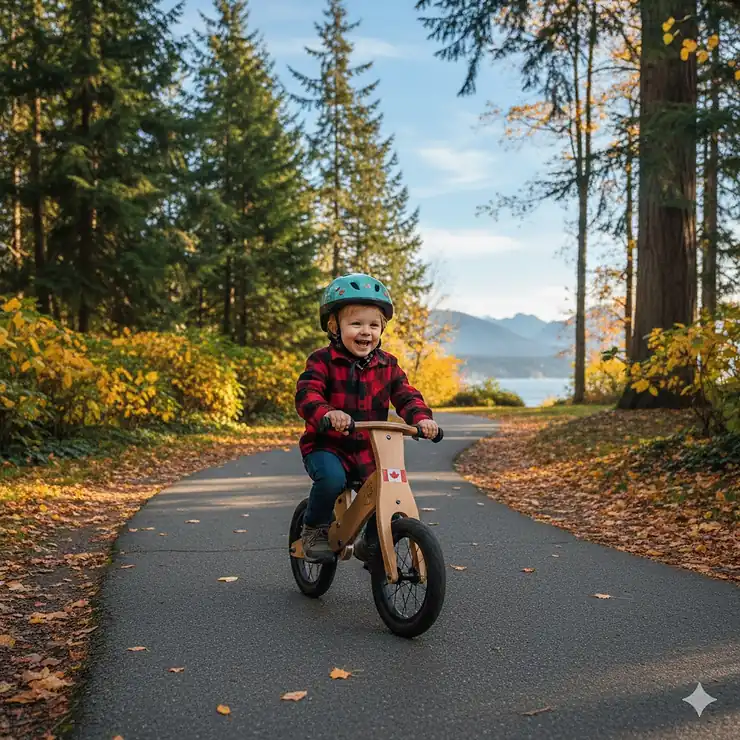
I’ll be honest with you—watching my nephew zoom past on his balance bike while other kids struggled with training wheels was the moment I became a believer. There’s something magical about seeing a three-year-old master the art of balance before they even understand what they’re doing. If you’re exploring options for a balance bike for 3 year old riders in Canada, you’re already ahead of the curve in giving your child a head start on cycling independence.
Research from the British Journal of Developmental Psychology reveals that children who practice with balance bicycles start cycling independently almost six months earlier than those using training wheels. That’s half a year of confidence, coordination, and outdoor adventures your child gains simply by choosing the right learning tool.
In Canada’s diverse climate—from Vancouver’s rainy springs to Toronto’s snowy winters—finding the perfect first bike for 3-5 year old children requires careful consideration. You need something that can handle our unique weather patterns, meets Canadian safety standards, and most importantly, grows with your child through those crucial developmental years.
This guide examines seven outstanding no-pedal learning bikes available on Amazon.ca in 2026, helping you navigate specifications, prices, and features that matter most for Canadian families.
Quick Comparison Table
| Balance Bike | Age Range | Seat Height | Weight | Price (CAD) | Best For |
|---|---|---|---|---|---|
| Strider 12″ Sport | 18mo-5yr | 11″-16″ | 2.9 kg | $139-159 | Best Overall Value |
| KRIDDO 12″ | 2-5 years | 13″-17″ | 3.2 kg | $89-119 | Budget-Friendly |
| Strider 14x | 3-6 years | 15″-22″ | 5.7 kg | $269-299 | Convertible to Pedals |
| SEREED 12″ | 2-5 years | 12.6″-16.5″ | 3.3 kg | $79-99 | Lightweight Option |
| Woom 1 Plus | 3-5 years | 15.5″-19.5″ | 4.5 kg | $399-449 | Premium Choice |
| Retrospec Cub | 18mo-4yr | 12″-16″ | 3.0 kg | $129-149 | Stylish Design |
| Radio Flyer Glide & Go | 2.5-5yr | 12″-17″ | 3.4 kg | $99-129 | Classic Brand |
💬 Just one click – help others make better buying decisions too! 😊
✨ Don’t Miss These Exclusive Deals!
🔍 Take your child’s cycling journey to the next level with these carefully selected products available in Canada. Click on any highlighted item to check current pricing and availability on Amazon.ca. These bikes will help you create authentic outdoor memories your family will cherish!
Top 7 Balance Bikes for 3 Year Olds: Expert Analysis
1. Strider 12″ Sport Balance Bike
The Strider 12″ Sport remains the gold standard for balance bikes in Canada, and for good reason. This American-born brand has revolutionized how Canadian kids learn to ride, with over a decade of proven results in our challenging climate.
Key Specifications:
- Adjustable seat height: 11″-16″ (28-41 cm)
- Weight capacity: 27 kg (60 lbs)
- Frame material: Steel
- Tire type: Puncture-proof EVA foam
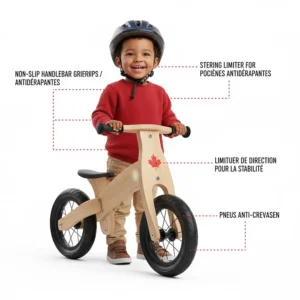
At $139-$159 CAD on Amazon.ca, the Strider Sport delivers exceptional value. The adjustable seat post requires no tools—a blessing when you’re at the park and your child suddenly needs a height adjustment. Canadian parents particularly appreciate the foam tires that never go flat, even during our harsh winters when temperatures plummet below -20°C.
Canadian customer feedback consistently praises the bike’s durability. One Montreal parent noted their Strider survived three children and two winters stored outside. The lightweight steel frame (2.9 kg) makes it easy for kids to maneuver and for parents to carry when the inevitable “all done” moment arrives mid-walk.
✅ Pros: Tool-free adjustments, weatherproof construction, extensive size range
✅ Pros: Never-flat tires, widely available replacement parts across Canada
✅ Pros: Excellent resale value on Canadian marketplaces
❌ Cons: Foam tires less cushioned than pneumatic on rough terrain
❌ Cons: No hand brake (available on Pro model)
2. KRIDDO Toddler Balance Bike 12″
For budget-conscious Canadian families, the KRIDDO Balance Bike punches well above its $89-$119 CAD weight class. This newer brand has gained substantial traction on Amazon.ca, accumulating thousands of positive reviews from satisfied parents across Canada.
Key Specifications:
- Adjustable seat height: 13″-17″ (33-43 cm)
- Weight capacity: 50 kg (110 lbs)
- Frame material: Carbon steel
- Tire type: Extra-thick EVA foam
What makes the KRIDDO stand out is its customization plate where kids can apply included stickers or create their own designs. This personal touch transforms an ordinary coordination development bike into “their” special ride. Canadian children love making their bike unique, and this feature extends the emotional connection to the product.
The carbon steel frame withstands Canadian winters admirably. Edmonton parents report leaving the bike outdoors through -30°C temperatures without paint chipping or frame damage. The extra-thick all-terrain tires handle everything from smooth Toronto sidewalks to rougher Calgary pathways.
✅ Pros: Outstanding price point for Canadian market
✅ Pros: Customizable plate engages children’s creativity
✅ Pros: Limited steering prevents over-rotation falls
❌ Cons: Heavier than premium models (3.2 kg)
❌ Cons: Assembly required (approximately 15 minutes)
3. Strider 14x Balance to Pedal Bike
The Strider 14x represents a significant investment at $269-$299 CAD, but it’s essentially two bikes in one. This innovative convertible design transitions from balance bike to pedal bike, eliminating the need for a second purchase when your child is ready.
Key Specifications:
- Adjustable seat height: 15″-22″ (38-56 cm)
- Weight capacity: 27 kg (60 lbs)
- Wheel size: 14 inches
- Frame material: Steel
This model targets larger three-year-olds and children up to age six, making it ideal for families wanting maximum longevity from their investment. The pedal conversion kit (included) attaches with minimal tools, though Canadian parents recommend watching the online video tutorial first.
According to research published by the National Center for Biotechnology Information, children who master balance before pedaling typically transition faster and with greater confidence. The 14x capitalizes on this developmental sequence perfectly.
Vancouver parents particularly appreciate the pneumatic tires that absorb the city’s numerous potholes and uneven sidewalk cracks. The hand brake introduces proper braking techniques early, setting children up for safer cycling habits as they grow.
✅ Pros: Grows with child from balance to pedal phase
✅ Pros: Pneumatic tires provide superior cushioning
✅ Pros: Dual hand brakes teach proper technique
❌ Cons: Higher initial investment than single-purpose bikes
❌ Cons: Larger size may overwhelm smaller three-year-olds
4. SEREED No-Pedal Balance Bike
The SEREED Balance Bike ($79-$99 CAD) represents the most affordable quality option for Canadian families. Despite its budget-friendly price, this bike doesn’t sacrifice essential features or safety.
Key Specifications:
- Adjustable seat height: 12.6″-16.5″ (32-42 cm)
- Weight capacity: 25 kg (55 lbs)
- Weight: 3.3 kg
- Tire type: EVA foam
SEREED bikes ship quickly within Canada, with many Amazon.ca Prime members receiving delivery within 2-3 days. The tool-free seat adjustment uses the same quick-release mechanism found on more expensive models.
Canadian reviewers consistently mention the bike’s surprisingly light weight (3.3 kg), making it manageable for even petite three-year-olds to pick up when they’ve tipped over. The ergonomic soft seat reduces pressure points during longer rides—important for maintaining interest in those crucial early learning sessions.
One Ottawa parent shared that their daughter progressed from tentative steps to confident gliding in just two weeks using the SEREED. The bike’s low standover height (the distance between the ground and frame) builds confidence by allowing feet to remain firmly planted.
✅ Pros: Exceptional value for money
✅ Pros: Fast shipping across Canada via Amazon Prime
✅ Pros: Lightweight design prevents intimidation
❌ Cons: Lower weight capacity than competitors
❌ Cons: Basic aesthetics compared to premium models
5. Woom 1 Plus Balance Bike
When you’re ready to invest in premium quality, the Woom 1 Plus ($399-$449 CAD) delivers European engineering excellence designed specifically for North American riders. This Austrian brand has cultivated a devoted following among Canadian cycling enthusiasts.
Key Specifications:
- Adjustable seat height: 15.5″-19.5″ (39-49 cm)
- Weight capacity: 60 kg (132 lbs)
- Weight: 4.5 kg
- Tire type: Pneumatic with Schwalbe rubber
The Woom features colour-coded dual hand brakes—a thoughtful detail that helps children distinguish left from right while learning braking mechanics. This preparation proves invaluable when transitioning to pedal bikes.
According to the Canadian Paediatric Society, introducing proper braking techniques early establishes safer cycling habits throughout childhood. The Woom’s child-sized brake levers require minimal hand strength, perfect for developing muscles.
The integrated footrest (“surfboard”) teaches children to lift their feet while coasting—a crucial balance skill. British Columbia parents particularly value the bike’s performance on varied terrain, from Vancouver’s smooth bike paths to Whistler’s gravel trails.
✅ Pros: Exceptional build quality and attention to detail
✅ Pros: Dual hand brakes with child-appropriate lever reach
✅ Pros: Lightweight aluminum frame (4.5 kg)
❌ Cons: Premium pricing may not suit all budgets
❌ Cons: Less readily available than mass-market brands
6. Retrospec Cub Balance Bike
The Retrospec Cub ($129-$149 CAD) combines vintage aesthetics with modern safety features, creating a balance bike that parents love photographing and kids love riding. This California-based company has established strong distribution across Canada.
Key Specifications:
- Adjustable seat height: 12″-16″ (30-41 cm)
- Weight capacity: 23 kg (50 lbs)
- Weight: 3.0 kg
- Tire type: Puncture-proof polymer
Available in stylish matte finishes and classic colours, the Retrospec Cub stands out at Canadian playgrounds. The powder-coated steel frame resists rust even in coastal humidity and winter road salt exposure.
The bike includes a padded handlebar crossbar that protects children during those inevitable early tumbles. Canadian parents in Saskatchewan and Manitoba appreciate this safety feature during learning sessions on harder prairie surfaces.
The minimal standover height accommodates younger or smaller three-year-olds better than many competitors. Toronto parents report successful use with petite children who struggled with taller frame designs.
✅ Pros: Attractive retro styling appeals to design-conscious families
✅ Pros: Padded crossbar provides extra protection
✅ Pros: Low standover height suits smaller riders
❌ Cons: Lower weight capacity limits longevity
❌ Cons: Polymer tires occasionally slip on wet surfaces
7. Radio Flyer Glide & Go Balance Bike
The iconic Radio Flyer brand brings its century of toy-making expertise to balance bikes with the Glide & Go ($99-$129 CAD). This American classic has been adapted for Canadian market preferences while maintaining the quality that made the brand famous.
Key Specifications:
- Adjustable seat height: 12″-17″ (30-43 cm)
- Weight capacity: 23 kg (50 lbs)
- Weight: 3.4 kg
- Tire type: Air-filled rubber
The Radio Flyer features 12-inch air-filled tires that provide superior shock absorption on Canadian sidewalks, bike paths, and even gentle trails. Halifax parents particularly appreciate this cushioning on the city’s characteristically bumpy infrastructure.
The steel frame includes Radio Flyer’s signature red finish with chrome accents—instantly recognizable and photographically appealing. The bell mounted on the handlebar isn’t just decorative; it teaches children to alert pedestrians and other cyclists, promoting road safety awareness early.
According to Canada Safety Council guidelines, teaching children to signal their presence represents an important safety skill that carries into their cycling future.
✅ Pros: Trusted brand with established Canadian presence
✅ Pros: Air-filled tires offer superior ride comfort
✅ Pros: Included bell promotes safety awareness
❌ Cons: Air tires require occasional inflation maintenance
❌ Cons: Steel frame slightly heavier than aluminum alternatives
Understanding Balance Bikes vs Training Wheels
The debate between balance bike vs training wheels represents one of parenting’s modern decision points. Having watched dozens of Canadian children learn through both methods, the evidence overwhelmingly favours balance bikes for most learners.
Why Balance Bikes Win
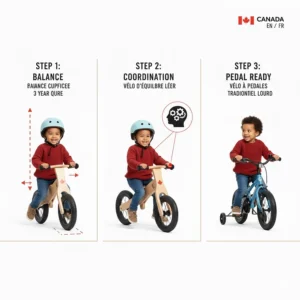
Training wheels teach children to pedal while keeping them upright artificially. When those training wheels come off, children must suddenly learn two complex skills simultaneously: balancing and pedaling. This dual challenge often leads to frustration, falls, and sometimes tears.
Balance bikes reverse this sequence brilliantly. Children master balancing first—the more difficult skill—while their feet remain safely on the ground. When they eventually transition to pedal bikes, they only need to learn pedaling, which is comparatively straightforward.
Research from Pennsylvania State University Extension confirms this advantage. Balance bike riders typically achieve independent cycling 6-12 months earlier than training wheel users.
The Canadian Climate Factor
Training wheels perform poorly on Canadian surfaces. Snow-covered sidewalks, autumn leaves, and spring mud all cause training wheels to slip, stick, or sink. Balance bikes, with their two-wheel design and lower center of gravity, handle these conditions far more gracefully.
Manitoba parents consistently report that balance bikes remain usable through longer portions of our abbreviated outdoor season. Kids can ride balance bikes on light snow, wet pavement, and uneven spring ground—conditions that render training wheels problematic or dangerous.
Cost Comparison
A quality balance bike for 3 year old riders costs $80-$450 CAD. A good pedal bike with training wheels runs $150-$300 CAD. However, balance bike graduates typically skip training wheels entirely, proceeding straight to standard pedal bikes. The math favours balance bikes.
Additionally, balance bikes maintain excellent resale value on Canadian marketplaces like Facebook Marketplace and Kijiji. Well-maintained Striders frequently sell for 60-70% of their original price, effectively reducing your net investment.
How to Choose Balance Bike Features for Canadian Conditions
Frame Material Considerations
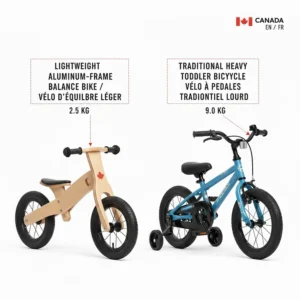
Steel frames dominate the budget category ($80-$150 CAD). They withstand Canadian winters admirably, resist rust when properly coated, and generally outlast the child’s growth period. The slight weight penalty (typically 0.5-1.0 kg extra) rarely matters for three-year-olds.
Aluminum frames appear in mid-range to premium models ($200-$450 CAD). They offer significant weight reduction—crucial if your child struggles with heavier bikes or if parents frequently need to carry the bike. Aluminum resists corrosion naturally, important in coastal regions and areas using road salt.
Tire Selection for Canadian Terrain
EVA foam tires never go flat—a massive advantage during Canadian winters when temperature swings can deflate pneumatic tires overnight. They require zero maintenance and handle pavement excellently. However, they provide less cushioning on rough surfaces and can slip on wet grass.
Pneumatic (air-filled) tires offer superior shock absorption and traction. They excel on varied terrain—gravel paths, dirt trails, grass fields—common in Canadian parks. The trade-off? Regular pressure checks and occasional flats, though Schwalbe and other premium brands include puncture protection.
For urban Canadian families on paved surfaces: foam tires excel. For suburban and rural families with access to trails and varied terrain: pneumatic tires justify their maintenance requirements.
Brake Systems
Most balance bikes for younger children omit brakes entirely. Kids naturally use their feet to stop, which works perfectly during the learning phase. However, around age 3.5-4, introducing hand brakes offers several advantages:
- Prepares children for pedal bike braking
- Allows faster, safer stops as confidence grows
- Protects shoes from excessive wear (a real concern for Canadian parents buying winter boots)
- Builds fine motor skills and hand-eye coordination
The Ontario Ministry of Transportation requires cyclists to have functioning brakes. While this regulation technically applies to vehicles ridden on roads, introducing brakes early establishes good habits.
Sizing Your Child’s Balance Bike Correctly
The Inseam Measurement Method
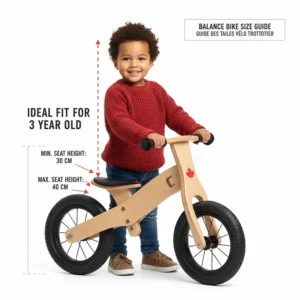
Forget age ranges—they’re guidelines at best. The only measurement that truly matters is your child’s inseam (inside leg length). Here’s how Canadian parents can measure accurately:
- Have your child stand barefoot against a wall
- Place a hardcover book between their legs, spine against the crotch
- Mark where the book’s top edge touches the wall
- Measure from floor to mark in centimeters
The balance bike’s minimum seat height should be 2-4 cm less than this measurement. This ensures your child can plant both feet flat on the ground with slightly bent knees—the ideal starting position.
Growth Considerations
Three-year-olds typically measure 90-100 cm tall with 35-42 cm inseams. However, Canadian children show considerable variation. My own nephew was 95 cm at three, while his cousin reached 105 cm at the same age.
Quality balance bikes offer 8-15 cm of seat height adjustment. A bike sized properly at age three should accommodate growth through age 4-5, providing 2-3 years of use—excellent value for Canadian families.
Safety Standards and Canadian Regulations
CSA Certification
Canada Safety Council recommends ensuring any children’s cycling equipment meets CSA International standards. While balance bikes don’t require formal certification (they’re considered toys, not vehicles), responsible manufacturers voluntarily comply with toy safety standards.
Look for:
- ASTM F963 (American toy safety standard, accepted in Canada)
- EN71 (European toy safety standard)
- CSA certification marks
All bikes featured in this guide meet or exceed these standards based on manufacturer specifications and Amazon.ca product listings.
Helmet Requirements
Every Canadian province and territory mandates helmet use for children under 18 while cycling. This includes balance bikes, even though they’re foot-powered. The Canadian Paediatric Society emphasizes that helmet-wearing habits established early persist throughout life.
Choose helmets certified by:
- CPSC (Consumer Product Safety Commission – USA)
- ASTM (American Society for Testing and Materials)
- Snell (Snell Memorial Foundation)
- CSA (Canadian Standards Association)
Use the 2V1 fitting rule: Two fingers above eyebrows, straps form a V under ears, One finger space between chin and strap.
Teaching Your 3 Year Old to Ride: A Canadian Parent’s Timeline
Week 1-2: Walking the Bike
Start on flat, smooth surfaces like basement floors, garage floors, or calm parking lots. Let your child straddle the bike and walk while seated. This familiarization period builds comfort and confidence.
Canadian tip: Indoor spaces work perfectly during winter months or rainy spring days. Many Ontario and Quebec parents begin balance bike lessons in rec center hallways or community centre gymnasiums.
Week 3-4: Gaining Speed
As comfort grows, encourage faster walking. Children naturally progress to faster speeds as their confidence builds. Gentle downhill slopes help kids experience the gliding sensation while maintaining foot contact with the ground.
Prairie parents have natural advantages here—the flat terrain provides perfect learning environments. British Columbia and Quebec families might need to seek out parks with slight, gradual slopes rather than steep hills.
Week 5-8: Lifting Feet
This represents the breakthrough moment when walking transforms into gliding. Most children spontaneously begin lifting their feet for short distances as they gain confidence.
Encourage this progression with verbal cues: “See how far you can coast!” or “Can you count to five with your feet up?” Make it playful, never pressured.
Month 3+: Mastery and Adventure
By month three, most children glide confidently with feet elevated for extended periods. They navigate turns, adjust speed, and generally look like tiny cyclists missing only pedals.
This is the perfect time to explore different terrains—grass, gentle dirt paths, slight hills. Canadian parks offer ideal environments for expanding skills during summer months.
Maintenance Tips for Canadian Climate
Winter Storage
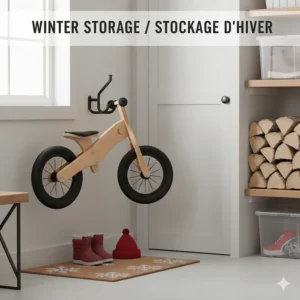
Storing balance bikes during Canadian winters extends their lifespan significantly. If garage or basement storage isn’t possible, cover outdoor bikes with weatherproof tarps and elevate them off ground to prevent freeze-thaw damage to tires and bearings.
For foam tire models, winter storage matters less. Strider and KRIDDO owners report successful year-round outdoor storage with minimal degradation.
Spring Inspection
Before the first ride after winter storage:
- Check all bolts for tightness (freeze-thaw cycles can loosen hardware)
- Inspect tires for cracks or damage
- Verify seat post clamp functions smoothly
- Wipe down frame to remove salt residue
Pneumatic Tire Care
If your child’s bike has air-filled tires:
- Check pressure weekly (cold Canadian mornings drop tire pressure)
- Inflate to manufacturer specifications (usually 20-30 PSI)
- Inspect for punctures or embedded debris monthly
- Consider seasonal tire changes if riding year-round
Transition to Pedal Bikes: When and How
Recognizing Readiness
Children demonstrate pedal bike readiness through several clear indicators:
- Confident gliding with feet elevated for 10+ seconds
- Smooth turns and directional control
- Effective use of hand brakes (if equipped)
- Stopping and starting independently
- General cycling competence and enthusiasm
According to Penn State Extension research, most balance bike graduates transition to pedal bikes between ages 3.5-5 years. Canadian children with year-round riding opportunities often transition earlier than those in regions with extended winters.
Choosing the Right Pedal Bike
For balance bike graduates, select pedal bikes using these guidelines:
- 12-14 inch wheels for most children transitioning at age 3.5-4
- 16-inch wheels for children transitioning at age 4.5-5
- Coaster brakes initially, then hand brakes once comfortable
- Lightweight frames (aluminum preferred)
Many balance bike users skip training wheels entirely—one of the primary advantages of the no-pedal learning method.
The First Pedal Bike Session
Canadian parents report success with this approach:
- Start on slight downhill slopes (easier than flat ground)
- Help child get feet on pedals while moving
- Encourage coasting first, pedaling second
- Choose calm, traffic-free locations (school parking lots on weekends work perfectly)
- Keep sessions short and positive (10-15 minutes maximum)
Most balance bike graduates pedal independently within 30-60 minutes of their first pedal bike session—a testament to the foundation balance bikes create.
Coordination Development Benefits Beyond Cycling
Balance bikes offer developmental advantages extending far beyond cycling skills. Research published by PubMed demonstrates that balance bicycle use significantly improves children’s overall motor development.
Core Strength and Stability
Maintaining balance on two wheels engages core muscles continuously. This constant micro-adjustment strengthens abdominal and back muscles, improving posture and stability for all physical activities.
Spatial Awareness
Navigating obstacles, judging distances, and controlling speed through varied terrain develops spatial reasoning skills that benefit children in sports, playground activities, and even classroom tasks requiring spatial thinking.
Confidence and Independence
Successfully mastering a physical skill independently builds self-efficacy—children’s belief in their own capabilities. This confidence often transfers to other learning domains, from academic challenges to social situations.
The Canadian Paediatric Society emphasizes that active transportation skills learned early contribute to lifelong physical activity patterns, potentially reducing obesity and related health conditions throughout adulthood.
Frequently Asked Questions
❓ What is the best age to start a balance bike in Canada?
❓ Do balance bikes work in Canadian winter conditions?
❓ How long should my child use a balance bike before transitioning to pedals?
❓ Are expensive balance bikes worth the cost for Canadian families?
❓ What size balance bike fits a 3 year old in Canada?
Conclusion: Making the Right Choice for Your Canadian Family
Selecting a balance bike for 3 year old riders in Canada involves balancing multiple factors: budget, features, climate compatibility, and your child’s specific needs. The coordination development bikes explored in this guide represent the best options available on Amazon.ca in 2026, each excelling in different areas.
For most Canadian families, the Strider 12″ Sport ($139-159 CAD) delivers unbeatable value with its proven durability, extensive adjustability, and never-flat foam tires. Budget-conscious parents should examine the KRIDDO ($89-119 CAD), which provides remarkable quality at an accessible price point. Families willing to invest in premium quality will appreciate the Woom 1 Plus ($399-449 CAD) with its exceptional engineering and attention to detail.
Remember that the “best” balance bike is ultimately the one your child will ride enthusiastically and frequently. Involve your three-year-old in the selection process when possible—children who choose favourite colours or designs often show greater engagement with their bikes.
As you embark on this cycling journey with your child, embrace the process rather than rushing outcomes. Balance bikes teach more than cycling skills; they build confidence, independence, and a love of outdoor activity that can last a lifetime. In Canada’s diverse landscape—from Pacific coastlines to Prairie expanses to Maritime shores—these simple two-wheeled vehicles open doors to family adventures and childhood memories worth every dollar invested.
The transition to pedal bikes will arrive sooner than you expect. Until then, enjoy watching your three-year-old discover the joy of movement, balance, and freedom that only cycling provides.
Recommended for You
- 7 Best Licensed 6V Ride On Cars Canada 2026 – Top Picks
- 7 Best First Electric Cars for Toddlers Canada 2026
- 7 Best 6V Ride On Cars for Preschoolers Canada 2026
Disclaimer: This article contains affiliate links to Amazon.ca. If you purchase products through these links, we may earn a small commission at no additional cost to you.
✨ Found this helpful? Share it with your friends! 💬🤗
