
In This Article
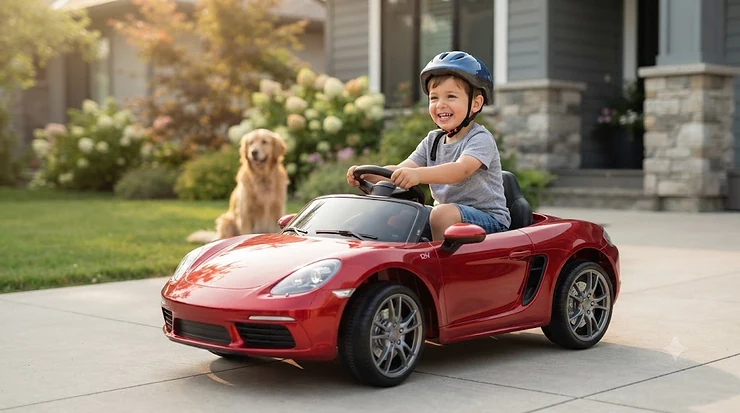
Somewhere between the driveway and the backyard, a whole childhood milestone is quietly happening: the first time a kid grips a tiny steering wheel and believes, with total conviction, that they are driving. A 12v ride on sports car is a battery-powered miniature vehicle built for toddlers and young children, typically topping out around 3-5 km/h, styled after real sports car brands, and steered either by the child’s own foot pedal or by a parent-held remote. It is not a bike, not a wagon, and definitely not a real car — but to a three-year-old, it might as well be all three. Canadian parents searching for one quickly discover the market is a mess of near-identical listings, vague specs, and marketing photos that all look suspiciously alike. This guide cuts through that. We researched seven real, currently available models — from no-frills budget haulers to scissor-door showpieces — and broke down what actually matters: rubber tires versus hard plastic wheels, parent remote reliability, battery run time, and where a 12v ride on sports car fits against the bigger 24v two-seaters. Whether you want a licensed Lamborghini for the driveway or a first electric car for a cautious toddler, you’ll find honest, sourced analysis below — not a rewritten spec sheet. It’s also worth noting that this kind of active, imaginative outdoor play lines up with what the Canadian Paediatric Society recommends for healthy child development, so a good ride-on car is doing more than just entertaining — it’s getting kids outside and moving.
Quick Comparison Table
| Product | Price Range (CAD) | Speed | Tire Type | Best For |
|---|---|---|---|---|
| Best Choice Products Jumbo 12V Ride-On Car | C$180-C$230 | Up to 3.7 mph | Plastic w/ spring suspension | Budget-conscious first-timers |
| TOBBI Licensed Lamborghini SIAN 12V | C$220-C$270 | Up to 2.5 mph | Plastic, wide tread | Toddlers new to remote control |
| Rock Wheels Licensed Lamborghini Urus 12V | C$250-C$310 | Up to 2.5 mph | Rubber traction tires | Driveways, grass, mixed terrain |
| OLAKIDS Licensed Lamborghini Huracan 12V | C$260-C$320 | Up to 3.1 mph | Spring-suspended, wide plastic | Bumpy backyards |
| Licensed Porsche 718 12V Ride-On Car | C$270-C$330 | Up to 3 mph | Durable tread tires | Families wanting doors + storage |
| ELEMARA Licensed Lamborghini Scissor-Door 12V | C$300-C$370 | Up to 3 mph | Rubber-accented tires | Kids who want the “wow” factor |
| JOYLDIAS Mercedes-Benz Maybach G650S 12V | C$340-C$400 | 3-speed, up to 3.7 mph | Rubber tires, dual motor | Premium buyers, longer resale life |
Looking at the spread above, the gap between the cheapest and priciest 12v ride on sports car in this lineup mostly comes down to tire quality, motor redundancy, and door mechanisms rather than raw speed — every model here is governed to a toddler-safe crawl. If your driveway is smooth concrete, the plastic-wheeled Best Choice Products Jumbo 12V Ride-On Car will do the job for a fraction of the cost; if your child will be riding across grass, gravel, or uneven paving stones, the rubber tires on the Rock Wheels Licensed Lamborghini Urus 12V or JOYLDIAS Mercedes-Benz Maybach G650S 12V earn their higher price tag. Dual-motor models like the Maybach also handle a heavier or older toddler climbing a gentle slope without bogging down, which single-motor budget units tend to struggle with.
💬 Already narrowing down your favourite? Scroll down for the full breakdown before you decide!
Top 7 12v Ride On Sports Cars: Expert Analysis
Picking a 12v ride on sports car isn’t just about which one looks coolest in the thumbnail — although, let’s be honest, that matters more to a four-year-old than any spec sheet ever will. Below are seven real, currently listed models spanning budget to premium, each evaluated on what the marketing copy conveniently leaves out.
1. Best Choice Products Jumbo 12V Ride-On Car — best budget pick with a parent remote
The standout here is simple: a legitimate parent remote and Bluetooth speaker at a price point that undercuts most of the licensed sports car competition. This model runs on a single 12V battery, tops out around 3.7 mph, and rides on spring-suspended plastic wheels rather than rubber, which keeps costs down but means bumpier rides on gravel or grass. Based on the spec comparison, this is the car to buy if you’re not sure your toddler will even like ride-on toys yet and don’t want to gamble C$300 to find out — it covers the fundamentals (seat belt, locking doors, forward/reverse) without the licensed-brand premium. Reviewers consistently report that assembly is quick, usually under 20 minutes, and that the Bluetooth speaker is a genuine hit with kids who like to “drive” to their own playlist, though a few note the plastic wheels get slippery on wet grass. Weight capacity sits around 65 lb, which comfortably covers most toddlers through preschool age.
Pros:
- ✅ Genuine parent remote with forward/reverse override
- ✅ Bluetooth speaker adds real replay value
- ✅ Lowest price point in this roundup
Cons:
- ❌ Plastic wheels slip more on wet or uneven grass
- ❌ No licensed sports car styling or badge
At around C$180-C$230, this is the easy entry point into the 12v kids car with parent remote category, and the value verdict is straightforward: if budget is the deciding factor, start here.
2. TOBBI Licensed Lamborghini SIAN 12V Ride-On Car — best for first-time remote control drivers
What most buyers overlook about this model is that it’s designed around gentle onboarding rather than raw speed — the 2.5 mph ceiling and soft-start acceleration mean a nervous toddler won’t get jolted forward the first time they tap the pedal. As an officially licensed Lamborghini SIAN, it wears real proportions and badge details rather than a generic “sports car” shell, which matters if your child has already fallen for a specific car from a movie or a toy aisle poster. The 12V battery and single motor combination is modest on paper, but in practice that’s a feature for this age bracket, not a limitation. Aggregated review sentiment points to the safety belt and horn function being the most-praised details, alongside a common note that the remote’s range is best kept to line-of-sight rather than around corners.
Pros:
- ✅ Officially licensed Lamborghini styling and badges
- ✅ Soft-start acceleration is gentle for beginners
- ✅ Working horn and LED headlights add realism
Cons:
- ❌ Remote range shortens around obstacles or corners
- ❌ Wide tread tires still aren’t true rubber
Priced in the C$220-C$270 range, the value case here is about styling and beginner-friendly pacing rather than performance, making it a strong pick among electric sports cars for kids who are just starting out.
3. Rock Wheels Licensed Lamborghini Urus 12V Ride-On Truck — best rubber tires for mixed terrain
This is the model to reach for if your backyard isn’t a flat slab of concrete. The rubber traction tires are the headline feature, and based on the spec comparison, they’re a meaningful upgrade over the hard plastic wheels found on cheaper units — better grip on grass, less noise on driveways, and noticeably less wear over a season of daily use. The dual-door design and MP3/AUX input add polish, while the 2.4G remote gives parents forward, reverse, and an emergency brake, which matters most in the early weeks before a child has learned the pedal is not, in fact, a gas pedal in the adult sense. What the spec sheet won’t tell you, but reviewer patterns suggest, is that the wider stance from the “Urus” SUV-inspired body gives it noticeably better stability on a gentle slope than the lower, narrower Lamborghini coupe-style models.
Pros:
- ✅ Genuine rubber traction tires handle grass and gravel
- ✅ Two opening doors plus working headlights
- ✅ Wider stance improves stability on slopes
Cons:
- ❌ Bulkier footprint needs more storage space
- ❌ Max speed capped at 2.5 mph even in RC mode
At roughly C$250-C$310, this is the clearest answer in this roundup to the 12v ride on car with rubber tires search, and it’s a smart upgrade for anyone whose play surface isn’t perfectly flat.
4. OLAKIDS Licensed Lamborghini Huracan 12V Ride-On Car — best dual-motor smoothness for bumpy yards
The Huracan’s dual 20W motor setup is the detail worth dwelling on: instead of one motor doing all the work, power is split across two, which in practice means less strain climbing over a garden hose or a slightly raised sidewalk seam than a single-motor budget car would handle. Four independently spring-suspended wheels back that up, smoothing out the kind of small terrain irregularities that make cheaper ride-ons buck and stutter. Here’s what to weigh: the trade-off for that mechanical redundancy is a slightly higher price and a marginally shorter run time per charge, since two motors draw more from the same 4.5Ah battery than one would. Reviewers frequently mention quick assembly (under 15 minutes) and describe the ride quality on uneven pavement as noticeably smoother than a single-motor competitor they’d previously owned, while a smaller number flag that the printed instructions could be clearer.
Pros:
- ✅ Dual motors handle small bumps and inclines
- ✅ Four-wheel spring suspension smooths rough ground
- ✅ Fast, straightforward assembly reported by owners
Cons:
- ❌ Shorter run time than single-motor equivalents
- ❌ Instruction booklet could be clearer per some buyers
Sitting around C$260-C$320, the Huracan earns its price if your outdoor space is anything less than a perfectly smooth patio.
5. Licensed Porsche 718 12V Ride-On Car — best storage and door practicality
The openable doors here aren’t just cosmetic — they’re wide enough for a toddler to climb in and out independently, which sounds minor until you’re the parent lifting a squirming 30 lb kid in and out fifteen times a weekend. Durable tread tires and a working suspension system round out a package clearly built with day-to-day family use in mind rather than showroom looks alone. Based on the spec comparison, the USB/AUX input is a small but genuinely useful inclusion, letting a child play their own music rather than relying on preloaded factory tunes that wear thin after the third listen. Aggregated customer sentiment tends to highlight the doors and the radio function as the most-used features, with a recurring, honest caveat that the plastic body panels scuff visibly after a summer of driveway use — cosmetic, not structural, but worth knowing going in.
Pros:
- ✅ Wide opening doors ease independent entry/exit
- ✅ USB/AUX input lets kids play their own music
- ✅ Suspension smooths pavement seams and cracks
Cons:
- ❌ Body panels show scuffs after heavy summer use
- ❌ Radio speaker volume is modest outdoors
At around C$270-C$330, this is the practical family pick in the lineup — not the flashiest badge, but arguably the easiest to live with day to day.
6. ELEMARA Licensed Lamborghini Scissor-Door 12V Ride-On Car — best showpiece styling with scissor doors
If the goal is maximum “wow” the moment it comes out of the box, this is the model. Scissor doors that swing upward rather than outward are the standout feature, and they photograph exactly the way you’d expect for a birthday reveal or a driveway surprise. Beyond the theatre, the wide seat and Bluetooth audio genuinely improve comfort and usability rather than existing purely for marketing copy — a wider seat matters more than it sounds once a child is wearing a winter coat over their car seat straps. What most buyers overlook about scissor-door models generally is that the hinge mechanism is a moving part with more failure points than a standard hinge, so aggregated reviews do flag occasional door-alignment complaints after months of daily opening and closing, alongside consistent praise for the Bluetooth pairing being simple enough for a parent to set up in under a minute.
Pros:
- ✅ Scissor doors deliver genuine showpiece appeal
- ✅ Wide seat improves comfort with winter clothing
- ✅ Simple, fast Bluetooth pairing
Cons:
- ❌ Scissor-door hinges can loosen with heavy daily use
- ❌ Premium styling adds cost over standard doors
Priced around C$300-C$370, this is the one to choose when the reaction on opening the box matters as much as the driving itself.
7. JOYLDIAS Mercedes-Benz Maybach G650S 12V Ride-On Car — best premium build with 3-speed control
This is the top of the lineup, and the spec sheet backs that positioning up: two motors, three selectable speeds, a proper locking function for when the car needs to sit unattended, and genuine rubber tires rather than a rubber-accented tread. The three-speed system is worth calling out specifically — rather than one fixed toddler-safe pace, parents can dial in a slower setting for a first-time rider and increase it as confidence grows, which single-speed budget models simply can’t offer. Reviewers consistently note the battery life as a strength relative to cheaper dual-motor competitors, likely thanks to the larger 7Ah pack, and several mention the lockable feature as genuinely useful for households with more than one small child eyeing the same car. The trade-off, honestly, is price: this sits meaningfully above the rest of the roundup, and the premium is paid mostly for polish and longevity rather than any dramatic leap in top speed.
Pros:
- ✅ Three selectable speeds suit growing confidence
- ✅ Genuine rubber tires plus dual-motor drivetrain
- ✅ Lockable function useful for multi-child households
Cons:
- ❌ Highest price point in this roundup
- ❌ Larger footprint needs more storage space
At C$340-C$400, this is the pick for buyers who want a 12v ride on sports car that will comfortably outlast a single child’s toddler years and get handed down.
Practical Usage Guide: Setup, First Rides, and Avoiding Rookie Mistakes
Getting a new ride-on right in the first month sets the tone for the whole ownership experience, and most of the mistakes are entirely avoidable. First, charge the battery fully — usually 8-12 hours — before the very first drive, even if the box says a partial charge will work; a full first charge tends to extend the pack’s usable life over the following year. Second, walk through the parent remote controls with your child before letting them touch the foot pedal, especially on any 12v kids car with parent remote functionality, since kids who understand “the grown-up can stop the car” tend to relax faster than kids who don’t. Third, build a simple maintenance habit: wipe down tires after grass or mud sessions, check the seatbelt buckle monthly, and store the car somewhere temperature-stable, since extreme cold measurably shortens battery range — a real consideration across most of a Canadian winter. Common first-30-day mistakes include leaving the car on charge overnight repeatedly (most manufacturers recommend disconnecting once fully charged), letting the remote batteries die without a spare set on hand, and skipping the initial screw-tightening check after the first week of bumpy use, when factory fasteners often need a quarter-turn snug-up.
Real-World Scenarios: Matching the Right Car to the Right Kid
Picture three different households. The first is a downtown condo family with a smooth underground parkade and a nearby park — for them, a lighter, simpler model like the TOBBI Licensed Lamborghini SIAN 12V makes sense, since they’ll never touch grass or gravel and don’t need rubber tires or dual motors. The second is a suburban family with a sloped driveway, a gravel side path, and two kids who will fight over the same car — here, the JOYLDIAS Mercedes-Benz Maybach G650S 12V earns its premium price through the lockable feature (ending the sibling standoff) and the rubber tires that handle the gravel path without shredding. The third is a budget-first family testing whether their cautious three-year-old even wants a ride-on toy before spending real money — for them, the Best Choice Products Jumbo 12V Ride-On Car is the obvious starting point, low-risk and full-featured enough to gauge genuine interest before any upgrade.
How to Choose a 12v Ride On Sports Car
Choosing well comes down to a short list of decision points rather than an exhaustive spec hunt. First, assess your terrain honestly — smooth driveways tolerate plastic wheels fine, while grass, gravel, or uneven pavers reward rubber tires like those on the Rock Wheels Licensed Lamborghini Urus 12V. Second, match the remote to your child’s age and temperament, since a toddler who’s easily startled benefits from the soft-start pacing found in beginner-oriented models. Third, check the weight capacity against your child’s current and near-future weight, not just today’s — most 12v units cap out between 60-70 lb, and outgrowing a car within a season is the single most common regret buyers report. Fourth, weigh dual-motor versus single-motor construction if your yard has any slope at all, since a single motor working overtime on an incline wears out measurably faster. Fifth, decide upfront whether storage space allows for a wider two-door SUV-style body or demands a narrower coupe shape. Sixth, factor in whether Bluetooth audio or a working radio actually matters to your household, since it’s a feature kids either love immediately or ignore entirely. Seventh, and often skipped, confirm return policy and warranty length before buying, since a failed motor in month two is a far more common issue with budget imports than most listings admit.
Common Mistakes When Buying a 12v Kids Car
The most frequent misstep is prioritizing top speed over tire type, when in reality every model in this category is governed to a toddler-safe pace and the tires matter far more for day-to-day satisfaction. A close second is skipping the weight capacity check entirely — parents often buy for their child’s current size without accounting for the growth spurt that’s coming in six months, leading to an outgrown car well before it’s worn out. A third common error is assuming “licensed” branding guarantees better build quality; licensing covers the styling and badge rights, not necessarily the motor or battery grade, so a licensed Lamborghini shell can sit on the same internal components as a generic-branded competitor. Fourth, buyers sometimes skip reading aggregated review sentiment specifically for remote range and assume all remotes perform identically — in practice, range and reliability vary noticeably between models. Fifth, and perhaps most avoidable, is forgetting to check whether replacement parts (tires, battery packs, remotes) are actually available for a given brand before committing, since cheaper import brands sometimes vanish from the market within a year or two. It’s also worth remembering that every ride-on sold in Canada is legally required to meet the mechanical, electrical, and flammability standards laid out in Health Canada’s Toys Regulations guidance, so sticking with established sellers who can speak to compliance is safer than chasing the absolute cheapest listing.
12v Ride On Sports Car vs 24v Two-Seater Ride On
The two categories solve genuinely different problems, and conflating them leads to buyer’s remorse either direction. A 12v ride on sports car is built around a single small child, typically ages 2-5, with speeds capped near 2.5-3.7 mph and a battery sized for shorter, frequent play sessions rather than long excursions. A 24v two-seater, by contrast, is aimed at older kids (often 5-8) or siblings riding together, with higher speeds, larger battery packs, and a noticeably heavier frame that demands more storage space and a sturdier surface to drive on. On paper this means the 24v category wins on raw capability, but that capability is largely wasted on a toddler who isn’t ready for anything beyond a slow backyard loop — and the added size and weight make a 24v model harder to lift, store, and manoeuvre in a smaller yard. The practical rule of thumb reviewers and retailers both echo: buy 12v for the toddler years, and consider stepping up to 24v only once a child has clearly outgrown the smaller car’s speed and weight ceiling, usually somewhere around kindergarten age.
What to Expect: Real-World Performance (Including High-Speed Toddler Electric Cars)
On paper, none of these seven cars are fast — top speeds cluster between 2.5 and 3.7 mph, which is a brisk adult walking pace, not a genuine “high speed” in any adult sense. That’s intentional: what get marketed loosely online as high speed toddler electric cars are, within Canadian and North American toy safety norms, still governed well below any speed that would pose a serious fall risk for a child under six. What actually changes the felt experience isn’t top speed but acceleration curve and terrain grip — a soft-start single-speed car like the TOBBI Lamborghini SIAN feels calmer to a nervous three-year-old than a three-speed model dialed to its top setting, even though the raw numbers are similar. Battery run time in real-world use tends to run 45-90 minutes per charge depending on terrain, rider weight, and whether the remote is doing most of the driving (which draws power differently than pedal mode). Expect noticeably shorter range in cold weather, a genuine consideration for anyone planning driveway use through a Canadian spring or fall.
Rubber Tires vs Plastic Wheels: Why It Matters
This is one of the most consequential, least-discussed decisions in the entire category. Plastic wheels, even with spring suspension layered on top, transmit far more vibration and noise over uneven ground, and they lose traction quickly on wet grass or morning dew — a near-daily reality for much of the Canadian outdoor season. Rubber tires, like those featured on the Rock Wheels Licensed Lamborghini Urus 12V and the JOYLDIAS Mercedes-Benz Maybach G650S 12V, grip noticeably better across grass, gravel, and damp pavement, and they wear more gracefully over a full season of near-daily use. The trade-off is cost: rubber tires typically add C$40-C$80 to a comparable model’s price versus a plastic-wheeled equivalent. For families whose play surface is consistently smooth, dry concrete or an indoor space, the upgrade is a nice-to-have rather than essential. For anyone dealing with a lawn, a gravel path, or Canadian weather’s habit of leaving driveways damp more mornings than not, rubber tire ride on toys are worth the premium, and it shows up in longer-term satisfaction more than in any single spec line.
Safety, Regulations, and Compliance Guide
In Canada, all children’s ride-on toys sold at retail — including every 12v ride on sports car in this roundup — fall under the Canada Consumer Product Safety Act and the associated Toys Regulations, which set mandatory standards for mechanical, electrical, thermal, and flammability hazards before a toy can legally reach shelves. Manufacturers and importers bear the legal responsibility for compliance, and enforcement can include product recalls or removal from sale where a hazard is identified. Beyond that regulatory baseline, Health Canada’s consumer guidance on play safety specifically flags battery chargers as a thermal burn risk and warns that small button batteries pose a serious swallowing hazard, both worth checking for on any ride-on toy’s charger and remote before first use. Practical safety habits worth adopting regardless of which model you choose: always supervise charging, keep the car away from roadways and pools per manufacturer warnings, check the seatbelt buckle and door latches monthly, and size the weight capacity conservatively rather than at the absolute limit.
Long-Term Cost and Maintenance
The sticker price is only part of total ownership cost. Replacement battery packs for 12V ride-ons typically run C$30-C$60 and usually need swapping after 18-30 months of regular use, depending on charging habits and storage conditions. Tires — rubber or plastic — are a wear item across every model in this roundup, and the Rock Wheels Licensed Lamborghini Urus 12V‘s rubber tires, while pricier upfront, generally outlast plastic equivalents by a full season or more of use, which partially offsets the initial cost gap. Remote controls occasionally fail before the car itself does, so checking whether a manufacturer sells standalone replacement remotes is a worthwhile five-minute check before buying, particularly for lesser-known import brands. Cost-per-use is genuinely favourable across this category: even the premium JOYLDIAS Mercedes-Benz Maybach G650S 12V at roughly C$370 works out to well under a dollar per use if a child rides regularly across two to three toddler years, especially when a well-maintained model can be resold or handed down to a younger sibling afterward.
Features That Actually Matter (And Those That Don’t)
Rubber tires, dual motors, and genuine weight capacity headroom are the features that measurably change day-to-day satisfaction. A working parent remote with an emergency stop matters enormously in the first month and fades in importance as a child masters the pedal. Bluetooth audio and working horns are genuine delight-drivers for kids but contribute nothing to durability or safety — nice extras, not deciding factors. What doesn’t matter nearly as much as marketing suggests: exact top-speed figures (every model here is governed to a similar toddler-safe range regardless of what the box claims), and cosmetic details like scissor doors, which look spectacular but add complexity and potential failure points without improving the actual ride. Buyers chasing brand licensing alone should remember that a badge licenses the styling, not necessarily superior internal components.
Frequently Asked Questions
❓ How fast can a 12v ride on sports car go?
❓ Do 12v ride on cars come with a parent remote as standard?
❓ Are rubber tires worth the extra cost on a kids' ride-on car?
❓ How long does the battery last on a single charge?
❓ What age is appropriate for a 12v ride on sports car?
Conclusion
A 12v ride on sports car isn’t a purchase that needs to be complicated, but it does reward a few minutes of honest comparison before checkout. The differences between these seven real models come down to a short, practical list: rubber tires versus plastic wheels for your specific terrain, single versus dual motors for any slope in your yard, and how much showpiece styling matters against your actual budget. Budget buyers land well with the Best Choice Products Jumbo 12V Ride-On Car, terrain-conscious families should look hard at the Rock Wheels Licensed Lamborghini Urus 12V or the JOYLDIAS Mercedes-Benz Maybach G650S 12V, and anyone chasing pure driveway theatre will get their money’s worth from the ELEMARA Licensed Lamborghini Scissor-Door 12V. Whichever you choose, prioritize the fundamentals — weight capacity, tire type, and remote reliability — over marketing language about speed, and you’ll end up with a car that earns its keep for more than one summer.
✨ Don’t Miss These Exclusive Deals!
🔍 Ready to pick your favourite? Click through on any highlighted model above to check current pricing and availability on amazon.ca before it changes. A well-chosen 12v ride on sports car turns ordinary driveway afternoons into the kind of memory your kid will bring up for years — go find the right one today!
Recommended for You
- 6v Ride On Tractor With Trailer: 7 Best Picks for 2026
- 6V Ride On Motorcycle for Toddlers: 7 Safest Picks (2026)
- 6v Ride On ATV for Kids: 7 Safest Picks for 2026
Disclaimer: This article contains affiliate links. As an Amazon Associate, I earn from qualifying purchases. If you purchase products through these links, we may earn a small commission at no additional cost to you.
✨ Found this helpful? Share it with your friends! 💬🤗
