In This Article
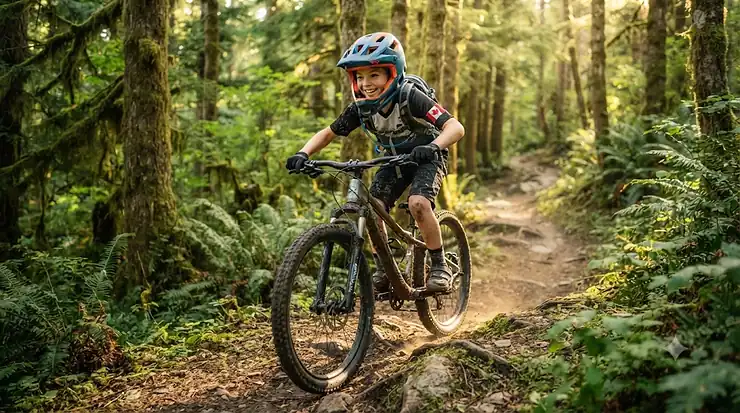
Somewhere between “training wheels” and “please stop doing wheelies in the driveway” sits one of the trickiest bike-buying decisions a parent will ever make: the kids mountain bike 8-12. This is the age where legs get longer, confidence gets bigger, and the old 20-inch bike suddenly looks like a tricycle parked next to your kid. A kids mountain bike 8-12 is a trail-capable bicycle — typically built around 24-inch wheels, sized for riders roughly 50 to 58 inches tall — that trades a plain hardware-store frame for real gearing, real brakes, and geometry that actually matches a growing rider’s proportions. Get the fit right and you’ll watch a kid go from wobbly to fearless in a single summer. Get it wrong, and you’ll be storing an expensive dust-collector in the garage by August.
Here’s the thing nobody tells you at the big-box store: most “kids mountain bikes” on the shelf are just adult-style frames shrunk down, with heavy steel tubing and brakes that a ten-year-old’s hand strength can barely squeeze. A genuinely well-designed 24-inch mountain bicycle for tweens uses shorter cranks, narrower handlebars, and a lower standover height so your kid isn’t fighting the bike just to ride it. We dug through real product specs, aggregated customer-review sentiment, and independent testing data (see the Wikipedia overview of mountain bike design for the mechanical basics) to build a shortlist that actually holds up on dirt, not just in a parking lot.
Below, you’ll find seven real bikes spanning budget hardware-store options to serious trail machines, honest pros and cons pulled from real owner feedback, and enough buying-criteria depth that you’ll walk away knowing exactly what matters — and what’s just marketing noise. Let’s get into it.
Quick Comparison Table
| Bike | Best For | Weight | Brakes | Price Range (CAD) |
|---|---|---|---|---|
| Huffy Rock Creek 24″ | Tightest budget | ~34 lb | Mechanical disc + linear-pull | Under C$300 |
| Schwinn High Timber 24″ | First real trail bike | ~32 lb | Linear-pull / disc (trim-dependent) | C$300-C$400 range |
| Mongoose Grafton 24″ | Mid-range all-rounder | ~30 lb | Mechanical disc | C$350-C$450 range |
| JOYSTAR Lubbock 24″ | Smaller/lighter tweens | ~28 lb | Dual hand brakes | Under C$350 |
| Specialized Riprock 24 | Dedicated singletrack | ~27-28 lb | Hydraulic disc | Mid-C$800s |
| woom OFF 5 | Lightest true MTB | ~21.6 lb | Hydraulic disc | Around C$1,300 |
| Prevelo Alpha Four | Best kids hybrid bike | ~19.2 lb | Hydraulic disc | Around C$900-C$1,000 |
Even a quick glance shows the real story: weight and brake quality track almost perfectly with price, and that gap isn’t marketing fluff. A bike that’s ten pounds lighter genuinely climbs easier and turns quicker for a rider who might weigh 70 pounds soaking wet — proportionally, that’s like an adult riding a bike ten pounds heavier than their usual ride, times two. Budget picks lean on linear-pull or basic mechanical disc brakes, which work fine on flat neighbourhood loops but ask more hand strength on steep descents, while the premium trio uses hydraulic discs that modulate with a light finger-pull. Neither is “wrong” — it’s about matching the bike to how and where your kid actually rides.
💬 Just one click — help others make better buying decisions too! 😊
💬 Already have a favourite from the table above? Scroll down to see current pricing and availability!
Top 7 Kids Mountain Bikes for Ages 8-12: Expert Analysis
1. Huffy Rock Creek 24″ — most wallet-friendly entry point
The Rock Creek expands on that budget promise with an 18-speed drivetrain, which sounds like overkill for a kid’s bike until you realize it just means smaller jumps between gears — easier for young legs to find a comfortable cadence on a hill. The steel hardtail frame is heavy compared to everything else on this list, and that’s the honest trade-off: Huffy keeps costs down by using hi-tensile steel rather than aluminum, so the bike outweighs some adult commuter bikes.
What that 18-speed Shimano-indexed shifting actually buys your kid is fewer stalled-out moments grinding up a driveway incline, since there’s always a gear close to what their legs want. The front suspension fork and aluminum rims take some sting out of curbs and gravel without adding real off-road capability — this is a neighbourhood-and-light-trail bike, not a singletrack shredder. Reviewers consistently mention that assembly requires more care than premium brands (tightened bolts loosen faster on entry-level components), and that the stock pedals and grips feel basic but functional.
This is squarely a children MTB entry level pick: it’s for the family testing the waters before committing serious money, or for a kid who mostly rides pavement with the occasional dirt path thrown in. Budget-conscious parents buying a first “big kid” bike consistently gravitate here, and reviewers note it holds up reasonably well for casual riding, provided you tighten bolts periodically. If your kid is destined for actual trail riding twice a week, though, you’ll likely outgrow this bike’s capability before they outgrow its frame size.
Pros:
- ✅ Lowest price point on this list by a wide margin
- ✅ 18-speed range eases pedaling on hills for small legs
- ✅ Widely available, easy to find replacement parts
Cons:
- ❌ Noticeably heavier steel frame slows handling
- ❌ Componentry needs more frequent tightening and adjustment
Priced under C$300 at the time of research, the Rock Creek delivers reasonable value for occasional, mostly-paved riding — just don’t expect it to keep pace on a rooty singletrack loop.
2. Schwinn High Timber 24″ — best value step-up for growing riders
Schwinn’s High Timber line has been a familiar name in bike shops and department stores alike for decades, and the 24-inch version leans into that legacy with a front-suspension fork and a drivetrain available in 7- or 21-speed configurations depending on the trim you find. That range matters more than it sounds: a 7-speed keeps things simple for a first-time shifter, while the 21-speed gives an older, more coordinated 11- or 12-year-old finer control over cadence on mixed terrain.
The aluminum-and-steel hybrid frame construction (aluminum on some trims, steel on others) keeps weight roughly comparable to the Rock Creek, and the front suspension fork — while basic — does a serviceable job soaking up washboard gravel and curb hops. Based on the spec comparison with other bikes in this price band, the High Timber’s biggest strength is consistency: it’s not flashy, but the componentry is proven and parts are easy to source at almost any bike shop in Canada.
Aggregated review sentiment across major retailers points to strong satisfaction with ride comfort and looks, with a recurring theme that the brakes need adjustment out of the box — a common issue with mass-market bikes assembled by non-specialists. For a family wanting a name-brand kids mountain bike 8-12 without stretching into four figures, this hits a genuine sweet spot between cost and capability, especially for kids who split time between neighbourhood streets, bike paths, and easy dirt trails.
Pros:
- ✅ Trusted, long-standing brand with wide parts availability
- ✅ Speed options let you match shifting complexity to rider skill
- ✅ Comfortable, confidence-inspiring upright riding position
Cons:
- ❌ Stock brake tuning often needs a shop adjustment
- ❌ Suspension fork is basic and offers limited real damping
Sitting in the C$300-C$400 range, the High Timber earns its keep as a dependable middle-of-the-road choice rather than a trail specialist.
3. Mongoose Grafton 24″ — best mechanical disc brakes under C$450
The Grafton steps things up with a genuinely aluminum frame — a real weight difference from the steel bikes above — paired with a 21-speed drivetrain and, notably, mechanical disc brakes on both wheels instead of linear-pull calipers. That’s a meaningful jump for stopping power, since disc brakes keep working consistently even when the rims get muddy or wet, which matters a lot more on actual trails than it does on a dry driveway.
The suspension fork and knobby mountain tires give the Grafton more legitimate off-road manners than the Huffy or Schwinn, and the aluminum frame trims a few pounds off the total package, which a growing rider will genuinely feel when hauling the bike up onto a bike rack or lifting it over a log. What most buyers overlook about mechanical disc brakes at this price is that they still require more hand strength to modulate than hydraulic systems — they’re a real upgrade over rim brakes, but not a substitute for the premium hydraulic setups further down this list.
Reviewers frequently cite the Grafton as a strong “outgrows the driveway” bike — something that can genuinely handle a local mountain bike park’s green and blue trails without immediately needing an upgrade. Common critique in owner feedback centres on the stock saddle comfort and the need to re-torque bolts after the first few rides, which is standard for this price tier across nearly every brand.
Pros:
- ✅ Real aluminum frame trims meaningful weight
- ✅ Mechanical disc brakes outperform basic rim brakes
- ✅ Knobby tires and fork suited to actual light trails
Cons:
- ❌ Stock saddle draws frequent comfort complaints
- ❌ Mechanical discs need more hand strength than hydraulic
Expect a price in the C$350-C$450 range, positioning the Grafton as the best mid-range mountain bike for kids 8-12 who are ready to leave pavement behind.
4. JOYSTAR Lubbock 24″ — lightest budget pick for smaller tweens
The Lubbock line distinguishes itself with drivetrain flexibility (1-speed or 7-speed options) and a frame built specifically with smaller riders in mind — a detail that matters enormously for a petite 8- or 9-year-old who’s technically tall enough for 24-inch wheels but not yet ready for an aggressive, stretched-out cockpit. The white-wall knobby tires add a playful visual touch while still delivering decent grip on hardpack dirt.
On paper, this means JOYSTAR is chasing a different buyer than Huffy or Schwinn: not the “biggest name” shopper, but the parent specifically hunting a lightweight kids bike 24 inch that won’t overwhelm a smaller-framed child. Dual hand brakes (rather than a mix of hand and foot brakes) teach proper braking technique early, which matters because kids who learn on coaster brakes often struggle to adapt to hand-brake bikes later.
Aggregated customer sentiment skews positive on ease of assembly and value, with recurring praise for how approachable the geometry feels for nervous or smaller riders — though buyers should note that as a smaller, budget-focused brand, the pool of verified long-term durability reviews is thinner than for Huffy or Schwinn, so we can’t make the same multi-year durability claims here as for the more established names. What we can verify is the spec sheet and the immediate ride-quality feedback, both of which are solid for the price.
Pros:
- ✅ Genuinely lighter frame suited to smaller 8-12 riders
- ✅ Dual hand brakes build proper braking habits early
- ✅ Straightforward assembly praised in owner feedback
Cons:
- ❌ Smaller review pool than legacy department-store brands
- ❌ Single-speed trims limit hill-climbing versatility
At under C$350, the Lubbock is a smart pick specifically for smaller-statured tweens who need bike geometry to shrink along with the price tag.
5. Specialized Riprock 24 — best dedicated kids trail bike
This is where the list pivots from “bike-shaped object” to genuine trail machine. Updated for 2026, the Riprock 24 pairs a 68-degree head tube angle with a wide-range 11-42t cassette and Promax hydraulic disc brakes — component choices lifted almost directly from adult trail bike design philosophy, just scaled to fit a kid. That head angle is the detail worth understanding: a slacker angle like this keeps the front wheel more stable at speed and on descents, which is exactly what a confident young rider needs when the trail tips downhill.
The 9-speed MicroSHIFT Advent drivetrain and 2.1-inch-wide tires give the Riprock real traction across mixed trail conditions, and the hydraulic brakes mean light finger pressure delivers strong, consistent stopping power — a genuine safety upgrade over the mechanical systems on the budget bikes above. Reviewers and independent kid-bike testers consistently flag the Riprock’s dropper-post compatibility as a standout for a bike in this price tier, since it lets an ambitious 11- or 12-year-old get low and centred on technical descents, a feature usually reserved for adult trail bikes.
This is the kids trail bike for a family that’s already logging regular singletrack miles, not just weekend strolls. Aggregated reviews describe it as “feels like a real mountain bike,” with the most common critique being that its climbing gear range, while wide, isn’t quite as generous as the ultralight boutique bikes further down this list.
Pros:
- ✅ Hydraulic disc brakes deliver real stopping confidence
- ✅ Dropper-post compatible — rare at this price point
- ✅ Wide-range cassette handles climbs and descents well
Cons:
- ❌ Heavier than the premium ultralight boutique options
- ❌ Climbing gear isn’t as low as some dedicated climbers
Around C$800 at the time of research, the Riprock is a legitimate trail bike wearing a kid-sized frame — a serious step up for a serious young rider.
6. woom OFF 5 — lightest true mountain bike on this list
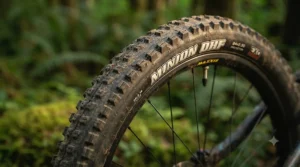
At roughly 21.6 pounds, the woom OFF 5 is astonishingly light for a 24-inch bike with a genuine SRAM drivetrain, Promax hydraulic disc brakes, and tubeless-ready wheels. Here’s what the spec sheet won’t tell you outright: every gram shaved off a kid’s bike matters more than the same gram on an adult bike, because the rider’s power-to-weight ratio is already lower. A ten-pound weight difference between two 24-inch bikes is roughly equivalent, proportionally, to an adult swapping between a road bike and a loaded touring bike.
The tubeless-compatible rims are a thoughtful long-game feature — they let a more advanced rider eventually drop tire pressure for extra grip and pinch-flat resistance without buying new wheels. woom’s kid-specific ergonomics extend to shorter cranks, a narrower cockpit, and reach measurements based on actual child proportions rather than a scaled-down adult frame, and the geometry sits more upright than the Riprock or Prevelo, which especially benefits petite, timid, or beginner riders who need a confidence-building position rather than an aggressive, stretched-out one.
Reviewers and independent testers repeatedly cite the OFF 5’s climbing manners and nimble handling as best-in-class for the 24-inch category, with the main trade-off being that this level of engineering carries a genuinely premium price. It’s the closest thing to a “grows with them” bike on this list, since the longer wheelbase gives a smaller rider real room before they outgrow it entirely.
Pros:
- ✅ Exceptionally light frame improves climbing and handling
- ✅ Tubeless-ready wheels support future upgrades
- ✅ Upright geometry suits beginner and petite riders
Cons:
- ❌ Among the highest prices in this category
- ❌ Gear range slightly narrower than some direct rivals
At around C$1,300, the OFF 5 asks for real investment, but reviewers consistently frame it as buy-once value given how long a rider can stay on it.
7. Prevelo Alpha Four — best kids hybrid bike for mixed terrain
The Alpha Four occupies a distinct lane from the dedicated trail bikes above: it’s built as an all-terrain, all-purpose machine that handles school runs, cul-de-sac laps, and gentle singletrack with equal competence. At roughly 19.2 pounds, it’s the lightest bike on this entire list, and it pairs that featherweight aluminum frame with hydraulic disc brakes, tubeless-ready wheels, and wide 1.95-inch tires that split the difference between a road-oriented hybrid and a true mountain bike.
Based on the spec comparison, what sets the Alpha Four apart as the best kids hybrid bike option here is versatility: it won’t out-climb or out-descend the Riprock on genuine singletrack, but it’s noticeably more comfortable and efficient for the mixed riding most 8-to-12-year-olds actually do — commuting to a friend’s house, exploring a local multi-use path, and occasionally detouring onto packed dirt. The build quality mirrors what you’d expect from a genuine adult bike, which is part of why Prevelo bikes routinely resell for strong prices once a kid outgrows them.
Aggregated owner sentiment highlights the Alpha Four’s precise handling and confidence-inspiring stability, alongside recurring praise for componentry that “just works” without the frequent adjustments budget bikes tend to need. If your family’s riding is 70% neighbourhood and bike-path and 30% easy trail, this bike matches that reality better than a dedicated mountain bike would.
Pros:
- ✅ Lightest bike on this entire list at 19.2 lb
- ✅ Hydraulic brakes and tubeless-ready wheels, adult-grade build
- ✅ Versatile geometry excels on mixed pavement-and-trail riding
Cons:
- ❌ Not as capable as dedicated trail bikes on technical singletrack
- ❌ Premium price for a bike your kid may outgrow in 2-3 years
Priced in the C$900-C$1,000 range, the Alpha Four rewards families prioritizing everyday versatility over singletrack specialization.
Practical Usage Guide: Setup, First Rides, and Maintenance
Getting a new bike out of the box is only step one — the next 30 days determine whether it becomes a beloved daily ride or a garage ornament. Start with a proper fit check: your kid should be able to stand over the top tube with an inch or two of clearance, and reach the handlebars without hunching. Most bikes in this guide ship 80-90% assembled, but torque every bolt yourself before the first ride, especially the stem, seatpost clamp, and pedal cranks, which loosen fastest under a new rider’s enthusiastic pedaling.
Tire pressure is the most-skipped maintenance step and arguably the most impactful. Check it weekly for the first month — a soft tire feels sluggish and increases pinch-flat risk on curb hops, while an overinflated one bounces harshly over roots. Brake adjustment matters just as much: hand-check both levers before every ride during the break-in period, since cables stretch and pads seat in over the first few dozen kilometres. A simple monthly habit — wipe the chain, apply a drop of bike-specific lubricant, and spin the wheels to check for wobble — prevents most of the squeaks and skips that make kids lose interest in riding altogether.
The most common first-30-days mistake we see referenced across owner forums and shop feedback is over-tightening the seatpost to “lock in” a height, which strips the clamp and makes future adjustments (crucial for a growing kid) much harder. Loosen it periodically and re-grease the post instead.
Real-World Scenario: Which Bike Fits Your Rider
Picture three very different 10-year-olds. First, there’s the budget-family scenario: two kids sharing driveway and bike-path duty, riding a couple times a week, parents wanting something durable but not precious. The Huffy Rock Creek or Schwinn High Timber fits here — reasonable cost, easy part replacement, and forgiving of the inevitable dropped-bike moments.
Next, the weekend trail family: they load bikes onto a rack most Saturdays and hit an actual mountain bike park or forest trail system. For them, the Mongoose Grafton offers a genuine step up in braking and tire capability without breaking the bank, while a family ready to invest seriously should look at the Specialized Riprock, whose hydraulic brakes and trail-tuned geometry earn their keep on real singletrack.
Finally, the everyday-versatility family: a kid who bikes to school, to friends’ houses, and occasionally onto a gravel path, with dirt trails as a bonus rather than the main event. The Prevelo Alpha Four or woom OFF 5 both shine here, trading ultimate trail aggression for light weight and everyday comfort that make riding effortless enough to become a daily habit rather than a special occasion.
Buyer’s Decision Framework
If budget is your primary constraint, choose the Huffy Rock Creek or JOYSTAR Lubbock, because both deliver a functional, safe first mountain-style bike under C$350. If your kid already rides singletrack regularly, choose the Specialized Riprock or woom OFF 5, because their hydraulic brakes and trail geometry are purpose-built for that use case. If your riding is genuinely mixed between pavement and trail, choose the Prevelo Alpha Four, because its lighter weight and versatile tires outperform a heavier dedicated mountain bike on everyday terrain. And if your child is smaller or less confident, prioritize bikes with more upright geometry and lower standover height — the woom OFF 5 and JOYSTAR Lubbock both lead in this category — over raw trail capability.
How to Choose a Kids Mountain Bike 8-12
Choosing the right kids mountain bike 8-12 comes down to seven weighted criteria, in order of importance:
- Standover height and reach — your kid should clear the top tube with 1-2 inches to spare and reach the bars without stretching, since fit affects control more than any component spec.
- Weight relative to rider size — a bike over 40% of your kid’s body weight becomes genuinely hard to manoeuvre; lighter frames like the Prevelo or woom pay off here.
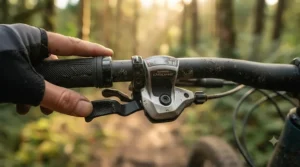
- Brake type — hydraulic discs offer the most consistent stopping power for less hand strength, mechanical discs are a solid middle ground, and rim brakes are the budget baseline.
- Gear range — a wide, low first gear matters more than total gear count for hill-climbing confidence.
- Tire width and tread — wider, knobbier tires grip better on dirt but add rolling resistance on pavement, so match tread to your actual terrain.
- Suspension (or lack thereof) — a genuinely capable fork adds real trail comfort, but a cheap, poorly-damped fork can be worse than a rigid fork; when in doubt on a budget bike, rigid often outperforms a mediocre suspension fork.
- Growth room — a longer wheelbase and adjustable seatpost stretch a bike’s useful lifespan by a year or more, which matters given how fast kids this age grow.
Common Mistakes When Buying a Kids Mountain Bike
The single biggest mistake parents make is buying a size “to grow into.” A bike that’s too big compromises control precisely when a kid needs confidence most, and an oversized frame is genuinely more dangerous — not just less fun — since a child who can’t fully control the bike is more likely to lose balance in a real trail situation. Buy for current height, not next year’s growth spurt.
The second mistake is fixating on gear count as a proxy for quality. A 21-speed department-store bike with poorly tuned derailleurs shifts worse than a well-tuned 7-speed. What most buyers overlook is that shifter and derailleur quality matters more than raw gear count. Third, many parents skip a post-purchase tune-up, assuming a new bike needs zero adjustment — in reality, cables stretch and bolts loosen within the first week of real riding, and skipping that first tune-up is the most common cause of early mechanical frustration. Finally, resist the urge to buy the flashiest colour scheme over the right fit; a bike your kid loves the look of but can’t control safely isn’t actually the better choice.
Kids Mountain Bike vs Kids Hybrid Bike
This is one of the most common points of confusion for parents outfitting an 8-to-12-year-old, and the answer depends entirely on where the riding actually happens. A dedicated kids mountain bike — like the Specialized Riprock or woom OFF 5 — prioritizes suspension travel, aggressive tire tread, and geometry tuned for descending and technical terrain. A best kids hybrid bike pick, like the Prevelo Alpha Four, splits the difference: narrower, faster-rolling tires, a more upright riding position, and a lighter overall build suited to varied everyday riding rather than singletrack specifically.
In practice, most 8-to-12-year-olds spend the majority of their riding time on pavement, bike paths, and easy hardpack — not technical singletrack — which is exactly why a hybrid often makes more sense than parents initially assume. The mountain bike wins decisively once real trail features (roots, rock gardens, steep descents) enter the picture regularly, because that’s precisely where suspension and aggressive tread earn their keep. If you’re unsure which camp your family falls into, count actual trail rides over the last few months; if it’s more than once a week, lean mountain bike, and if it’s occasional, a hybrid will likely serve your kid better day-to-day.
What to Expect: Real-World Performance for Ages 8-12
Specs on a page don’t translate directly into what a ride actually feels like, so here’s the honest translation. A budget hardtail like the Huffy or Schwinn will feel stable and forgiving on pavement and light gravel, but every root and curb transmits straight up through the fork and frame — kids notice this as “bumpy,” not dangerous, but it does reduce confidence on rougher ground. Step up to a mechanical-disc bike like the Mongoose Grafton, and braking feels noticeably more controlled, particularly in damp Canadian spring conditions where rim brakes lose grip on wet aluminum.
On a true trail bike like the Specialized Riprock, the difference is dramatic on descents: the slacker head angle and hydraulic brakes let a kid carry more speed with more control, which paradoxically makes rougher terrain feel safer, not scarier. And on the ultralight boutique bikes — the woom or Prevelo — the standout real-world sensation is climbing. A ten-pound-lighter bike genuinely transforms how a hill feels to an 80-pound rider; parents consistently report their kids climbing hills unassisted for the first time after switching to a lighter bike, simply because the effort-to-progress ratio finally makes sense for smaller legs.
Long-Term Cost & Maintenance
The sticker price is never the full story. A budget bike under C$300 will likely need a brake adjustment, a derailleur tune, and possibly a replacement tire within the first year of regular use — call it an additional C$60-C$100 in shop time and parts, which narrows the gap with a mid-range bike that ships better-tuned from the start. Premium bikes carry a different calculus: the Prevelo, woom, and Riprock hold resale value unusually well, since quality components and frames outlast a single growth spurt, and resale prices for well-maintained kids’ mountain bikes from name brands routinely recoup 40-60% of the original price.
Basic annual maintenance — a full tune-up, cable replacement, and brake pad check — runs roughly the same across price tiers, in the C$40-C$80 range at most Canadian shops, so the ongoing cost gap between a budget and premium bike is smaller than the upfront price difference suggests. The real long-term value question is usage: a bike that gets ridden three times a week for two years is a better investment than a premium bike that sits idle after the novelty wears off, regardless of price tag.
Safety, Regulations & Compliance for Young Riders in Canada
Helmet laws vary by province, but the general Canadian pattern is consistent: cyclists under 18 are required to wear an approved helmet in most jurisdictions, and parents or guardians are typically responsible for ensuring compliance for children under 16. Ontario’s cycling safety guidance confirms this pattern for that province specifically, and similar rules apply across most of the country, so check your specific province’s current regulation before hitting the trail.
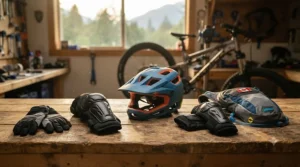
Beyond legal requirements, look for a helmet certified to CSA, CPSC, or Snell standards, replace it after any real impact, and make sure it fits level with two-finger spacing above the eyebrows. Research published through Canada’s public health research archive has examined how helmet legislation affects both injury rates and youth cycling participation, and the consistent theme across that research is that helmet use meaningfully reduces head injury severity, even where the effect on overall participation rates is debated. For families riding actual trail systems, gloves and knee pads add a meaningful safety margin for kids still building bike-handling skills, and a properly fitted bike — not oversized “to grow into” — remains one of the single biggest controllable safety factors, since a rider who can actually control their bike avoids far more incidents than one fighting an ill-fitting frame.
✨ Ready to gear up your young rider the right way?
🚴 Check current pricing on any bike above and make sure a certified helmet is part of the cart before checkout!
Price Range & Value Analysis
| Price Tier | Range (CAD) | What You Get | Best For |
|---|---|---|---|
| Budget | Under C$350 | Steel frame, basic brakes, functional gearing | First bike, casual/pavement riding |
| Mid-Range | C$350-C$450 | Aluminum frame, disc brakes, better tires | Regular light-trail riding |
| Premium | C$800-C$1,300 range | Hydraulic brakes, ultralight frames, tubeless-ready wheels | Serious trail riders, long-term investment |
The jump from budget to mid-range buys real safety and handling improvements — disc brakes and an aluminum frame — for a relatively modest price increase, which is why the mid-range tier is often the smartest value for families unsure how seriously their kid will take mountain biking. The jump from mid-range to premium is steeper in price but buys disproportionate gains in weight and brake feel, gains that matter most for kids already committed to regular trail riding rather than occasional weekend outings.
Frequently Asked Questions
❓ What age is a 24-inch mountain bike for?
❓ How much should I spend on a kids mountain bike 8-12?
❓ Is a hybrid or mountain bike better for a 10-year-old?
❓ Do kids mountain bikes need suspension?
❓ How long will a 24-inch bike last my child?
Conclusion
Choosing the right kids mountain bike 8-12 isn’t about finding the “best” bike in the abstract — it’s about matching real specs to your kid’s actual riding life. A budget hardtail like the Huffy Rock Creek or Schwinn High Timber makes total sense for a family testing the waters or riding mostly pavement, while a mid-range pick like the Mongoose Grafton earns its price with genuinely better brakes and tires for regular light trails. Families with a committed young trail rider will get real, tangible value from the hydraulic brakes and trail geometry on the Specialized Riprock, and anyone prioritizing everyday versatility and featherweight handling should take a hard look at the Prevelo Alpha Four or woom OFF 5.
Whatever you land on, remember that fit and brake quality matter more than gear count or paint colour, and that a properly sized bike — not one bought “to grow into” — is both the safer and more enjoyable choice for your kid, today and for the next couple of growth spurts. Bookmark this guide, measure your kid’s inseam, and go find the bike that turns them into the trail-obsessed rider you already suspect they’re going to become.
✨ Don’t Miss These Exclusive Deals! 🔍
Take your family’s next ride to the next level with these carefully selected picks above. Click on any highlighted bike to check current pricing and availability on Amazon.ca. The right kids mountain bike 8-12 could be the thing that turns weekend errands into your family’s favourite new hobby!
Recommended for You
- Bike for Kids 8-12: 7 Trusted Picks Parents Love in 2026
- Off-Road Hoverboard for Kids: 7 Rugged Picks for 2026
- How to Choose a Safe Hoverboard for Kids in Canada: Top 7 (2026)
Disclaimer: This article contains affiliate links. As an Amazon Associate, I earn from qualifying purchases. If you purchase products through these links, we may earn a small commission at no additional cost to you.
✨ Found this helpful? Share it with your friends! 💬🤗
